The First Question Writing a Memoir: What Emotions Arise When Sharing Your Life Story

April 5, 2026

The first question when you write a memoir: What emotions arise when you think about sharing your life story?

That is a loaded question. For anyone writing a memoir, it may be the first consideration: are you prepared to reveal your personal history and inner thoughts to others? Which aspects of your life would you share, with whom, and would sharing bring you happiness or sorrow?

That raises a followup question: would I, or should I, experience emotion when sharing my story? By emotion, I mean feelings of pride or shame, excitement or boredom when discussing myself. I might downplay or amplify achievements. I could even conceal parts of my story, perhaps out of shyness or avoid recalling painful memories. When prompted, I think I would be happy to share but I would not initiate such discussions unless the setting was appropriate.

Another consideration: what is my life story? Is it focused on my career, chronological list of positions held? Or does it center on pivotal moments that shaped my life? Or would my story be marked by how I navigated adversity, or by how I capitalized on—or missed—opportunities?

Then, the audience matters. Am I sharing my story with people of my generation, who have similar accomplishments and backgrounds, such as fellow immigrants? Would I discuss it with someone experiencing homelessness when I have financial stability? Would I share it with children, and for what purpose?

For example, I would share my adventures and challenging experiences with those who have faced similar situations, but I might feel uneasy sharing with people whose lives have been sheltered. They might not relate to or value my experiences.

Issues of comparability can also lead to uncomfortable situations. We have seven grandchildren. People without grandchildren have said we’re lucky and well-off for that reason. I agree. But I am sensitive to such situations, and I do not want to cause discomfort, so I avoid the topic unless asked. People adapt their life stories to their listeners.

Another example, do you want to describe your children’s success, even if the other person had misfortune with theirs? There have been instances when such situations could have led to negative comparisons between my experience and theirs. I try to avoid those situations.

In conclusion: Would I share my story with someone? Yes. I have nothing to hide and would be glad to talk if someone is interested. However, I’ve noticed people are rarely curious about others’ experiences; even travel stories are met with polite acknowledgment unless the listener traveled the same routes.

I would prefer sharing my experiences with those who have backgrounds similar to mine, so we can genuinely connect over common ground.

If I were to share my life story, I would begin with my childhood in Hungary under the Communist regime, describing what that experience was like. A major turning point came when I walked to Vienna, where I was temporarily placed in high school. Afterward, I lived in Manchester, England, for a few months before flying to Vancouver, Canada, and start a new life. Other significant moments included attending university, getting married, having children, and building my career. Each of these events represents a critical event that shaped who I am today.

As my story continued, I would include my experiences in consulting and as a lobbyist, sharing what each role entailed. I would also discuss the countries we visited and the lessons we learned by exploring diverse cultures. Through these experiences, both professional and personal, my life story would come together as a collection of challenges, opportunities, and discoveries.

Some subjects, such as troublesome family matters, might be harder to share honestly. Although I could speak more openly about deceased family members, I might still avoid sensitive subjects.

Overall, I feel positive about sharing my life story when there is genuine interest, especially when I know my story will not make listeners uncomfortable.


Life Experiences fit Together like a Mosaic….Sometimes

April 1, 2026

Three recent experiences connected in my mind last week. The pieces clicked, as in a mosaic. These three experiences led me to stories about people who saw demand for services that were unavailable. Their instincts led to successful companies.

The first experience was a talk I went to hear by a business professor. He introduced himself by describing his usual pitch to students, which is to ask them what motivates business. He said the answer is usually money. He responds to that view by describing a situation, a business transaction: when he goes shopping, he wants to purchase specific goods, such as vegetables. Business is about buying and selling goods and services. Money is simply the vehicle that enables goods and services to change hands.

The next experience was speaking with a physiotherapist, who advised me to strengthen my aching legs. Without going into details, I may have something called lazy butt syndrome, or butt amnesia. Muscles can lose their ability to function properly, so it’s important to use targeted exercises to help them remember how to work.  During our consultation, we talked about cycling and bike racks. I mentioned my intent to buy one. She suggested I visit Rack Attack, a store specializing in racks for cars that carry bikes, skis, and other outdoor gear.

The third experience was buying a hanging bike rack from Amazon, which came from Rack Attack. The rack came in a box, partially assembled. Not fully understanding the assembly instructions, I drove over to Rack Attack and asked for help. The young assistant was excellent, showing me how to prepare the full assembly. Searching the store’s website, I learned that the founder of this chain emphasizes customer relations, focusing on the sales, installation, and maintenance of a variety of racks.

Reflecting on these three experiences, that took place in a couple of days, led me to think about what makes companies successful in business.

The very satisfying experience with Rack Attack made me look into the store’s history. Chris Sandy, the founder, worked at a bike shop in Vancouver, BC, Canada. He noticed that most racks did not fit the more aerodynamic car models, which lacked traditional rain gutters. Attaching sports gear racks to these newer cars was difficult. He decided to open a store catering to outdoor enthusiasts who carry gear in their cars. He started by selling products from Thule, Yakima, and others that fit newer cars.

The first store opened in 1996, and Chris quickly expanded by establishing stores in Toronto and other Canadian cities. In 2014, he sold his stores to Banyan Capital Partners, a private equity investor, to raise money for further growth. By 2026, Rack Attack had over 40 stores, with 30 in the US.

The Rack Attack story reminded me of the Running Room, a specialty store selling running shoes and related products. Running Rooms always have a running club. I used to run with them in Ottawa for years. Running with a group is motivating. You meet people with similar interests. On-the-road discussions fill time and take your mind off tired muscles.

John Stanton established the Running Room in Edmonton, Alberta, Canada, in 1984. He was a chubby food industry executive who needed to change his lifestyle for his health. Embarrassed by neighbors watching him try to run, he went outside at dawn to run. He could hardly run a block before sucking for air. But he persevered, became a runner, and opened a one-room store in Edmonton to sell running gear. The store was a huge success, and he expanded the Running Room stores across Canada and the US. Today, there are over 100 Running Rooms, with 8 in the US. The chain employs 1,300 people. John still works and manages the chain with his two sons.

Another example is the Tim Horton franchise. Tim Horton, an NHL player, sought a business after his hockey career ended. He tried several ventures—first, a burger joint, followed by a car dealership, and finally a coffee-and-doughnut shop in Hamilton, Ontario, in 1964. He imagined creating a community hub where people could mingle and enjoy coffee and fresh doughnuts. The idea proved successful: today, there are more than 6,000 locations in 14 countries, growth fueled by key mergers with Wendy’s in 1995 and Burger King in 2014.

These stories back up the business professor’s view of what business is: at its most basic tenet, it is finding an opportunity to sell a product people want. The money part is secondary; the priority is to fulfill an unmet demand for which people are willing to pay. And clearly, the business must be profitable in the long run, otherwise it becomes unsustainable. I would add that good service is also essential to sustain a company and an enthusiastic founder could be a catalyst for future success.

The question is, where can you find ideas for a sustainable business? I do not know that. But, in the high-tech industry, common wisdom says one out of ten startups goes bankrupt. One makes it. The rest struggle on.

In conclusion, it was worth attending the professor’s lecture; it made me think about what business is.

The Echoes of 1956 in Today’s Middle East

February 5, 2026

One stated aim of this Middle Eastern war is to help the Iranian people replace their current regime. As the argument goes, the Iranian economy is weak, and with the pummeling of the country by bombs, this is an opportune time for the people to take over and establish the form of government they wish to have. This situation feels familiar to me, I remember the Hungarian uprising of 1956, when the US encouraged the Hungarian people to take over their government, leading people to hope for support that never materialized.

Let me go back to my memories. In my youth, I tinkered with bicycles, and then built a basic crystal radio. I am talking about the 1960s; we have come a long way technologically since crystal radio.

The “people’s radio” with one channelwas the standard radio set in Hungary in the 1950s. the channel boadcast government propaganda and communist/socialist ideas, tracing their routes back to Marx and Engels. I learned that a “rheostat” could change all that, and I bought one at the local hardware store. Once I installed it into one of the “people’s radios, I was ecstatic and danced around in my room, hearing all the foreign stations (German, French, English).

Mind you, reception was not good; all the foreign channels except the Hungarian official channel were jammed. I discovered that reception was better at night, and the foreign channels moved to different frequencies to avoid the jamming. Of course, the jammers searched for the moving stations, but during the time the jammers discovered and logged on to the new frequencies, I heard music and news.

It’s important to understand that altering people’s radios was against the law, as was tuning in and listening to foreign radio stations. I am not sure how the secret police could monitor people listening to foreign stations, but illegal activities were punished by jail and torture, so just knowing that something was illegal was enough to deter such activity.

Aware of the political atmosphere, I did not tell my parents what I had done; in fact, they could have gotten into trouble by an accusation that they let their son engage in an illegal activity. So, I listened to my new device at night and hid the radio under my blanket listening to foreign channels.

And this is how I heard it: in Hungarian, Radio Free Europe (FRE), a US agency, advocating the overthrow of the then-current Hungarian government. And the voice on RFE encouraged the Hungarian people to organize mass demonstrations on Budapest’s major streets and to take over the government.

Behind the RFE messaging was the view of John Foster Dulles, the Secretary of State under President Eisenhower, advocating the overthrow of the government. Hungarians were ecstatic; they thought the US was about to help the revolution by sending soldiers and ammunition. And they waited. And waited. But help never came.

Reading historical notes now, I learned that although Dulles encouraged the uprising to move to take over the government, but he later changed his mind, considering that Hungary was not a potential ally and that assisting the uprising might antagonize the Russians. He was also preoccupied with the Suez Canal crisis happening at the same time. But he took the Hungarian situation to the UN Security Council, proposing a diplomatic approach to resolve the uprising. The Russians, knowing the Americans would not interfere, came in with tanks on November 4, 1956, and crushed the uprising, which started on November 23.

The Russian tanks had taken a few weeks to reoccupy the country. By mid-November the situation appeared hopeless, and my brother and I walked out to Vienna (Austria) on the highway. Subsequently, we found our way to Manchester (England), and finally, to Vancouver, Canada, as refugees. I wonder how many Iranians are considering, or able, to leave their country.

All these memories came back when I heard the US encouraging the Iranian people to take over the government. Clearly, Hungary and Iran are vastly different countries; one has a population of 9 million, while the other has 92 million. Also, Hungary did not have nuclear ambitions. But inciting local populations to rebel and take over their government is a bold and drastic initiative with major consequences. The lack of follow-up to keep the uprising going, encouraged by the messaging of Radio Free Europe, was a crushing disappointment for the Hungarians in 1956.

Is There a Role for AI in Healthcare? Exploring Its Potential

February 25, 2026

A talk I listened to on how AI works with healthcare left me puzzled. A PhD working at the hospital explained LLMs (Large Language Models), such as Co-Pilot, ChatGPT, and Gemini, and compared them to search engines like Google and Bing. I thought I understood the difference: while search engines provide sources for queries, such as links or URLs, LLMs combine multiple sources into text and provide a human-like form of written communication.

According to the speaker, search engines maintain up-to-date information by constantly crawling the web, while LLMs remain current only up to the time they were trained, that is, the information they were given. This is so because not all LLMs are tied to the internet, so they do not have up-to-date information. So, I took it that search engines are good for research, while LLMs offer text and context to a query.

Both tools share the same starting point: the prompt. A question or prompt to a search engine would bring up links and URLs, while an LLM would generate a complete essay on the subject.

I was aware of much of this information; I have used search engines for years, and in the last year, I tried my hand at using some LLMs, for example, Co-Pilot, which is built into the MS Office suite. But how does all this technology relate to healthcare? That was the title of the presentation. So, I asked for an example at the end of the lecture. I said I see a cardiologist sitting at a computer, an MRI image on the screen, and a patient on the side. What does he do to use AI? Does he use a prompt about the MRI taken of the patient sitting next to him? Instead of a direct answer, the speaker explained that the infrastructure for using AI is not yet complete; for example, the hospital must have its own storage for the data, it cannot use storage elsewhere due to privacy concerns.

Also, I did not find answers to how doctors are trained to use AI or what percentage of them are currently using it. Anecdotally, I remember that when I last visited my ophthalmologist, he was concerned and dubious about computerizing his patients’ information. I wonder how long it may take for the medical profession to embrace and use computer technology, especially AI.

Coming back to a live example of how the medical profession may use AI, would he/she ask AI to examine the MRI and identify any medical problem shown on the image? The speaker emphasized that AI is only a tool to use and ultimately, the doctor decides on treatment, potentially using information gleaned with AI tools. After the lecture, I told the speaker that a few examples of medical professionals using AI would have been useful.

To test what I learned, I came home and used a prompt: “Write 300 words on the Vatican Museum”, and asked Google and Co-Pilot, to respond. To my surprise, both apps wrote a nice essay. It appears that the boundaries between search engines and LLMs are blurring, especially as technology advances and these tools integrate.

However, while both can provide information, their use in the specialized, privacy-sensitive field of healthcare remains challenging. There is potential, but also barriers in infrastructure, training, and trust.

PS. In today’s Washington Post, February 24, there is an article by a doctor about how to use AI in medical practice. “AI didn’t replace me as a doctor. It made me better.” By Ashish K. Jha

https://www.washingtonpost.com/opinions/2026/02/24/health-care-ai-doctors-chatbots/

Snow’s Impact on Ottawa Life and Art at the Gallery

February 20, 2026

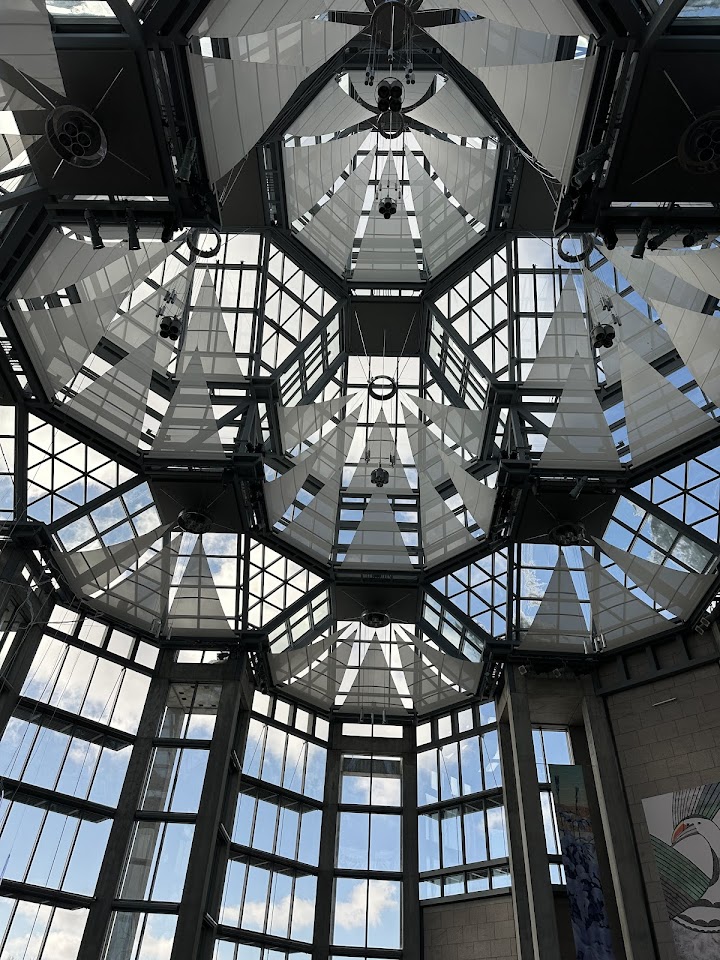
Walking along the snowy pathways behind the Sportsplex brought to mind the snow-themed exhibit currently at the National Gallery of Canada. Drawn by memories of past visits and the Gallery’s dramatic architecture, we decided to visit the exhibit.

The entrance to the galleries is via a long, upward-sloping hallway with a towering glass wall on the left. The building has an almost gothic feel, when walking up the hallway toward the impressive great room, which features an intricate ceiling with an open design. Notably, the building’s design was the result of an international competition won by Moshe Safdie, a renowned architect and McGill University graduate in Montreal. Safdie is a Canadia Israeli, and US citizen.

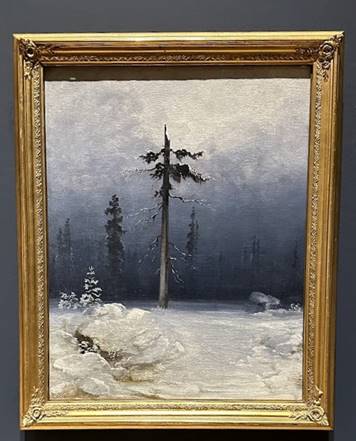
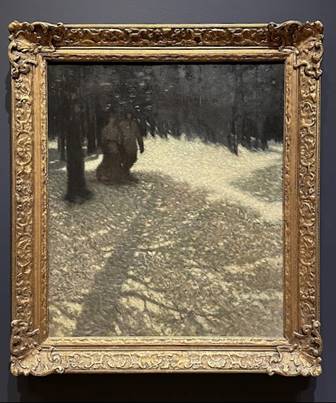
Inside, the theme of snow was immediately evident. What color is snow? That question on a flyer greeted us at the National Gallery. Melting snow on my driveway revealed shades of grey, blue, and yellow as the sun set. Walking the snowy paths in the park, I noticed various colors on the ground—especially where people had walked dogs. Snow displays many colors, from sunny to cloudy days and into the night.

Reflecting on the exhibit, I realized what a great idea it was to spotlight snow, as it defines our winters for three months of the year. With snow enabling so many activities, skiing, sledding, and snowball fights, it’s central to our outdoor lives and fitness. Exhibiting snow photos is a perfect way to celebrate the true spirit of our winters.

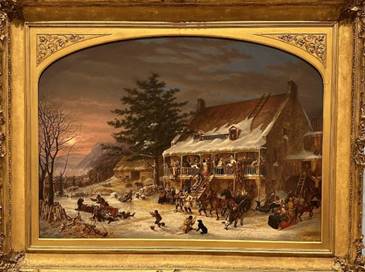
This appreciation for snow was evident throughout the Gallery, which featured over 160 pictures with snow on them. The Gallery curated paintings of Canadian artists, in collaboration with other European museums. Noteworthy were pictures of the Group of Seven landscape artists, Canadian native artists, Swedish and Norwegian painters, and pictures by Monet and Pissarro from France. Among the many rooms, some showed daytime scenes, and others showed night scenes.

The snow scenes were cleverly displayed: daytime paintings were shown in white rooms, which felt cold, while night snow scenes were in black rooms with dim lighting, creating a unique atmosphere for the exhibit.

Snow dominates winter life in Ottawa, affecting daily routines. Residents carry extra shoes to swap for boots indoors, wear parkas and toques outside, and equip cars with snow tires, scrapers, and salt. Snow accumulates along streets, making clearing the driveway essential. When I moved from Washington, DC, our first Ottawa winter brought over ten feet of snow—I had to shovel just to open the door. Over time, we adapted and came to enjoy it.