Life in my Early Years


April 7, 2026

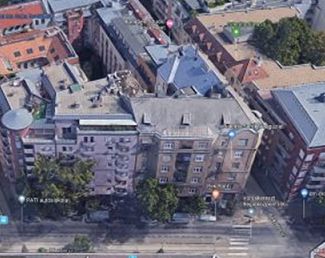
I’m unsure of my earliest memory. It may have been at age two or three. What I reall is that we lived in an apartment on the fourth floor, with the building facing a major street. I remember the address: 39 Mester Ucca (Expert Street) in Budapest, Hungary. It’s odd I remember the address but few other details, perhaps my parents ensured I knew it in case I got lost.
An early, clear memory I have is of the windows in the apartment. We covered them at night to darken and hide the building from incoming Russian bombers. As soon as the sirens shrieked, we rushed down into the basement for security. It occurred frequently. It was in 1944, during World War II.

The basement bunker was cold. People from the apartments huddled together, some on mattresses, others on the floor. I was scared as German soldiers and Hungarian Nazis searched for Jews to deport. The bunker was full; some may have been Jewish. At four, I didn’t understand the situation but saw fear. I pretended to sleep and waited for the soldiers to leave. The memory of Nazis searching for Jews in the bunker has stayed with me. I must have heard adults talk about it and seen soldiers question people. At age four I saw what was happening with no understanding of the context.

The Nazis also came upstairs to the apartments searching for Jews. We were warned by messages from each floor as they moved up. We awaited them with fear. My aunt Rose hid behind the china closet, which was placed diagonally across the corner to provide space for her to stand, hide, and wait until the Nazis left.

After these events in Budapest, my father, a medical doctor, was drafted into the Hungarian army, which was aligned with the Germans. We then all moved to an army camp in Szatmarnemeti, which was part of Hungary at the time but is now Romania. Father served on the military trains running in Ukraine. During our time at the camp, we lived in a modest military house, under the watch of a soldier. With the war ongoing, I vividly remember Russian planes swarming over the camp daily. Whenever the sirens alerted us to incoming bombers, the soldier would practically throw my brother and me into a four-foot-deep hole in front of the house, covering it with plywood. We shuddered inside, listening to the planes overhead, until the all-clear siren sounded, when the soldier pulled us out.

I cannot recall how long we stayed at the camp in Szatmarnemeti before returning to Budapest. After our return, Mother took my older brother and me out to a park a few blocks away on most days. This park had some play equipment: a sandbox, swings, and a rotating plaything. We walked there, an open, green space surrounded by concrete. The area where we lived had apartment buildings up to six stories high along the major streets, and two-story buildings on the local streets.

Our building had an elevator that never worked. It was in a cage-like structure with the staircase winding around it. We raced up four floors with my brother, always trying to beat each other to the apartment. The building was L-shaped. The entrance to the apartments on each floor was via an open balcony running along the inside of the building, facing a courtyard.

In terms of the neighborhood where we lived, I remember that gypsies lived in a large housing block, which my parents advised us to avoid. The housing block was doughnut-shaped with an entrance from the street. Inside was a courtyard surrounded by two-story buildings, occupied by gypsies who, I understood, lived communally.

The first level of apartment buildings along major roads housed commercial businesses, typical of European cities. A tramway ran on Mester Ucca. The neighborhood was noisy, and we rarely ventured far except when we moved to Szatmarnemeti.

I cannot remember where I went to school. No friends or images of a school building come to mind. Still, I must have attended school because we stayed in Budapest until I was eight years old, when my father became the director of the local hospital in Sopron, and we moved there.

Overall, I cannot say that I had a good time in my early life. But I did not have a bad time either. We never went without food. And I do not recall having friends or playmates who came to our apartment or whom I visited.

Beyond these hazy memories, I can’t recall anything unique. I can’t picture the room I slept in, though I likely shared it with my brother. I don’t recall specific toys or a single friend from eight years in that apartment. My most memorable early experiences relate to World War II.

The First Question Writing a Memoir: What Emotions Arise When Sharing Your Life Story


April 5, 2026

The first question when you write a memoir: What emotions arise when you think about sharing your life story?

That is a loaded question. For anyone writing a memoir, it may be the first consideration: are you prepared to reveal your personal history and inner thoughts to others? Which aspects of your life would you share, with whom, and would sharing bring you happiness or sorrow?

That raises a followup question: would I, or should I, experience emotion when sharing my story? By emotion, I mean feelings of pride or shame, excitement or boredom when discussing myself. I might downplay or amplify achievements. I could even conceal parts of my story, perhaps out of shyness or avoid recalling painful memories. When prompted, I think I would be happy to share but I would not initiate such discussions unless the setting was appropriate.

Another consideration: what is my life story? Is it focused on my career, chronological list of positions held? Or does it center on pivotal moments that shaped my life? Or would my story be marked by how I navigated adversity, or by how I capitalized on—or missed—opportunities?

Then, the audience matters. Am I sharing my story with people of my generation, who have similar accomplishments and backgrounds, such as fellow immigrants? Would I discuss it with someone experiencing homelessness when I have financial stability? Would I share it with children, and for what purpose?

For example, I would share my adventures and challenging experiences with those who have faced similar situations, but I might feel uneasy sharing with people whose lives have been sheltered. They might not relate to or value my experiences.

Issues of comparability can also lead to uncomfortable situations. We have seven grandchildren. People without grandchildren have said we’re lucky and well-off for that reason. I agree. But I am sensitive to such situations, and I do not want to cause discomfort, so I avoid the topic unless asked. People adapt their life stories to their listeners.

Another example, do you want to describe your children’s success, even if the other person had misfortune with theirs? There have been instances when such situations could have led to negative comparisons between my experience and theirs. I try to avoid those situations.

In conclusion: Would I share my story with someone? Yes. I have nothing to hide and would be glad to talk if someone is interested. However, I’ve noticed people are rarely curious about others’ experiences; even travel stories are met with polite acknowledgment unless the listener traveled the same routes.

I would prefer sharing my experiences with those who have backgrounds similar to mine, so we can genuinely connect over common ground.

If I were to share my life story, I would begin with my childhood in Hungary under the Communist regime, describing what that experience was like. A major turning point came when I walked to Vienna, where I was temporarily placed in high school. Afterward, I lived in Manchester, England, for a few months before flying to Vancouver, Canada, and start a new life. Other significant moments included attending university, getting married, having children, and building my career. Each of these events represents a critical event that shaped who I am today.

As my story continued, I would include my experiences in consulting and as a lobbyist, sharing what each role entailed. I would also discuss the countries we visited and the lessons we learned by exploring diverse cultures. Through these experiences, both professional and personal, my life story would come together as a collection of challenges, opportunities, and discoveries.

Some subjects, such as troublesome family matters, might be harder to share honestly. Although I could speak more openly about deceased family members, I might still avoid sensitive subjects.

Overall, I feel positive about sharing my life story when there is genuine interest, especially when I know my story will not make listeners uncomfortable.

To My Blook, Where the Writing Hobby Took Me


June 11, 2023

You may ask what is a blook? Well, the word is a combination of the words blog and book. And a blook is a book consisting of blogs. It is a new word, first coined in 2003 by Jeff Jarvis, a well-known journalist from New York. Since then, several blooks have been published and the “Blooker” prize was established in 2006, fashioned from the “Booker” prize. Julia and Julie, by Julie Powell, was awarded the first Blooker prize in 2006; it is a cookbook based on blogs preparing the recipes of Julia Childs (a film by the same name was made in 2009).

I was intrigued by the concept of a blook and was inspired to compile my own do one since I have been blogging for a few years. The pandemic was the trigger for the start of my blogging. When avoiding people, and staying home had become not only desirable but periodically mandatory, when my gym and community center where I played bridge closed, what was I to do at home? I was retired with plenty of time on my hands. Expressing personal opinions and describing my activities in writing seemed like a good idea to keep me busy.

But my blogging begs another question: “What experience did I have in writing”? This is a relevant question since I had never worked as a professional writer; my writing was limited to technical and policy papers. After I retired, I did publish two books, a memoir, and a travel book.

I can anticipate your next question: “What made me write these books”? And the trigger to start writing my memoir was a friend who challenged me to write it because she said that my children do not know who I am. And she was right: I was a Hungarian refugee/immigrant to Canada in 1956, married a Welsh girl, spoke English at home, and never discussed much of my history with the family.

All of our children attended university, married, and settled in the US, limiting opportunities to discuss my early background. When my friend challenged me to write my memoir, I had to agree that she was right, and I got motivated and even excited, to write my memoir, primarily for my children and grandchildren.

To prepare myself for writing my first book, the memoir, I enrolled in the online university Coursera. I took several of their writing courses. The Coursera Zoom classes include lectures led by Wesleyan University professors and writing assignments reviewed by fellow students. I found it interesting reviewing others’ work, some people I found to be excellent writers, while others were novices. I thought I was somewhere between the two camps.

And I enjoyed receiving comments on my work, I learned much from these comments: one reviewer rebuked me for sloppy writing when I said I was at Kennedy Airport in New York City in 1957. The reviewer criticized me for my poor memory or for not having done the research. The correct name at that time was “Idlewild” airport. It is important to check your facts, especially when you write about events sixty years ago. Overall, I found the courses very helpful in practicing my writing skills.

To further my writing knowledge, I also signed up for writing blogs such as The Write Practice and took free Zoom lectures on how to do a memoir by Marion Roach Smith. In addition to reading “How to do memoir” books, I also read many memoirs. My favorite was “Born a Crime” by Trevor Noah, written with humor, and sensitivity about growing up in South Africa having a white father and a black mother. 

After a year’s work, I published my memoirs on Kindle Publishing and sent copies to all family members, awaiting their response. Some thought it was interesting and commented, “I never knew this” while one granddaughter found parts of it boring. At any rate, the family got to know me a little bit better.

Buoyed by having a book published, I was motivated to embark on another one, this time on our travels in Southeast Asia. As before, I read travel books such as the annual Best American Travel Writing series and took some Zoom courses as well on how to write about travel. My favorite travel authors were Paul Theroux and Bill Bryson.

I learned a few key lessons from the courses I have taken and the experience I have accumulated writing my two books: write about subjects that you know, express your personal opinions and feelings, and “show and not tell”.

The first one seems obvious, but it is interesting how easily one can get involved in matters unfamiliar to you, only to start looking up the internet for information. Although that avenue is useful and available to everyone, it is mostly informational. I found people are much more interested in your personal experiences and opinions. For example, a hotel in Barbados might tout its beauty on the oceanfront while someone who has been there may point out that the furniture is old and decrepit.

Before I started studying the fine art of writing my writing had reflected my positive, non-critical attitude.  But I soon realized that, in the writing of others, my interest was drawn more to their personal reflections and observations rather than my descriptive, non-critical approach.

And “show and not tell’ advises you not to use general statements like “it was a beautiful sky’ which is a “tell”, but rather “show” it in terms of its color, shading, cloud formation, and your reaction to it and let the reader interpret your description.

Having improved my writing skills and enjoying writing, I wondered, “What is next?” Another book was not of interest to me, and the pandemic had shut us down from travel and socializing. But I was still interested in writing, and I had the time to carry on with writing short pieces on select subjects where I express my thoughts and opinions.  

And so, I started writing; I wrote blogs about the pandemic, about the Ukrainian war, and about Canadian and Ottawa issues and controversies. The number of blogs I have written has grown and I thought that I should try to weave them together into a book format, the idea behind a blook. Look for my Kindle blook by the end of the year!