May 16, 2026
This episode happened in Greenville, SC, on May 6. We came to cycle in GA, SC, NC, and VA, had our bikes on a Thule bike rack fastened to the back of the car, and locked with a plastic-covered braided wire cable. Well, the bikes were stolen overnight at the La Quinta, Heywood Hotel, where we stayed a couple of years ago, and we thought it was a safe place to leave the bikes on the bike rack, locked. I find it difficult to describe my feelings when I discovered the bikes had been stolen. I felt violated, ashamed for being stupid for not thinking to take the bikes inside the hotel, and upset at the same time. The built-in cable into the Thule bike rack gave me a sense of security, which was one reason that I bought this bike rack. It turned out to be a false sense of security. But the cable was cleanly cut with a wire cutter, and the straps holding the bikes down were snipped as well, but left in the grooves. It looked like it was a professional job.
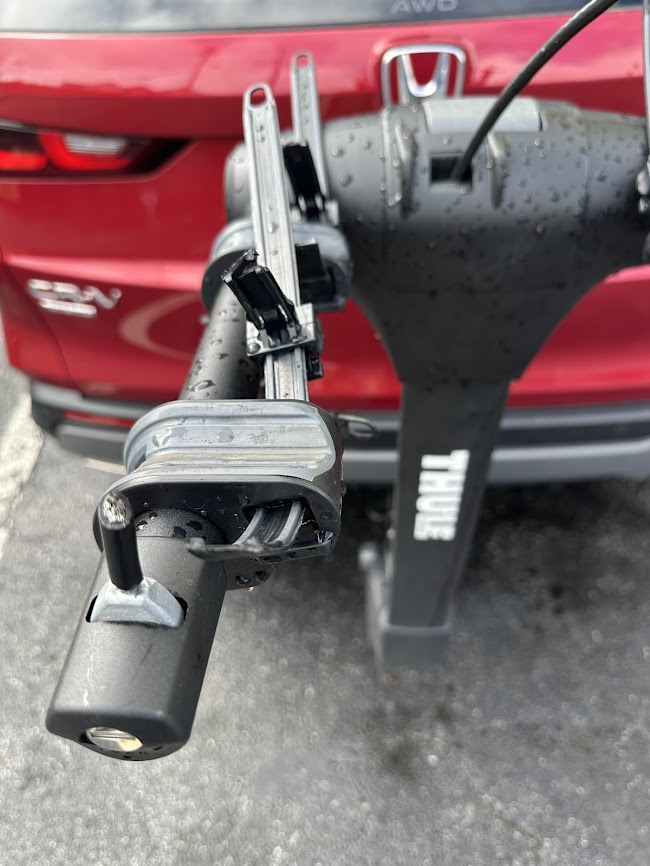
When I exited the back door of the hotel and noticed there were no bicycles at the rear of my car, a very strange feeling of impending catastrophe came over me. I looked at the cut cable and the snipped straps, then immediately entered the hotel, walked to the reception, and, in a serious voice, described my misfortune to the clerk. He seemed stunned and said this had never happened at this hotel. Standard defensive comments that I did not believe for a moment but asked him what he suggested I do. The first thing he told me was that the hotel has signs posted in many locations stating they are not responsible for any items in cars parked in their lot. He suggested that I file a police report but did not offer to provide a phone number or call the police himself.
I asked whether the hotel monitors its parking lot? Yes, of course, he said they have cameras around the hotel and showed me the twenty-four or so live videos showing on a TV screen above the reception desk. So, I asked, ” Can you roll through the video stream showing the area at the back door where my car was?” He said it may not show anything, contrary to what a normal person would expect, perhaps because they turn off the cameras at night. And perhaps the overnight receptionist does not watch the cameras. I found our entire conversation wholly unsatisfactory. But what surprised me when I walked back to my car to take pictures of the cut cable was that I met a policeman who indicated they patrolled the area because of frequent criminal activity. I filed a report with the policeman and then walked back to the hotel and conferred with the Assistant Manager, who expressed the mandatory sorry for the incident but emphasized again that the hotel is not responsible for objects in or attached to the car on their lot, although my property insurance may cover loss of personal assets.
I thought the security around the hotel was lacking, despite the cameras placed throughout the exterior. Cameras do not provide security unless they are monitored in real time.
At a bike store in Durham, NC, I bought a Kryptonite bicycle lock after consulting with the store manager. He explained that the only 100% way to keep a bicycle safe is to take it into the hotel where one is staying when traveling. His bike was stolen once, and since then, he has always taken it into the hotel when traveling. But locks help when stopping for a coffee during the day; people looking for a bike are unlikely to steal one with a lock on it during the daytime in a parking lot.
Armed with this information and the newly purchased lock, I started my car and noticed a Starbucks sign at a Barnes & Noble bookstore. It was time for a good coffee, so I entered the store. I thought it advisable to empty my bladder before buying a coffee and starting on Interstate 40 towards Winston-Salem, and searched for the washroom in the bookstore. The door had a digital lock. OK. I searched for an attendant to learn the code. While serving a customer, she handed me a small piece of paper with a five-digit code.
The code worked, but I wondered what the purpose of using the code was; would they refuse to provide the piece of paper to anyone? It inconveniences customers who must ask for the code. But the process also gives the attendants an opportunity to assess the customer requesting the code. Is that the purpose of using a code to access the washrooms? And how do the attendants assess whether to provide the code to the customers? Or do they think that if the washroom is not open, some customers would just walk out of the store? I found the system interesting, but couldn’t understand its purpose or how it would be used. It inconveniences customers and gives store clerks an opportunity to assess who wants to use the washroom. But would they ever refuse a customer the use of the washroom, and on what basis?
These are just a couple of ad hoc examples of security methods. But clearly, one purpose of security systems is to identify people who may commit criminal activity, cause damage, or be unsavory and/or undesirable to visit the premises. While monitored cameras can be useful, digital locks are less so without articulated policies on who is allowed to have the code.

 andrasthehun.ca