Cycling Through Jekyll and St. Simons Islands: A Historical Journey


May 4, 2026

Exploring the Historical Layers of Jekyll and St. Simons Islands in Georgia: A Cyclist’s Journey with Road Scholar. History is woven into nearly every stop and story on these remarkable islands, from grand clubs and pivotal events to deeply meaningful landmarks.

We cycled for a few hours each day, spending the rest of the time visiting historical and other unique sites across the two barrier islands.

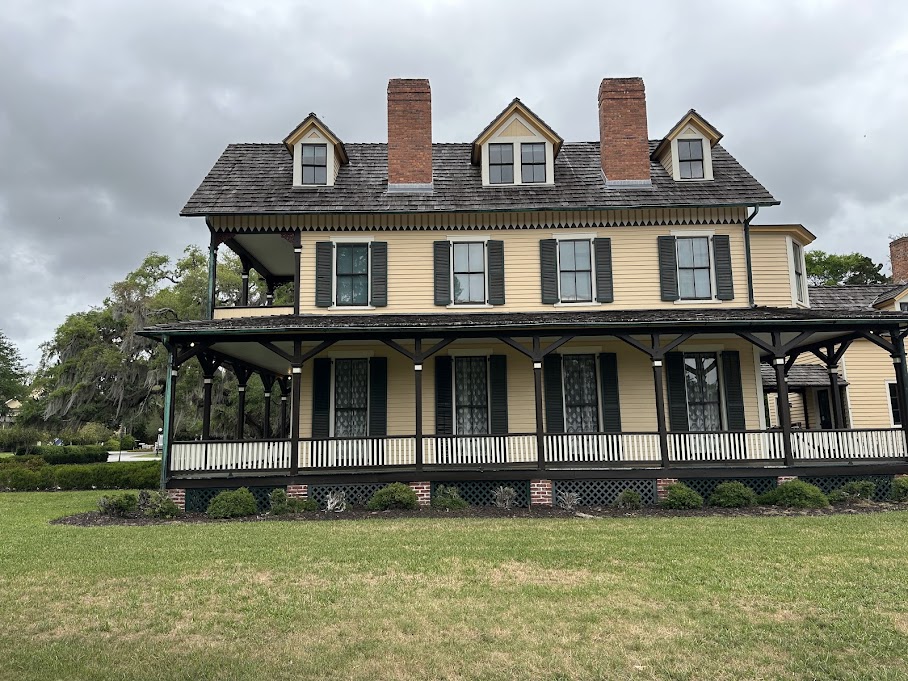
Among the many stops we made on Jekyll Island, the most fascinating story for me involved the Jekyll Island Club and its founders. The original owner of the Island, Eugene du Bignon, a Frenchman, sold it to New York investors looking for a wintering place for hunting and recreation in 1886. Fifty shares were sold to industry elites in New York, including the Morgans, the Rockefellers, the Vanderbilts, and other titans of industry. Joseph Pulitzer was one of the original owners as well. He built his fortune publishing the St. Louis Dispatch-Post and later the New York World. A hotel was built, and some shareholders also built “their cottages,” which measured up to 10,000 square feet. The cottages had no kichens, all the people ate at the Club.
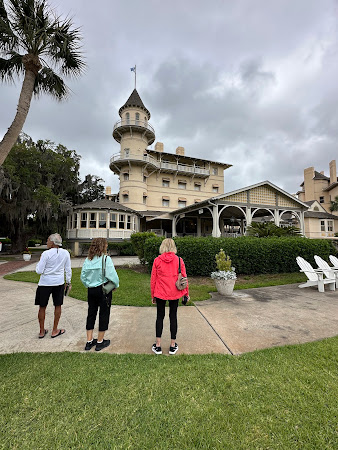
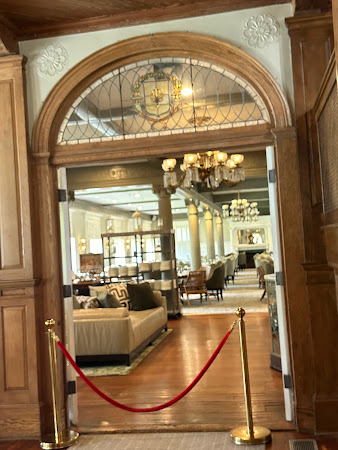
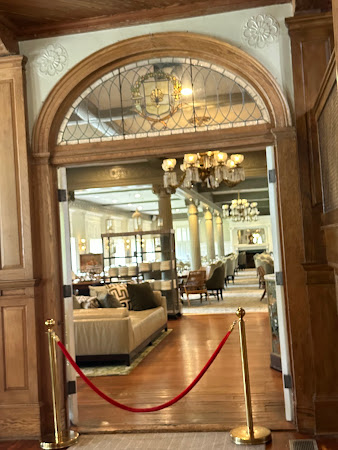
The Jekyll Island Clubhouse and the dining room. Below are two cottages.
Among the Club’s many noteworthy events was a 1910 gathering of American financial leaders, who drafted legislation that would later serve as the foundation for the Federal Reserve system.

The depression impacted the industrialist owners of Jekyll Island and their use of the Club diminished. Also, travel opportunities expanded in the 1940s, and the original owners’ descendants lost interest in Jekyll Island and the Club. After the Club closed in 1942, the Island was expropriated by the State of Georgia in 1947 for $647,000, designated a historic landmark, and turned into a State Park managed by a Governor-appointed Commission.

The architecture of the Clubhouse is in the Queen Anne style, with a typical four-story turret, wraparound porches, and complex rooflines. The interior is in the Gilded Age style, with luxurious furnishings that made me think about how the ultrarich lived in the late 1800s and early 1900s. Thwae Clubhouse is a magnificent building in my opinion and is open as a luxury hotel today.

Turning to another chapter of the island’s history, the story of the Wanderer stood out. This luxury schooner, built in 1856, was converted into a slave ship two years later. Businessmen brought over more than 400 slaves from the Congo in 1858 to Jekyll Island and sold the slaves in the South, that was against federal law since 1808 in the United States. The businessmen were indicted but not convicted, and the ship was seized by the Union Navy and later sunk by Cuba. The Wanderer Memory Trail on Jekyll Island relates the story of the slaves brought over from Africa. I found the exhibits along the trail fascinating, espemcially the musical instruments and the foods the black people brought over from Africa. Walking along the trail and listening to the audio stories gave me a bad feeling.

On St. Simons Island, two key points of interest drew my attention. First was Harrington House, which was once a one-room schoolhouse for black children in grades 1 to 7. Inside the building were pictures and artifacts related to the schoolhouse’s operation, as well as information about the students who attended. After the Brown v. Board of Education decision in 1954 (the desegregation legislation), the school closed, and the students were transferred to the wider public school system in Brunswick. The school docent was from the local community and had vast knowledge of the school’s history and explained that the island’s black population has decreased due to gentrification, falling from over 80 percent to just 1 to 2 percent of the current 13,000 residents.

The island’s past also comes alive at Fort Frederika, built in 1736 by James Oglethorpe. Now a National Monument, the fort was at the heart of 18th-century debates between Spanish and British governments over lands south of Savannah. Oglethorpe asked the King for a land grant to establish a colony, to serve as a defense against the Spanish. Like civil war sites, the Fort Frederika National Monument is a grassy field today with remnants of buildings and ramparts.

Oglethorpe was a visionary, and in 1736, he laid out a town, a utopian kind of village with streets forming a grid pattern, giving each resident a 50-by-100-foot piece of land on which to build a house and a fifty-acre site for agricultural uses. And he brought over from England indebted people in prison as colonists.
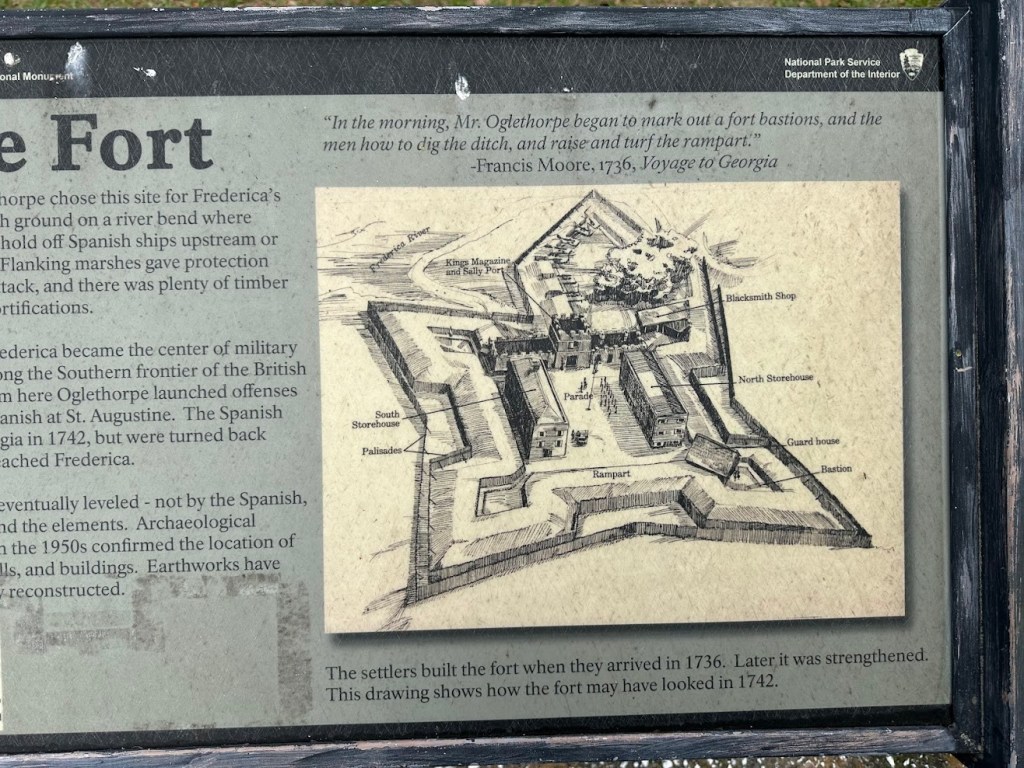
Fort Frederika.

I learned that the houses were built with “tabby”, a material made of crushed seashells, mixed with sand and water, the combination of which resembles concrete.

Before concluding my journey, I visited another unique destination: the Georgia Sea Turtle Center on Jekyll Island. It is a hospital for sick turtles as well as an educational and research center. I learned that turtles lay hundreds of eggs a few times a year, but only after reaching 30 years of age; after that, they lay eggs every second year up until they die, which might be at 100 years of age. But only one egg will grow into a full turtle out of 3,000 eggs!

The expert also explained that after the eggs hatch, the baby turtles are guided by moonlight to find their way into the water. She advised us not to use flashlights at night when watching the move of the turtles because that may confuse them and lead them away from the water.
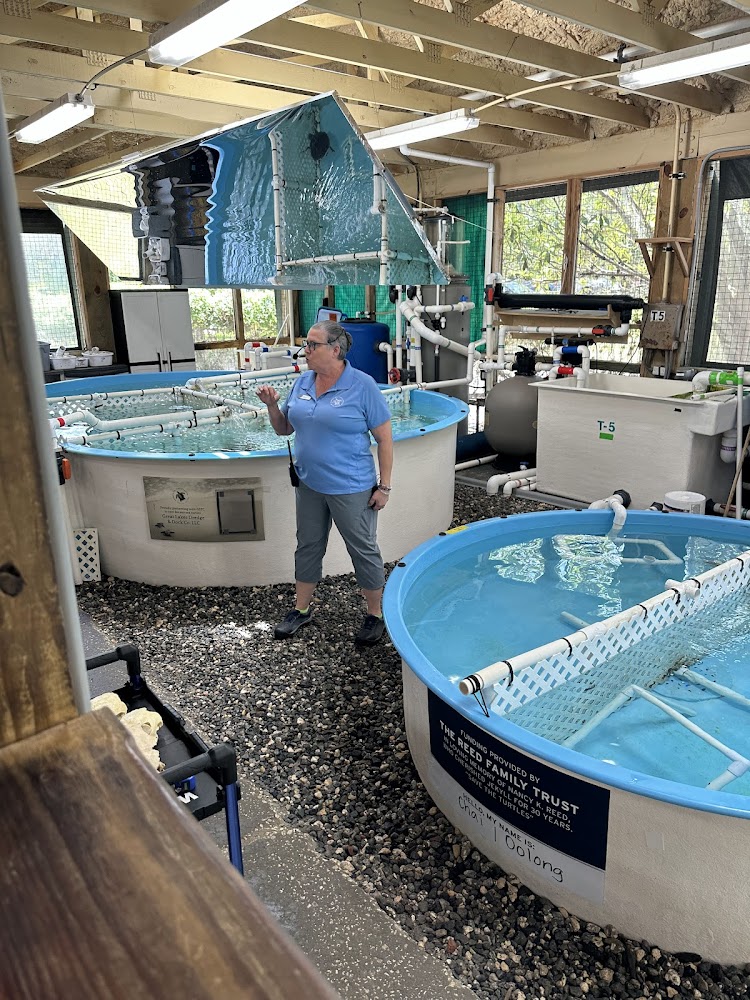
Tanks with recuperating turtles.

In addition to listening to an expert on turtles describing their lives, we observed technicians examining a turtle in a lab, behind a window. Next to the exhibition space on turtles was an industrial warehouse, filled with huge tanks housing recuperating turtles. Interestingly, there was only one turtle in each tank. Apparently, turtles are solitary animals, and if more than one is in a tank, they attack each other. Most of the turtles in the tanks came from Cape Cod; the cold water at the Cape caused hypothermia in turtles and were brought to this hospital for recuperation.

Visiting the two barrier islands offered a unique window into American history—from colonial times, through the Civil War and Gilded Age, to the civil rights period. The experience reminded me how these islands encapsulate the evolving story of the region, illustrating why their preservation and interpretation matter so much today.
Snow’s Impact on Ottawa Life and Art at the Gallery


February 20, 2026

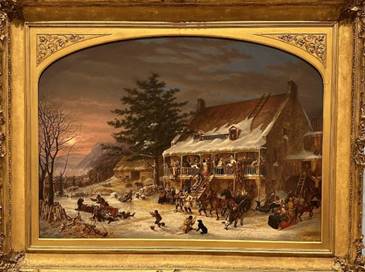
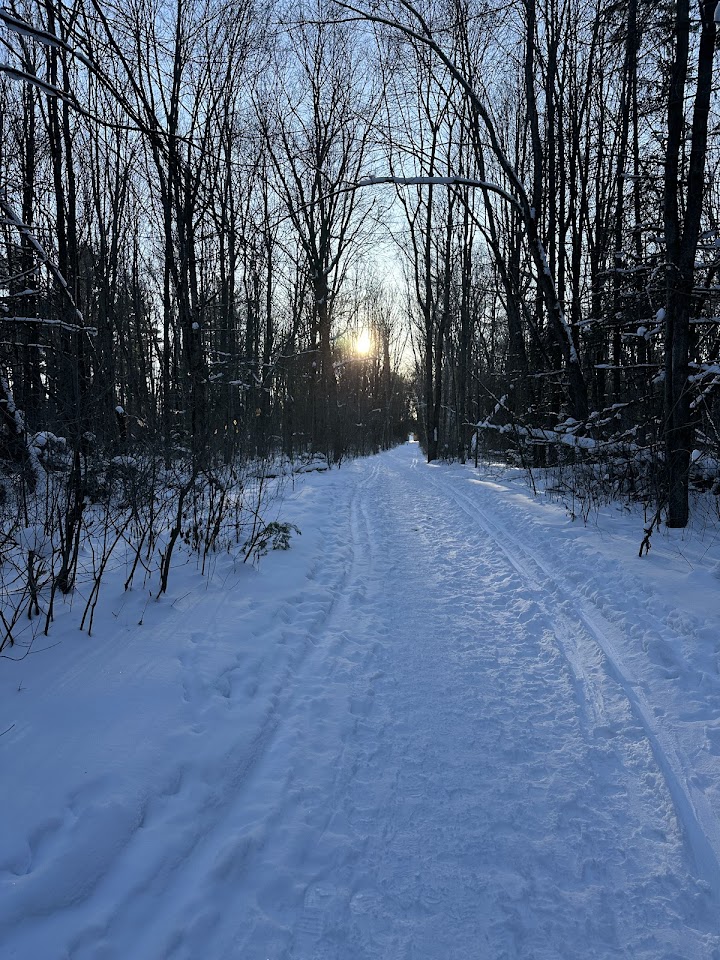
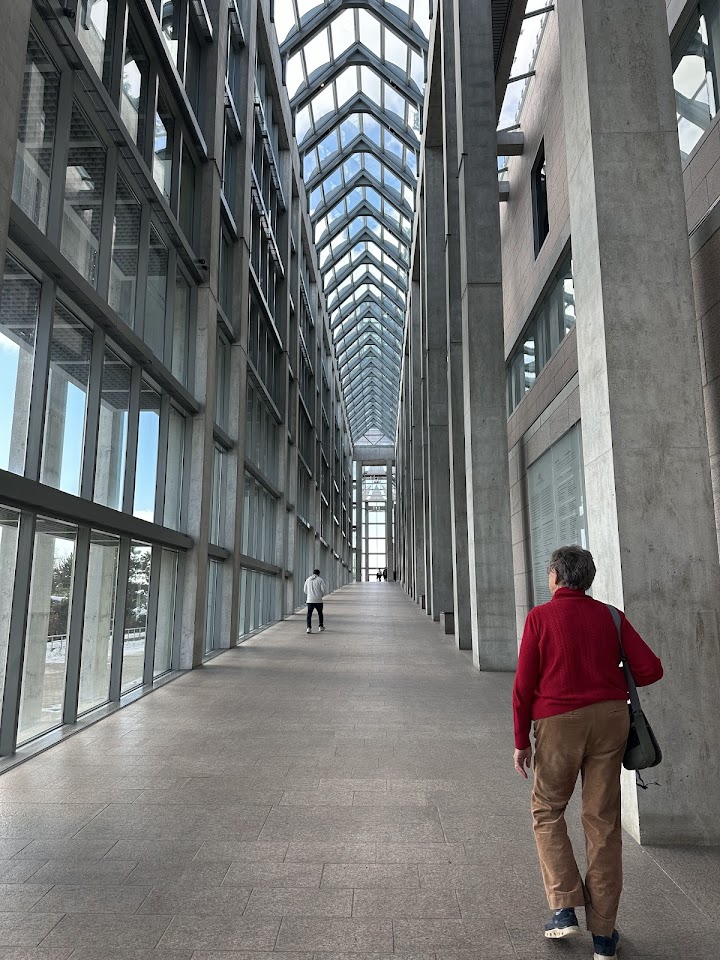
Walking along the snowy pathways behind the Sportsplex brought to mind the snow-themed exhibit currently at the National Gallery of Canada. Drawn by memories of past visits and the Gallery’s dramatic architecture, we decided to visit the exhibit.

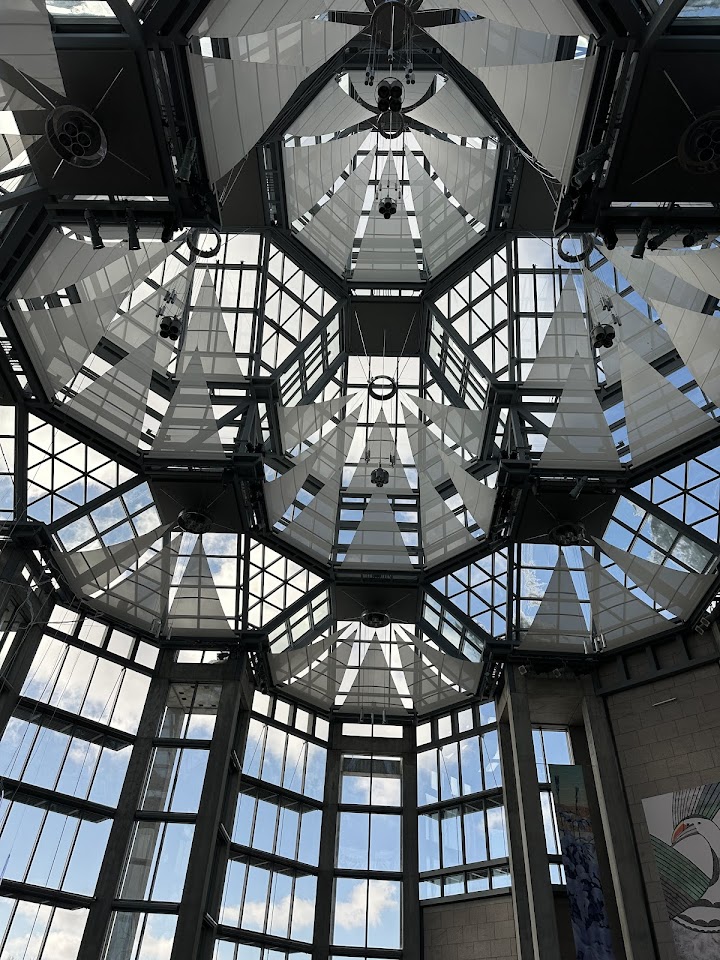
The entrance to the galleries is via a long, upward-sloping hallway with a towering glass wall on the left. The building has an almost gothic feel, when walking up the hallway toward the impressive great room, which features an intricate ceiling with an open design. Notably, the building’s design was the result of an international competition won by Moshe Safdie, a renowned architect and McGill University graduate in Montreal. Safdie is a Canadia Israeli, and US citizen.

Inside, the theme of snow was immediately evident. What color is snow? That question on a flyer greeted us at the National Gallery. Melting snow on my driveway revealed shades of grey, blue, and yellow as the sun set. Walking the snowy paths in the park, I noticed various colors on the ground—especially where people had walked dogs. Snow displays many colors, from sunny to cloudy days and into the night.

Reflecting on the exhibit, I realized what a great idea it was to spotlight snow, as it defines our winters for three months of the year. With snow enabling so many activities, skiing, sledding, and snowball fights, it’s central to our outdoor lives and fitness. Exhibiting snow photos is a perfect way to celebrate the true spirit of our winters.

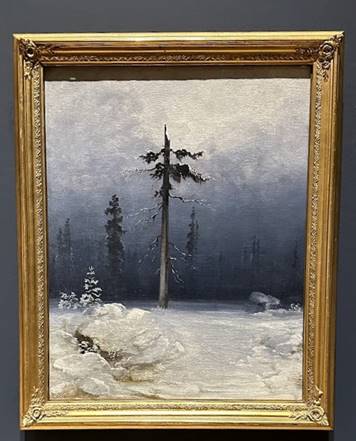
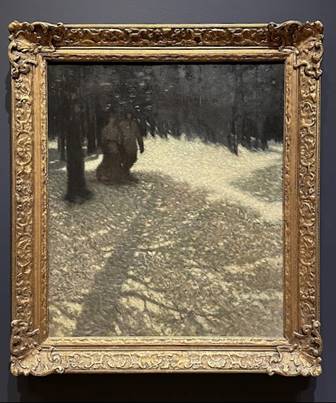
This appreciation for snow was evident throughout the Gallery, which featured over 160 pictures with snow on them. The Gallery curated paintings of Canadian artists, in collaboration with other European museums. Noteworthy were pictures of the Group of Seven landscape artists, Canadian native artists, Swedish and Norwegian painters, and pictures by Monet and Pissarro from France. Among the many rooms, some showed daytime scenes, and others showed night scenes.

The snow scenes were cleverly displayed: daytime paintings were shown in white rooms, which felt cold, while night snow scenes were in black rooms with dim lighting, creating a unique atmosphere for the exhibit.

Snow dominates winter life in Ottawa, affecting daily routines. Residents carry extra shoes to swap for boots indoors, wear parkas and toques outside, and equip cars with snow tires, scrapers, and salt. Snow accumulates along streets, making clearing the driveway essential. When I moved from Washington, DC, our first Ottawa winter brought over ten feet of snow—I had to shovel just to open the door. Over time, we adapted and came to enjoy it.

Understanding Misinformation on U.S. Travel


January 30, 2026

Amazing how much misinformation permeates reality today. My coffee buddy told me not to enter the United States because I’ll have trouble at the border. I told him I am going to visit friends and family in the Carolinas and Florida, which triggered a long rant from him about why he does not visit the US these days. To cut a long story short, we had no trouble at all at the border. The official at the gate wished us a good trip south after a brief, friendly conversation.

Why did my friend have a negative impression of travelling south? He must have seen too many headlines about border agents harassing tourists, read too many articles on the internet about tight immigration policies into the US, and probably seen too many digital media videos on how US immigration agents manhandle travellers.

Confirming the bad publicity surrounding travel to the US, I met a Dutch fellow in the Everglades in Florida who said that travellers from Europe must hand over their cell phones to US immigration officers for a scan of their digital accounts to see if anything there reflects negaitvely on President Trump. If any such messages are found on their phones, they may be banned from visiting the US for a couple of years, he told me.

In our conversation, I learned that he has a condo in Naples that he has not been able to rent due to the significant decline in visitors this year that he attributed to the current US official position towards foreigners and visitors. I read recently that there is a proposal to launch a search program for critical views of Trump on the digital accounts of US visitors, but it is not in effect yet. This type of misinformation is pervasive and spreads by word of mouth.

Misinformation also happened in my family. When we travelled to Florida years ago, my mother, who lived in Vancouver, British Columbia, warned us against swimming off the coast of Florida for all the crocodiles there. Well, there are no crocodiles where we traveled. I do not know where my mother obtained her information.

The subject of how much people are misinformed is discussed in a recent book by Hans Rosling, entitled “Factfulness”. The author conducted numerous surveys worldwide on people’s opinions and knowledge about common topics such as population size and growth. The author concluded that people are ignorant, less than thirty percent were the correct answers in his surveys.

Rosling describes numerous reasons for people’s ignorance; for example, people tend to project the future based on straight-line projections. The world’s population doubled or grew from four to eight billion over the last fifty years. Projecting the doubling of the population over the next fifty years would bring the world’s population to sixteen billion by 1976. The author’s projection, based on economic, family formation and fertility trends, projects the world population peaking at around 11 billion people.

Rosling’s work is data driven. He cites statistics from many sources (such as those from the United Nations) supplemented by the surveys he has conducted. I am not sure that data and surveys together provide an adequate picture and would suggest that, in addition, direct observations may help shed light on reality. For example, if you watch the major TV channels today, you cannot avoid seeing the chaotic environment in Minneapolis. So, you may jump on the idea that Minneapolis is typical of the entire US. But the US is a big country, and life goes on without federal agents interfering in most places.

We traveled in December to North Carolina, Florida, and Tennessee, and have not witnessed any civil disruptions. Stayed a few days in Winston-Salem, Durham, and Charlotte in North Carolina, Orlando and Everglades City in Florida, and Decatur, Tennessee, and had a great time meeting friendly people. Real-time experience defies what you see on TV.

I am not saying that my experience provides an accurate picture of what is going on in the US. What I am saying is that, in addition to what you see and read in the media, it should be complemented by other sources of information, including personal observation and common sense.

And reflecting on my view of life in the US is but a small part of reality. We traveled in a few cities, met a few people, and I’d be the first to admit that my observations are limited in number. But what I learned is that what you see in the media is just one part of the big picture, and the best way to find out what is going on is to travel, to gain a better picture of reality.

Thrilling Kayak Adventure in Florida’s Mangrove Tunnels


December 23, 2025

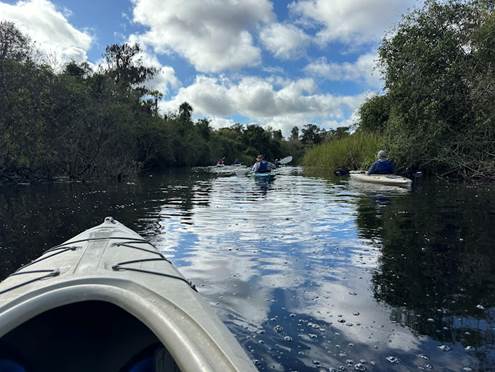
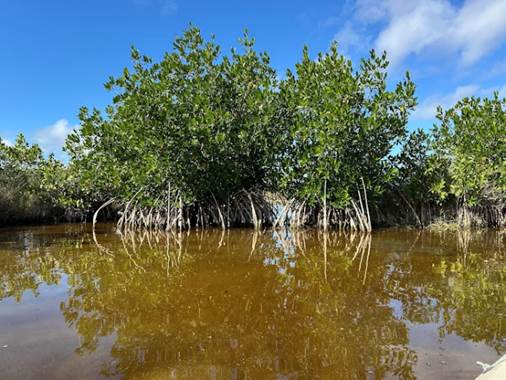
The trip started innocently enough. Ten of us in single kayaks, equipped with two-way radio communication with our guide, paddled up a narrow waterway in the Everglades in Florida. We observed ospreys, ibises, and gators, taking a leisurely pace, enjoying the scenery until we entered the mangrove forest.

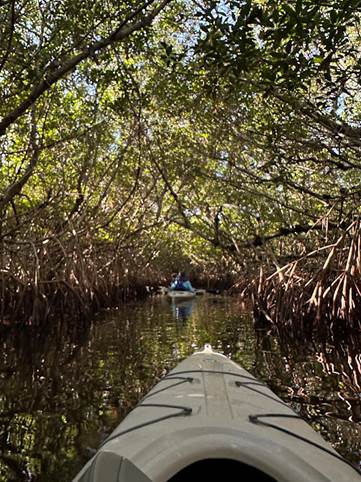
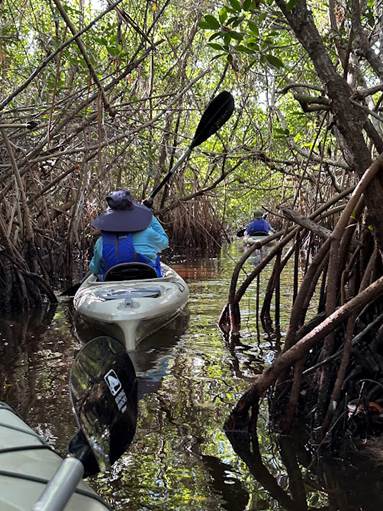
The leader’s voice came on in my earbud, telling us to follow him as he disappeared into a mangrove bush. I paddled into the narrow opening, struggling with my paddle; the passage was too narrow. There were three options for paddling in the tunnel, the leader advised: we can try to use the paddle and fight the mangrove bushes, we can take apart the paddle and use the canoe J-stroke with the half paddle, or we can follow the Tarzan method by grabbing the branches and pushing ourselves ahead. I took apart my kayak paddle using it as if I were in a canoe.

It was rough going, navigating the mangrove branches protruding in all directions, while the waterway was only a few feet wide. And I did not expect to be swatting mosquitoes at this time of year. I tried to anticipate the quick turns in the tunnel while grabbing my hat, which was caught by the branches above. My initial frustration with our progress gave way to a sense of challenge. I began to enjoy the challenge of avoiding the branches, using my skills to navigate the narrow, winding passageway. The overhanging branches provided shade. When we exited the tunnel, the hot, bright sun felt like a sudden climate shift.

But our relaxation was short-lived; we approached a second mangrove tunnel, followed by a third, before the leader announced that our trip was not a loop. We were returning through the three mangrove tunnels. By now, I enjoyed the fight my paddle was having with the mangrove forest as we went through the tunnels.

I should not have been so sanguine. If you ever paddled in lake country, you probably experienced the feeling of seeing shorelines that look identical. Getting lost is easy. When I emerged from a tunnel in a lake and looked for a way forward, I did not see any opening. I took the largest gap in the mangrove forest and got tangled up in the forest, paddling only a hundred yards forward with no exit. I was lost. I tried to back up, but the 3-foot wide waterway did not allow a 180-degree turnaround for a 12-foot kayak. So, I paddled backward with great difficulty, not seeing the mangrove branches behind me even though I turned as much as I could. Two other kayakers followed me into the mangrove branches, and seeing that I was stuck, they tried to back out as well.

Once we all escaped from the jungle-like forest back into the lake, the leader spoke to us via the earbuds when he discovered that three kayakers were missing and described where the next tunnel began.

The other challenge occurred when we met another group of kayakers coming our way; we had to move to the side and grab a branch to let them pass. They were passing us within the narrow waterway, with less than a foot separating our kayaks. Surprising to me were some of the sea kayaks the other party had, which were 14 feet long; it must have been challenging to paddle those through the narrow, curvy tunnels.

This trip was not for beginner kayakers. First of all, one had to be in shape to sit in the kayak and paddle for five hours. Second, there is only so much liquid a bladder can hold: I cut back on my coffee in the morning and limited my water intake despite the hot weather. Third, one had to have had some experience kayaking; this was not the time to learn how to use a kayak paddle. I also found it extremely useful to know how to use a canoe paddle when I took apart my kayak paddle and used it as if I were canoeing.

Although paddling the mangrove tunnels seemed challenging and frustrating at first, I came to enjoy it over time. I would certainly recommend it for adventurous people.

Cultural Insights on Icebreaker Introductions


December 18, 2025

Our group of twenty people sat down for our first night’s dinner at our Road Scholar program. Many of us were tired from a long drive or flight to the southwest corner of Florida, to the Everglades. As an icebreaker, our leader asked us to stand and introduce ourselves: our name, where we are from, and what we were looking for in the kayaking program for the coming week.

I looked around with curiosity; what kind of characters indulge in kayaking for hours each day? There were mostly grey hairs, with more women than men. Seniors, although some looked youngish. Later, I discovered that the “youngish” people were 60 or older.  

Although it is useful to know everybody’s name, I could not remember them ten minutes later. But it was interesting to learn about where they came from: many from Florida, but others were from Washington, Wisconsin, Pennsylvania, Indiana, and Maryland. We were the only ones from Canada.

One talkative person at our table gave us a blow-by-blow account of his life without prompting. He described his career from studying microbiology, to serving in the air force, and then using the GI bill to become a Physician’s Assistant. I thought it was useful to have a medical person on hand should anyone get hurt kayaking.

Then this extrovert asked another fellow at our table what he had done before retirement. Surprisingly to me, the answer was “test pilot”. Wow, I thought, that must have been an interesting career. When I talked with the “test pilot” later, I learned that he participated in 16 Road Scholar programs, which was an eye opener for me about its popularity.

We discussed the Everglades’ fauna and flora during kayaking. For example, we spent time discussing gators, their growth, and the danger they pose to humans: I learned humans are not in their food chain. And we learned about the Brazilian pepper tree, an invasive species that harms mangrove growth but very difficult to contain.

A genuinely fascinating surprise was discovering one participant, who taught maths before, but now was a Road Scholar leader for walking/hiking tours out west. In conversation with him, he mentioned that his icebreaker includes, in addition to the three questions we responded to the first night, the age of the participants, their middle name, and something unique they accomplished or special about them. That made me think how I would have responded if we were asked these questions.

Why would I volunteer to reveal my age to a group of kayakers I just met? What would that add to their impression of me? If they found out how old I am, would they think I would slow them down? And if I appear younger, would they accept me? Would that make any difference? I am already a participant. So, what purpose would it serve to reveal my age?

The other icebreaker, mentioning one’s middle name, was also curious. What do middle names signify? My middle name is my godfather’s first name, and that was the tradition in my family, coming fron a central European culture. Kathy’s middle name is her grandmother’s family name to show family lineage; that is part of Celtic culture. She comes from Wales. Is the goal to offer extra details, possibly about ethnicity? I am not sure that this information is valuable to a kayaking group. And what would happen if someone had no middle name?

 Others may not want to reveal their middle name for religious reasons. For example, my good friend, Zane, used his middle name all the time instead of his first name. I had known him for years, before I discovered that his first name was Mohamed. I think he used his middle name to avoid being stereotyped as a Muslim with all he complications North Americans have today with the religion. I also think asking for middle name is a mild incursion into privacy matters.

In conclusion, icebreakers should be simple; a name, the location where one lives, and perhaps one detail about you, such as your hobby, favorite music, or author. Or the question the leader asked the first night: what do you want to get out of this program. Then let people talk to each other to discover additional information about each other, should they so desire.