Life in my Early Years


April 7, 2026

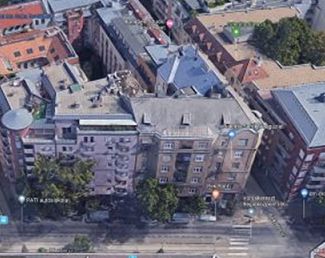
I’m unsure of my earliest memory. It may have been at age two or three. What I reall is that we lived in an apartment on the fourth floor, with the building facing a major street. I remember the address: 39 Mester Ucca (Expert Street) in Budapest, Hungary. It’s odd I remember the address but few other details, perhaps my parents ensured I knew it in case I got lost.
An early, clear memory I have is of the windows in the apartment. We covered them at night to darken and hide the building from incoming Russian bombers. As soon as the sirens shrieked, we rushed down into the basement for security. It occurred frequently. It was in 1944, during World War II.

The basement bunker was cold. People from the apartments huddled together, some on mattresses, others on the floor. I was scared as German soldiers and Hungarian Nazis searched for Jews to deport. The bunker was full; some may have been Jewish. At four, I didn’t understand the situation but saw fear. I pretended to sleep and waited for the soldiers to leave. The memory of Nazis searching for Jews in the bunker has stayed with me. I must have heard adults talk about it and seen soldiers question people. At age four I saw what was happening with no understanding of the context.

The Nazis also came upstairs to the apartments searching for Jews. We were warned by messages from each floor as they moved up. We awaited them with fear. My aunt Rose hid behind the china closet, which was placed diagonally across the corner to provide space for her to stand, hide, and wait until the Nazis left.

After these events in Budapest, my father, a medical doctor, was drafted into the Hungarian army, which was aligned with the Germans. We then all moved to an army camp in Szatmarnemeti, which was part of Hungary at the time but is now Romania. Father served on the military trains running in Ukraine. During our time at the camp, we lived in a modest military house, under the watch of a soldier. With the war ongoing, I vividly remember Russian planes swarming over the camp daily. Whenever the sirens alerted us to incoming bombers, the soldier would practically throw my brother and me into a four-foot-deep hole in front of the house, covering it with plywood. We shuddered inside, listening to the planes overhead, until the all-clear siren sounded, when the soldier pulled us out.

I cannot recall how long we stayed at the camp in Szatmarnemeti before returning to Budapest. After our return, Mother took my older brother and me out to a park a few blocks away on most days. This park had some play equipment: a sandbox, swings, and a rotating plaything. We walked there, an open, green space surrounded by concrete. The area where we lived had apartment buildings up to six stories high along the major streets, and two-story buildings on the local streets.

Our building had an elevator that never worked. It was in a cage-like structure with the staircase winding around it. We raced up four floors with my brother, always trying to beat each other to the apartment. The building was L-shaped. The entrance to the apartments on each floor was via an open balcony running along the inside of the building, facing a courtyard.

In terms of the neighborhood where we lived, I remember that gypsies lived in a large housing block, which my parents advised us to avoid. The housing block was doughnut-shaped with an entrance from the street. Inside was a courtyard surrounded by two-story buildings, occupied by gypsies who, I understood, lived communally.

The first level of apartment buildings along major roads housed commercial businesses, typical of European cities. A tramway ran on Mester Ucca. The neighborhood was noisy, and we rarely ventured far except when we moved to Szatmarnemeti.

I cannot remember where I went to school. No friends or images of a school building come to mind. Still, I must have attended school because we stayed in Budapest until I was eight years old, when my father became the director of the local hospital in Sopron, and we moved there.

Overall, I cannot say that I had a good time in my early life. But I did not have a bad time either. We never went without food. And I do not recall having friends or playmates who came to our apartment or whom I visited.

Beyond these hazy memories, I can’t recall anything unique. I can’t picture the room I slept in, though I likely shared it with my brother. I don’t recall specific toys or a single friend from eight years in that apartment. My most memorable early experiences relate to World War II.
Life Experiences fit Together like a Mosaic….Sometimes


April 1, 2026

Three recent experiences connected in my mind last week. The pieces clicked, as in a mosaic. These three experiences led me to stories about people who saw demand for services that were unavailable. Their instincts led to successful companies.

The first experience was a talk I went to hear by a business professor. He introduced himself by describing his usual pitch to students, which is to ask them what motivates business. He said the answer is usually money. He responds to that view by describing a situation, a business transaction: when he goes shopping, he wants to purchase specific goods, such as vegetables. Business is about buying and selling goods and services. Money is simply the vehicle that enables goods and services to change hands.

The next experience was speaking with a physiotherapist, who advised me to strengthen my aching legs. Without going into details, I may have something called lazy butt syndrome, or butt amnesia. Muscles can lose their ability to function properly, so it’s important to use targeted exercises to help them remember how to work.  During our consultation, we talked about cycling and bike racks. I mentioned my intent to buy one. She suggested I visit Rack Attack, a store specializing in racks for cars that carry bikes, skis, and other outdoor gear.

The third experience was buying a hanging bike rack from Amazon, which came from Rack Attack. The rack came in a box, partially assembled. Not fully understanding the assembly instructions, I drove over to Rack Attack and asked for help. The young assistant was excellent, showing me how to prepare the full assembly. Searching the store’s website, I learned that the founder of this chain emphasizes customer relations, focusing on the sales, installation, and maintenance of a variety of racks.

Reflecting on these three experiences, that took place in a couple of days, led me to think about what makes companies successful in business.

The very satisfying experience with Rack Attack made me look into the store’s history. Chris Sandy, the founder, worked at a bike shop in Vancouver, BC, Canada. He noticed that most racks did not fit the more aerodynamic car models, which lacked traditional rain gutters. Attaching sports gear racks to these newer cars was difficult. He decided to open a store catering to outdoor enthusiasts who carry gear in their cars. He started by selling products from Thule, Yakima, and others that fit newer cars.

The first store opened in 1996, and Chris quickly expanded by establishing stores in Toronto and other Canadian cities. In 2014, he sold his stores to Banyan Capital Partners, a private equity investor, to raise money for further growth. By 2026, Rack Attack had over 40 stores, with 30 in the US.

The Rack Attack story reminded me of the Running Room, a specialty store selling running shoes and related products. Running Rooms always have a running club. I used to run with them in Ottawa for years. Running with a group is motivating. You meet people with similar interests. On-the-road discussions fill time and take your mind off tired muscles.

John Stanton established the Running Room in Edmonton, Alberta, Canada, in 1984. He was a chubby food industry executive who needed to change his lifestyle for his health. Embarrassed by neighbors watching him try to run, he went outside at dawn to run. He could hardly run a block before sucking for air. But he persevered, became a runner, and opened a one-room store in Edmonton to sell running gear. The store was a huge success, and he expanded the Running Room stores across Canada and the US. Today, there are over 100 Running Rooms, with 8 in the US. The chain employs 1,300 people. John still works and manages the chain with his two sons.

Another example is the Tim Horton franchise. Tim Horton, an NHL player, sought a business after his hockey career ended. He tried several ventures—first, a burger joint, followed by a car dealership, and finally a coffee-and-doughnut shop in Hamilton, Ontario, in 1964. He imagined creating a community hub where people could mingle and enjoy coffee and fresh doughnuts. The idea proved successful: today, there are more than 6,000 locations in 14 countries, growth fueled by key mergers with Wendy’s in 1995 and Burger King in 2014.

These stories back up the business professor’s view of what business is: at its most basic tenet, it is finding an opportunity to sell a product people want. The money part is secondary; the priority is to fulfill an unmet demand for which people are willing to pay. And clearly, the business must be profitable in the long run, otherwise it becomes unsustainable. I would add that good service is also essential to sustain a company and an enthusiastic founder could be a catalyst for future success.

The question is, where can you find ideas for a sustainable business? I do not know that. But, in the high-tech industry, common wisdom says one out of ten startups goes bankrupt. One makes it. The rest struggle on.

In conclusion, it was worth attending the professor’s lecture; it made me think about what business is.

The Echoes of 1956 in Today’s Middle East


February 5, 2026

One stated aim of this Middle Eastern war is to help the Iranian people replace their current regime. As the argument goes, the Iranian economy is weak, and with the pummeling of the country by bombs, this is an opportune time for the people to take over and establish the form of government they wish to have. This situation feels familiar to me, I remember the Hungarian uprising of 1956, when the US encouraged the Hungarian people to take over their government, leading people to hope for support that never materialized.

Let me go back to my memories. In my youth, I tinkered with bicycles, and then built a basic crystal radio. I am talking about the 1960s; we have come a long way technologically since crystal radio.

The “people’s radio” with one channelwas the standard radio set in Hungary in the 1950s. the channel boadcast government propaganda and communist/socialist ideas, tracing their routes back to Marx and Engels. I learned that a “rheostat” could change all that, and I bought one at the local hardware store. Once I installed it into one of the “people’s radios, I was ecstatic and danced around in my room, hearing all the foreign stations (German, French, English).

Mind you, reception was not good; all the foreign channels except the Hungarian official channel were jammed. I discovered that reception was better at night, and the foreign channels moved to different frequencies to avoid the jamming. Of course, the jammers searched for the moving stations, but during the time the jammers discovered and logged on to the new frequencies, I heard music and news.

It’s important to understand that altering people’s radios was against the law, as was tuning in and listening to foreign radio stations. I am not sure how the secret police could monitor people listening to foreign stations, but illegal activities were punished by jail and torture, so just knowing that something was illegal was enough to deter such activity.

Aware of the political atmosphere, I did not tell my parents what I had done; in fact, they could have gotten into trouble by an accusation that they let their son engage in an illegal activity. So, I listened to my new device at night and hid the radio under my blanket listening to foreign channels.

And this is how I heard it: in Hungarian, Radio Free Europe (FRE), a US agency, advocating the overthrow of the then-current Hungarian government. And the voice on RFE encouraged the Hungarian people to organize mass demonstrations on Budapest’s major streets and to take over the government.

Behind the RFE messaging was the view of John Foster Dulles, the Secretary of State under President Eisenhower, advocating the overthrow of the government. Hungarians were ecstatic; they thought the US was about to help the revolution by sending soldiers and ammunition. And they waited. And waited. But help never came.

Reading historical notes now, I learned that although Dulles encouraged the uprising to move to take over the government, but he later changed his mind, considering that Hungary was not a potential ally and that assisting the uprising might antagonize the Russians. He was also preoccupied with the Suez Canal crisis happening at the same time. But he took the Hungarian situation to the UN Security Council, proposing a diplomatic approach to resolve the uprising. The Russians, knowing the Americans would not interfere, came in with tanks on November 4, 1956, and crushed the uprising, which started on November 23.

The Russian tanks had taken a few weeks to reoccupy the country. By mid-November the situation appeared hopeless, and my brother and I walked out to Vienna (Austria) on the highway. Subsequently, we found our way to Manchester (England), and finally, to Vancouver, Canada, as refugees. I wonder how many Iranians are considering, or able, to leave their country.

All these memories came back when I heard the US encouraging the Iranian people to take over the government. Clearly, Hungary and Iran are vastly different countries; one has a population of 9 million, while the other has 92 million. Also, Hungary did not have nuclear ambitions. But inciting local populations to rebel and take over their government is a bold and drastic initiative with major consequences. The lack of follow-up to keep the uprising going, encouraged by the messaging of Radio Free Europe, was a crushing disappointment for the Hungarians in 1956.

Snow’s Impact on Ottawa Life and Art at the Gallery


February 20, 2026

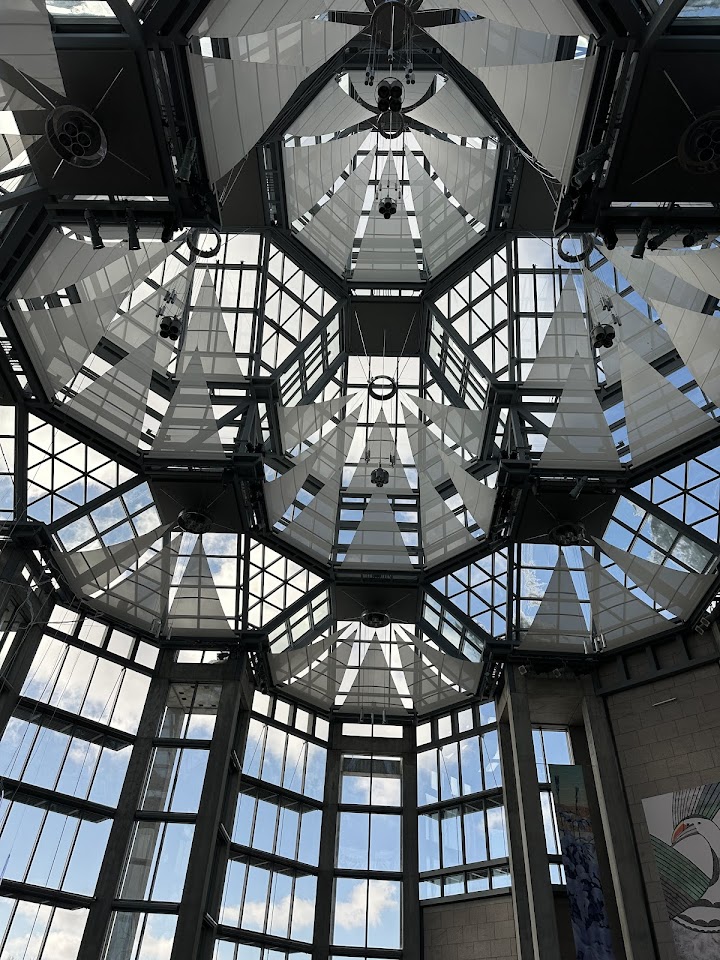
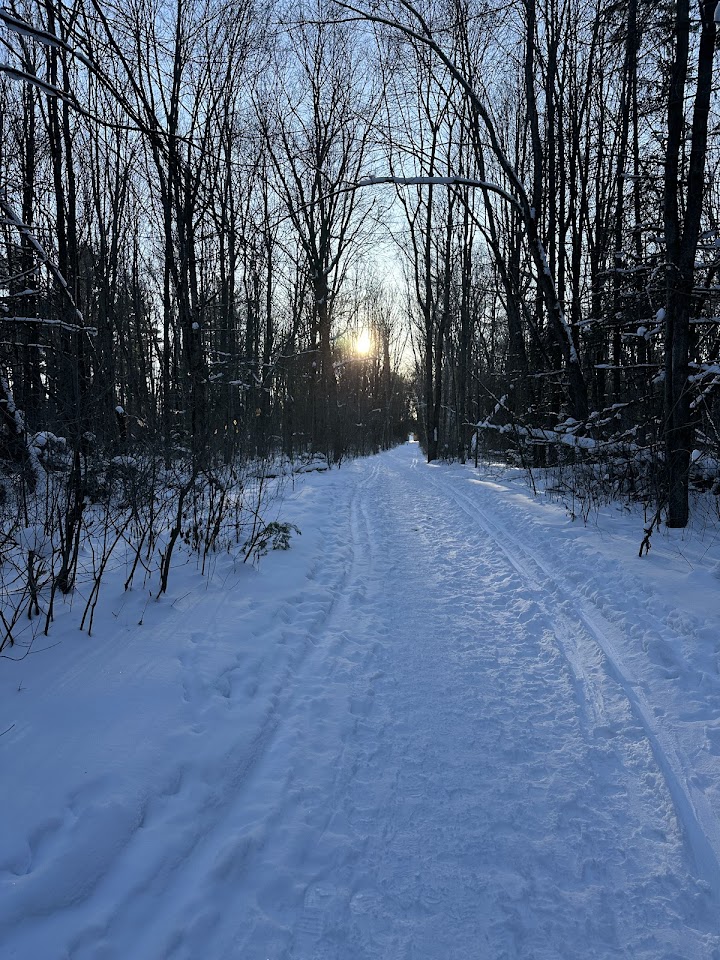
Walking along the snowy pathways behind the Sportsplex brought to mind the snow-themed exhibit currently at the National Gallery of Canada. Drawn by memories of past visits and the Gallery’s dramatic architecture, we decided to visit the exhibit.

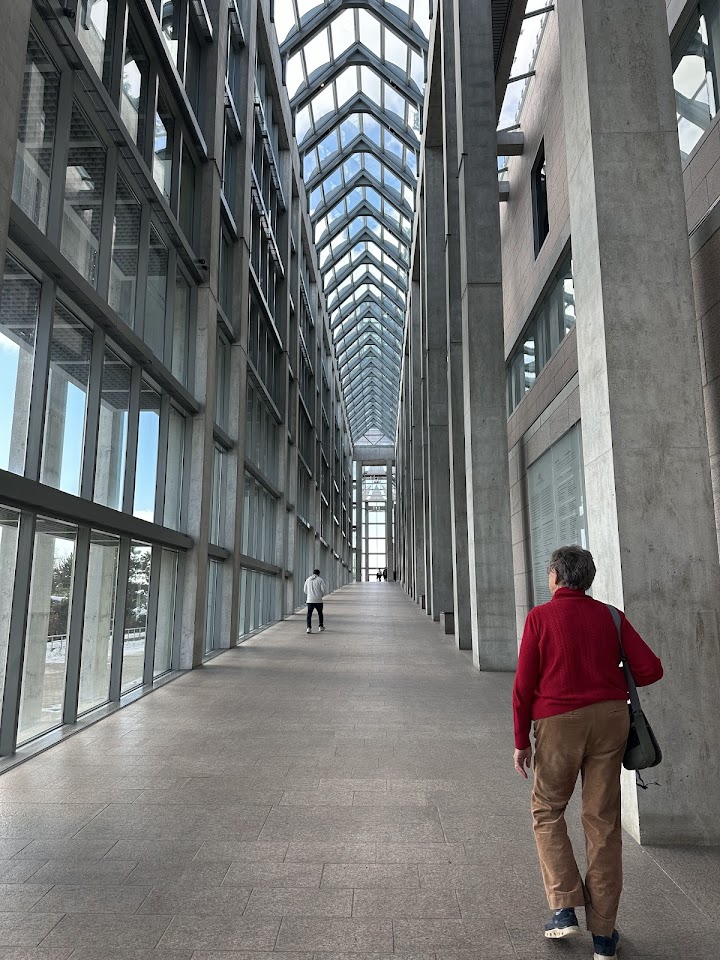
The entrance to the galleries is via a long, upward-sloping hallway with a towering glass wall on the left. The building has an almost gothic feel, when walking up the hallway toward the impressive great room, which features an intricate ceiling with an open design. Notably, the building’s design was the result of an international competition won by Moshe Safdie, a renowned architect and McGill University graduate in Montreal. Safdie is a Canadia Israeli, and US citizen.

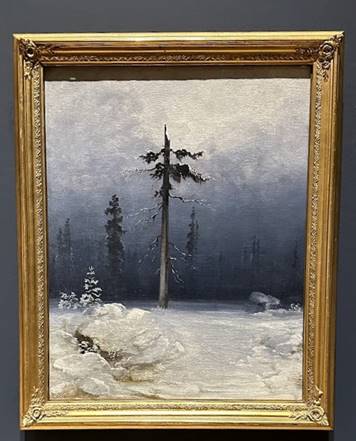
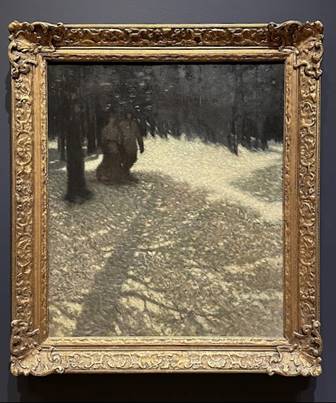
Inside, the theme of snow was immediately evident. What color is snow? That question on a flyer greeted us at the National Gallery. Melting snow on my driveway revealed shades of grey, blue, and yellow as the sun set. Walking the snowy paths in the park, I noticed various colors on the ground—especially where people had walked dogs. Snow displays many colors, from sunny to cloudy days and into the night.

Reflecting on the exhibit, I realized what a great idea it was to spotlight snow, as it defines our winters for three months of the year. With snow enabling so many activities, skiing, sledding, and snowball fights, it’s central to our outdoor lives and fitness. Exhibiting snow photos is a perfect way to celebrate the true spirit of our winters.

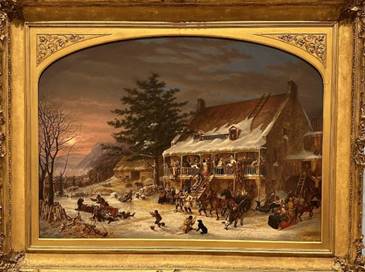
This appreciation for snow was evident throughout the Gallery, which featured over 160 pictures with snow on them. The Gallery curated paintings of Canadian artists, in collaboration with other European museums. Noteworthy were pictures of the Group of Seven landscape artists, Canadian native artists, Swedish and Norwegian painters, and pictures by Monet and Pissarro from France. Among the many rooms, some showed daytime scenes, and others showed night scenes.

The snow scenes were cleverly displayed: daytime paintings were shown in white rooms, which felt cold, while night snow scenes were in black rooms with dim lighting, creating a unique atmosphere for the exhibit.

Snow dominates winter life in Ottawa, affecting daily routines. Residents carry extra shoes to swap for boots indoors, wear parkas and toques outside, and equip cars with snow tires, scrapers, and salt. Snow accumulates along streets, making clearing the driveway essential. When I moved from Washington, DC, our first Ottawa winter brought over ten feet of snow—I had to shovel just to open the door. Over time, we adapted and came to enjoy it.

Exploring Contemporary European Man in Szalay’s _All That Man Is_


February 13, 2026

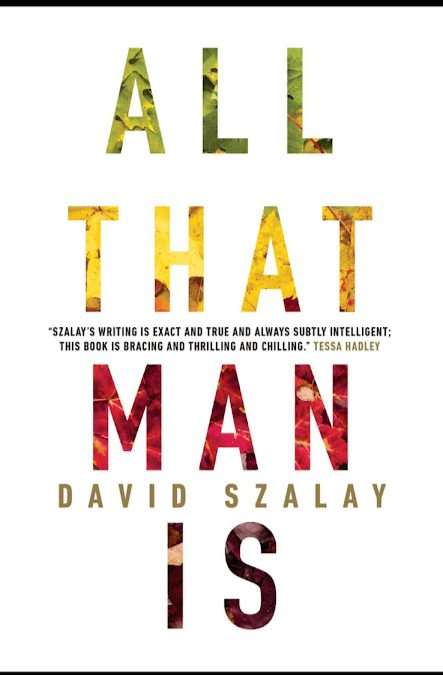
The book All That Man Is by David Szalay has short stories about European men. The stories unfold chronologically from April to December, the first story starting with the youngest man, who is 17, and each subsequent story featuring an older man, culminating in the last story, which features a man who is 73.

The book has nine stories, starting with two students sightseeing in Berlin and Prague, followed by a young Frenchman vacationing in Cyprus. The subsequent stories are about a university student and his girlfriend driving ftrom Oxford, England to Poland; a bodyguard with his boss and the boss’ wife from Budapest working in London; a Danish journalist digging up dirt on a politician in Amsterdam; an English realtor selling condos in the Swiss Alps; an Englishman living on the Croatian Riviera; a Russian oligarch trying to commit suicide on his yacht on the Mediterranean, and a retired British diplomat living in Italy.

The stories center on white, heterosexual European males traveling or living in a country other than their home in Europe. Does this group of characters represent what it means to be the typical European man today, as the book’s title suggests? I think the author is exploring whether these men collectively illustrate a modern archetype.

I really enjoyed the book. The stories are compelling with well-written plots and fascinating characters whose problems feel real. The smooth language is punctuated by dialogue, balancing longer passages introducing the characters and describing the localities.

Some events are quite funny, as in the story where a married woman in Prague tries to seduce a young, shy boy and ends up sleeping with boy’s friend. Or, when the oversized girl and Bernard put the mattress on the floor in the Cyprus hotel in order to accommodate their lovemaking. However, the author never mocks the inept subjects. Instead, he uses gentle language to describe their frailties and haplessness.

A recurring theme in the stories is the lack of, or search for, meaning in life. This led me to question whether Szalay portrays contemporary European men as lacking purpose, ambition and opportunities, focusing instead on vacations, drinking, and sex. Through these motifs, the book prompts us to ask: Is this what defines the European man today?

An interesting writing craft the author uses is leaving the stories hanging at the end, with no conclusion about what happens next. For example, when the student finds out that his girlfriend is pregnant, he assumes an abortion will solve the problem, while the girlfriend absolutely refuses to do so and wants to keep the baby. The story ends without the reader knowing what happens with the couple. Another example is the Russian oligarch who wants to commit suicide but does not know how to do it. Again, the reader is left with uncertainty about what happens in the end. I found the stories with uncertain conclusions entertaining, leaving the reader to speculate about potential ends.

The stories are realistic; the plots are familiar. The book In Praise of Older Women came to mind while reading the first two stories about young men and older women (Stephen Vizinczey, 1978). The realtor story recalled brochures for ski chalets in Canada, and the story of the Hungarian woman in London reminded me of Central European girls brought to the US for prostitution. The Danish minister’s affair with a married woman is typical of politicians’ scandals. Such familiar situations made the book feel genuine to me.

The short stories also reminded me of Alice Munro’s work, such as Runaway (2004). However, in contrast to the women who suffer in Munro’s stories, the men in Szalay’s stories end up the losers. For example, Murray, retired on the Croatian Riviera, is chasing validation of his masculinity by going after a barmaid, and when losing her to a Dutch friend, he goes after the barmaid’s mother, not upscale choices by any standard.

If Szalay’s stories attempt to define the contemporary European male, I wonder about their lasting relevance. As Europe’s demographics change, will the image of the European man in this book remain accurate or become outdated? The book was short-listed for the Man Booker Prize, and I found it thought-provoking and enjoyable.