Life Experiences fit Together like a Mosaic….Sometimes

April 1, 2026

Three recent experiences connected in my mind last week. The pieces clicked, as in a mosaic. These three experiences led me to stories about people who saw demand for services that were unavailable. Their instincts led to successful companies.

The first experience was a talk I went to hear by a business professor. He introduced himself by describing his usual pitch to students, which is to ask them what motivates business. He said the answer is usually money. He responds to that view by describing a situation, a business transaction: when he goes shopping, he wants to purchase specific goods, such as vegetables. Business is about buying and selling goods and services. Money is simply the vehicle that enables goods and services to change hands.

The next experience was speaking with a physiotherapist, who advised me to strengthen my aching legs. Without going into details, I may have something called lazy butt syndrome, or butt amnesia. Muscles can lose their ability to function properly, so it’s important to use targeted exercises to help them remember how to work.  During our consultation, we talked about cycling and bike racks. I mentioned my intent to buy one. She suggested I visit Rack Attack, a store specializing in racks for cars that carry bikes, skis, and other outdoor gear.

The third experience was buying a hanging bike rack from Amazon, which came from Rack Attack. The rack came in a box, partially assembled. Not fully understanding the assembly instructions, I drove over to Rack Attack and asked for help. The young assistant was excellent, showing me how to prepare the full assembly. Searching the store’s website, I learned that the founder of this chain emphasizes customer relations, focusing on the sales, installation, and maintenance of a variety of racks.

Reflecting on these three experiences, that took place in a couple of days, led me to think about what makes companies successful in business.

The very satisfying experience with Rack Attack made me look into the store’s history. Chris Sandy, the founder, worked at a bike shop in Vancouver, BC, Canada. He noticed that most racks did not fit the more aerodynamic car models, which lacked traditional rain gutters. Attaching sports gear racks to these newer cars was difficult. He decided to open a store catering to outdoor enthusiasts who carry gear in their cars. He started by selling products from Thule, Yakima, and others that fit newer cars.

The first store opened in 1996, and Chris quickly expanded by establishing stores in Toronto and other Canadian cities. In 2014, he sold his stores to Banyan Capital Partners, a private equity investor, to raise money for further growth. By 2026, Rack Attack had over 40 stores, with 30 in the US.

The Rack Attack story reminded me of the Running Room, a specialty store selling running shoes and related products. Running Rooms always have a running club. I used to run with them in Ottawa for years. Running with a group is motivating. You meet people with similar interests. On-the-road discussions fill time and take your mind off tired muscles.

John Stanton established the Running Room in Edmonton, Alberta, Canada, in 1984. He was a chubby food industry executive who needed to change his lifestyle for his health. Embarrassed by neighbors watching him try to run, he went outside at dawn to run. He could hardly run a block before sucking for air. But he persevered, became a runner, and opened a one-room store in Edmonton to sell running gear. The store was a huge success, and he expanded the Running Room stores across Canada and the US. Today, there are over 100 Running Rooms, with 8 in the US. The chain employs 1,300 people. John still works and manages the chain with his two sons.

Another example is the Tim Horton franchise. Tim Horton, an NHL player, sought a business after his hockey career ended. He tried several ventures—first, a burger joint, followed by a car dealership, and finally a coffee-and-doughnut shop in Hamilton, Ontario, in 1964. He imagined creating a community hub where people could mingle and enjoy coffee and fresh doughnuts. The idea proved successful: today, there are more than 6,000 locations in 14 countries, growth fueled by key mergers with Wendy’s in 1995 and Burger King in 2014.

These stories back up the business professor’s view of what business is: at its most basic tenet, it is finding an opportunity to sell a product people want. The money part is secondary; the priority is to fulfill an unmet demand for which people are willing to pay. And clearly, the business must be profitable in the long run, otherwise it becomes unsustainable. I would add that good service is also essential to sustain a company and an enthusiastic founder could be a catalyst for future success.

The question is, where can you find ideas for a sustainable business? I do not know that. But, in the high-tech industry, common wisdom says one out of ten startups goes bankrupt. One makes it. The rest struggle on.

In conclusion, it was worth attending the professor’s lecture; it made me think about what business is.

The Echoes of 1956 in Today’s Middle East

February 5, 2026

One stated aim of this Middle Eastern war is to help the Iranian people replace their current regime. As the argument goes, the Iranian economy is weak, and with the pummeling of the country by bombs, this is an opportune time for the people to take over and establish the form of government they wish to have. This situation feels familiar to me, I remember the Hungarian uprising of 1956, when the US encouraged the Hungarian people to take over their government, leading people to hope for support that never materialized.

Let me go back to my memories. In my youth, I tinkered with bicycles, and then built a basic crystal radio. I am talking about the 1960s; we have come a long way technologically since crystal radio.

The “people’s radio” with one channelwas the standard radio set in Hungary in the 1950s. the channel boadcast government propaganda and communist/socialist ideas, tracing their routes back to Marx and Engels. I learned that a “rheostat” could change all that, and I bought one at the local hardware store. Once I installed it into one of the “people’s radios, I was ecstatic and danced around in my room, hearing all the foreign stations (German, French, English).

Mind you, reception was not good; all the foreign channels except the Hungarian official channel were jammed. I discovered that reception was better at night, and the foreign channels moved to different frequencies to avoid the jamming. Of course, the jammers searched for the moving stations, but during the time the jammers discovered and logged on to the new frequencies, I heard music and news.

It’s important to understand that altering people’s radios was against the law, as was tuning in and listening to foreign radio stations. I am not sure how the secret police could monitor people listening to foreign stations, but illegal activities were punished by jail and torture, so just knowing that something was illegal was enough to deter such activity.

Aware of the political atmosphere, I did not tell my parents what I had done; in fact, they could have gotten into trouble by an accusation that they let their son engage in an illegal activity. So, I listened to my new device at night and hid the radio under my blanket listening to foreign channels.

And this is how I heard it: in Hungarian, Radio Free Europe (FRE), a US agency, advocating the overthrow of the then-current Hungarian government. And the voice on RFE encouraged the Hungarian people to organize mass demonstrations on Budapest’s major streets and to take over the government.

Behind the RFE messaging was the view of John Foster Dulles, the Secretary of State under President Eisenhower, advocating the overthrow of the government. Hungarians were ecstatic; they thought the US was about to help the revolution by sending soldiers and ammunition. And they waited. And waited. But help never came.

Reading historical notes now, I learned that although Dulles encouraged the uprising to move to take over the government, but he later changed his mind, considering that Hungary was not a potential ally and that assisting the uprising might antagonize the Russians. He was also preoccupied with the Suez Canal crisis happening at the same time. But he took the Hungarian situation to the UN Security Council, proposing a diplomatic approach to resolve the uprising. The Russians, knowing the Americans would not interfere, came in with tanks on November 4, 1956, and crushed the uprising, which started on November 23.

The Russian tanks had taken a few weeks to reoccupy the country. By mid-November the situation appeared hopeless, and my brother and I walked out to Vienna (Austria) on the highway. Subsequently, we found our way to Manchester (England), and finally, to Vancouver, Canada, as refugees. I wonder how many Iranians are considering, or able, to leave their country.

All these memories came back when I heard the US encouraging the Iranian people to take over the government. Clearly, Hungary and Iran are vastly different countries; one has a population of 9 million, while the other has 92 million. Also, Hungary did not have nuclear ambitions. But inciting local populations to rebel and take over their government is a bold and drastic initiative with major consequences. The lack of follow-up to keep the uprising going, encouraged by the messaging of Radio Free Europe, was a crushing disappointment for the Hungarians in 1956.

Snow’s Impact on Ottawa Life and Art at the Gallery

February 20, 2026

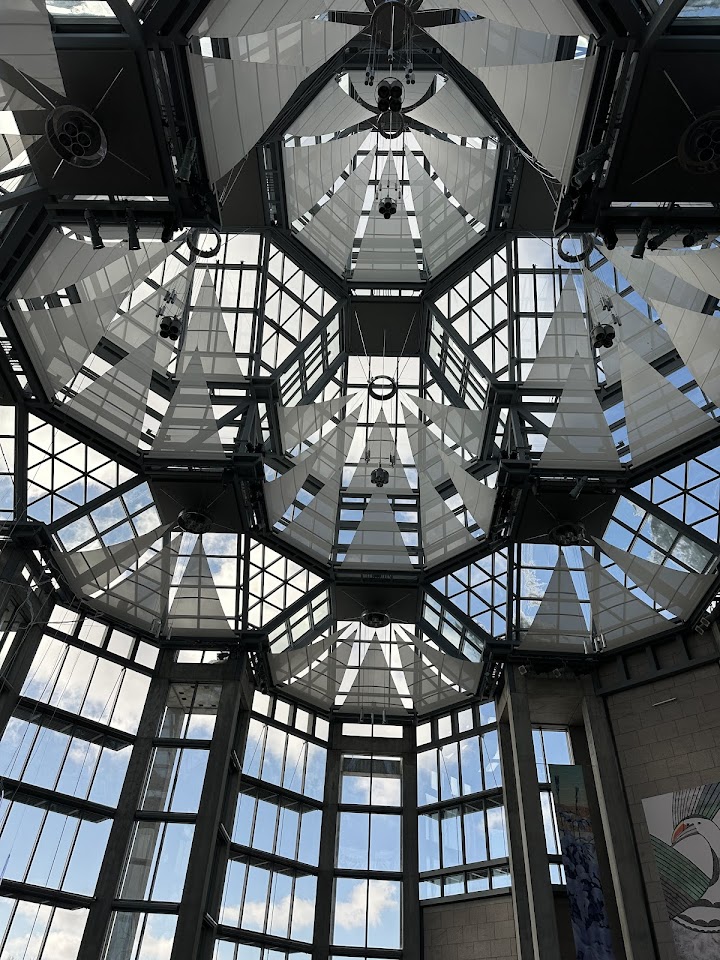
Walking along the snowy pathways behind the Sportsplex brought to mind the snow-themed exhibit currently at the National Gallery of Canada. Drawn by memories of past visits and the Gallery’s dramatic architecture, we decided to visit the exhibit.

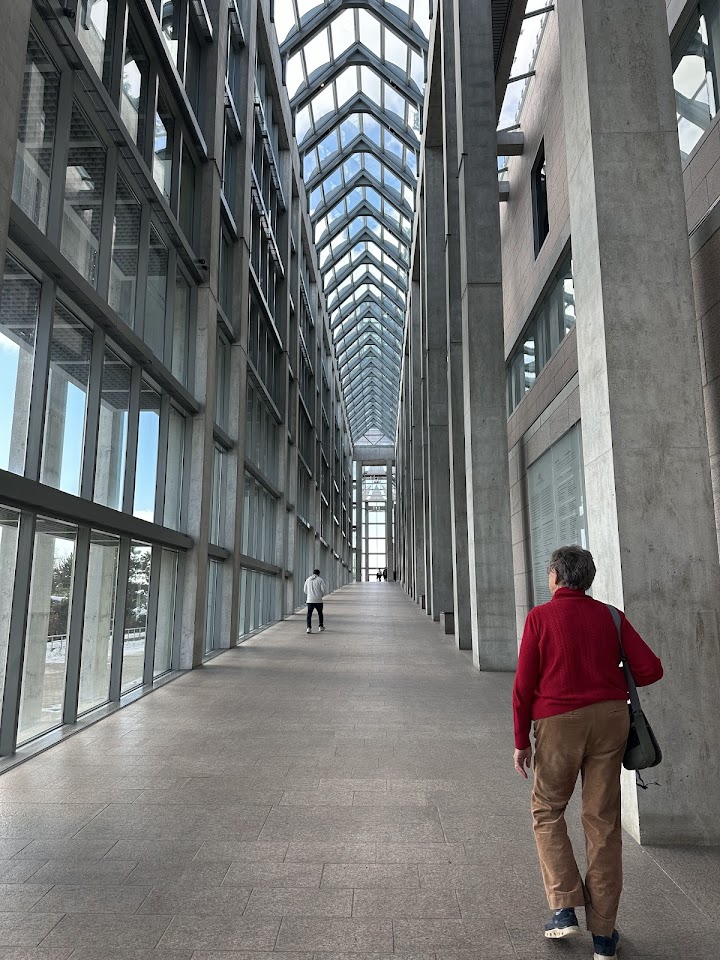
The entrance to the galleries is via a long, upward-sloping hallway with a towering glass wall on the left. The building has an almost gothic feel, when walking up the hallway toward the impressive great room, which features an intricate ceiling with an open design. Notably, the building’s design was the result of an international competition won by Moshe Safdie, a renowned architect and McGill University graduate in Montreal. Safdie is a Canadia Israeli, and US citizen.

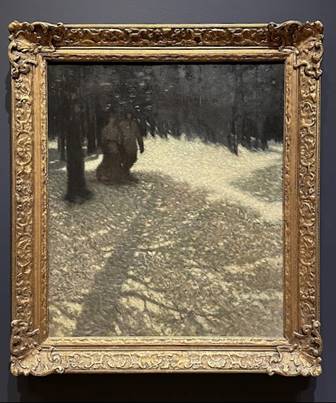
Inside, the theme of snow was immediately evident. What color is snow? That question on a flyer greeted us at the National Gallery. Melting snow on my driveway revealed shades of grey, blue, and yellow as the sun set. Walking the snowy paths in the park, I noticed various colors on the ground—especially where people had walked dogs. Snow displays many colors, from sunny to cloudy days and into the night.

Reflecting on the exhibit, I realized what a great idea it was to spotlight snow, as it defines our winters for three months of the year. With snow enabling so many activities, skiing, sledding, and snowball fights, it’s central to our outdoor lives and fitness. Exhibiting snow photos is a perfect way to celebrate the true spirit of our winters.

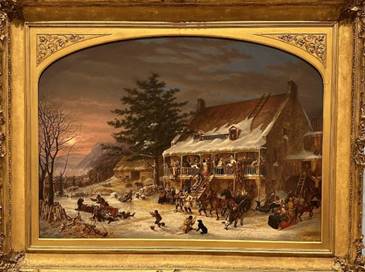
This appreciation for snow was evident throughout the Gallery, which featured over 160 pictures with snow on them. The Gallery curated paintings of Canadian artists, in collaboration with other European museums. Noteworthy were pictures of the Group of Seven landscape artists, Canadian native artists, Swedish and Norwegian painters, and pictures by Monet and Pissarro from France. Among the many rooms, some showed daytime scenes, and others showed night scenes.

The snow scenes were cleverly displayed: daytime paintings were shown in white rooms, which felt cold, while night snow scenes were in black rooms with dim lighting, creating a unique atmosphere for the exhibit.

Snow dominates winter life in Ottawa, affecting daily routines. Residents carry extra shoes to swap for boots indoors, wear parkas and toques outside, and equip cars with snow tires, scrapers, and salt. Snow accumulates along streets, making clearing the driveway essential. When I moved from Washington, DC, our first Ottawa winter brought over ten feet of snow—I had to shovel just to open the door. Over time, we adapted and came to enjoy it.

Reflecting on Daily Life: My First Journaling Experience

February 9, 2026

Digital media often invades privacy, or should I say always. Ads for shoes, books, and cars follow online searches. Banners even remind me to journal (writing down daily thoughts, feelings and experiences). I’ve never done this before but yesterday was both challenging and interesting and decided to put it to writing.

Yesterday was challenging because the garage door would not open. Both cars were locked in, leaving us immobile with no public transit nearby. It took time to discover the problem—the spring was broken. Bottom line: I couldn’t get the 2010 Mazda3 to a repair shop for an appointment. The car needed a diagnosis for a knocking noise when turning right, and the brakes were pulsating.

I tried to disengage the door from the lift engine and just push it up. Because the spring was broken, the door was too heavy for me to lift. I used an 8-foot-long 2×4 stud as a lever but still could not lift it. A neighbor came over to help me. Together, we raised the garage door and put a stud under it to keep it from closing. I managed to drive the car to the repair shop, arriving late for my appointment.

Addressing the garage door issue promptly was important, as an open garage without cars inside can jeopardize security. Once I managed to drive out, I called the repair service, and fortunately, they had time in the afternoon to come over to fix it. This was an unanticipated and unwelcome expenditure, adding to the day’s complexity; I got lost driving to the garage even with my GPS on. I took an Uber taxi home.

Yesterday’s other event that made an impression on me involved the Uber driver and the two garage door technicians—all were recent immigrants. It made me wonder: are most service workers in Canada immigrants? While my sample was small, I found it interesting that all of them I met in one day were newcomers.

In halting English, the Uber driver related that he came from Cameroon 8 months ago; he was French speaking. This was his first winter in Canada. I gathered that he had three children under 10 years of age, and that his wife worked as well; they needed two incomes for the family to live. Driving a cab gave Yves, the driver, the opportunity to get home when the children needed him.

He could not find employment in Cameroon in his field, food processing, and immigrated to Italy, where his wife was already living. There, however, he felt that Italians were too close-knit and would not embrace foreigners. For example, he said he never saw a black bus driver in Milan. So, they decided to come to Canada and arrived last summer. On this day, the temperature was minus 20 degrees Celsius or minus 4 degrees Fahrenheit yesterday, a huge climatic difference from Cameroon.

I also had interesting conversations with the two technicians who came to fix the garage door in the aafternoon. The lead technician was from Punjab, India. With his Punjabi accent, he explained the meaning of ‘Punjab’ to me; it means ‘five rivers’ in Punjabi. He also talked about the partition of India while instructing the other repairman, who identified himself as a Palestinian.

Talking with the Palestinian, I learned that he grew up in Jordan but never goes to Gaza, where he has relatives, because of the Israeli road checks. In spite of carrying a Canadian passport, whenever he tried to cross into Gaza, the Israeli soldiers harassed him. So, he no longer visits. On leaving, he advised me to oil the moving parts of the garage door a few times a year and showed me the product he used, which is available at Home Depot. I never thought of oiling the garage door before, a learning experience.

Meeting three immigrants prompted me to reflect on Canada’s diversity. Statistics show that 1 in 4 Canadians is a first-generation immigrant, and another 17% are second-generation. Over 40% of the population has recent immigrant roots—it’s a remarkable diversity. I would not be surprised to find Canada to be the most diverse country in the world.

Late afternoon, I called the repair shop to check on my car. I was shocked to learn their huge estimate to make the car “safe” again. However, after discussing it with the mechanic and hearing his detailed explanation, I felt confident in his recommendation. I realized I had not had the car repaired for years, I thought it was indestructible.

I had to decide whether to choose repairs, knowing that more issues might arise soon, or consider buying a new/used one. First, I thought it was time to trade up. However, I reconsidered; the suggested repairs could extend the car’s use for another year or two. I have spent nothing on this car for years, and I liked the gearshift; they do not make gearshift cars anymore.

Reflecting on journaling, I do not expect every day to be as eventful as yesterday, worthy of journaling. Writing the journal required time and thought. It made me realize the importance of maintenance and discovered the impact of immigration on Canada via direct experience. Some days may be less striking, but journaling can still offer value.

Finding Travel Partners: Lessons from Ottawa West Probus

February 6, 2026

I was disappointed attending an organizational meeting for a travel group. The Ottawa West Probus Club decided to establish a travel interest group. A volunteer arranged the meeting to discuss what we should do. We met in a cold church room with no coffee provided. A poor beginning for me. On top of this, only five people showed up, including me. A very inauspicious start, when we have two hundred people in the Probus Club.

Right off the bat, someone mentioned privacy concerns. She took exception to the spreading of personal emails; I assumed she was referring to the invitation to this meeting. I wondered how difficult it would be to organize a group without using email today. Should we use a phone instead and call each participant? Would that be time-consuming? The same person also expressed a dislike for people taking pictures when the lunch group meets.

After this curious discussion of privacy issues, the organizer asked what we wanted to get out of this meeting! Since this was the second meeting of this group, and since only I and another person were new, I thought the purpose of this group had already been established. But no, the agenda was wide open.

I suggested three options based on experience: holding monthly meetings with travel slide shows, inviting guest speakers from travel companies, or organizing group trips ourselves.

These options were not what the organizer had in mind; she explained that this group would serve only as a “travel dating” site, where people with similar travel interests would be introduced to one another. And once such a group coalesced, they would handle travel arrangements like flights, hotels, and tours. Ok. But why is such a service needed?

Well, she explained, people do not like to travel solo and look for company. Family or friends, I assume. The assumption is that people do not find family members or friends available to travel with and look for travel companions with similar interests, likely members of the Probus Club.

I agree with her opinion. It is a challenge to find friends or family to travel with, as preferences for travel differ—some enjoy cruising, while others prefer five-star hotels. Our nascent travel group aims to connect Probus Club members with similar travel interests and preferences.  

The idea of traveling in a group with local people made me think of what we used to do. We used to arrange our trips and travel with a backpack, just the two of us. We looked forward to meeting local people in faraway countries, tasting their food, whether spicy or not, and learning about their culture. Getting lost on our way was always a highlight, a learning experience, and I thought we were enriched by such unanticipated adventures.

I am not sure that I want to travel with our Probus friends; in fact, traveling with a group often limits interaction with locals. Guided tours are efficient for planning, but limit opportunities to engage with locals. Some prefer arranged trips, while others enjoy planning their own trip.

I left the meeting with no information on the next steps. But it has become clear to me that the organizer should explain the idea for this travel group in the Probus Club newsletter. And that there should be a structure in place to allow people to sign up for trips of their choice.

Considering all this, I left the meeting seeing limited value of this travel group for our Probus Club. But I give full credit to the organizer for trying to get this group off the ground.

Note: Probus is a worldwide organization run by volunteers. It is a non-profit organization for semi-retired and retired professionals and businesspeople, with no political or religious ties.   It started in the United Kingdom by a Rotary Club.