April 7, 2026
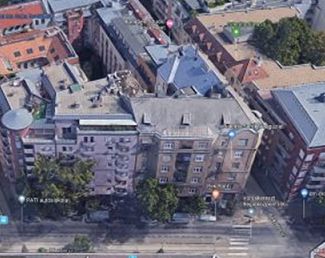
I’m unsure of my earliest memory. It may have been at age two or three. What I reall is that we lived in an apartment on the fourth floor, with the building facing a major street. I remember the address: 39 Mester Ucca (Expert Street) in Budapest, Hungary. It’s odd I remember the address but few other details, perhaps my parents ensured I knew it in case I got lost.
An early, clear memory I have is of the windows in the apartment. We covered them at night to darken and hide the building from incoming Russian bombers. As soon as the sirens shrieked, we rushed down into the basement for security. It occurred frequently. It was in 1944, during World War II.
The basement bunker was cold. People from the apartments huddled together, some on mattresses, others on the floor. I was scared as German soldiers and Hungarian Nazis searched for Jews to deport. The bunker was full; some may have been Jewish. At four, I didn’t understand the situation but saw fear. I pretended to sleep and waited for the soldiers to leave. The memory of Nazis searching for Jews in the bunker has stayed with me. I must have heard adults talk about it and seen soldiers question people. At age four I saw what was happening with no understanding of the context.
The Nazis also came upstairs to the apartments searching for Jews. We were warned by messages from each floor as they moved up. We awaited them with fear. My aunt Rose hid behind the china closet, which was placed diagonally across the corner to provide space for her to stand, hide, and wait until the Nazis left.
After these events in Budapest, my father, a medical doctor, was drafted into the Hungarian army, which was aligned with the Germans. We then all moved to an army camp in Szatmarnemeti, which was part of Hungary at the time but is now Romania. Father served on the military trains running in Ukraine. During our time at the camp, we lived in a modest military house, under the watch of a soldier. With the war ongoing, I vividly remember Russian planes swarming over the camp daily. Whenever the sirens alerted us to incoming bombers, the soldier would practically throw my brother and me into a four-foot-deep hole in front of the house, covering it with plywood. We shuddered inside, listening to the planes overhead, until the all-clear siren sounded, when the soldier pulled us out.
I cannot recall how long we stayed at the camp in Szatmarnemeti before returning to Budapest. After our return, Mother took my older brother and me out to a park a few blocks away on most days. This park had some play equipment: a sandbox, swings, and a rotating plaything. We walked there, an open, green space surrounded by concrete. The area where we lived had apartment buildings up to six stories high along the major streets, and two-story buildings on the local streets.
Our building had an elevator that never worked. It was in a cage-like structure with the staircase winding around it. We raced up four floors with my brother, always trying to beat each other to the apartment. The building was L-shaped. The entrance to the apartments on each floor was via an open balcony running along the inside of the building, facing a courtyard.
In terms of the neighborhood where we lived, I remember that gypsies lived in a large housing block, which my parents advised us to avoid. The housing block was doughnut-shaped with an entrance from the street. Inside was a courtyard surrounded by two-story buildings, occupied by gypsies who, I understood, lived communally.
The first level of apartment buildings along major roads housed commercial businesses, typical of European cities. A tramway ran on Mester Ucca. The neighborhood was noisy, and we rarely ventured far except when we moved to Szatmarnemeti.
I cannot remember where I went to school. No friends or images of a school building come to mind. Still, I must have attended school because we stayed in Budapest until I was eight years old, when my father became the director of the local hospital in Sopron, and we moved there.
Overall, I cannot say that I had a good time in my early life. But I did not have a bad time either. We never went without food. And I do not recall having friends or playmates who came to our apartment or whom I visited.
Beyond these hazy memories, I can’t recall anything unique. I can’t picture the room I slept in, though I likely shared it with my brother. I don’t recall specific toys or a single friend from eight years in that apartment. My most memorable early experiences relate to World War II.
 andrasthehun.ca