Book Club Insights: Discussing Albright’s Take on Fascism


April 19, 2026

We thought our book club would have a great discussion of Albright’s book on fascism. And we did. Our group’s politics is mostly in the middle of the spectrum, from right to left. But we have someone on the far left, I would think about him as a tree hugger, with social views, and he is a vegetarian. A strong believer in climate change, who cycles everywhere when he can. At the same time, he has a Tesla and another car. And then we have someone on the right, who questions climate change and has been a supporter of Trump. I am not sure if he is still supporting him, although he followed the line justifying the Iran war by saying that for decades no President has had the balls to tackle Iran’s nuclear arsenal. I looked forward to our discussion.

Let’s not forget: our group starts with lunch, the quality of which has been improving with each meal, as if we are competing for better lunches. This time, we started with vegetable soup, with maple syrup as the key flavoring. Although I do not favor sweet soups, this soup was excellent and the cook was proud of his creation. Following the soup were sandwiches with any filling you wished for. With chips as well. And, oh, the desert was a cake, six inches in diameter and equally tall. It was a lemon cake that we cut into eight pieces; there were eight of us. We do not consume any alcoholic beverages yet, but I think it could come soon. Coffee was made, and we moved to the living room to continue our book discussion which had already started over lunch.

I asked, “What is fascism?” One club member explained that according to Albright, it is a form of autocracy, although not all autocrats are fascists. I took some time to digest this idea. In Albright’s view, autocrats try to dominate the judiciary, the press, universities, and are willing to use force and violence to enforce their rules. The examples Albright related in her book were Mussolini, Hitler, Erdogan, and others, and I was wondering whether perhaps Orban was an autocrat but not a fascist, since he did not use violence, to the extent that I am familiar with his story.

It did not take long before the discussion veered over to the present time and whether Trump is a fascist. Albright does talk about Trump’s first administration which exhibited characteristics of fascism but never called him a fascist. And it also did not take long to talk about the Iran war, triggering a flashpoint between our club members, between the far left and far right members. Tempers flared, and I interrupted the conversation by raising the question of how one country can interfere in another’s affairs; on what basis would such behavior be acceptable? I thought that measures to create temporary peace for a few years would be acceptable, providing time for further negotiations, and who knows what may happen in the next few years that may ameliorate current issues. I was called a “prag,” and I asked, “What?” Again, I was called a “prag,” which I suddenly realized was a term for a pragmatist, never heard that before. OK. I could live with that.

The book is written in an easy style, with anecdotes from Albright’s career that make it interesting to read (she was Secretary of State under President Bill Clinton). I found the book very relevant and entertaining, as it related to recent events I remember well from reading the papers and listening to the news. But I was surprised that Albright did not discuss Mao and Stalin, perhaps she did not consider them fascists, although both acted like autocrats, and used their power to intimidate their people, and used violence to enforce their governing philosophy. Mao and Stalin adhered to communist philosophy and nationalized assets while Mussolini and Hitler left private enterprise carry on.

The economic descriptions of countries she mentioned lacked numbers. I would have preferred to see numbers on economic growth, unemployment, industry trends, and similar matters to ground her broad characterizations, such as that Germany had a poor economy that helped Hitler gain traction. But I realize that she was a historian or political scientist, not an economist, and the book was not a research exercise.

Having read some more scientific books on climate change and cryptocurrency in our book club recently, this book was a nice change, offering a clear, plain-English account of recent history I could relate to. And we spent as much time on the book discussion as we did eating; I suspect some members joined to socialize.  However we all would probably agree that the club encourages us to read books.

Memories of Chapel Hill: Love, Weddings, and History


April 1, 2025

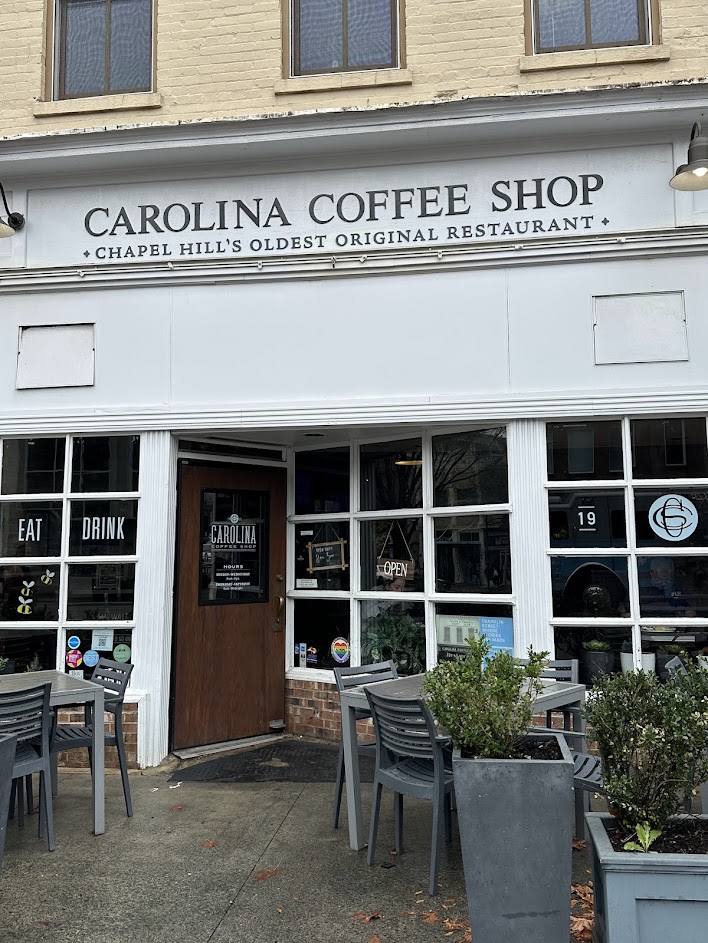
Chapel Hill. The University of North Carolina. Ah! All the memories came rushing back as we drove around, parked the car, and walked along Franklin Street in Chapel Hill, North Carolina.

I recalled meeting the Dean of City Planning, who welcomed me upon my arrival. He greeted me warmly and instilled confidence in me that I could not fail here. After I met my future wife, we listened to Johnny Cash on the quad, frequented local pubs, and eventually got married!

We initially had a civil ceremony in South Carolina without informing our families; it was one of those spur-of-the-moment decisions. The experience of the civil process, alongside that of four other couples, felt rather mundane. Returning to Chapel Hill, my Peugeot 403 broke down on the road, and we had to hitchhike back.

Returning to our dorms after the ceremony was exhilarating. We had a piece of paper that officially declared us married, and we were embarking on a new life together, forever. I wondered if this was the same experience that pioneers felt when loading their wagons on the journey west.

At that moment, no one knew we were married—not even our school friends.

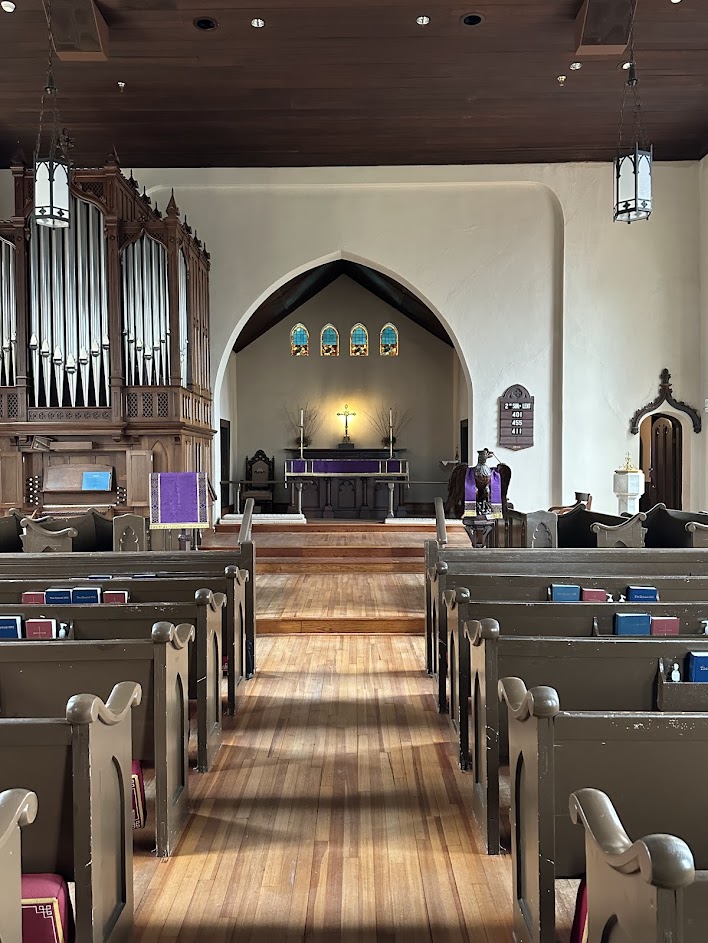
This exhilarating feeling lasted for a few weeks until we had our church wedding in the Episcopal Chapel of the Cross, which was attended by family and my classmates, with whom I had just graduated. In the lead-up to the wedding, the pastor asked us if our differing religious beliefs would ever cause friction between us. It seemed unlikely: I was a non-practicing Roman Catholic, while Kathy was Episcopalian. Having a church wedding was the traditional way to get married, which both our families accepted.

The memories bubbling up were from over fifty years ago. The Town of Chapel Hill has also aged. We walked along Franklin Street starting from Martin Luther King Jr. Boulevard. There were many more restaurants, coffee shops, and fraternity and sorority houses than we could recall from the past, in addition to newer tourist shops, vaping lounges, and art galleries.

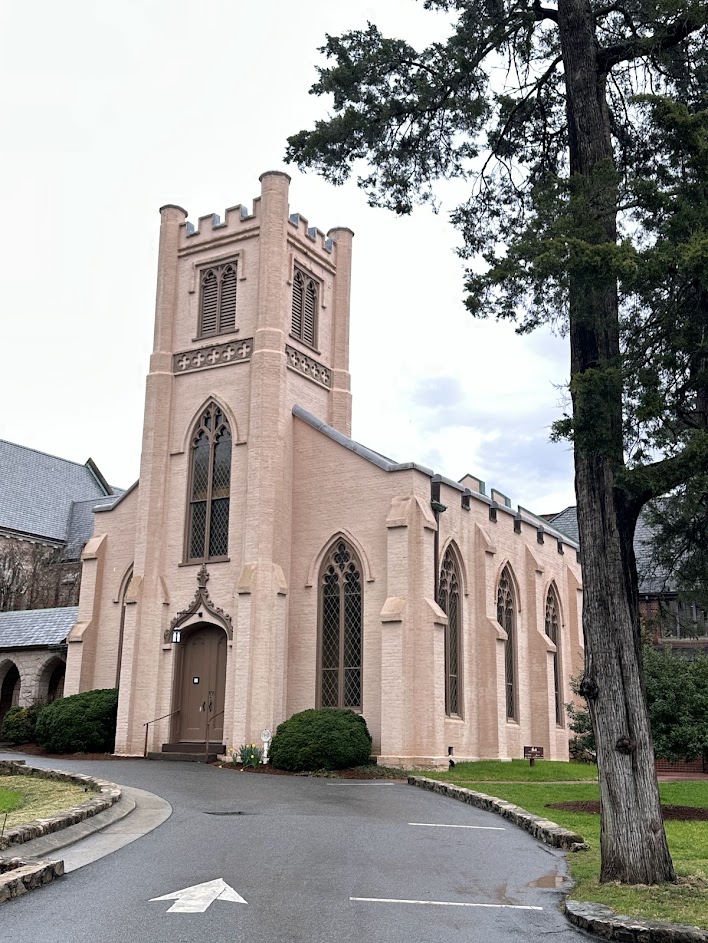
As we crossed Franklin Street, we approached the Chapel of the Cross, where we were married decades ago. I couldn’t remember much about the building except for the circular driveway in front. I remember it well because, after the ceremony, when we tried to drive away in Kathy’s car, my classmates had blocked our tires with rocks. I felt embarrassed as I heard all my friends laughing. I quickly exited the vehicle and moved the stones. However, a loud noise came from the wheels during my next attempt to speed off. I decided to ignore the noise as we drove away, stopping a few blocks later to empty the rocks from the hubcaps.

To my surprise, the Chapel did not evoke any strong emotions within me. I struggled to recall its architecture and viewed the Chapel as if I were seeing it for the first time. However, once we entered the building, the historical information provided in a brochure added to a cultural dimension that was entirely new to me and left a lasting impression.

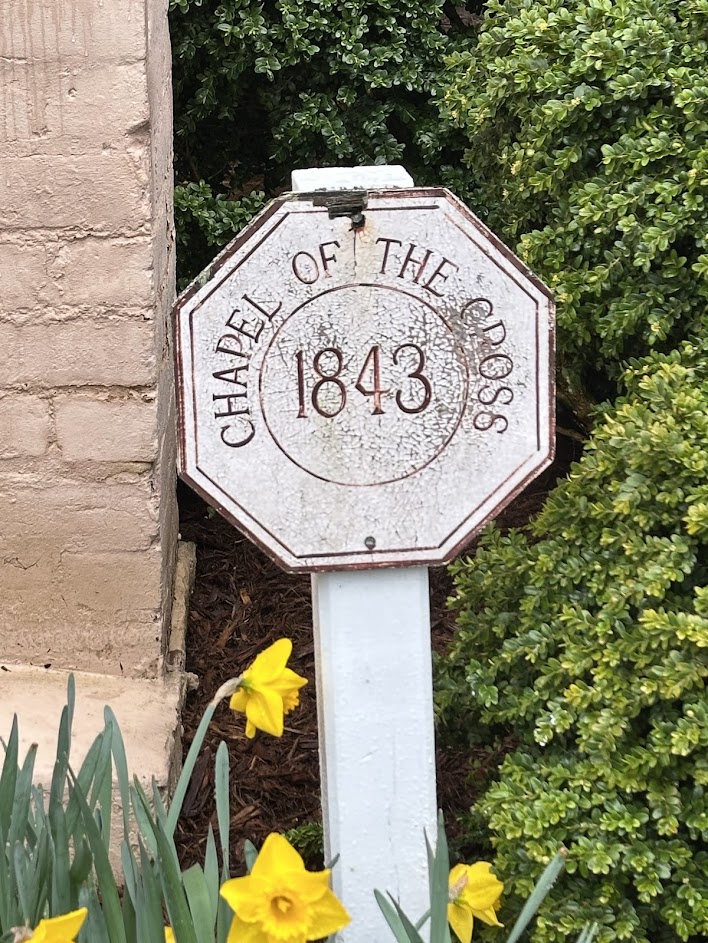
Mary Ruffin Smith (1814-1885) was an early benefactor of the Chapel, constructed in 1843. Her father, a plantation owner, physician, and congressman, paid $450 for a mulatto slave, a fifteen-year-old girl, for Mary. One of Mary’s brothers took a fancy to the slave girl, Harriet, and stalked and sexually assaulted her. Mary’s other brother, Frank, took exception and pummeled Sidney, ordering him to stay away from Harriet. Sidney stayed away from Harriet after the incident, during which she gave birth to a girl, Cornelia. However, Frank fell in love with the girl and had three daughters with Harriet. Mary cared for Harriet and the four girls, bought them from the plantation, and took them to the Chapel of the Cross every Sunday. All the colored people sat on the balcony of the Chapel, not permitted to sit with the white folks. Mary had all four girls baptized at the Chapel, as well as Harriet.

The story continued with Pauli Murray (1910-1985), the granddaughter of Cornelia, the oldest of Harriet’s daughters. Murray was an author, activist, and writer. In 1938, she attempted to enroll at the University of North Carolina (UNC), but her admission was denied due to her race, despite her close relationship with her great-aunt Mary, who had donated a significant portion of her land to the university. Pauli Murray went on to become a lawyer and practice law. In 1977, she made history as the first African American woman to be ordained as an Episcopal priest in the United States. After her ordination, Rev. Pauli Murray took communion in the Chapel where her enslaved grandmother had been baptized.

This story left a significant impression on me. Perhaps it’s because topics like plantations, slavery, the significance of skin color, and religion are not part of my background. Instead, I could discuss the Iron Curtain, Communism, and the experiences of the Pioneers (the communist equivalent of the Boy Scouts), as I spent my youth in Hungary under Russian domination.