A Culinary Journey on Two Wheels: Cycling and Cuisine

September 30, 2025

These days, we are looking for flat biking routes and prefer to avoid steep, mountainous areas. The rail-to-trail paths are ideal for us, so we decided to cycle along the Petit Train du Nord linear park in Quebec, just north of Montreal.

The recommended ride is from the northern end of the trail at Mont Laurier to St. Jerome, just outside Montreal, because there is a slight slope in that direction. The distance is approximately 200 kilometers, and it can be covered in a few days.

Typically, the cyclist would drive to St. Jerome, leave the car there, and take a bus that goes once a day to transport them to the northern end. However, by the time I called, there was no room on the bus for the day we had planned to go. Instead, we reserved a room at a hotel along the trail, closer to the northern end, to avoid the busier section near Montreal, and planned to cycle in both directions.

That turn of events was fortuitous, as Kathy had pulled a leg muscle while working out at the gym, limiting her ability to cycle for longer distances. Staying at a hotel provided us the opportunity to take shorter rides with rest in between.

Our trip got off to a great start when we drove into Montebello on our way to the trail and discovered a chocolate factory. We couldn’t resist buying some chocolate bars and truffles, completely forgetting about the prices. For lunch, we chose a bistro—after all, it’s Quebec! The French onion soup we had there was delicious.

With tables arranged closely together and the bistro full, the noise level was high, making conversation difficult unless one spoke loudly. However, the proximity to other diners allowed us to engage with our neighbors, which we did. Surprisingly, we ended up discussing politics without any arguments, likely because we shared similar views.

We attempted to use our French, which was more than rusty. Since we rarely have the opportunity to speak French, we struggled to find the right words when communicating with the service people. But it is always satisfying to express oneself in another language when the locals understand you. My feeling was that the locals appreciated our efforts to communicate in French.

In contrast to the bistro, our dinner at the Club du Golf Nominingue hotel restaurant was a more formal affair. While it was also noisy, the dining room was spacious, with tables dressed in white tablecloths and with elegant wine glasses. The service was prompt and attentive to our questions. Although I didn’t find the menu particularly unique to Quebec cuisine, the presentation of the food we ordered was stunning. I felt compelled to take pictures of our plates, which resembled sculptures, even though the food itself was pretty ordinary.

For example, I ordered saucisse artisanale du Québec, which seemed to me to be regular hot dogs, split in two, served with vegetables, and accompanied by French fries, presented in a wire mesh dish. While I wouldn’t consider any of the ingredients unusual, the presentation was truly remarkable.

The next day, we discovered a local bistro that was a lot of fun. It was extremely noisy, with people yelling from the bar to the other side of the restaurant, conversing in French, of course. It seemed that all the locals gathered at the bistro in the evening. We enjoyed local beer and cider, and I ordered osso buco, which is pork hocks in English, and it was delicious. For dessert, we had mousse fromage érable, which was delightful.
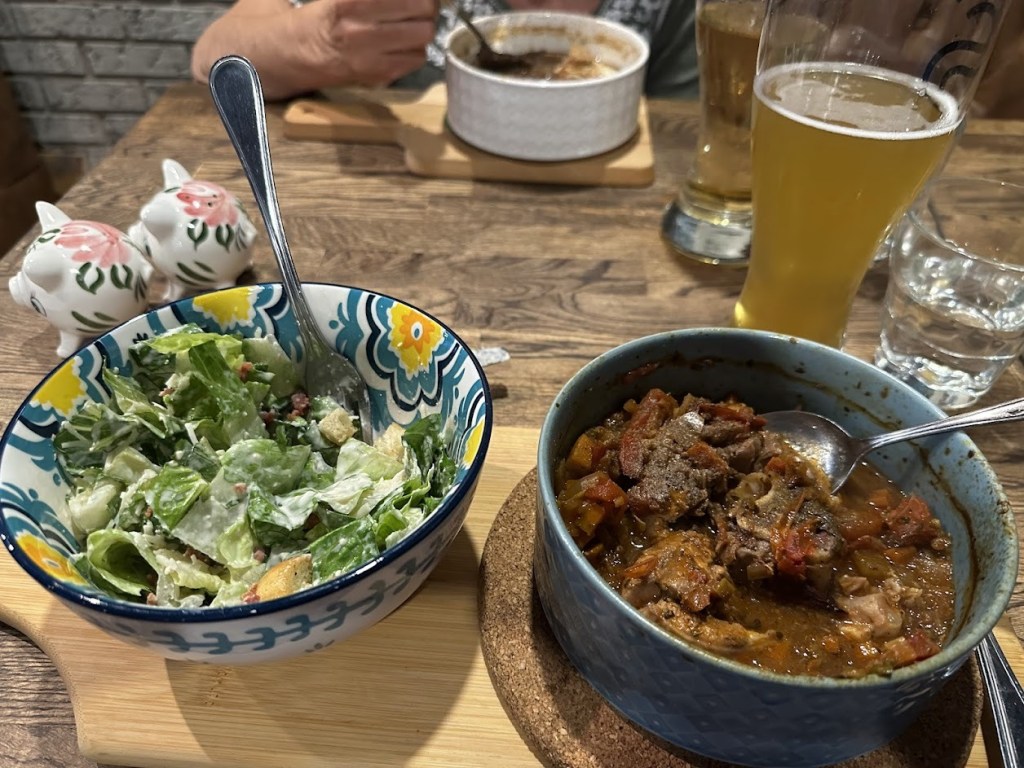
Beef bourgignon with ceasar salad

With all the food we consumed, we needed to burn off some calories, so we rode the Petit Train du Nord with plenty of energy. Like many trails of this nature, there are long, straight sections that can feel relaxing at times, while at other moments, they may become a bit boring. However, the trail was flat, with a grade that never exceeded four percent.

I was surprised by the number of electric bikes we encountered. Although I knew these bikes were popular, I didn’t expect most of the cyclists we saw to be using them, especially since there was no need for supplemental power on such level terrain. It was also interesting to see how many people were dressed in heavy clothing; I wore just a T-shirt and shorts, while others wore winter jackets. I thought riding an electric bike at higher speeds could feel quite chilly.

Although the speed limit on the trail was 22 kilometers per hour, we maintained a leisurely pace of 10 to 15 kilometers per hour, taking breaks to admire the surrounding landscape.

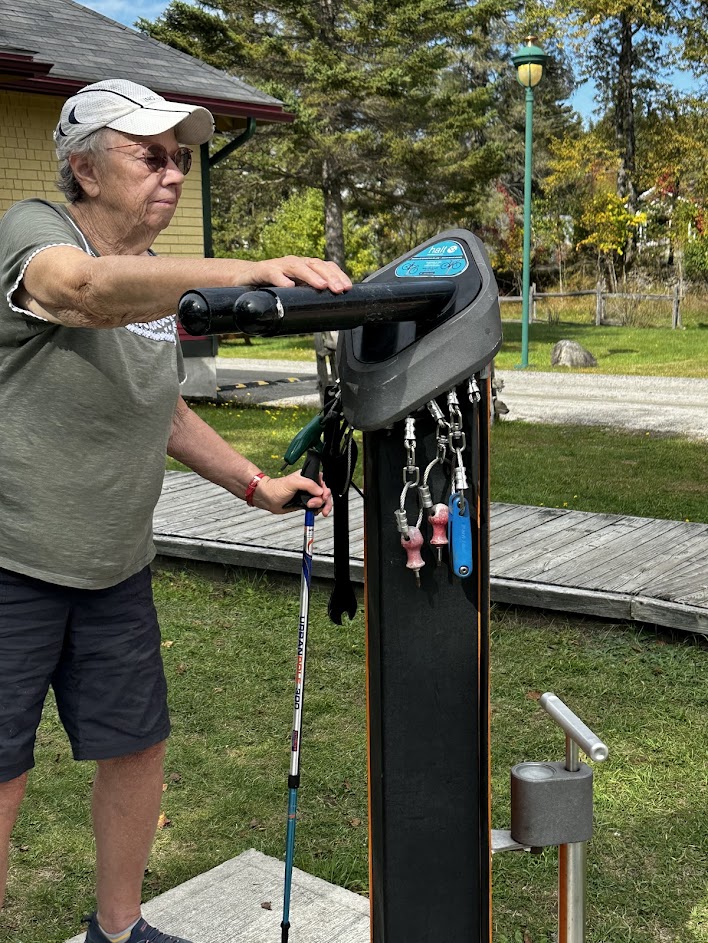
I have to commend the Quebec government for the development and excellent maintenance of this trail. It is entirely paved, and cracks in the pavement are clearly marked with yellow chalk. In areas with a buckling surface, a “danger” sign is placed to alert cyclists. More importantly, there are picnic tables, shelters, water fountains, and even bicycle maintenance pillars equipped with all the necessary tools. This is the most developed trail I have ever experienced. We have cycled on trails in Virginia (the Virginia Creeper), South Carolina (the Spanish Moss Trail), North Carolina (the Tobacco Trail), and many trails in Ontario.
The ambiance at the Le Club et Hotel de Golf Nominingeu, where we stayed, and on the trail, the Quebecois people, the food, and, not least, the cycling trail all contributed to a pleasurable trip. We absolutely have to return for another adventure. We thoroughly enjoyed interacting with the Quebecois people, who, without a doubt, tend to be more expressive, animated, and louder than their English counterparts. One of the highlights of our trip was the opportunity to improve our French language skills. The locals appreciated our efforts, even when our conversations switched to English.

Eating and Walking: Discovering Wheeler’s Maple Sugar Shack

April 18, 2025

We went to a sugar shack in April this year. April weather is ideal for maple syrup flow, which happens when nighttime temperatures are -5 °C and daytime highs are 5°C (24°F to 40°F). Such weather is a pleasure to walk about, especially in contrast with the much colder weather in February and March.

I enjoy visiting maple sugar farms for their restaurants, which serve delectable pancakes with freshly made maple syrup, sausages, and beans. And post-lunch, I enjoy strolling through the woods and checking out the maple trees’ syrup containers.

We went to Wheeler’s this year for our annual sugar shack trip and pancake feast. The hour-long journey was worthwhile; a sunny day with blue skies followed the snowstorm, leaving the fields white.

Maple sugar shacks now typically require reservations. Despite this, the restaurant had few patrons when we got there. I think the idea is to ensure enough seats if a busload of tourists arrives.

The coffee flowed endlessly at Wheeler’s, and the enormous pancakes were eight inches in diameter. Thinking I was hungry for lunch, I ordered a two-pancake meal with three sausages and a side of beans. It was too much food, so I knew I would need a long walk afterward to burn off the meal. I recalled visiting a different sugar bush where we sampled local beer with friends last year.

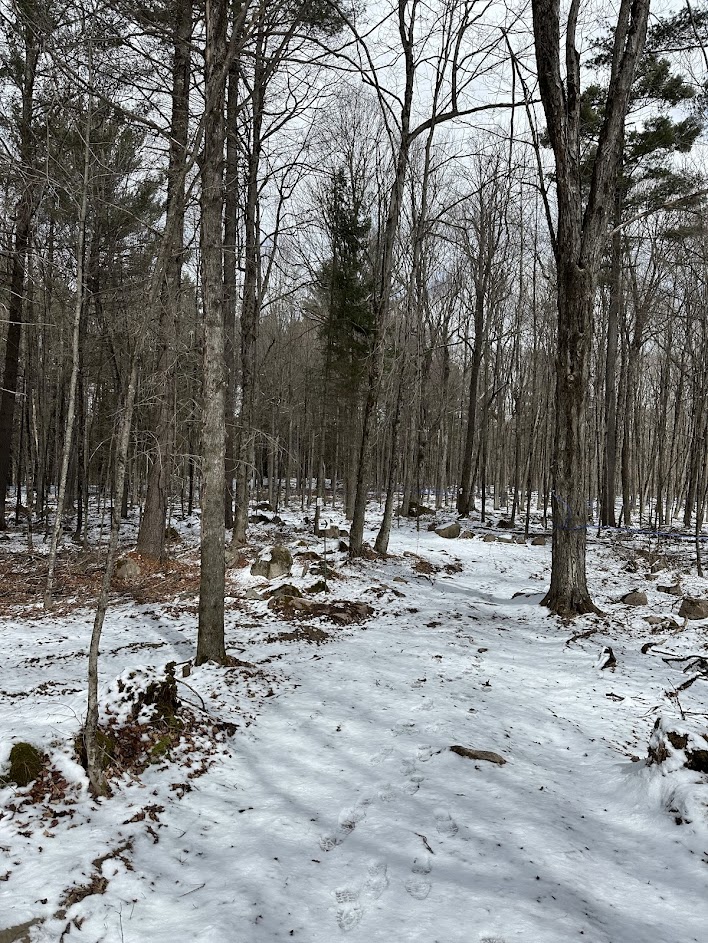
We found many trails outside and took the longest, five kilometers long. The snow covered the ground, with some icy patches in places. Only a few people were walking, and the silence in the woods was peaceful, perfect for yoga classes.

The history of this farm is fascinating. Vernon and Judy Wheeler purchased the farm and planted sugar maples, and they, along with their four children, still operate the farm today. It takes thirty years for the trees to be ready for tapping, and they tapped their first trees in 1978. They installed six hundred kilometers of plastic pipes to collect sap from forty thousand trees. Vernon’s local builder helped construct the restaurant using local wood, which opened in 1996. Vernon also wrote a book about the farm’s history, available in the restaurant’s lobby.

The Wheelers keep the farm open year-round for visitors, with the only exception being Christmas Day. Families enjoy exploring the farm during the summer by hiking the grounds, while cross-country skiing and snowshoeing are popular winter activities.

Syrup production involves boiling sap down to a 40:1 ratio. Boiling the sap further makes a sweeter, darker, and thicker syrup. Customers can choose from three grades of syrup, ranging from light to dark, when making their purchases

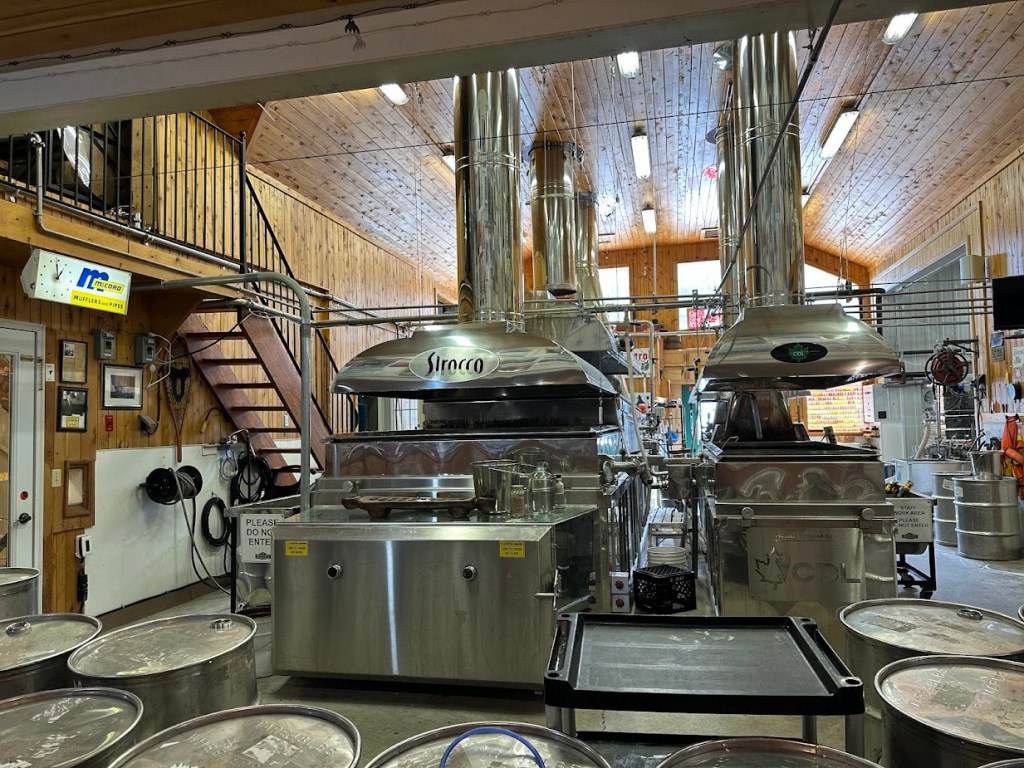
Previously, people boiled sap outside in large kettles to evaporate the water. Today, however, they use reverse osmosis to produce the syrup. The factory at Wheeler’s is open for inspection and features a large room with advanced equipment. A kitchen and a small shop offering maple syrup items are situated between the appealing post-and-beam restaurant and the factory.

Panels within the plant’s viewing area show information about the maple syrup industry. Canada provides over 80 percent of the global maple syrup supply, 90 percent of which originates from Quebec, and 4 percent from Ontario.

It was an Indigenous child who discovered maple syrup hundreds of years ago by sucking on the icicle of a branch from a maple tree. The sugary taste was delightful, a treat Indigenous people quickly learned to harvest. It took about a hundred years for them to develop the method of boiling the sap to create today’s sweet syrup.

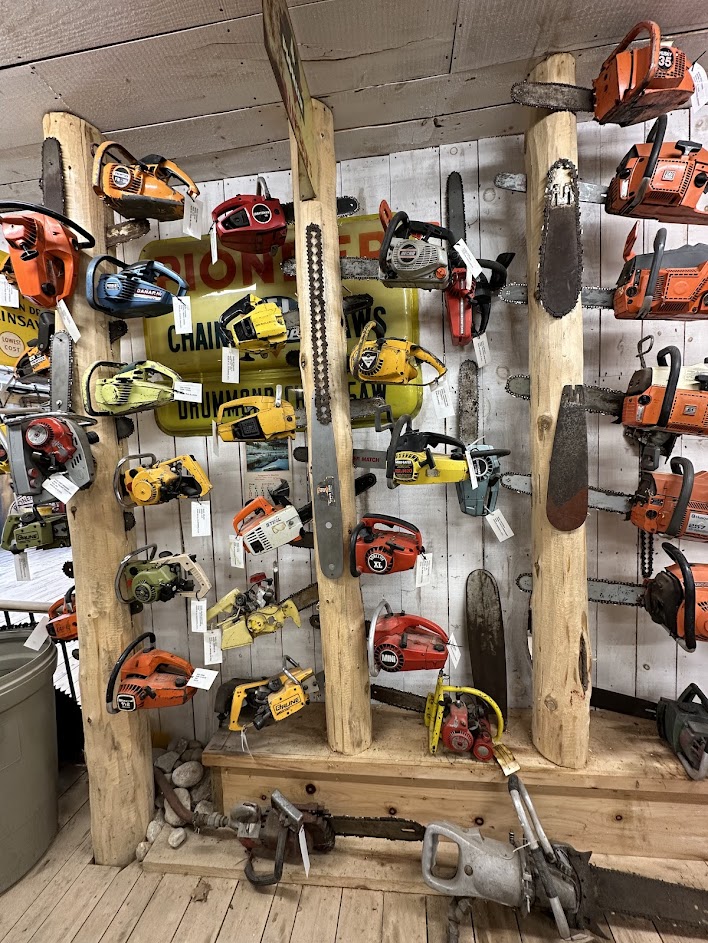
The two museums on Wheeler’s farm are possibly the most interesting part. One museum displays hundreds of maple syrup artifacts, the other shows Mr. Wheeler’s extensive chainsaw collection. The chainsaw collection amazed me; there are over four hundred old models, some of which I recognized, while others were unfamiliar.

      
A couple of soulful llamas stared at us as we approached the museums. The presence of llamas on this farm, among other options, puzzled me.

Maple syrup is a quintessential Canadian product. I recall trips to Europe where we searched for gifts for family and friends to take with us. We often bought small jars of maple syrup. Thankfully, travel for fresh maple syrup is no longer necessary; our neighbours’ parents run a maple farm, and we can purchase fresh maple syrup from them at wholesale prices.

My Questions for the Canadian Immigration Minister

November 5, 2022

The Minister announced yesterday that Canada will welcome 500,000 immigrants annually. He said the country needs to move up immigration targets because of the low fertility rate and a million vacant jobs in Canada. But, Mr. Minister, have you fully considered the costs of a sudden surge in immigration, and the impacts on healthcare and housing in Canada?

Canada used to welcome a quarter million immigrants annually, ramping up to 300,000 recently. The number jumped to over 400,000 in 2001 and is likely to approach 500,000 this year.

Immigration policy in Canada has evolved. Initially, immigrants were invited in the 18th century to colonize the west, coming mostly from the British Isles. Central Europeans came early in the 20th century. People coming to work in Canada created the “economic class” of immigrants, and their families followed them (called the “family reunification” class of people). The “refugee” class of people was created under Prime Minister Diefenbaker, who welcomed 37,500 Hungarian refugees escaping their country after the 1956 Hungarian revolution. Sixty percent of immigrants today fall into the “economic” class. India is the source of 32% of today’s immigrants, followed by China at 8%.

Besides economic development, demographics have become a new policy issue for Canada because of our low fertility rate of 1.5%, the replacement rate is 2.1%. So, the question comes to mind: have we tried to influence fertility rates? Many countries have tried it with limited success (Russia, and France, for example). Changing behavior is difficult, so let’s bring more people into the country to boost our population.

But the devil is in the details. Of the two major sources of immigrants to Canada today, India’s fertility rate was 2.1% in 2021 and China’s 1.7%. If immigrants from these two countries continue to follow their culture, they may not help with Canadian fertility rates. But would this flow of immigrants help with the economy?

A target group for the Minister is the science, technology, engineering, and math people (STEM). Yes, we have a million vacant jobs, but most are in the service industries, the hospitality and retail industries, and not in STEM. So this group of immigrants may not help fill the vacant jobs we have in Canada, especially when technology people are being laid off these days (Amazon, Apple, Facebook, Twitter).

A related question I have for the Minister is: what do we do with the one million unemployed people in Canada and another half million people who stopped looking for work? We have one and one-half million people who could be employed. Retraining may make them employable. It may not be in the Immigration Minister’s mandate to solve labor shortages via retraining, but it begs the question: should we look at the unemployed and the stay-at-home people for filling vacant positions in Canada before filling these jobs with immigrants?

And the Minister has not talked about the cost of immigration, except for the benefits to the GDP and the income taxes immigrants will pay. But clearly, immigrants need services like healthcare and housing, provided by lower levels of government. We, the taxpayers, pay all government taxes – federal, provincial and local – so perhaps it is time to reflect on the costs of immigration.

At a time when healthcare is already breaking at the seams with doctors’ shortages and nurses retiring, an increase in immigration will put an additional load on the system. (Six million people in Canada do not have a family doctor. Some emergency rooms have closed due to a lack of nursing staff). You say that, of course, we should target doctors and nurses in the immigration program. Makes sense. But do you realize that both professions require certification by relevant authorities and the reality in Canada is that foreign doctors and nurses must qualify before they can practice?

For example, I had a technician perform an ”ultrasound” procedure on me and I found out that she was a medical doctor from Belarus and took all the Canadian exams to become a doctor but failed to get residency in a hospital required for certification and was forced to take a technician’s job.

Yes, Mr. Minister, we have a supply problem: we need more doctors and nurses and immigration will not provide a quick fix because of certification barriers.

And immigrants need housing. On average, 200,000 housing units are built in Canada annually. The half million immigrants coming to Canada each year could use a few hundred thousand units and drive-up housing prices, especially given the present housing shortage (for example, the Premier of Ontario recently announced a sweeping housing plan to ease the shortage of housing).

Preserving and increasing the value of current homeowners’ units may be good for the homeowners, but difficult for young Canadians who would like to get into the housing market. Has the Minister thought through how the half million immigrants coming into the country each year impact housing markets?

And my questions to the Minister would not be complete without asking about “absorption rates” for immigrants in Canada. Absorption refers to the ease with which immigrants assimilate or integrate into Canadian society: get a job, acquire housing, have their children in school, and become a part of their local community.

Ethnic groups like to settle near each other for comfort. When a large group of immigrants settles in an area – that often happens – ghettos may result and integration into Canadian society may take the back seat. Has the Minister studied how many immigrants can Canada absorb annually?

There are costly impacts on education and social services at the local level when immigrants arrive. Teaching the official languages of Canada to immigrants is a significant cost for school boards. For example, Quebec has 23% of Canada’s population and could take up to 117,000 of the 500,000 immigrants, but the Premier said their capacity to teach the French language is limited to 50,000 people annually. Has the Minister discussed how many immigrants each province would take?

I am for immigration; I was an immigrant myself and found my journey to assimilate into Canadian society has been challenging but tremendously satisfying (it never stops). But I ask the Minister whether he has thought about the impact immigrants will have on our healthcare system, our housing situation today, and our experience with integrating immigrants successfully into our society when suddenly we’ll receive a half million newcomers each year.