Memories of Chapel Hill: Love, Weddings, and History

April 1, 2025

Chapel Hill. The University of North Carolina. Ah! All the memories came rushing back as we drove around, parked the car, and walked along Franklin Street in Chapel Hill, North Carolina.

I recalled meeting the Dean of City Planning, who welcomed me upon my arrival. He greeted me warmly and instilled confidence in me that I could not fail here. After I met my future wife, we listened to Johnny Cash on the quad, frequented local pubs, and eventually got married!

We initially had a civil ceremony in South Carolina without informing our families; it was one of those spur-of-the-moment decisions. The experience of the civil process, alongside that of four other couples, felt rather mundane. Returning to Chapel Hill, my Peugeot 403 broke down on the road, and we had to hitchhike back.

Returning to our dorms after the ceremony was exhilarating. We had a piece of paper that officially declared us married, and we were embarking on a new life together, forever. I wondered if this was the same experience that pioneers felt when loading their wagons on the journey west.

At that moment, no one knew we were married—not even our school friends.

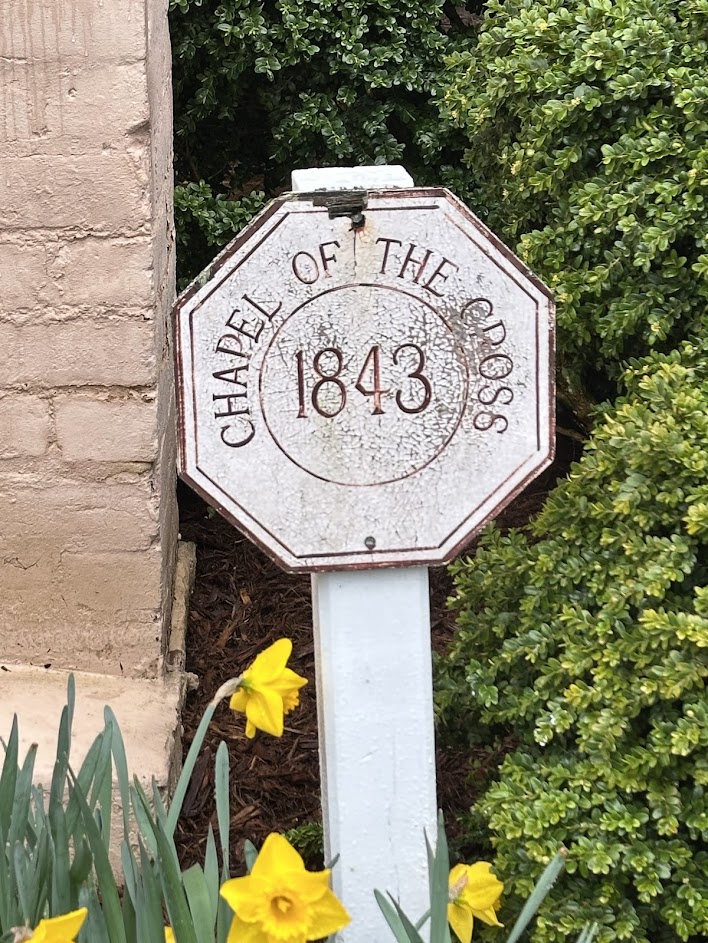
This exhilarating feeling lasted for a few weeks until we had our church wedding in the Episcopal Chapel of the Cross, which was attended by family and my classmates, with whom I had just graduated. In the lead-up to the wedding, the pastor asked us if our differing religious beliefs would ever cause friction between us. It seemed unlikely: I was a non-practicing Roman Catholic, while Kathy was Episcopalian. Having a church wedding was the traditional way to get married, which both our families accepted.

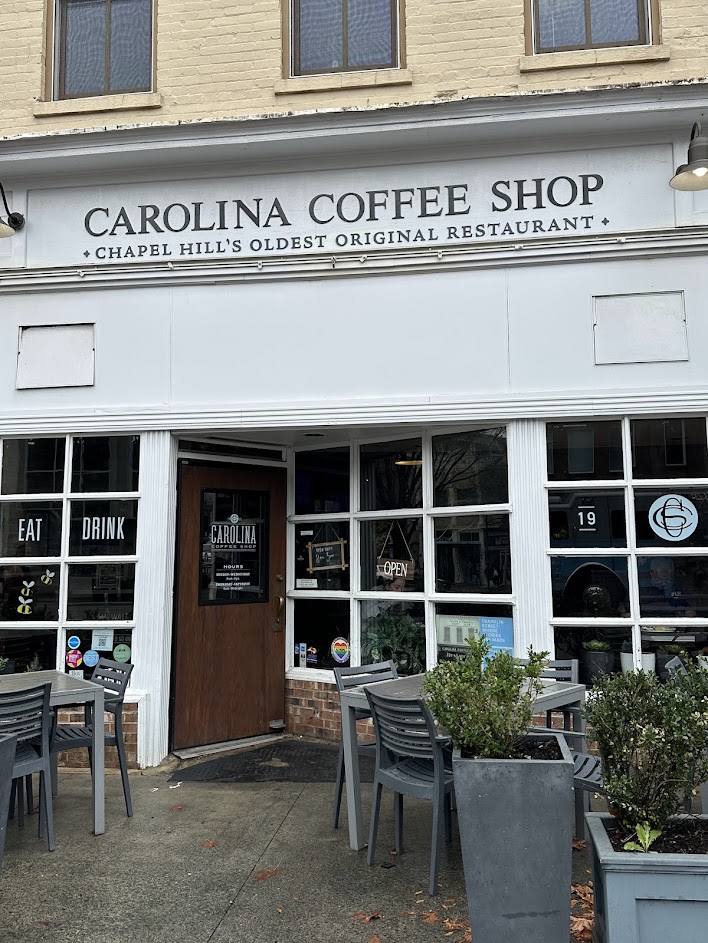
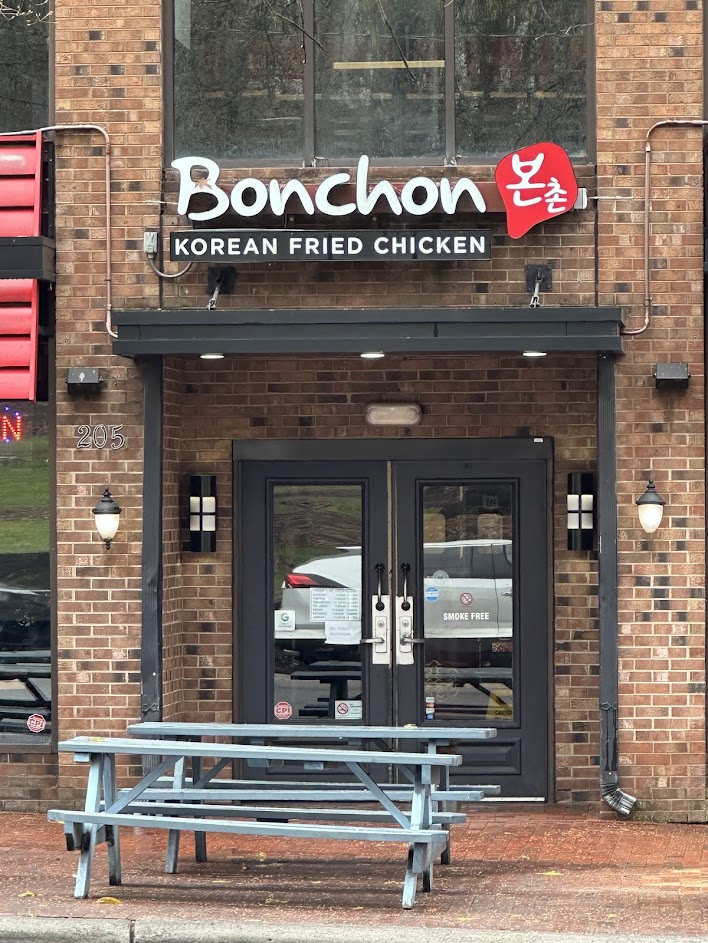
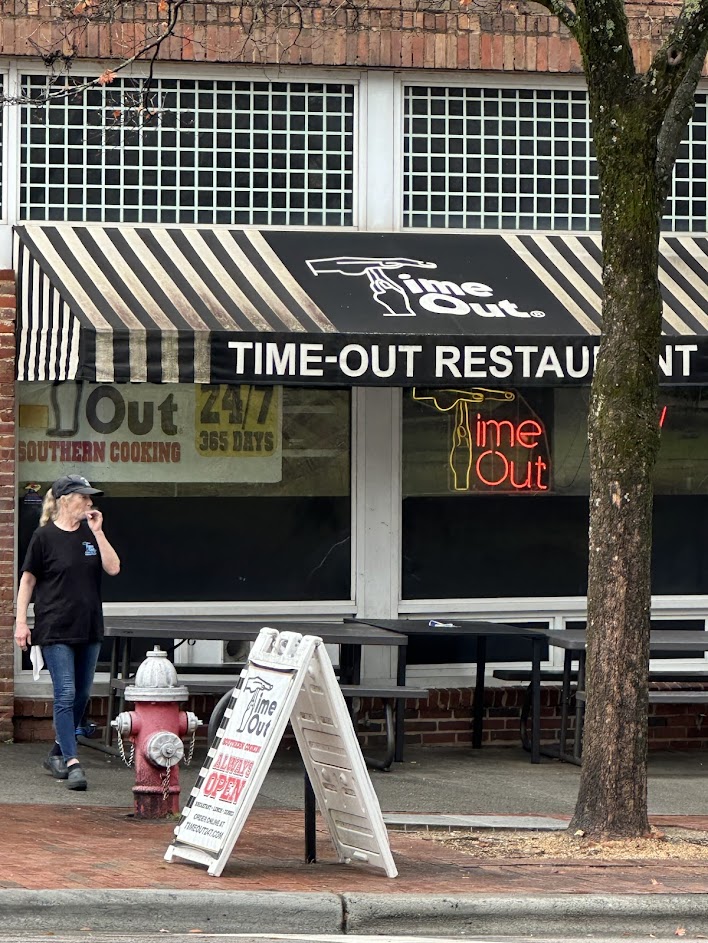
The memories bubbling up were from over fifty years ago. The Town of Chapel Hill has also aged. We walked along Franklin Street starting from Martin Luther King Jr. Boulevard. There were many more restaurants, coffee shops, and fraternity and sorority houses than we could recall from the past, in addition to newer tourist shops, vaping lounges, and art galleries.
As we crossed Franklin Street, we approached the Chapel of the Cross, where we were married decades ago. I couldn’t remember much about the building except for the circular driveway in front. I remember it well because, after the ceremony, when we tried to drive away in Kathy’s car, my classmates had blocked our tires with rocks. I felt embarrassed as I heard all my friends laughing. I quickly exited the vehicle and moved the stones. However, a loud noise came from the wheels during my next attempt to speed off. I decided to ignore the noise as we drove away, stopping a few blocks later to empty the rocks from the hubcaps.
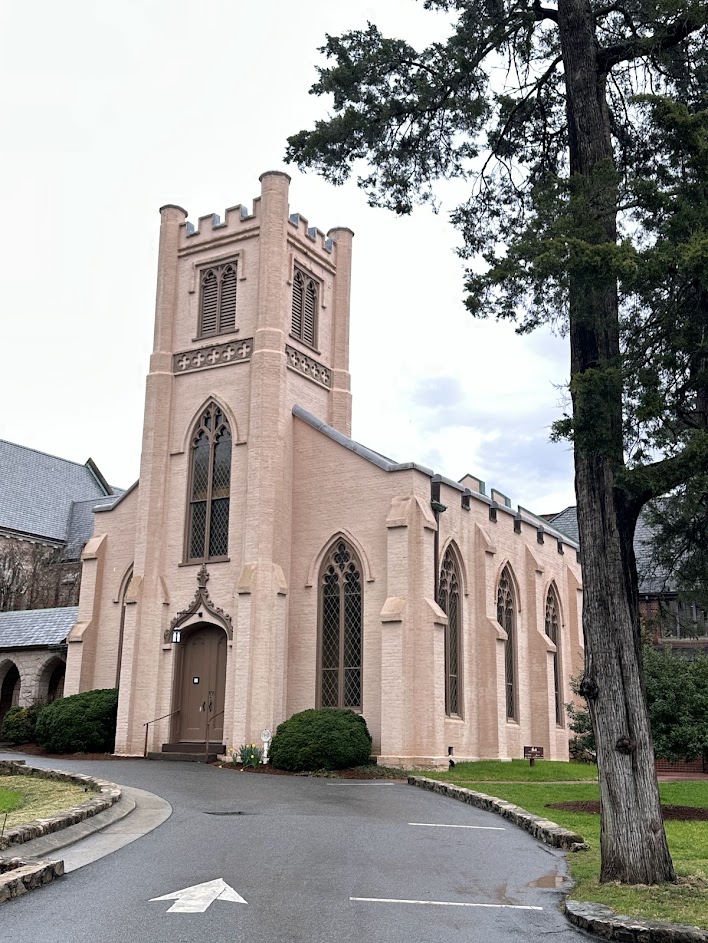
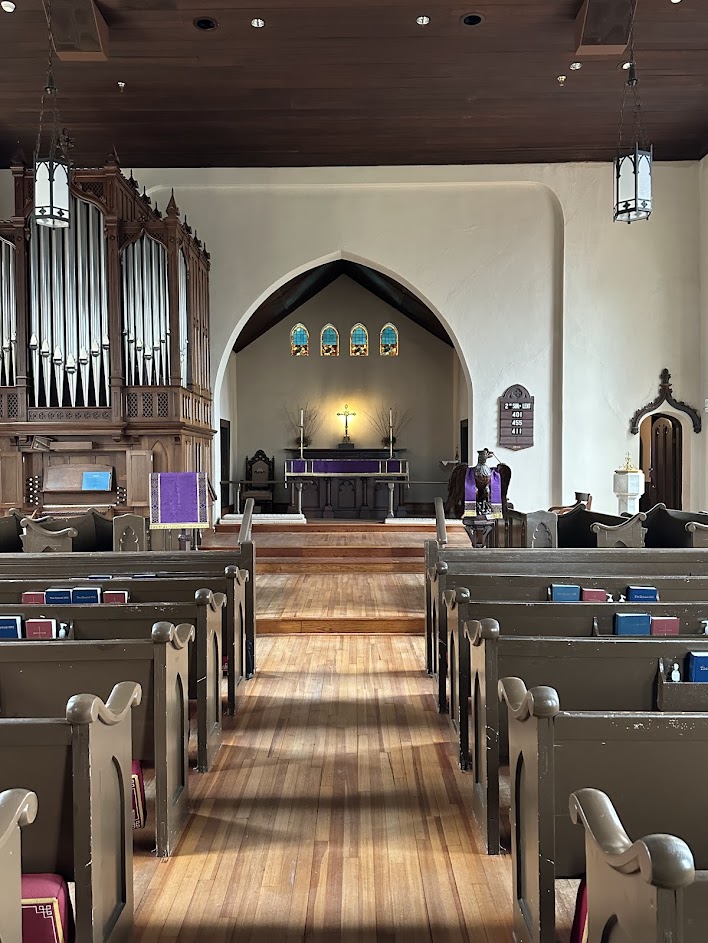
To my surprise, the Chapel did not evoke any strong emotions within me. I struggled to recall its architecture and viewed the Chapel as if I were seeing it for the first time. However, once we entered the building, the historical information provided in a brochure added to a cultural dimension that was entirely new to me and left a lasting impression.

Mary Ruffin Smith (1814-1885) was an early benefactor of the Chapel, constructed in 1843. Her father, a plantation owner, physician, and congressman, paid $450 for a mulatto slave, a fifteen-year-old girl, for Mary. One of Mary’s brothers took a fancy to the slave girl, Harriet, and stalked and sexually assaulted her. Mary’s other brother, Frank, took exception and pummeled Sidney, ordering him to stay away from Harriet. Sidney stayed away from Harriet after the incident, during which she gave birth to a girl, Cornelia. However, Frank fell in love with the girl and had three daughters with Harriet. Mary cared for Harriet and the four girls, bought them from the plantation, and took them to the Chapel of the Cross every Sunday. All the colored people sat on the balcony of the Chapel, not permitted to sit with the white folks. Mary had all four girls baptized at the Chapel, as well as Harriet.

The story continued with Pauli Murray (1910-1985), the granddaughter of Cornelia, the oldest of Harriet’s daughters. Murray was an author, activist, and writer. In 1938, she attempted to enroll at the University of North Carolina (UNC), but her admission was denied due to her race, despite her close relationship with her great-aunt Mary, who had donated a significant portion of her land to the university. Pauli Murray went on to become a lawyer and practice law. In 1977, she made history as the first African American woman to be ordained as an Episcopal priest in the United States. After her ordination, Rev. Pauli Murray took communion in the Chapel where her enslaved grandmother had been baptized.

This story left a significant impression on me. Perhaps it’s because topics like plantations, slavery, the significance of skin color, and religion are not part of my background. Instead, I could discuss the Iron Curtain, Communism, and the experiences of the Pioneers (the communist equivalent of the Boy Scouts), as I spent my youth in Hungary under Russian domination.

Exploring North Carolina: Vineyards, Memories, and Family

May 15, 2024

Sitting in the sun, shaded partly by an umbrella at Shelton’s vineyard in North Carolina, was hugely relaxing. Helping the relaxation was the Cabernet Sauvignon that we sipped. The food was average: pulled pork on an open sandwich base, or perhaps it was a pizza. I am not sure, but it tasted like pub food, appropriate in the setting.

Driving away from the lush meadows of the Yadkin Valley where Shelton’s grows its grapes, my thoughts turned towards the many times we visited North Carolina over the last few decades, and my memory lane took me back to the first time I drove to Chapel Hill, NC.

That was when the Dean of the Graduate School of City Planning welcomed me with an open smile; Jack Parker welcomed each planning student. His intimate reception touched me, and he generated a feeling that I’d succeed in my studies. It was a competitive program, but I have known no one who failed. The UNC Planning School admitted me for the January session; I applied to many other Ivy League schools, but UNC took me mid-year, and I accepted the offer, not waiting for the other schools to respond. But let me explain how I decided to attend planning school.

After graduating from the School of Architecture at the University of British Columbia in Vancouver, Canada, I worked with a small architectural firm in Vancouver. I lasted six months before getting bored with mundane designs of lobbies for high-rise buildings put up by developers. Another job with an even smaller firm was more interesting: designing a recreation center for a specific location in Vancouver. This project came about as a request for proposals for a competition our firm did not win.

After my brief experience with two architectural firms, I decided that I did not fit the mold of an architect. Architecture envisions plenty of attractive and well-appointed living spaces unavailable for most people worldwide. Architecture is irrelevant to people who have no choice but to tolerate less attractive environments. So, that was the impetus for me to search for a new field of endeavor. City planning appeared to be a related field, so I started applying to graduate planning schools in the fall, which is how I ended up in Chapel Hill in January.

When I arrived, I felt I was in paradise, experiencing southern hospitality and the positive energy generated by, and friendships made with, the planning students. Living at a campus-type university was another positive for me; UBC was a city university where moststudents lived off-campus. In contrast, campus life at UNC was rich with lectures and performances I could attend. For example, at the annual Jubilee Music Festival in the spring, I listened to Johnny Cash while sitting with thousands of students on the ground of the quadrangle. It was a memorable concert. 

Another primary reason North Carolina holds deep memories is that I spent considerable time with my future wife during our second year there. Although we met in Washington, DC, where we both had summer jobs, upon returning to UNC for our second year, we saw each other daily, starting with breakfast in thestudent dining room,Lenoir Hall, when it cost forty cents. And we spent many evenings talking late into the night at the Rathskeller, a student pub in Chapel Hill. We married at year’s end at the Anglican Church on the campus with family and all my classmates in attendance. The audience had a big laugh when the newlyweds left in the car with a colossal ruckus created by the rocks my friends put into the hubcaps of our vehicle.

A career launch and meeting my lifelong partner provide deep roots in North Carolina. But there is more to it. Our three children applied to US universities after finishing high school in Ontario. Although they did get into Canadian universities, they thought going to American schools would be more adventurous, perhaps influenced by their parent’s experience there. The upshot of their leaving Canada was that Tony and David attended UNC in Chapel Hill, while Megan graduated from Duke University in Durham.

They married after graduating from university; the two boys married North Carolina girls and settled in Charlotte and Durham. Further, Kathy’s brother, Huw, retired from Washington, DC to Winston-Salem, near where his wife had grown up. Our recent visits to North Carolina span from Charlotte to Winston-Salem to Durham, all of these locations along Interstate 40, within three hours of driving time.

Innumerable opportunities have existed to visit our children and their growing families in North Carolina, share a vacation, help them move, or see them. Over the years, I wore out several car tires along Interstate 81, driving from Ottawa to North Carolina. However, the visits have also provided opportunities to see the state and enjoy what it offers.

Huw and Judy introduced us to vineyards while driving around Wiinston-Salem. With the decay of the tobacco industry, growing grapes had taken over the rich agricultural soil. My attraction to visiting vineyards goes beyond sipping wines; they happen in areas with lush vegetation on rolling hills, with a lake and a fountain facing the tasting room.

Having visited Shelton’s vineyard, where the wine was tasty, but the food was not the best, we decided to visit Shadow Springs Vineyards with Huw and Judy on our last visit before returning to Ottawa. They do not have a restaurant, and since we do not sip wine without some food at lunchtime, we stopped at the Shiloh General Store in Hammondville to pick up a sandwich.

Amish people run the store, and the owner, Phil Graber, was on cash. I learned from him that the area has over fifty Amish families. Phil and his wife Mary established the store in the early 2000s and expanded it to over thirty-five hundred square feet. The store sells homemade products with fresh ingredients, such as pickled vegetables, dry soup mixes, Amish noodles, pretzels, and crackers.

They made a tasty sandwich for us. I found their order-taking fascinating. You choose on a piece of paper the type of bread, meat, spread, vegetables, and sides you want and place it in a window. Then, they prepare the sandwich and call your name. There was no limit on what you could ask for, and I thought, why not order pulled pork and chicken under meats? And low and behold, my sandwich had both meats!

Armed with our sandwich, we entered Shadow Springs’ tasting room. Judy selected a 2022 Seyval Blancand a2022 Chardonnay while we settled at a table on the lakefront, cranking up the umbrella to provide shade from the sun’s heat at midday. The chatty hostess in the tasting room described how Chuck Johnson, the owner, decided to retire from his corporate job to his home state and look for another career opportunity after missing too many of his son’s ball games. Chuck and his wife Mary went winetasting upon their return to NC and decided that winemaking might be an excellent opportunity for starting a new life. They looked at dozens of farms for sale until they found this piece of land with the proper orientation and soil qualities to make wine. They started making wine in 2005.

And we were not disappointed with their wines. We spent the two-hour lunch sipping wine in sunny weather, sitting outside with a huge fountain making a bubbling sound in the middle of the lake next to us. What a way to spend our last day in North Carolina before returning to Ottawa, where the trees were getting leafy.