Finding Travel Partners: Lessons from Ottawa West Probus

February 6, 2026

I was disappointed attending an organizational meeting for a travel group. The Ottawa West Probus Club decided to establish a travel interest group. A volunteer arranged the meeting to discuss what we should do. We met in a cold church room with no coffee provided. A poor beginning for me. On top of this, only five people showed up, including me. A very inauspicious start, when we have two hundred people in the Probus Club.

Right off the bat, someone mentioned privacy concerns. She took exception to the spreading of personal emails; I assumed she was referring to the invitation to this meeting. I wondered how difficult it would be to organize a group without using email today. Should we use a phone instead and call each participant? Would that be time-consuming? The same person also expressed a dislike for people taking pictures when the lunch group meets.

After this curious discussion of privacy issues, the organizer asked what we wanted to get out of this meeting! Since this was the second meeting of this group, and since only I and another person were new, I thought the purpose of this group had already been established. But no, the agenda was wide open.

I suggested three options based on experience: holding monthly meetings with travel slide shows, inviting guest speakers from travel companies, or organizing group trips ourselves.

These options were not what the organizer had in mind; she explained that this group would serve only as a “travel dating” site, where people with similar travel interests would be introduced to one another. And once such a group coalesced, they would handle travel arrangements like flights, hotels, and tours. Ok. But why is such a service needed?

Well, she explained, people do not like to travel solo and look for company. Family or friends, I assume. The assumption is that people do not find family members or friends available to travel with and look for travel companions with similar interests, likely members of the Probus Club.

I agree with her opinion. It is a challenge to find friends or family to travel with, as preferences for travel differ—some enjoy cruising, while others prefer five-star hotels. Our nascent travel group aims to connect Probus Club members with similar travel interests and preferences.  

The idea of traveling in a group with local people made me think of what we used to do. We used to arrange our trips and travel with a backpack, just the two of us. We looked forward to meeting local people in faraway countries, tasting their food, whether spicy or not, and learning about their culture. Getting lost on our way was always a highlight, a learning experience, and I thought we were enriched by such unanticipated adventures.

I am not sure that I want to travel with our Probus friends; in fact, traveling with a group often limits interaction with locals. Guided tours are efficient for planning, but limit opportunities to engage with locals. Some prefer arranged trips, while others enjoy planning their own trip.

I left the meeting with no information on the next steps. But it has become clear to me that the organizer should explain the idea for this travel group in the Probus Club newsletter. And that there should be a structure in place to allow people to sign up for trips of their choice.

Considering all this, I left the meeting seeing limited value of this travel group for our Probus Club. But I give full credit to the organizer for trying to get this group off the ground.

Note: Probus is a worldwide organization run by volunteers. It is a non-profit organization for semi-retired and retired professionals and businesspeople, with no political or religious ties.   It started in the United Kingdom by a Rotary Club.
Understanding Misinformation on U.S. Travel

January 30, 2026

Amazing how much misinformation permeates reality today. My coffee buddy told me not to enter the United States because I’ll have trouble at the border. I told him I am going to visit friends and family in the Carolinas and Florida, which triggered a long rant from him about why he does not visit the US these days. To cut a long story short, we had no trouble at all at the border. The official at the gate wished us a good trip south after a brief, friendly conversation.

Why did my friend have a negative impression of travelling south? He must have seen too many headlines about border agents harassing tourists, read too many articles on the internet about tight immigration policies into the US, and probably seen too many digital media videos on how US immigration agents manhandle travellers.

Confirming the bad publicity surrounding travel to the US, I met a Dutch fellow in the Everglades in Florida who said that travellers from Europe must hand over their cell phones to US immigration officers for a scan of their digital accounts to see if anything there reflects negaitvely on President Trump. If any such messages are found on their phones, they may be banned from visiting the US for a couple of years, he told me.

In our conversation, I learned that he has a condo in Naples that he has not been able to rent due to the significant decline in visitors this year that he attributed to the current US official position towards foreigners and visitors. I read recently that there is a proposal to launch a search program for critical views of Trump on the digital accounts of US visitors, but it is not in effect yet. This type of misinformation is pervasive and spreads by word of mouth.

Misinformation also happened in my family. When we travelled to Florida years ago, my mother, who lived in Vancouver, British Columbia, warned us against swimming off the coast of Florida for all the crocodiles there. Well, there are no crocodiles where we traveled. I do not know where my mother obtained her information.

The subject of how much people are misinformed is discussed in a recent book by Hans Rosling, entitled “Factfulness”. The author conducted numerous surveys worldwide on people’s opinions and knowledge about common topics such as population size and growth. The author concluded that people are ignorant, less than thirty percent were the correct answers in his surveys.

Rosling describes numerous reasons for people’s ignorance; for example, people tend to project the future based on straight-line projections. The world’s population doubled or grew from four to eight billion over the last fifty years. Projecting the doubling of the population over the next fifty years would bring the world’s population to sixteen billion by 1976. The author’s projection, based on economic, family formation and fertility trends, projects the world population peaking at around 11 billion people.

Rosling’s work is data driven. He cites statistics from many sources (such as those from the United Nations) supplemented by the surveys he has conducted. I am not sure that data and surveys together provide an adequate picture and would suggest that, in addition, direct observations may help shed light on reality. For example, if you watch the major TV channels today, you cannot avoid seeing the chaotic environment in Minneapolis. So, you may jump on the idea that Minneapolis is typical of the entire US. But the US is a big country, and life goes on without federal agents interfering in most places.

We traveled in December to North Carolina, Florida, and Tennessee, and have not witnessed any civil disruptions. Stayed a few days in Winston-Salem, Durham, and Charlotte in North Carolina, Orlando and Everglades City in Florida, and Decatur, Tennessee, and had a great time meeting friendly people. Real-time experience defies what you see on TV.

I am not saying that my experience provides an accurate picture of what is going on in the US. What I am saying is that, in addition to what you see and read in the media, it should be complemented by other sources of information, including personal observation and common sense.

And reflecting on my view of life in the US is but a small part of reality. We traveled in a few cities, met a few people, and I’d be the first to admit that my observations are limited in number. But what I learned is that what you see in the media is just one part of the big picture, and the best way to find out what is going on is to travel, to gain a better picture of reality.

Navigating Municipal Services: Recycling Dilemmas

January 7, 2026

Do you live in a city with municipal services such as water, sewer, electricity, and waste collection? And if you do, have you ever had trouble with any services? Today was my turn.

This morning, before seven o’clock, I put out the garbage for collection. I won’t bore you with the complicated schedule of what gets picked up when — let’s just say you practically need a college degree to figure out which type of waste goes into which color bin on which day of the week.

So out went the blue bin with glass and plastics, the green bin with compost, and two black garbage bags containing all other garbage except paper, which is collected on alternate weeks. When I stepped outside an hour later, two more black garbage bags had magically appeared beside mine. Someone had the audacity to drop their garbage at my curb.

Normally, that wouldn’t matter, but in their infinite wisdom, the city fathers have decided that we must recycle more and now only pick up three black garbage bags every two weeks. I decided to wait and see whether the collectors would take all four bags. Of course, they didn’t — one bag was left sitting on my driveway.

I was annoyed. I suspected the neighbor across the street, because next to us is a large rental complex with huge open dumpsters, so the tenants wouldn’t need to sneak extra bags onto someone else’s curb. Our immediate neighbors don’t produce much garbage, and we know them well. The couple next door and the small family across the street have even asked us in the past to put out their bins when they’re away. That left, by process of elimination, the neighbors one house down on the opposite side of the street.

My suspicion grew when I remembered that over the weekend, they had four cars in their driveway and another four parked along the curb in front of our house. When I took out my garbage, I also noticed a pile of bins and bags on their driveway. One gets the impression they might be running a B&B out of that house — there are always different cars coming and going, some staying for weeks, others only a few days. I even searched online to see if I could identify the owner or occupants but found nothing.

Frustrated, I picked up the extra bag and placed it squarely in the middle of their driveway. Let them deal with it. When I checked later that night, the bag was gone and a car was parked there instead.

Was I right to return the bag? Should I have knocked on their door to discuss it? I honestly don’t know. I don’t know any of the people living there, and with the constant flow of vehicles, it’s impossible to tell who lives there. Maybe I overreacted — but at the time, it certainly didn’t feel like it.

The lesson to learn is that recycling does work. Once you separate paper, glass, plastics, food and garden trash, there is not much garbage left. So, the next time I find garbage on my driveway I did not place there, I’ll go across the street and try to talk with the residents there about recycling.

Cultural Insights on Icebreaker Introductions

December 18, 2025

Our group of twenty people sat down for our first night’s dinner at our Road Scholar program. Many of us were tired from a long drive or flight to the southwest corner of Florida, to the Everglades. As an icebreaker, our leader asked us to stand and introduce ourselves: our name, where we are from, and what we were looking for in the kayaking program for the coming week.

I looked around with curiosity; what kind of characters indulge in kayaking for hours each day? There were mostly grey hairs, with more women than men. Seniors, although some looked youngish. Later, I discovered that the “youngish” people were 60 or older.  

Although it is useful to know everybody’s name, I could not remember them ten minutes later. But it was interesting to learn about where they came from: many from Florida, but others were from Washington, Wisconsin, Pennsylvania, Indiana, and Maryland. We were the only ones from Canada.

One talkative person at our table gave us a blow-by-blow account of his life without prompting. He described his career from studying microbiology, to serving in the air force, and then using the GI bill to become a Physician’s Assistant. I thought it was useful to have a medical person on hand should anyone get hurt kayaking.

Then this extrovert asked another fellow at our table what he had done before retirement. Surprisingly to me, the answer was “test pilot”. Wow, I thought, that must have been an interesting career. When I talked with the “test pilot” later, I learned that he participated in 16 Road Scholar programs, which was an eye opener for me about its popularity.

We discussed the Everglades’ fauna and flora during kayaking. For example, we spent time discussing gators, their growth, and the danger they pose to humans: I learned humans are not in their food chain. And we learned about the Brazilian pepper tree, an invasive species that harms mangrove growth but very difficult to contain.

A genuinely fascinating surprise was discovering one participant, who taught maths before, but now was a Road Scholar leader for walking/hiking tours out west. In conversation with him, he mentioned that his icebreaker includes, in addition to the three questions we responded to the first night, the age of the participants, their middle name, and something unique they accomplished or special about them. That made me think how I would have responded if we were asked these questions.

Why would I volunteer to reveal my age to a group of kayakers I just met? What would that add to their impression of me? If they found out how old I am, would they think I would slow them down? And if I appear younger, would they accept me? Would that make any difference? I am already a participant. So, what purpose would it serve to reveal my age?

The other icebreaker, mentioning one’s middle name, was also curious. What do middle names signify? My middle name is my godfather’s first name, and that was the tradition in my family, coming fron a central European culture. Kathy’s middle name is her grandmother’s family name to show family lineage; that is part of Celtic culture. She comes from Wales. Is the goal to offer extra details, possibly about ethnicity? I am not sure that this information is valuable to a kayaking group. And what would happen if someone had no middle name?

 Others may not want to reveal their middle name for religious reasons. For example, my good friend, Zane, used his middle name all the time instead of his first name. I had known him for years, before I discovered that his first name was Mohamed. I think he used his middle name to avoid being stereotyped as a Muslim with all he complications North Americans have today with the religion. I also think asking for middle name is a mild incursion into privacy matters.

In conclusion, icebreakers should be simple; a name, the location where one lives, and perhaps one detail about you, such as your hobby, favorite music, or author. Or the question the leader asked the first night: what do you want to get out of this program. Then let people talk to each other to discover additional information about each other, should they so desire.

How to Optimize Your iRobot Roomba for Efficient Cleaning

November 24, 2025

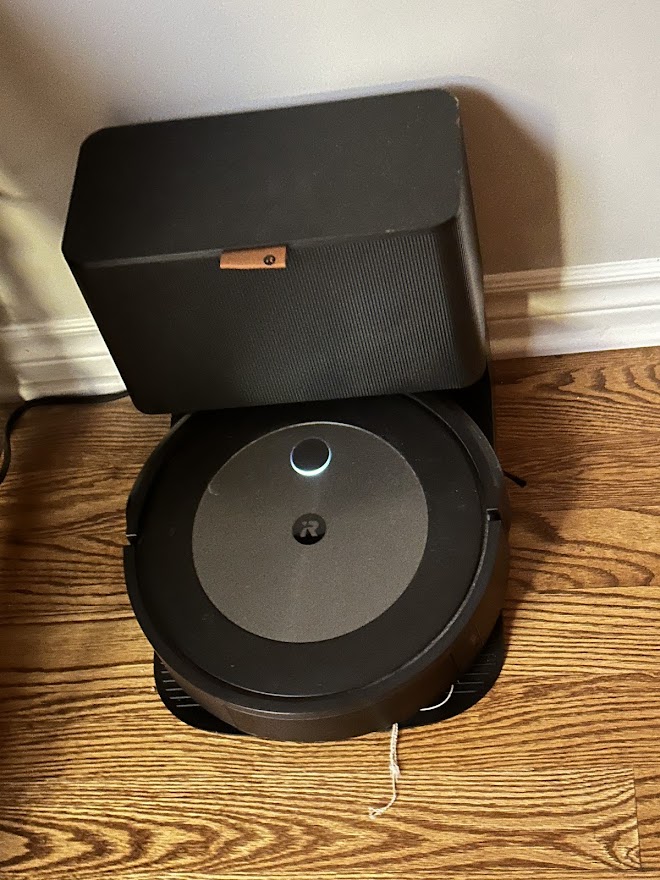
It was a typical Sunday morning. Kathy brewed some coffee, and then she and I scrolled through our iPhones, reading about the world’s problems, which put us in a negative mood. Instead, I suggested we leave reading the news and let Roomba, our iRobot, which we call Matilda, do some cleaning, and we have breakfast. Kathy agreed it was a good idea, so I switched the news channels on my iPhone to the Roomba app to start a “new job”. An iPhone is essential for accomplishing anything in today’s environment.

However, Matilda was in a cranky mood and sent me a voice message saying I needed to “blow out” the dirt from its previous job. It didn’t work at first; perhaps Matilda wasn’t quite awake. However, after ten minutes of troubleshooting accompanied by rich critical verbal expressions, I got it working. Listening to my running commentary on robots, AI, and techies, Kathy suggested a male name might be more fitting for our robot; a male’s early-morning grumpiness would more accurately reflects the robot’s behaviour this morning. So, we decided to rename the robot Mathis. The name was not a nod to Johnny Mathis; both of us are fans of his music.

But first, we had to clear the floor so Mathis could move around and clean. This meant putting the laundry basket, a few backpacks, slippers, and books lying on the floor onto the bed, in the bedroom. In the office, Kathy moved the office chair out of the way and the yoga equipment into another room. Finally, we were ready for Mathis to do his job.

Mathis struggled to navigate out of the dining room, which was full of obstructions. The room had five chairs and two tables, totaling twenty-eight legs that could interfere with Mathis’ movement. At one point, it seemed like he was lost as he moved back and forth, but he eventually found his way to the bedroom and the office. But his movements were inefficient overall, wasting significant battery power to reach the work sites.

For Mathis to work efficiently, it would be best to have an empty house with no furniture. Without obstacles like chair legs, he wouldn’t need to make detours and could make a clean sweep of the entire floor.

After some reflection, I decided to find a better home location for Mathis, with fewer obstructions on his way to reach the rooms in the house. A more central location in the house would avoid obstacles such as chair and table legs. So I moved Mathis’s home base to a new, central spot.

However, this change posed a potential problem: would Mathis feel at home in this new location after being accustomed to his previous spot? Are the floor plans in his memory tied to where he used to rest, or would he adjust and recognize the new location since he initially mapped our house from another place?

To test this new setup, I decided to give Mathis a “new job.” I asked him to clean the kitchen and the dining room after I turned all the chairs there upside down and placed them on the tables.

To see Mathis’s navigation skills in this new environment, I observed his movements. He seemed a bit lost at first, wandering around the living room before entering the dining room. However, he soon got to work, methodically cleaning the dining room by going back and forth, and then found the kitchen and cleaned it.

Overall, Mathis did an excellent job, and I considered rewarding him with a treat, such as a dog biscuit or candy, but how could I do it? This made me think that the brilliant designers of these robots should also provide rewards for good robotic behavior. Rewards could help robots learn from completed tasks and boost future performance.