November 24, 2025
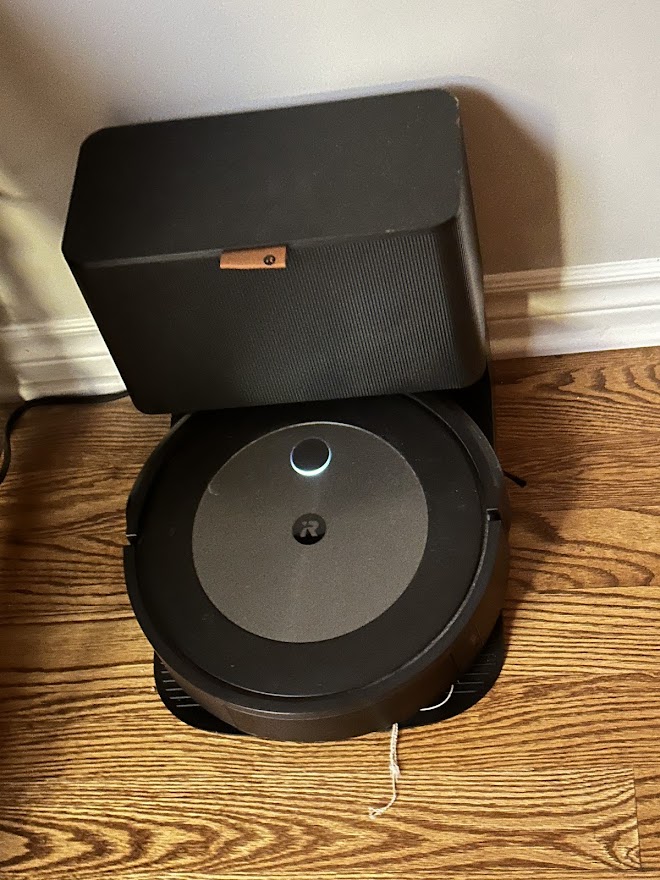
It was a typical Sunday morning. Kathy brewed some coffee, and then she and I scrolled through our iPhones, reading about the world’s problems, which put us in a negative mood. Instead, I suggested we leave reading the news and let Roomba, our iRobot, which we call Matilda, do some cleaning, and we have breakfast. Kathy agreed it was a good idea, so I switched the news channels on my iPhone to the Roomba app to start a “new job”. An iPhone is essential for accomplishing anything in today’s environment.
However, Matilda was in a cranky mood and sent me a voice message saying I needed to “blow out” the dirt from its previous job. It didn’t work at first; perhaps Matilda wasn’t quite awake. However, after ten minutes of troubleshooting accompanied by rich critical verbal expressions, I got it working. Listening to my running commentary on robots, AI, and techies, Kathy suggested a male name might be more fitting for our robot; a male’s early-morning grumpiness would more accurately reflects the robot’s behaviour this morning. So, we decided to rename the robot Mathis. The name was not a nod to Johnny Mathis; both of us are fans of his music.
But first, we had to clear the floor so Mathis could move around and clean. This meant putting the laundry basket, a few backpacks, slippers, and books lying on the floor onto the bed, in the bedroom. In the office, Kathy moved the office chair out of the way and the yoga equipment into another room. Finally, we were ready for Mathis to do his job.
Mathis struggled to navigate out of the dining room, which was full of obstructions. The room had five chairs and two tables, totaling twenty-eight legs that could interfere with Mathis’ movement. At one point, it seemed like he was lost as he moved back and forth, but he eventually found his way to the bedroom and the office. But his movements were inefficient overall, wasting significant battery power to reach the work sites.
For Mathis to work efficiently, it would be best to have an empty house with no furniture. Without obstacles like chair legs, he wouldn’t need to make detours and could make a clean sweep of the entire floor.
After some reflection, I decided to find a better home location for Mathis, with fewer obstructions on his way to reach the rooms in the house. A more central location in the house would avoid obstacles such as chair and table legs. So I moved Mathis’s home base to a new, central spot.
However, this change posed a potential problem: would Mathis feel at home in this new location after being accustomed to his previous spot? Are the floor plans in his memory tied to where he used to rest, or would he adjust and recognize the new location since he initially mapped our house from another place?
To test this new setup, I decided to give Mathis a “new job.” I asked him to clean the kitchen and the dining room after I turned all the chairs there upside down and placed them on the tables.
To see Mathis’s navigation skills in this new environment, I observed his movements. He seemed a bit lost at first, wandering around the living room before entering the dining room. However, he soon got to work, methodically cleaning the dining room by going back and forth, and then found the kitchen and cleaned it.
Overall, Mathis did an excellent job, and I considered rewarding him with a treat, such as a dog biscuit or candy, but how could I do it? This made me think that the brilliant designers of these robots should also provide rewards for good robotic behavior. Rewards could help robots learn from completed tasks and boost future performance.





 andrasthehun.ca