Can New Housing Strategies Solve Canada’s Affordable Housing Shortage?

April 26, 2025

With the Canadian federal election only days away, all federal parties have offered plans to tackle the housing shortage and its impact on affordability.

High housing prices, expensive rents, and a shortage of homes are key issues, especially for first-time homebuyers. Unfortunately, there are no simple solutions. The proposals presented by party leaders comprise well-worn ideas that have been around for decades.

While one party wants to double the annual housing construction to 500,000 units, another proposes 3 million units over 5 years—an annual rate of 600,000. According to one study, Canada must construct three million housing units by 2030 to satisfy demand and lower prices. The housing industry has averaged only 250,000 units built annually in recent years.

Canadians’ income levels are tied to affordability. The average salary in Canada is $67,000, while the average home price is $670,000. Salaries can vary based on age, occupation, and other factors, and home prices vary across the country depending on location factors. Historically, housing was affordable when an individual’s income was one-third of the home’s price. Home ownership becomes unattainable for many people today when the home price reaches ten times their annual income.

Despite these challenges, the housing market continues to bubble because of two-income households and help from family members.

We can attribute the current housing crisis to the imbalance between supply and demand. Demand has surged because of a rise in immigration; the government has acknowledged this situation and has implemented measures to reduce the number of immigrants. However, the government has not addressed supply.

The major political parties propose a plethora of ideas to increase supply:

A proposal to establish a new government agency, “Build Canada Homes,” immediately caught my attention. Whoa! I remembered the Ministry of State for Urban Affairs, a government agency established years ago that ran into provincial jurisdiction and was abolished. I worked there and learned the hard way not to interfere with provincial matters. And how long would it take to create a new agency?

One party proposes rent control due to steeply escalating rents, averaging over $2,000. Policymakers in Europe and North America have long discussed and implemented this system. However, it has always resulted in a lack of maintenance and deteriorating buildings. Rent control does not increase the housing supply; it does the opposite, although it benefits long-term rentals. It also leads to “renovictions,” or forcible eviction of people for renovations and the subsequent legal rent increase.

Another proposal is to build “affordable” housing units for homeless individuals, students, low-income families, and indigenous people. When I asked my local councillor to define affordable housing, he could not provide one. Subsidies are necessary to encourage developers to construct units that are not based on market rates.

There are also suggestions for building prefabricated housing, which is less expensive than traditional methods but of lower quality.

Yet another idea is to train more people in the building trades. The shortage of skilled labor is one reason Canada builds only about 250,000 housing units yearly.

People blame the cost and duration of the regulatory process, zoning, and associated standards, such as the building code, for increased costs. There’s a convincing argument for reducing standards to lower expenses, but would Canadians go back to smaller bedrooms and less insulation?

While the proposed solutions have merit, a significant issue remains: Most of these pertain to provincial matters, including planning, zoning, rent control, and building codes, all of which fall under local jurisdictions. Local governments are also responsible for education and training, should a program for skilled trades be established.

Housing inventory can only increase through new land development and the densification of existing urban areas. Since local jurisdictions control these functions, the federal government has limited opportunities to expand the housing stock beyond providing financial resources and taxation strategies, such as reducing the GST for first-time homebuyers (proposals also exist to use vacant federal lands and buildings for “affordable” housing).

Besides the limited availability of land and skilled labor for house construction, the rising cost of materials presents a significant barrier to building affordable housing. This begs the question: Can the federal government regulate the price of construction materials?

Considering the housing problem more broadly revealed added complexities. For example, homelessness is often associated with mental health issues and substance abuse, leading to more complex problems that need specific solutions.

Another complicating factor is that, with low unemployment rates in Canada today, many young people may not see the need to train for skilled trades when they already have jobs. Governments should promote training in skilled trades such as carpentry and plumbing, which offer good pay. Employed people, however, might be reluctant to switch careers.

I’m wary of recycled housing solutions presented as novel ideas. The proposed ideas are not fresh: similar proposals have been made before, and I wonder why these proposals have not been implemented. I believe the emphasis should be on cooperative action at all levels of government and execution rather than just rhetoric.

Eating and Walking: Discovering Wheeler’s Maple Sugar Shack

April 18, 2025

We went to a sugar shack in April this year. April weather is ideal for maple syrup flow, which happens when nighttime temperatures are -5 °C and daytime highs are 5°C (24°F to 40°F). Such weather is a pleasure to walk about, especially in contrast with the much colder weather in February and March.

I enjoy visiting maple sugar farms for their restaurants, which serve delectable pancakes with freshly made maple syrup, sausages, and beans. And post-lunch, I enjoy strolling through the woods and checking out the maple trees’ syrup containers.

We went to Wheeler’s this year for our annual sugar shack trip and pancake feast. The hour-long journey was worthwhile; a sunny day with blue skies followed the snowstorm, leaving the fields white.

Maple sugar shacks now typically require reservations. Despite this, the restaurant had few patrons when we got there. I think the idea is to ensure enough seats if a busload of tourists arrives.

The coffee flowed endlessly at Wheeler’s, and the enormous pancakes were eight inches in diameter. Thinking I was hungry for lunch, I ordered a two-pancake meal with three sausages and a side of beans. It was too much food, so I knew I would need a long walk afterward to burn off the meal. I recalled visiting a different sugar bush where we sampled local beer with friends last year.

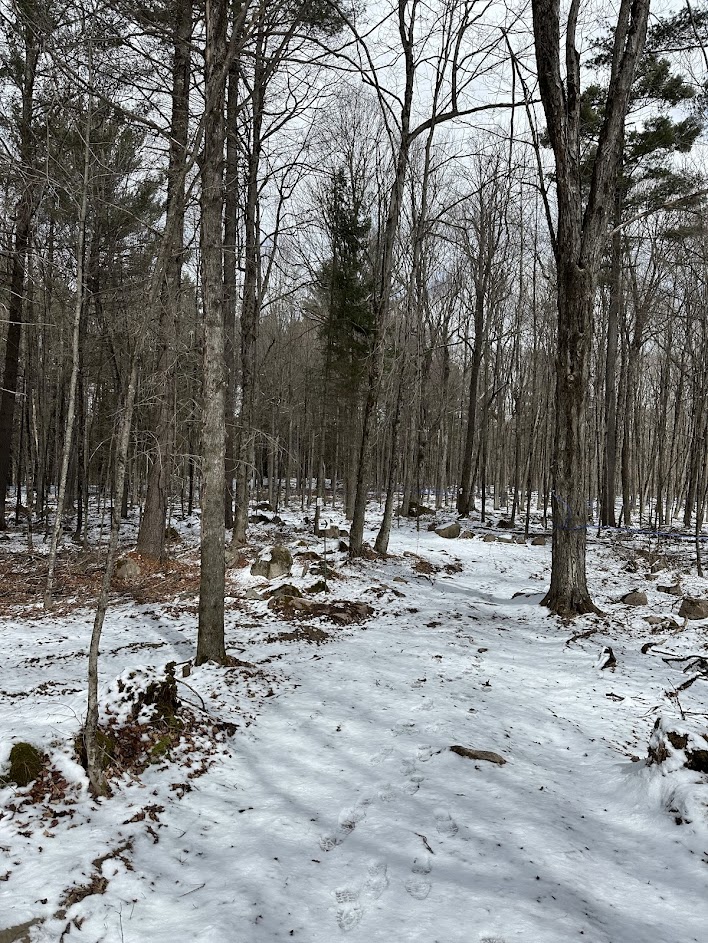
We found many trails outside and took the longest, five kilometers long. The snow covered the ground, with some icy patches in places. Only a few people were walking, and the silence in the woods was peaceful, perfect for yoga classes.

The history of this farm is fascinating. Vernon and Judy Wheeler purchased the farm and planted sugar maples, and they, along with their four children, still operate the farm today. It takes thirty years for the trees to be ready for tapping, and they tapped their first trees in 1978. They installed six hundred kilometers of plastic pipes to collect sap from forty thousand trees. Vernon’s local builder helped construct the restaurant using local wood, which opened in 1996. Vernon also wrote a book about the farm’s history, available in the restaurant’s lobby.

The Wheelers keep the farm open year-round for visitors, with the only exception being Christmas Day. Families enjoy exploring the farm during the summer by hiking the grounds, while cross-country skiing and snowshoeing are popular winter activities.

Syrup production involves boiling sap down to a 40:1 ratio. Boiling the sap further makes a sweeter, darker, and thicker syrup. Customers can choose from three grades of syrup, ranging from light to dark, when making their purchases

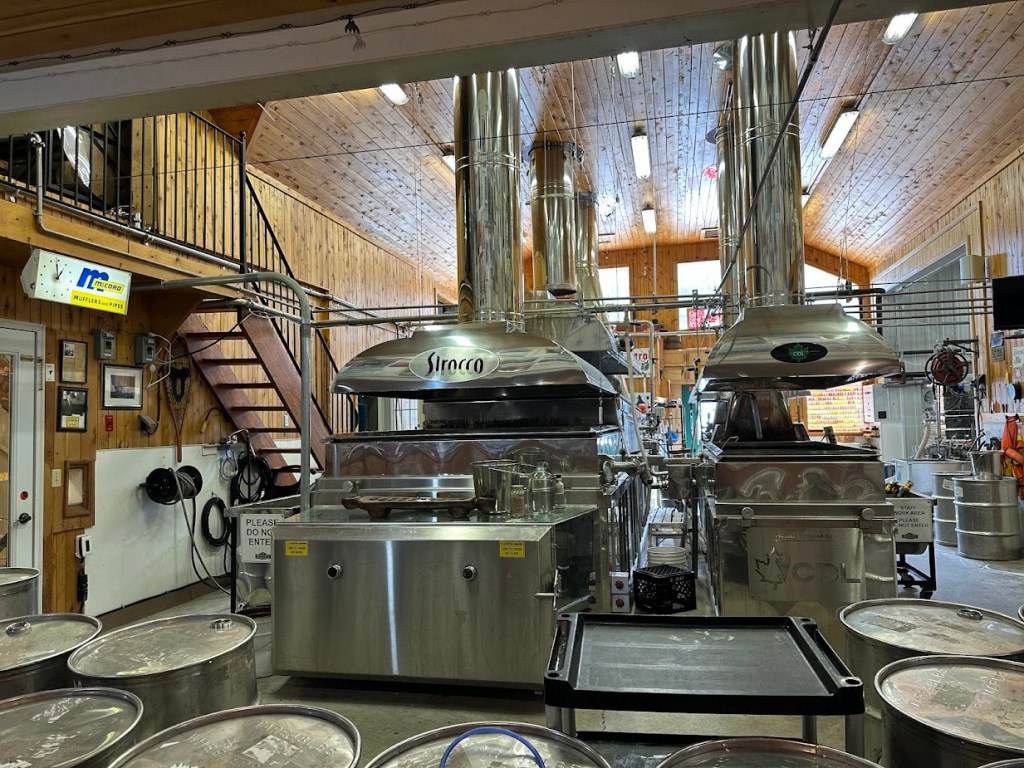
Previously, people boiled sap outside in large kettles to evaporate the water. Today, however, they use reverse osmosis to produce the syrup. The factory at Wheeler’s is open for inspection and features a large room with advanced equipment. A kitchen and a small shop offering maple syrup items are situated between the appealing post-and-beam restaurant and the factory.

Panels within the plant’s viewing area show information about the maple syrup industry. Canada provides over 80 percent of the global maple syrup supply, 90 percent of which originates from Quebec, and 4 percent from Ontario.

It was an Indigenous child who discovered maple syrup hundreds of years ago by sucking on the icicle of a branch from a maple tree. The sugary taste was delightful, a treat Indigenous people quickly learned to harvest. It took about a hundred years for them to develop the method of boiling the sap to create today’s sweet syrup.

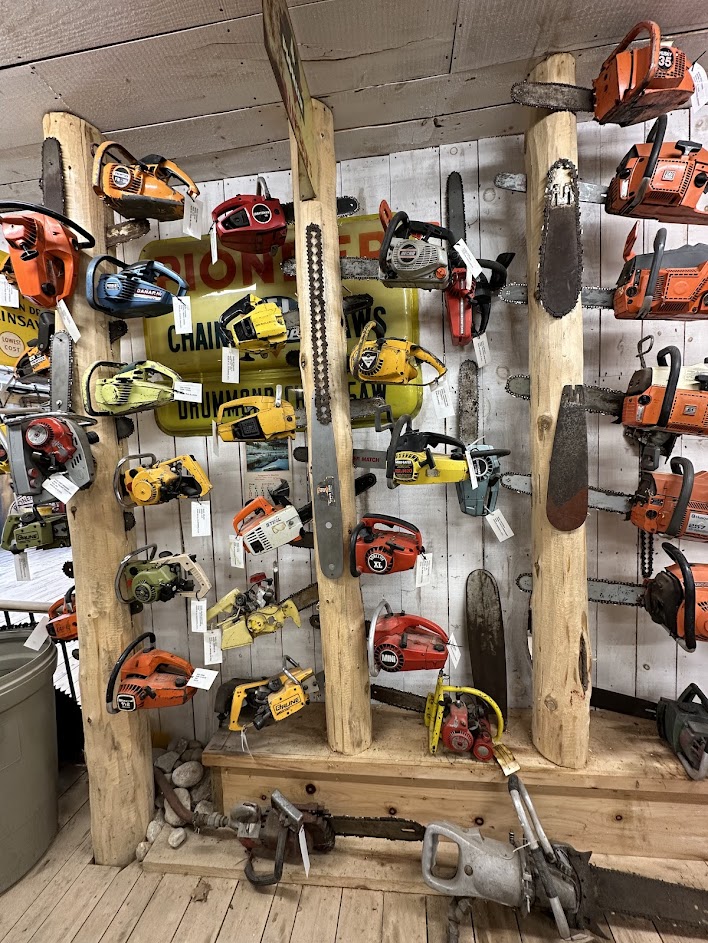
The two museums on Wheeler’s farm are possibly the most interesting part. One museum displays hundreds of maple syrup artifacts, the other shows Mr. Wheeler’s extensive chainsaw collection. The chainsaw collection amazed me; there are over four hundred old models, some of which I recognized, while others were unfamiliar.

      
A couple of soulful llamas stared at us as we approached the museums. The presence of llamas on this farm, among other options, puzzled me.

Maple syrup is a quintessential Canadian product. I recall trips to Europe where we searched for gifts for family and friends to take with us. We often bought small jars of maple syrup. Thankfully, travel for fresh maple syrup is no longer necessary; our neighbours’ parents run a maple farm, and we can purchase fresh maple syrup from them at wholesale prices.

Understanding the Brain: Insights from Dr. Schwartz’s Book

April 13, 2025

Neurosurgeon Dr. Theodore Schwartz argues in his 2024 book, Gray Matters, that your brain defines you. He contends that “soul” and “mind” are English language constructs without scientific foundation.


Millions of neurons, the brain’s nerve cells, transmit messages that store a person’s memories, knowledge, habits, and sensory details. These clusters of neurons form different lobes or regions of the brain, each responsible for specific functions such as vision, hearing, language comprehension, and pain perception.


I’m fascinated by how neurosurgeons chart brain functions using electrodes and electrical pulses in individual lobes. For example, stimulating one lobe with an electrode can cause leg movement or relieve a cramp. By repeating this procedure, neurosurgeons create a detailed brain map, akin to a world atlas, showing areas connected to sensory and other stimuli.


Personal decisions and actions are shaped by neurons storing one’s identity, history, and knowledge. People can broaden these factors by learning, traveling, and having new experiences.


This thought process is reminiscent of artificial intelligence (AI). AI can solve problems and generate responses based on information stored in its memory, derived from sources like the Internet. Our decision-making processes mirror AI’s use of available data, the data we have stored by neurons in our brains.


Dr. Schwartz raises a thought-provoking point: Are our decisions truly free, given the information constraints within our brains, limited by what is stored in the neurons in one’s brain? Decisions are often shaped by information from sources such as car salespeople or tour guides. Their insights, combined with our resources and aspirations stored in neurons in our brains, lead us to our conclusion. This prompts the question of whether our decisions are truly free or predetermined.

Dr. Schwartz concludes with a chapter on “brain-computer interfaces” (BCI). This emerging field allows electrodes to connect with the brain, and future technologies may enable wireless connections to the brain. Surgeons implant electrodes in the brain to treat Parkinson’s disease; these electrodes stimulate motor function neurons to improve movement control. While BCI holds promise for enhancing intelligence and physical performance, its early development raises complex ethical questions relative to changing human behavior. Employing BCI in this manner is rather disturbing.

However, Gray Matters encompasses significantly more than just describing brain mapping and discussing free will and BCI. Dr. Schwarz also describes the history of neurosurgery and training neurosurgeons in easy-to-read language, sharing anecdotes about well-known individuals who have undergone neurosurgery resulting from shootings and sports accidents, including JFK and President Biden. He also examines the crucial choices neurosurgeons face in emergencies, choices with potentially severe outcomes.


Neurosurgeons are interesting because they can perform long surgeries without breaks, which requires excellent physical stamina. The author portrays brain surgery as “the ultimate in mindful meditation,” where surgeons ignore all bodily needs, even the urge to use the restroom, until the operation is finished.

Despite its length of five hundred pages on a complex subject, the book targets the general reader. The illustrations show the brain’s parts and neurosurgical instruments. Learning that early practitioners used drills and saws to open skulls for brain access is fascinating. Today, however, computerized equipment has become the standard. I found the book extremely interesting because of what its content portends for our future as individuals. Neurosurgeons will be able to change personality by influencing brain functions. Would these changes be initiated by the individuals themselves, or could some authorities mandate them? These are troublesome questions that need a response.


Memories of Chapel Hill: Love, Weddings, and History

April 1, 2025

Chapel Hill. The University of North Carolina. Ah! All the memories came rushing back as we drove around, parked the car, and walked along Franklin Street in Chapel Hill, North Carolina.

I recalled meeting the Dean of City Planning, who welcomed me upon my arrival. He greeted me warmly and instilled confidence in me that I could not fail here. After I met my future wife, we listened to Johnny Cash on the quad, frequented local pubs, and eventually got married!

We initially had a civil ceremony in South Carolina without informing our families; it was one of those spur-of-the-moment decisions. The experience of the civil process, alongside that of four other couples, felt rather mundane. Returning to Chapel Hill, my Peugeot 403 broke down on the road, and we had to hitchhike back.

Returning to our dorms after the ceremony was exhilarating. We had a piece of paper that officially declared us married, and we were embarking on a new life together, forever. I wondered if this was the same experience that pioneers felt when loading their wagons on the journey west.

At that moment, no one knew we were married—not even our school friends.

This exhilarating feeling lasted for a few weeks until we had our church wedding in the Episcopal Chapel of the Cross, which was attended by family and my classmates, with whom I had just graduated. In the lead-up to the wedding, the pastor asked us if our differing religious beliefs would ever cause friction between us. It seemed unlikely: I was a non-practicing Roman Catholic, while Kathy was Episcopalian. Having a church wedding was the traditional way to get married, which both our families accepted.

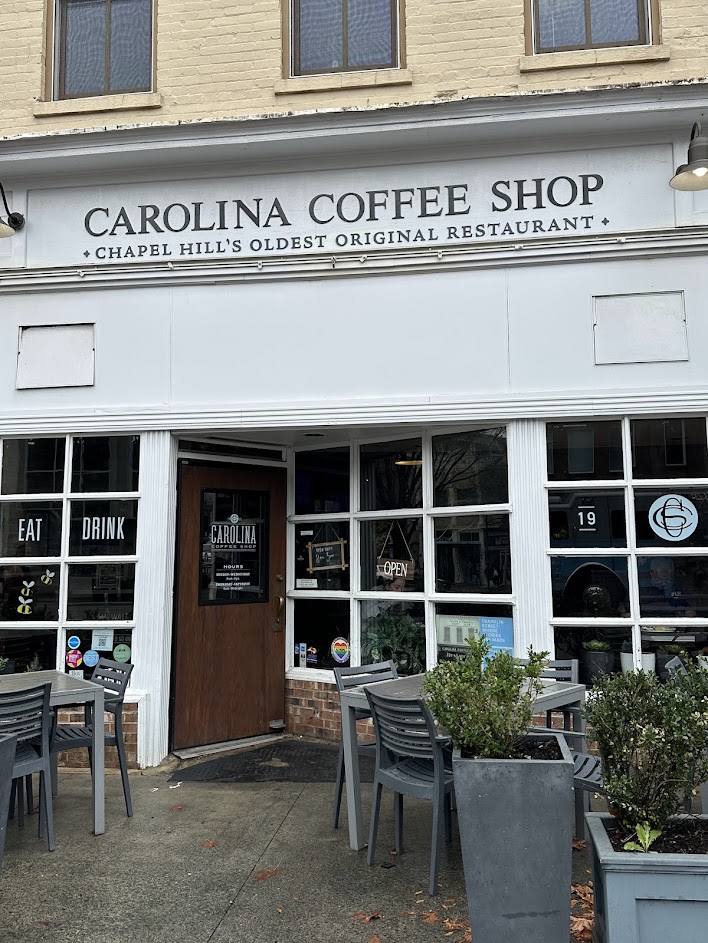
The memories bubbling up were from over fifty years ago. The Town of Chapel Hill has also aged. We walked along Franklin Street starting from Martin Luther King Jr. Boulevard. There were many more restaurants, coffee shops, and fraternity and sorority houses than we could recall from the past, in addition to newer tourist shops, vaping lounges, and art galleries.

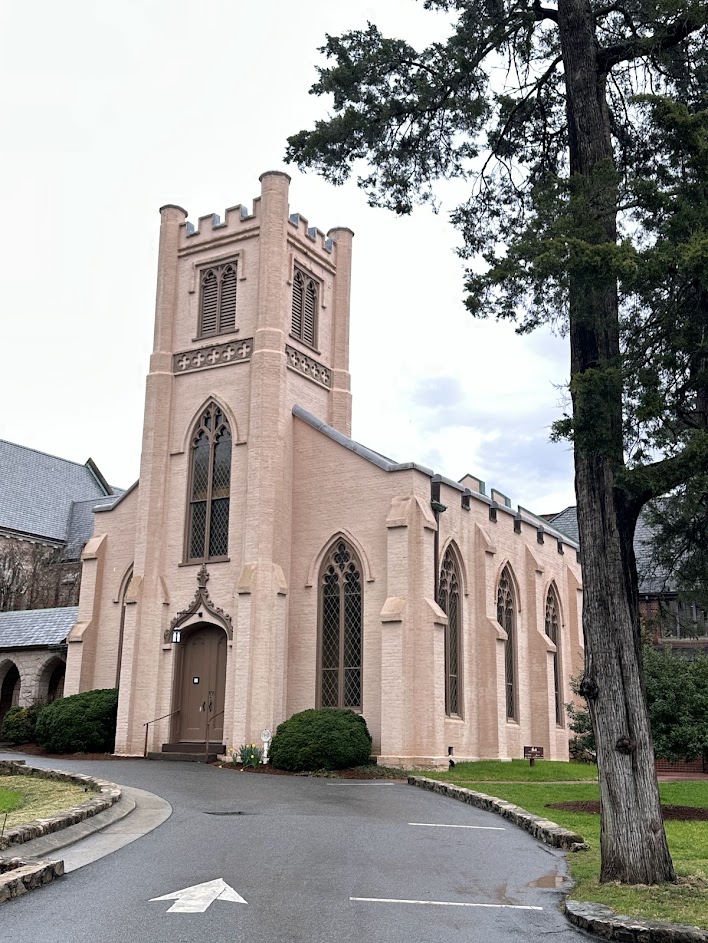
As we crossed Franklin Street, we approached the Chapel of the Cross, where we were married decades ago. I couldn’t remember much about the building except for the circular driveway in front. I remember it well because, after the ceremony, when we tried to drive away in Kathy’s car, my classmates had blocked our tires with rocks. I felt embarrassed as I heard all my friends laughing. I quickly exited the vehicle and moved the stones. However, a loud noise came from the wheels during my next attempt to speed off. I decided to ignore the noise as we drove away, stopping a few blocks later to empty the rocks from the hubcaps.

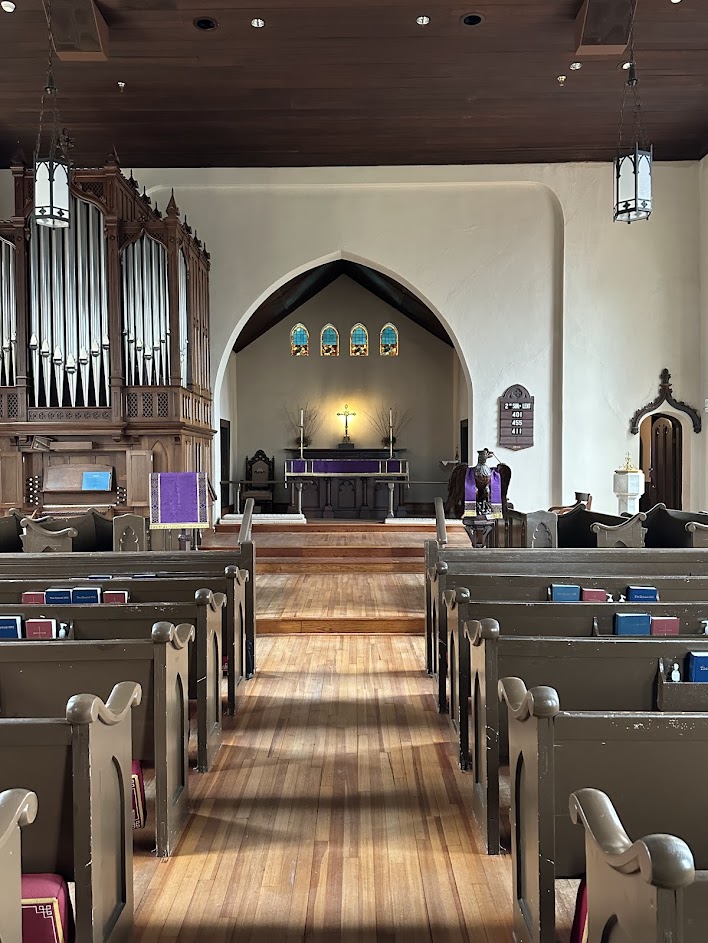
To my surprise, the Chapel did not evoke any strong emotions within me. I struggled to recall its architecture and viewed the Chapel as if I were seeing it for the first time. However, once we entered the building, the historical information provided in a brochure added to a cultural dimension that was entirely new to me and left a lasting impression.

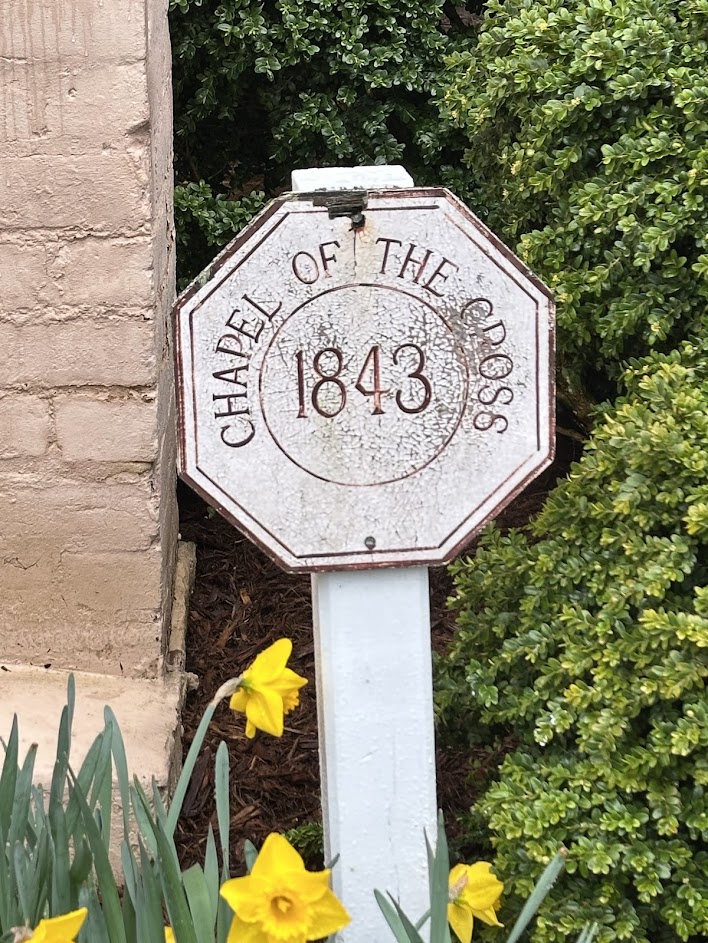
Mary Ruffin Smith (1814-1885) was an early benefactor of the Chapel, constructed in 1843. Her father, a plantation owner, physician, and congressman, paid $450 for a mulatto slave, a fifteen-year-old girl, for Mary. One of Mary’s brothers took a fancy to the slave girl, Harriet, and stalked and sexually assaulted her. Mary’s other brother, Frank, took exception and pummeled Sidney, ordering him to stay away from Harriet. Sidney stayed away from Harriet after the incident, during which she gave birth to a girl, Cornelia. However, Frank fell in love with the girl and had three daughters with Harriet. Mary cared for Harriet and the four girls, bought them from the plantation, and took them to the Chapel of the Cross every Sunday. All the colored people sat on the balcony of the Chapel, not permitted to sit with the white folks. Mary had all four girls baptized at the Chapel, as well as Harriet.

The story continued with Pauli Murray (1910-1985), the granddaughter of Cornelia, the oldest of Harriet’s daughters. Murray was an author, activist, and writer. In 1938, she attempted to enroll at the University of North Carolina (UNC), but her admission was denied due to her race, despite her close relationship with her great-aunt Mary, who had donated a significant portion of her land to the university. Pauli Murray went on to become a lawyer and practice law. In 1977, she made history as the first African American woman to be ordained as an Episcopal priest in the United States. After her ordination, Rev. Pauli Murray took communion in the Chapel where her enslaved grandmother had been baptized.

This story left a significant impression on me. Perhaps it’s because topics like plantations, slavery, the significance of skin color, and religion are not part of my background. Instead, I could discuss the Iron Curtain, Communism, and the experiences of the Pioneers (the communist equivalent of the Boy Scouts), as I spent my youth in Hungary under Russian domination.