Memories of Chapel Hill: Love, Weddings, and History

April 1, 2025

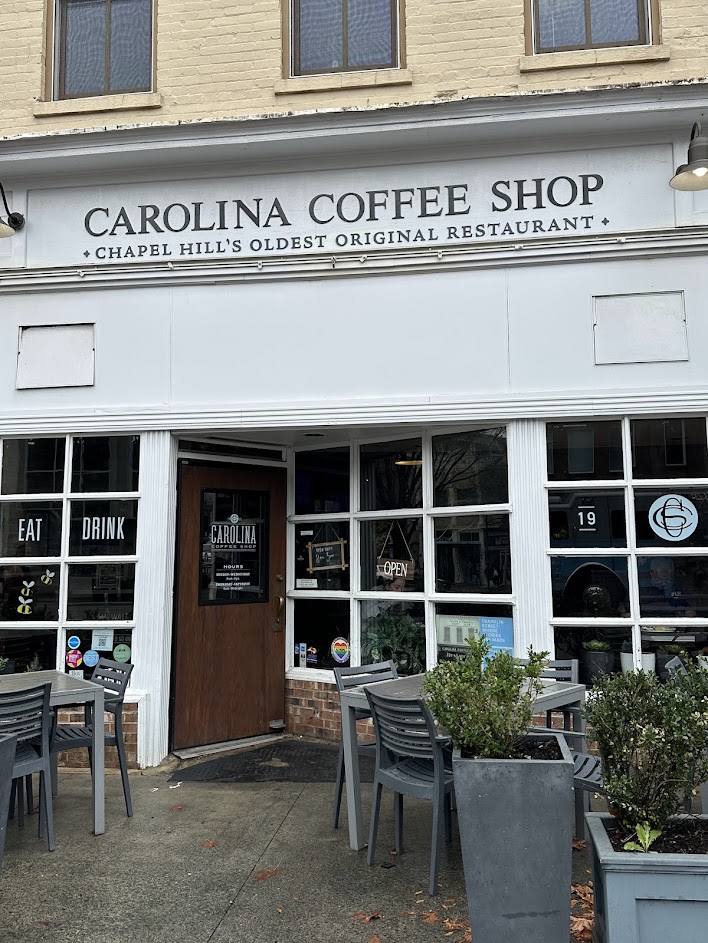
Chapel Hill. The University of North Carolina. Ah! All the memories came rushing back as we drove around, parked the car, and walked along Franklin Street in Chapel Hill, North Carolina.

I recalled meeting the Dean of City Planning, who welcomed me upon my arrival. He greeted me warmly and instilled confidence in me that I could not fail here. After I met my future wife, we listened to Johnny Cash on the quad, frequented local pubs, and eventually got married!

We initially had a civil ceremony in South Carolina without informing our families; it was one of those spur-of-the-moment decisions. The experience of the civil process, alongside that of four other couples, felt rather mundane. Returning to Chapel Hill, my Peugeot 403 broke down on the road, and we had to hitchhike back.

Returning to our dorms after the ceremony was exhilarating. We had a piece of paper that officially declared us married, and we were embarking on a new life together, forever. I wondered if this was the same experience that pioneers felt when loading their wagons on the journey west.

At that moment, no one knew we were married—not even our school friends.

This exhilarating feeling lasted for a few weeks until we had our church wedding in the Episcopal Chapel of the Cross, which was attended by family and my classmates, with whom I had just graduated. In the lead-up to the wedding, the pastor asked us if our differing religious beliefs would ever cause friction between us. It seemed unlikely: I was a non-practicing Roman Catholic, while Kathy was Episcopalian. Having a church wedding was the traditional way to get married, which both our families accepted.

The memories bubbling up were from over fifty years ago. The Town of Chapel Hill has also aged. We walked along Franklin Street starting from Martin Luther King Jr. Boulevard. There were many more restaurants, coffee shops, and fraternity and sorority houses than we could recall from the past, in addition to newer tourist shops, vaping lounges, and art galleries.

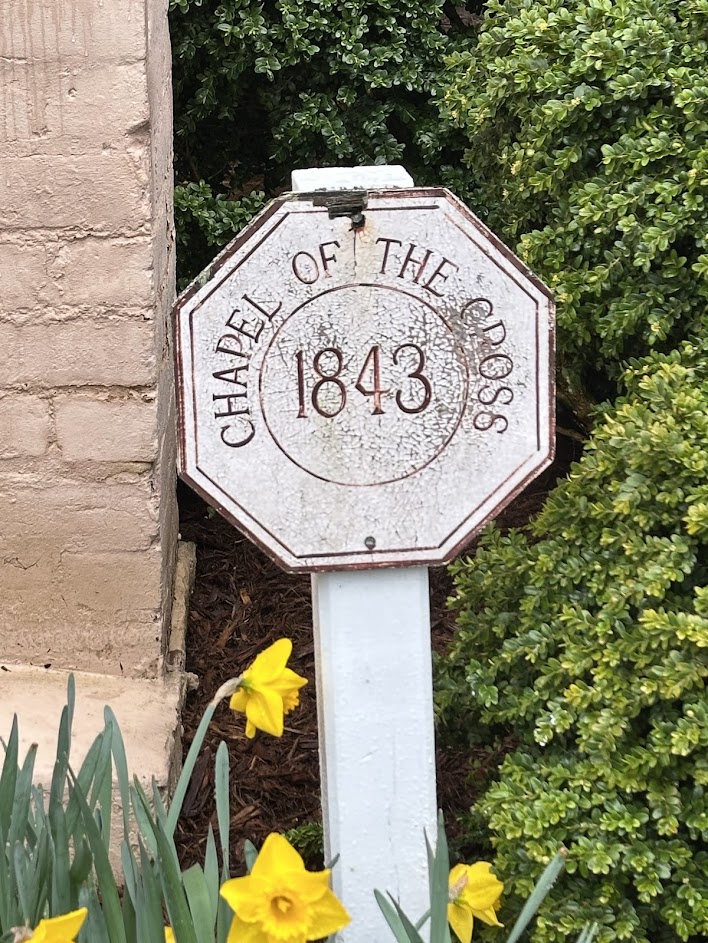
As we crossed Franklin Street, we approached the Chapel of the Cross, where we were married decades ago. I couldn’t remember much about the building except for the circular driveway in front. I remember it well because, after the ceremony, when we tried to drive away in Kathy’s car, my classmates had blocked our tires with rocks. I felt embarrassed as I heard all my friends laughing. I quickly exited the vehicle and moved the stones. However, a loud noise came from the wheels during my next attempt to speed off. I decided to ignore the noise as we drove away, stopping a few blocks later to empty the rocks from the hubcaps.
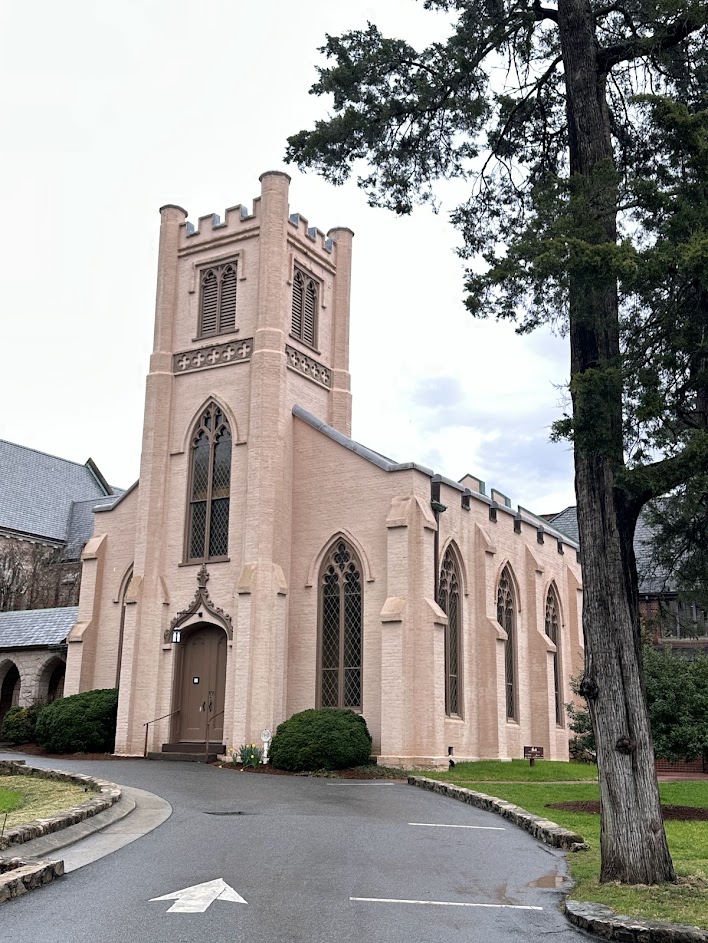
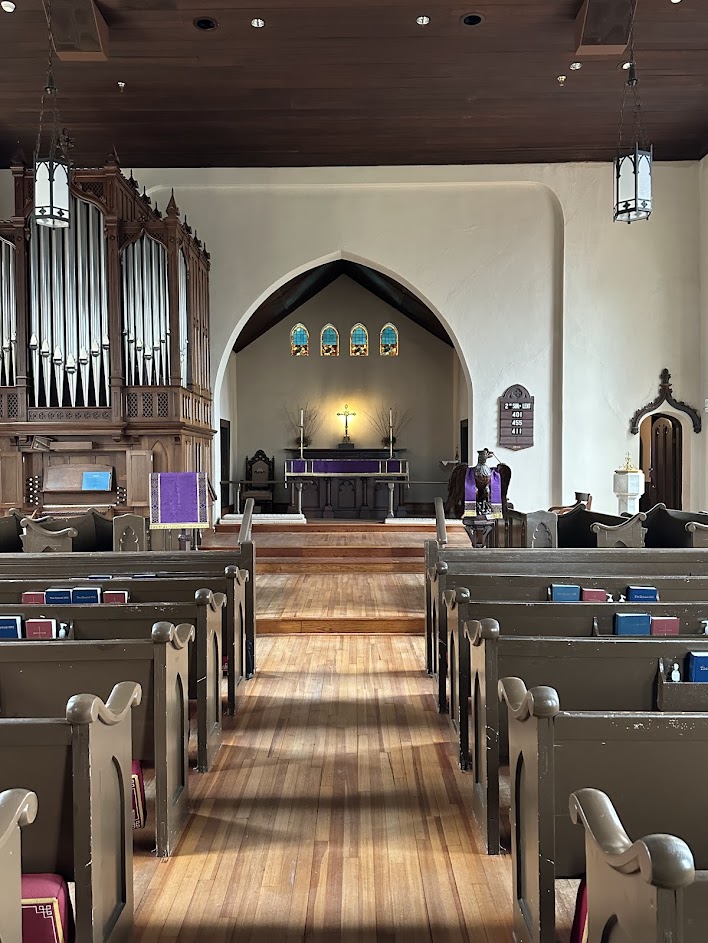
To my surprise, the Chapel did not evoke any strong emotions within me. I struggled to recall its architecture and viewed the Chapel as if I were seeing it for the first time. However, once we entered the building, the historical information provided in a brochure added to a cultural dimension that was entirely new to me and left a lasting impression.

Mary Ruffin Smith (1814-1885) was an early benefactor of the Chapel, constructed in 1843. Her father, a plantation owner, physician, and congressman, paid $450 for a mulatto slave, a fifteen-year-old girl, for Mary. One of Mary’s brothers took a fancy to the slave girl, Harriet, and stalked and sexually assaulted her. Mary’s other brother, Frank, took exception and pummeled Sidney, ordering him to stay away from Harriet. Sidney stayed away from Harriet after the incident, during which she gave birth to a girl, Cornelia. However, Frank fell in love with the girl and had three daughters with Harriet. Mary cared for Harriet and the four girls, bought them from the plantation, and took them to the Chapel of the Cross every Sunday. All the colored people sat on the balcony of the Chapel, not permitted to sit with the white folks. Mary had all four girls baptized at the Chapel, as well as Harriet.

The story continued with Pauli Murray (1910-1985), the granddaughter of Cornelia, the oldest of Harriet’s daughters. Murray was an author, activist, and writer. In 1938, she attempted to enroll at the University of North Carolina (UNC), but her admission was denied due to her race, despite her close relationship with her great-aunt Mary, who had donated a significant portion of her land to the university. Pauli Murray went on to become a lawyer and practice law. In 1977, she made history as the first African American woman to be ordained as an Episcopal priest in the United States. After her ordination, Rev. Pauli Murray took communion in the Chapel where her enslaved grandmother had been baptized.

This story left a significant impression on me. Perhaps it’s because topics like plantations, slavery, the significance of skin color, and religion are not part of my background. Instead, I could discuss the Iron Curtain, Communism, and the experiences of the Pioneers (the communist equivalent of the Boy Scouts), as I spent my youth in Hungary under Russian domination.
The Death of the Single-Family Home on a Quarter-Acre Lot

February 3. 2023

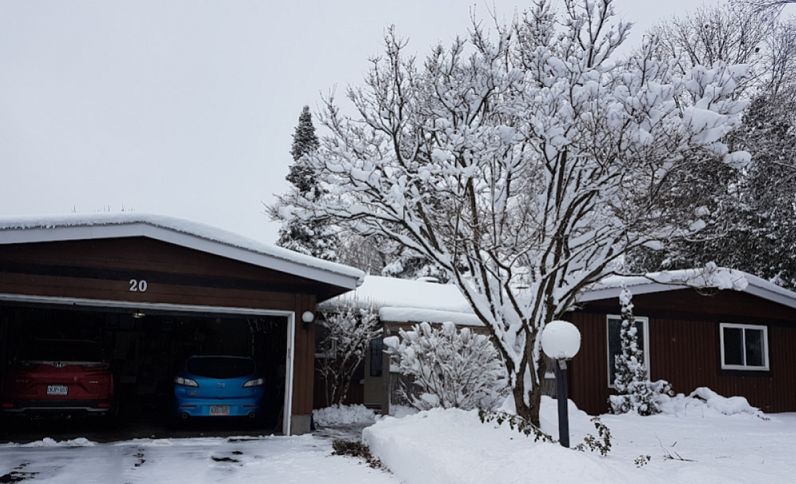
The house on a quarter-acre lot, which has been the Canadian dream, is under vicious attack. The quarter-acre lot in planning terms is the R1 zone, which occupies over half of the land of Canadian cities. In Ottawa, the R1 zone occupies over 50% of the land; in Toronto, Calgary, Edmonton, and Vancouver, it is over 60%, while in Montreal it is 45%.

But the R1 zone is “exclusionary” cry social advocates, citing the shortage and unaffordability of housing, to absorb people arriving in Canada’s cities from the hinterland, and from abroad. R1 is the culprit and therefore, it must be eliminated to permit higher densities, putting two and three dwellings on the quarter-acre lot.

But how can the R1 zone be “exclusionary” when more than half of the land used in cities is zoned R1? To me, the word exclusionary conjures up images of elite golf clubs; high-end tennis clubs, and similar facilities with entrance requirements that a minority of people possess. And by a minority, we usually talk about the “top” five percent or even the top one percent of people.

In 2016, fifty-three percent of dwellings were single-family detached homes in the R1 zone in Canada, and I would not call this metric exclusionary. The rest of the Canadians live in apartments and condominiums.

I realize municipalities could use zoning for excluding certain groups of people by specifying  minimum lot and house sizes, which could make purchasing a house unaffordable for some people. It happened to blacks in parts of the United States (until it became illegal to do so), but I have seen nothing in Canada to illustrate that zoning has been used to exclude a specific group of people from a community.

I studied city planning at the University of North Carolina where Professor Chapin wrote and taught the classic and long-used textbook “Urban Land Use Planning”. According to him, zoning has been a tool to regulate development, generated by employment growth, creating a need for housing, schools, and commercial development.

We have been fortunate in Canada to date, being able to expand the urban boundaries of our metropolitan areas, to provide for growth and reasonably priced housing. Now, suddenly, we find that environmental concerns, greenbelts, and natural boundaries like water and mountains constrict some of our cities concurrent with our radically exploding immigration intake, creating an unprecedented demand for housing.

The government solution to the housing crisis is to densify our communities, and one approach is to permit the doubling or tripling of dwellings that occupy half the land of our cities. And that is the R1 zone. Conclusion: it has to be done away with. Ontario recently introduced legislation to triple the population of the R1 zone by allowing three dwellings on the quarter-acre lot instead of one, starting in the summer of 2023.

I think that by doing so, we’ll destroy some of our attractive and historical districts. Allowing three dwellings where there is one now will lead to a haphazard and unsightly streetscape. Instead of the usual one car per dwelling, we’ll have four of five cars on the same piece of land and lacking parking space on the quarter-acre lot, on the streets. Traffic will increase on roads designed for low-density residential districts. Schools will have to be renovated to serve more children on limited sites.

So, you ask, what is the solution for the burgeoning demand for additional housing? I think that we’ll have to develop some new towns and/or attract our future development into peripheral small towns around our metropolitan areas.

Failing that approach, I suggest that densification in our single-family communities should be allowed gradually in places where the installed infrastructure permits additional development, or until after governments build the required infrastructure.

But the demise of the single-family dwelling on a quarter-acre lot has already started. In my community, doubles have replaced single-family units. In one situation, someone purchased two lots, demolished the homes on the land, and constructed three units. These small-scale redevelopments, to date, have bordered our community, but I foresee some enterprising homeowners in the middle of our community replacing their dwellings with a duplex or triplex, creating increased traffic and destroying the family-oriented nature of the community.

How Did You Meet Your Spouse

November 12, 2022

That was the question at a celebration of a friend’s sixtieth wedding anniversary. We were looking at pictures of the couple’s past activities going back decades when someone popped the question. After the wife related how a “blind date” experience in Montreal led to an amazing sixty years of marriage, somebody spoke up and wanted to know how others, present at the celebration, met. I had no chance to relate my story; the conversation turned to how long it took from meeting your spouse to the wedding.

So here is my story. It started with my first car: a Peugeot 403 that I bought in Vancouver, in the early 1960s. I drove my car to North Carolina to attend graduate school in January 1965.

During the summer of 1965, I, along with two other graduate students studying city planning at the University of North Carolina (UNC) at Chapel Hill, had summer jobs in Washington, DC.

Ray rented a cheap apartment painted all black; it was unbearably hot with no AC. Another classmate, Alvaro, and I rented a room at Hartnett House off Dupont Circle. It was a bit of a flophouse. Our room had a window facing inwards onto a courtyard, with no air-conditioning and no fans.

If you know Washington’s weather during the summer, you know how steamy and hot it can be. Going to the beach one weekend was a wonderful idea, and since I was the only one with a car, I drove all of us to the beach in my Peugeot.

Alvaro invited Kathy to come with us to the beach. Kathy was a graduate student as well, studying economics and political science at UNC.

As soon as we arrived at the beach, Ray and Alvaro went to play the slot machines in the arcade. Kathy and I started talking about school life and hit it off immediately; we discovered we were both newcomers to North America and shared details of our growing up here. In those days we called stealing your friend’s date “birddogging”.

During the summer, Kathy and I got to know each other while discovering Rock Creek Park, going to nightclubs with blaring music, and eating at fish bistros along the Potomac. Our relationship hit a high point when her mother invited me for dinner. She was an experienced cook; the chicken meat just fell off the bones. I enjoyed the dinner and told her so. That pleased her. I was in.

I asked her to marry me three weeks after meeting her and bought her a skinny ring that I could afford from my meagre earnings that summer. But promised that I would replace the ring with a much larger ring as soon as I could buy one; I did so later when my job took me to the Yukon, where I bought her a wide gold ring.

The summer ended, and we had to go back to university. I suddenly got worried that if I spend so much time with Kathy, my studies will suffer. But as soon as we were back at school, we saw each other every day, starting with breakfast at Lenoir Hall, the student cafeteria.

We planned the church wedding for June 7, 1966, right after graduation, in Chapel Hill. But I had a suggestion; let us get married in a civil ceremony before the church wedding. We hustled off to South Carolina so that no one would know of our marriage and got married in the courthouse by a Justice of the Peace. I did not think the props in the courthouse measured up to the significance of the event; a couple of flowerpots did not provide the right background for taking a vow for life. But it was a marriage, and we had the certificate to prove it.

Our courthouse marriage burned an unforgettable memory in my mind; two grad students in a small South Carolina town, far from family, getting married, with nobody around who knew us, casually dressed, and making a contract for life. I thought it was surrealistic but deeply emotional and tremendously exciting.

This unique experience overwhelmed us, and nothing could break our spirits, not even when my faithful old car, the Peugeot 403, broke down on the drive back to Chapel Hill and we had to hitchhike back home. We just left the car on the highway; I took the license plates off it so people could not trace the car back to me. Disposal of the car was the last thing on my mind right after our union.

I cannot describe in words how excited and happy I felt being married, nobody knowing about it, not even my family, and going back to my dorm and Kathy going back to her dorm where she was a student councilor (her dorm students would have been flabbergasted to know what their advisor/councilor just did. This was in the sixties!).

The preparations for the church wedding took some other interesting turns; the pastor at the  Chapel of the Cross Episcopal Church who was to perform the wedding ceremony asked if religion would cause a problem for us. Kathy is Episcopal and I am Catholic. I assured the pastor that religion would not be an issue; I was a non-practicing Catholic and could not see myself launching into heavy arguments over religious doctrines.

Kathy’s brother Huw, whom I just met the day before the wedding, and my friend Ray, took me out for a few drinks; explaining that it was a custom to do so. On the day of the wedding, I got up a bit groggy and searched around for my formal clothing only to find I did not have a tie. I walked down the dorm corridor hall knocking on doors until I found a classmate happy to lend me one. I was ready to marry the second time.

My entire city planning class showed up for the wedding and had a great laugh when I tried to drive off in Kathy’s car. They put rocks in front and back of the tires, and I could not drive off until I got out of the car and cleared the rocks to the laughter of all. And when I drove off, a terrible racket came from the hubcaps; my friends put rocks into them as well. I drove off and stopped a block away to take the hubcaps off to get rid of the stones before driving off to our honeymoon.

Although I did not have the opportunity at the celebration to relate my story, I reflected on a marriage that lasted over sixty years. What I found more significant is that only one percent of couples in the U.S. can celebrate 60 years of marriage. I could not find similar statistics for Canada. I also found that an average marriage lasts fifteen years in Canada. So, a sixty-year marriage is an incredible achievement. Congratulations.