November 7, 2025
Dana Milbank’s recent Washington Post article about forest bathing caught my attention. Forest bathing is like a walk in the park, but with a focus on the forest’s sights, sounds, and smells. Forest bathing, a trend originating in Japan in the late 1800s known as shinrin-yoku, is spreading in the U.S. The Harvard Medical School even offers a course on it for its overworked residents, highlighting its significance.
Forest bathing involves taking a leisurely walk in a forest while disconnecting from digital devices and focusing on sensory experiences. It includes stopping to contemplate your surroundings and even taking off your shoes to feel the ground beneath you. Engaging in conversations with trees and plants is also part of the experience. The walk can last anywhere from an hour to a few hours, and the beneficial effects can last for days or weeks.
According to enthusiasts, the benefits include improving the immune system, lowering blood pressure, promoting relaxation, and enhancing sleep. Walking among trees allows you to breathe in tree oils known as phytoncides and plant compounds called terpenes. Studies suggest that these chemicals may help prevent cancer and protect against dementia. While I’m not entirely convinced of all the claims, this information has inspired me to give forest bathing a try.
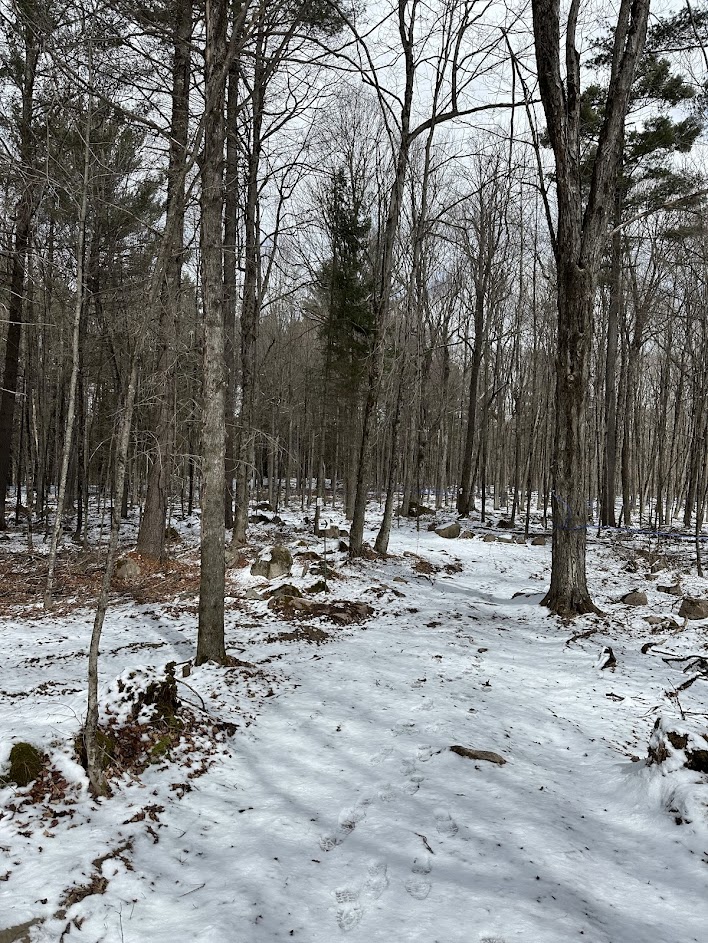
I visited the paths behind Ottawa’s Sportsplex. I strolled at a leisurely pace of three kilometers per hour (about two miles per hour), fully engaging my senses. I could hear airplanes flying overhead and the sounds of traffic from the major roads surrounding the park. The traffic noise was quite noticeable, especially since there were no leaves on the trees to act as a buffer. I did hear leaves falling, but I didn’t hear any birds singing; they must have flown south for the winter, as it is November.
As I looked around, I noticed the attractive tapestry of leaves on the ground. Many trees lay on the ground, some having fallen during windstorms and others cut down to clear pathways. Many fellow walkers, some with their dogs, greeted me and engaged in conversations.
The ground felt soft beneath my feet, and I could feel the wind gently brushing against my face. The bark of the trees felt cold to my touch. Apart from a few dogs licking my hands, I didn’t experience other tactile sensations.
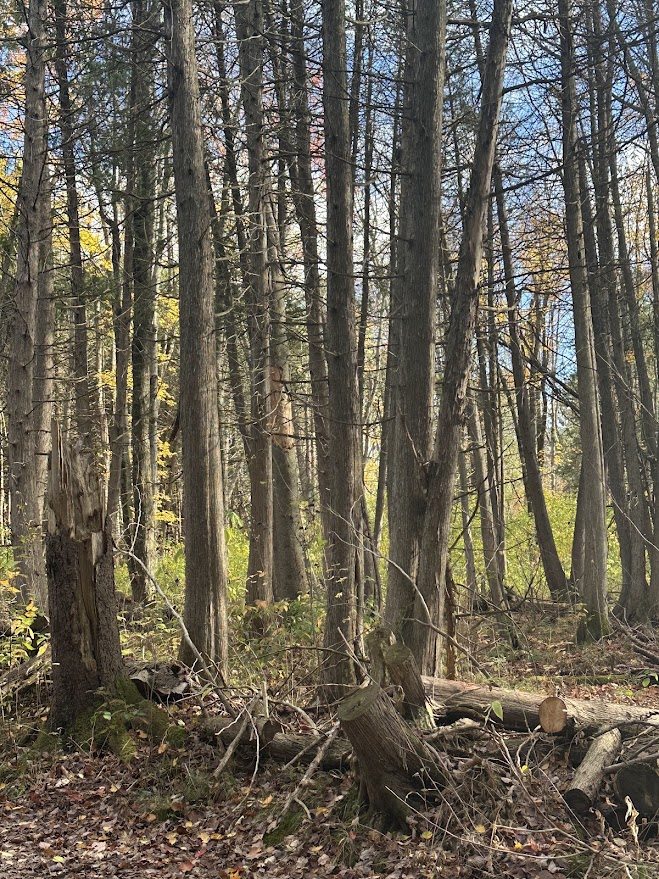
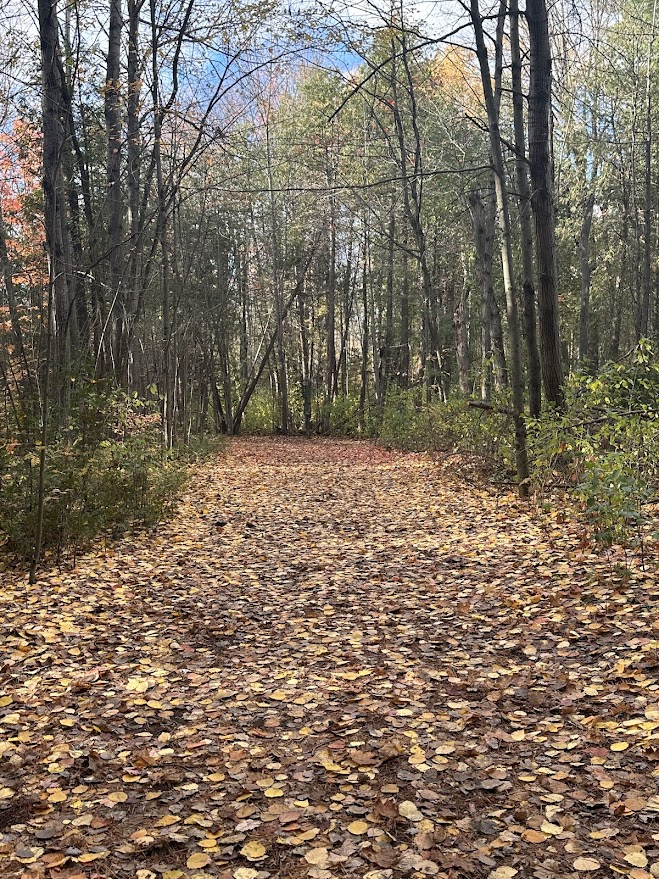
I decided to slow down even more and took a break, sitting on a fallen log. I attempted to meditate but was unsuccessful: as people walked by, they would say hello, and I felt compelled to respond. I could use some guidance on how to engage more deeply with nature and avoid distractions to fully benefit from walking in the forest.
On the internet, I searched for “forest bathing near me.” I found a company advertising a forest bathing walk in Arnprior, a community sixty kilometers from my home, scheduled for next week. The registration cost was $40 for a three-hour guided walk, which was worth it. However, I couldn’t find an online registration page, so I emailed to request a spot.
A few days later, I received a response informing me that the guide was sick, and the walk had been canceled. Another company advertised various activities, such as dancing, meditation, and yoga, in addition to forest bathing. However, their leader was in India and, according to the website, was “locked up” in a happy state.
While browsing online, I came across the Arizona organization that certifies people as forest bathing guides. Lucky for me, they had a scheduled Zoom session just a few days later, so I quickly registered. However, I was disappointed when I listened to the meeting; it wasn’t what I had expected; it was a sales pitch for a course.
On the Zoom call, two forest bathing practitioners presented information about a training course for becoming a certified guide. One practitioner spoke from Boston, and the other from Portugal. The six-month online course is priced at over US$3,000, with an extra US$500 required for a one-week on-site training. Instead of a commercial for a training course, I had hoped for hands-on instruction on how to conduct a forest bathing walk.
I have always enjoyed the outdoors for many activities, including walking. With friends, we walked the Chilkoot Trail, the Camino Santiago, and other trails. Still, I was not aware of forest bathing at that time and paid less attention to sensory experiences. But walking in nature has some challenges. Let me give some examples.
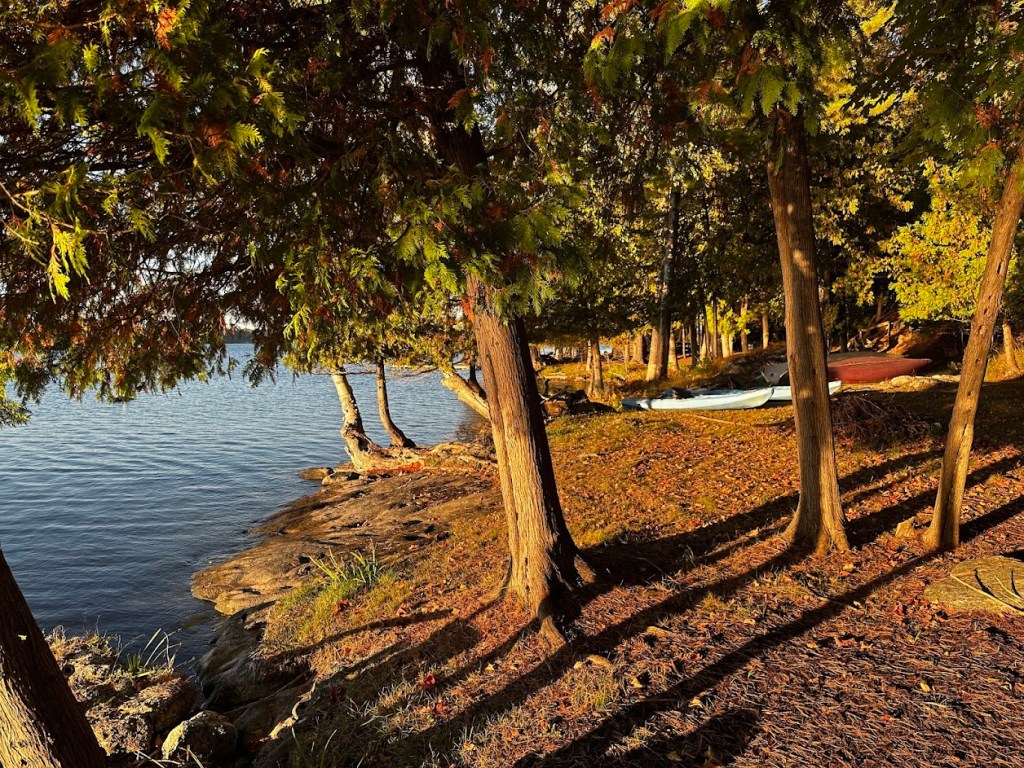
While walking under the foliage of giant maple trees at our cottage a few years ago, I stumbled upon a ball made of leaves and small twigs on the ground. When I picked it up to examine it, an army of wasps came buzzing around my face. I quickly ran back to the cottage to escape them. Subsequently, I received shots for several years to immunize myself.
By some stroke of luck, I’ve attracted ticks at the cottage two years ago. I was treated for Lyme disease with doxycycline for four weeks. This year, I’ve become popular with ticks again and ended up contracting another illness spread by ticks, called anaplasmosis, which put me in a hospital for four days. Again, I was treated with doxycycline.
I’m not suggesting that the outdoors is so dangerous that it should be avoided, but that there are hazards to be aware of. Given the years I’ve spent hiking in the forest and enjoying the outdoors, these misadventures feel like brief moments. So, by all means, go into the forest and enjoy walking.
The literature I’ve read on forest bathing advises disconnecting from urban life, embracing the outdoors, and living in the present moment. The practice of forest bathing encourages slowing down—rather than walking briskly to reach a destination, meander and explore unknown paths, and discover nature through your senses. Although my experience indicates that, depending on the season, one should combine DEET bathing with forest bathing.
I found that forest bathing is more challenging in practice than it is in theory. Letting go of your thoughts on daily life can be difficult, as is avoiding distractions from others you may encounter, or pausing conversations with a companion, while walking. It’s best to go alone at times when there aren’t many dog walkers in the park.



 andrasthehun.ca