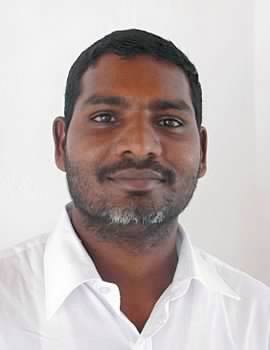
Heavyset, with an average height and a dark face, Dinesh was our guide in Kerala. He grew up in Kochin, his birthplace. Malayalam, the official language of Kerala, was his mother tongue, although he spoke English but with an Indian accent. Over a couple of weeks, we had gotten to know him. Married with two small children; his family surely missed him while he traveled constantly for work. We found him easy-going, affable, personable, and eager to please us.
Everything about him was clean; he wore a clean shirt daily, befitting a professional chauffeur and guide. Although I never asked him, it impressed me how he got his impeccably starched shirts every day. He must have carried many shirts or had them cleaned overnight. Similarly, his car was shiny and always impeccably clean, and the interior was spotless. No objects, like the newspapers we read on the road, were ever left behind. His company’s car was like a jewel to him, and he hoped to buy it soon. Years later, I saw him showing off “his” car on Facebook.
Proud of his country, he showed and described it to us in glowing terms. His work was very important to him, and he related his experience with the English chef Gordon Ramsey collecting recipes for a book on Indian cooking. Dinesh showed us a photograph of Ramsey, his crew, and himself for emphasis. Impressed, Kathy bought a copy of that book in Kerala.
I noticed he was conscious of his class, a reality in some countries, including India. He deferred to others, whom I assumed he considered high-class people. It always happened when we invited him to eat lunch with us. He excused himself by claiming to be busy.
But once, we asked him to take us to a local Indian restaurant, a highway stop. There, we had thali food on grape leaves filled with curries. Looking around, I noticed that most of the people looked like laborers. He did not hesitate to sit with us and explain our food. After we ate with our fingers, local style, we washed our hands in the sink at the end of the dining hall.
At another time, we invited him to dinner to discuss the next day’s plans. He did not want to join us, perhaps because it was a more expensive restaurant. We were forceful and did not take no for an answer. He obliged us. When the waiter came, he gave Kathy and me menus, but not Dinesh. Even the local people knew and discriminated according to what class they were serving.
I requested an extra menu for Dinesh, which the waiter provided. We were all served, but I knew Dinesh was uncomfortable throughout the dinner. He remained silent, avoiding eye contact. Later, I realized we may have asked too much of him by insisting he eat with us. What we thought was normal was not for him.
After days of traveling with Dinesh, I noticed he did not come into the hotels with us; he dropped us off. I remember the Tharawad Homestay, where he left us with the details of when he would pick us up the following day. Drivers were not permitted to park in high-end residential areas or obstruct driveways. We learned he slept in the car every night.
We were on a tour, and the tour operator paid for all our hotels but provided no accommodation for our guide. He had to find a place to park and sleep overnight. I do not know how he looked so fresh every morning, drove us around Kerala, and provided knowledgeable comments. I follow him on Facebook.
Kanyakumari, located at India’s southernmost point, is where the Bay of Bengal, Indian Ocean, and Arabian Sea converge. The sunrises and sunsets were vivid on a clear day, and we saw the moon rising on one side while the sun was going down on the other. We were eager to witness the bay’s unique three-colored seas, a natural wonder, and its importance in Indian burial traditions. It is a mecca; people bring the ashes of their loved ones from all over India to toss into the waters at the southernmost tip of India.
View from our balcony: Thiruvalluvar Statue and Vivekananda Rock Memorial
Dinesh showed us the Thiruvalluvar Statue and Vivekananda Rock Memorial from our waterfront hotel, two major attractions on a large rock outcropping several hundred meters offshore. From our room facing the bay, we watched the ferries transport people to the Rock throughout the day. The crowd below enjoyed bathing in the water, and long lines waited for the ferry to take them to the Rock.
I discovered the place where the crowd bathed was blessed. Let me recount a Hindu legend to explain. The name Kanyakumari comes from Goddess Kanyakumari, the sister of Krishna. Hindus revere Krishna, one of the most popular Indian divinities, as the supreme God, embodying compassion, tenderness, and love. His sister Kanyakumari is a goddess to whom women pray to get married.
Hindu legend says Goddess Kanyakumari’s wedding to Shiva, a main Hindu deity, was ruined when he didn’t show. Rice meant for the wedding remained uncooked and unused. The uncooked grains turned into stones as time went by. Legend says the small, shore-side white stones, resembling rice, are from a wedding that never took place. Kanyakumari, now seen as a virgin goddess, bestows blessings on the many pilgrims and tourists visiting the town of stones. So the bathers were on blessed grounds.
From the balcony, we had a clear view of the Thiruvalluvar statue. The pilgrims reached it by ferry, which departed every half hour, fully loaded. Instead of going there, we felt our time would be better spent reading up on what the statue represented.
Thiruvalluvar, which means Saint Valluvar, was an Indian poet and philosopher. He wrote the Tirukkural, a treatise on virtue, love, and wealth in short couplets of seven words, called the kurals. Scholars date the text variously between 300 BC and AD 500. Saint Valluvar is one of Tamil Nadu’s most famous philosophers, and the Tirukkural is considered a secular work on morality and ethics.
Officials unveiled the statue on January 1, 2000. Interestingly, the artist who designed it related it to the Tirukkural; the statue is 133 feet high, corresponding to the 133 chapters in the Tirukkural. Although I could not find why the statue was there, it is a striking location in the ocean, four hundred meters from the shoreline.
We got up at 4:00 am and took pictures of the sunrise on one side and the moon receding on the other. Then, we went down to the port to join the crowds. We walked around the people and talked with some who spoke English; they had slept there overnight to ensure they could get on the ferry early in the morning. Along with the crowds, we visited the Mahatma Gandhi Memorial (Gandhi Mandapam), where the urn containing his ashes was kept for public viewing.
There was not much to see at the Memorial except the modern architecture. Mahatma Gandhi visited Kanyakumari in 1925 and 1937. Twelve urns containing his ashes were dispersed across the nation following his 1948 demise. They brought one urn to Kanyakumari and placed it where they built the Memorial. Construction was completed in 1956.
The central spire of this Memorial is 79 feet high, reflecting Gandhi’s age when he died. I was reminded of the Thiruvalluvar statue—its height correlating to the number of chapters in St. Valluvar’s book—when I saw how this building incorporated an aspect of the person it memorializes. On Gandhi’s birthday, October 2nd, sunlight shines directly on the spot where his ashes are kept in the Mahatma Gandhi Memorial building, thanks to a strategically placed ceiling opening.
Workers constructed the Vivekananda Rock Memorial in 1970 to honor Swami Vivekananda. Vivekananda, born in 1863, was a chief disciple of the nineteenth-century Indian mystic Ramakrishna and introduced the Indian philosophies of Vedanta and Yoga to the Western world. He died in 1902. But it was not just the Swami who interested me. It was the process by which the Memorial had taken shape.
In 1963, during the centenary of Swami’s birth, a Hindu committee in Kanyakumari recommended that a memorial be constructed on the Rock about 500 meters from the shore. Local Catholic fishermen opposed the plan, staging a protest that included a large cross placed on the Rock; however, it vanished overnight. This controversy became a political issue, and the local politicians escalated it to Madras, now Chennai, the capital of Tamil Nadu.
The controversy continued in Chennai, with opposition from a politically powerful state minister who thought a monument would destroy the natural beauty of the rock island. Eknath Ranade, an activist, pushed for the memorial by raising the matter in Delhi, lobbying representatives, and gathering enough signatures to persuade Prime Minister Nehru to approve it. This story and process were not atypical of similar efforts in North America.
The night before our departure to Bangalore, on the way to Goa, we lounged by the pool of the Pappukuty Beach Resort in Kovalam. In the pool, I had a very informative and pleasant conversation with an Indian in the high-tech field. We discussed the superb high-tech professionals India’s Institutes of Technology (IITs) educate.
India boasts over a dozen IITs, including those in Delhi, Mumbai, and Chennai. A tutoring industry has emerged to help students gain admission to these prestigious universities, which receive more government funding than other institutions. But beyond good technical education, are other factors that make Indians successful in high-tech?
My newly found friend in the pool suggested that the English colonials left a management-oriented culture for the Indians after independence. He also thought that the English language, widely used in India, had been an advantage for Indian techies over those from countries without strong English language skills, such as China. My new friend says Indian culture emphasizes consensus over directives, which makes Indians naturally adept at collaborative management, which is crucial for modern success. Given the success of Indian CEOs at companies like Microsoft, Google, Nokia, Sun, and Adobe, it was hard to disagree with his perspective. On the last day, Dinesh took us to the Trivandrum Airport, and we said goodbye to each other. He became quiet and serious. Over two weeks, we had bonded and gotten used to each other’s company and would miss each other. However, our trip to Goa provided a welcome distraction from missing him.
We drove from Munnar to Alleppey in five hours. Our journey through Kerala’s backwaters led us across numerous canals to Alleppey, a city with a population exceeding 300,000. Alleppey district, with over two million inhabitants, boasted a 96% literacy rate and harmonious religious coexistence, according to our guide Dinesh. Hindus comprised half; Christians and Muslims, a quarter each.
Reclaimed lakes around Alleppey formed a backwater area for rice paddies and coconut groves. Manual labor initiated the first reclamation in the late nineteenth century. The second reclamation wave of the early 1900s relied on steam engines, while electric motors powered the final, larger phase of that same century. Reclamation efforts resulted in the canals and rice paddies. Today, the backwater area spans over three hundred square kilometers.
Rice paddies and coconut groves formed the economic foundation of this region. The canals served as transportation routes. Rice barges were the conveyances used to bring the rice to Alleppey; this area is the rice bowl of Kerala. The coconut groves created the coir industry. I was unfamiliar with the word “coir,” but Kathy believed it was identical to sisal, a material her seafaring relatives, including her father, used to craft carpets aboard ships during their downtime. However, sisal comes from a species of flowering plant native to southern Mexico, according to Wikipedia, cultivated and naturalized in many other countries. Like coir, it produces a rigid fiber suitable for rope-making.
In contrast, coir or coconut fiber is a natural fiber extracted from the outer husk of coconut and used in products such as floor mats, doormats, brushes, and mattresses. Coir is the fibrous material found between the hard internal shell and the outer coat of a coconut. Brown coir, derived from mature coconuts, also finds use in upholstery padding, sacking, and horticulture. White coir, harvested from unripe coconuts, makes finer brushes, string, rope, and fishing nets. This material doesn’t sink, so it’s useful in deep water at long lengths without weighing down boats and buoys.
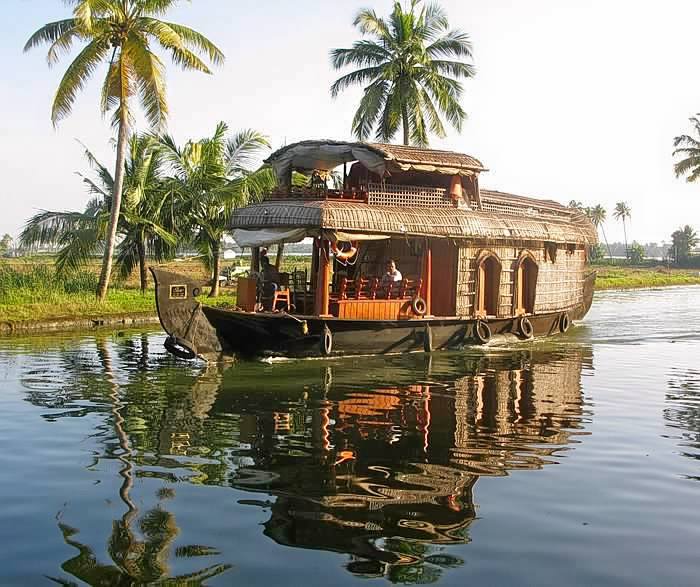
The Alleppey area has always been popular with domestic and international tourists because of its climate. When the rice markets collapsed in the 1960s, rice farmers converted rice barges into houseboats for tourists. There are more than one thousand houseboats now, also called kettuvallams. Coir ropes tied in knots hold the entire boat structure together. This boat uses no nails. Instead, the boat comprises vast planks of Jackwood or Aanjili joined with coir.
Dinesh explained the coir industry has become a significant economic force in the Alleppey area. After giving us all this information, Dinesh took us to the port where we would embark on a Kerala backwater cruise on a kettuvallam. A backwater cruise was our principal attraction when we came to Kerala, and we had grand expectations.
Dinesh left us by the houseboats, docked side-by-side and connected to the port via gangplanks. We started walking toward the kettuvallams, and it was such a major disappointment! At the water’s edge, a dirt path ran alongside the port’s bulkhead. The path extended several hundred meters, with boats moored at the bulkhead and trees bordering the water. Garbage lined the entire pathway. The path was littered with paper boxes, wrappers, and empty soda cans!
I expressed my disgust to Kathy, declaring my intention to leave. Given this awful beginning, what good outcome can we expect from this trip? They advertised Alleppey as notable for its backwater cruises.
But then, a young fellow approached us and asked if we were his passengers. We said that we were waiting for our cruise. We crossed a gangplank to his boat, and the atmosphere suddenly changed. Inside, the boat featured teakwood lounge chairs, a bedroom, and a bathroom, all spotlessly clean. Two boatmates and a chef stayed in the kitchen area.
We departed, gliding along the canal toward a massive lake. Relaxing on this lavish boat allowed me to contemplate the stark difference in condition between the decrepit shoreline and the well-maintained boat. Was it because the coastline and its maintenance are a municipal responsibility, and no money is available to upgrade it? Perhaps boat owners prioritize tourist competition and maintaining boats while lacking resources or desire for approach improvements. I think boat owners should be more keenly interested in a pleasant and attractive approach to their boats.
We were not the only ones getting into the canal system; several houseboats were leaving, and it looked like a busy street with lots of traffic. The blue sky and summer weather were lovely, but many people following the same routine detracted from the trip’s special quality. Despite that, we sat in lounge chairs and enjoyed the scenery. And the entire trip was like that; enjoyment depended on your perspective.
There were minor drawbacks. For example, the boat lacked alcoholic beverages, such as beer, but I could purchase some in the small villages along the way. People complained about the lack of Western channels on the boat’s TV. Television viewing hadn’t crossed my mind. I took a positive approach and enjoyed every moment.
We cruised until we stopped for lunch by the shore, joining other boats in line. But the lunch was ample and delicious, consisting of local fish we enjoyed. We also stopped and bought fresh prawns for our dinner. It was in addition to the full vegetarian meal included with the trip. The cabin crew provided tea and banana fritters for a snack. We had ample food for dinner, including chapati, del curry, aloo gobi, cabbage, a vegetable salad, and vendakka. The chef prepared the food with local spices and heat.
The waterway offered a view into daily life: women in vibrant sarees washing clothes, children returning from school, and people fishing or traveling by small boat. Observing children playing in the water, we guessed the polluted water must have built up their immunity. We also saw commercial barges moving rice. The people along the shore waved at us.
Travelers we spoke with later expressed different views on the boat tours. Some thought an hour would be sufficient. Others found the trip dull. In contrast, we enjoyed the private time we had on the boat. The boat trip offered a relaxing, mosquito-free evening. We observed the morning rush hour in the tiny village where our houseboat docked. Boatloads of children went to school; others were readied for fishing. The chef served us breakfast of idli with sambar and tea. Then, the captain took us back to the dock to disembark, where Dinesh awaited us.
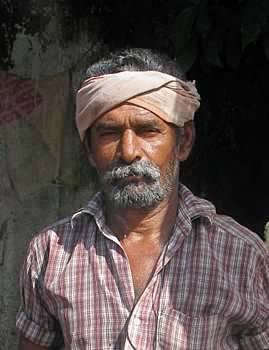
Dinesh took us to the fish market next. I have always liked fish markets, seeing the variety of fresh fish caught in the area, and the Alleppey market was no exception. Photographing the busy fishmongers proved rewarding. Several looked like genuine characters with enormous mustaches and used their long knives to clean fish expertly. Before taking their picture, I asked them if they would mind. Nobody refused.
Having walked around the fish market, Dinesh took us to the Tharavad Homestay, where we would spend the night, leaving us at the door for the evening. He mentioned he could not park overnight in the guesthouse driveway. I suspected hired drivers could not leave their cars in this neighborhood even though we were traveling in an unmarked SUV.
The hosts, Maria and Zac, received us at the homestay, and they were the most hospitable people I had met anywhere. They showed us our bedroom, which was large and spartanly furnished with a bathroom that was not modern but functional. Breakfast was included in our reservation, however, dinner was at our own expense. Although we were the only guests there, Maria provided us with a choice of menus for the night. She was an excellent cook serving local dishes.
During dinner, conversation with our lively and insightful hosts covered all aspects of Alleppey and Indian culture. They were well-traveled, and we discussed politics. The election of a communist government in Kerala surprised everyone, including our hosts, making it one of the first Indian states with such a government. The hosts were involved in the coir industry and had a son in the United States.
The next day, we visited the coir museum and saw lots of coconut remnants used to make the coir in the area. After breakfast, Dinesh picked us up and drove us to Kanyakumari.
A two-hour drive from the heat of Kochi brought us to Munnar, a hill station 1600 meters above sea level. With a population of 40,000, Munnar was a tourist destination for honeymooners, hikers, and tea connoisseurs. Dinesh took us to the Shamrock Hotel for overnight accommodation. From our Shamrock balcony, mountains and tea plantations were visible.
Munnar’s downtown market bustled with people. Although I assumed hill stations had limited shopping, I found the town market fascinating. There were various teas, coffees, and spices, like pepper, cloves, cinnamon, and cardamom. There were also wooden artifacts, handicrafts, fabrics, aromatic essential oils, homemade chocolate, and more. Stalls lined the streets, offering many things, from rice to pots to utensils. Although many items appealed to us, we had no space for additional purchases in our suitcases. But grabbing one of those fine-smelling coffees was in order. With coffee in hand, we strolled around the stalls offering fruits and vegetables neatly piled up, sweetening the air that was already perfumed by scents of spices and coffee.
A mosque was being renovated, and a Christian church was nearby. Walking, we saw drying sheets spread across open fields. I wondered if the locals would ever switch to using dryers.
A nearby attraction was the Tata Tea Museum, which opened in 2005 (until 2005, the Tata Group owned extensive tea plantations in this region). The exhibits explained the tea-making process and helped us understand what we saw on our field trip.
To harvest the tea plants, women plucked tea leaves into big sacks worn on their backs; supervising the women was always done by men. We watched this operation and attributed this division of roles by gender to historical precedent and/or class. When the sacks were full, the women transported leaves to the plant for size-based sorting. The next step was to remove the leaves’ moisture and then crush them. Further drying by blowing air through the laid-out leaves created oxidation. As leaves dry, their color changes and lighter brown leaves are harvested first for lighter teas. With further drying, the leaves turn darker for stronger teas.
After the museum guides explained the tea-making process, they offered samples of teas from light to darker varieties and provided a history of tea, the world’s most consumed beverage. The tea plant comes from India and China, with three varieties: China, Assam, and Cambodia. Of course, there are hybrids.
The Assam variety was cultivated in the Munnar area. This tea can reach twenty meters in height. It’s smaller after pruning and lasts up to four decades. When grown at elevations near Darjeeling in Assam or Munnar in Kerala, the tea leaves produce a variety of flavors.
I found an interesting description of a legend in the museum of how tea drinking started. The Hindu legend’s origin is attributed to a saintly priest, Bodhidharma. About 1,900 years ago, the eventual founder of Zen Buddhism was in the fifth year of a seven-year sleepless contemplation of the Buddha. Finding himself dangerously close to falling asleep, Bodhidharma snatched some leaves from a nearby bush and chewed them. He was immediately revived. Bodhidharma turned to these leaves, the leaves of a wild tea tree, whenever he again felt drowsy and was thus, according to legend, able to complete his seven years of meditation.
Note: The history of tea plantations in the Munnar area starts in the second half of the nineteenth century. The land was undeveloped until British resident John Daniel Munro came to Munnar in 1857. He thought of creating a plantation in the area and leased hundreds of square kilometers of land from the Poonjar royal family. In 1872, the Scottish Finley Muir Company acquired the local tea plantations. In 1964, the Finley Group collaborated with the Tata Group to form the Tata Finley Group, which became Tata Tea, Ltd. in 1983.
The next day Dinesh showed us the Chinese fishing nets. These were stationary lift nets. Circling them, I discovered teak pylons hammered into the ground supporting a shoreside deck, from which the enormous net cantilevered. Four poles, lashed together at the apex, supported a twenty-meter-wide net stretched between their bases. Two of the poles connected to the edge of the platform while the other two cantilevered over the water.
From the platform, workers used ropes tied to the apex of the four poles where the poles met, to raise and lower the net into the water. It took up to six men to pull up the net when submerged. The workers lowered the net for about ten minutes, then lifted it to remove the fish. Tourists could buy the catch of the day, prepared as fresh fish, at little sidewalk restaurants. The entire operation was a crowd-pleaser, and I watched it for a few hours.
I heard two stories about where the nets and this construction came from. One was that the Chinese explorer Zheng He brought such nets from the court of Kublai Khan. The other story was that Portuguese traders returned with the idea from their travels in China; confirmed by the fact that many fishing net parts retained their Portuguese names. Both narratives dated the fishing nets back to the fifteenth century. There were only eight such nets left. Watching the nets go down and up was a relaxing sight.
But Kochin had more to offer us; Dinesh took us to Jew Town. I said, What? The idea of a city area named after an ethnicity seemed unique to me, until I remembered examples like Ottawa’s Little Italy and the many Chinatowns. I learned that the oldest Jewish settlement in India was in Kochin and that they traced their ancestry back to King Solomon. Known as Malabari Jews, they built synagogues along the Malabar coast, starting in the twelfth and fourteenth centuries. Following the expulsion of Jews by the Spanish in 1492 in Iberia, Sephardi Jews made their way to the Kochin area. These people were called Paradesi Jews—the word means foreigners.
The Sephardim spoke Spanish but learned the Judea-Malayalam language from the Malabari Jews. The two communities maintained their respective ethnic identities, languages, and customs. In the late nineteenth century, some Arabic-speaking Jews immigrated to the Kochin area and became known as Baghdadi Jews. The synagogue we saw dates back to 1568. It was one of only eight synagogues left in Kerala that were functioning and had congregants; the oldest congregant was ninety-six years old. After independence in India was declared in 1947, many Jews moved to Israel. Today, there are few Jews left in Kochin, and Jew Town consists mostly of antique stores, and the one synagogue that we saw.
We went inside the synagogue and learned how the various Jewish ethnic groups used the synagogue. Synagogue membership was granted in full to the Paradesi Jews, also known as White Jews, who were of Sephardic descent from Spain, Portugal, and the Netherlands. The so-called black Jews, or Malabari Jews, could worship in the synagogue but were not admitted to full membership. I did not learn the status of the Arabic Jews.
The 1968 four-hundredth anniversary of the synagogue saw global Jewish communities celebrate, with Indian Prime Minister Indira Gandhi in attendance. The celebration demonstrated how the Jews from Kochin melted into the global diaspora.
On our way to the Green Woods Bethlehem Homestay, Dinesh convinced us to visit the Church of St. Francis on the site of old Fort Kochin. Kochin’s history and its succession of rulers are interwoven with the story of St. Francis Church. The history of this church started with Vasco da Gama, the Portuguese explorer who discovered the sea route from Europe to India. Portuguese explorers later built Fort Kochi in Kochin, which contained a church honoring St. Bartholomew. The construction of this wooden church was completed in 1506.
In 1516, Franciscan friars replaced the wooden church with a brick-and-mortar structure dedicated to St. Anthony. Vasco da Gama died in Kochin in 1524 and was buried in this brick-and-mortar church. After fourteen years, they moved his remains to Lisbon. But the gravestone of Vasco da Gama was still visible on the ground at the southern side of the Church of St. Francis.
The church remained Franciscan until the Dutch captured Kochin in 1663 and converted it to a Protestant government church. After the British captured Kochin in 1795, the church’s denomination changed again—this time to Anglican, run by the Anglican Communion, and renamed the Church of St. Francis. Historians believe the Anglicans changed the name to St. Francis. The church we saw was small by European standards and needed renovation.

 andrasthehun.ca