How to Optimize Your iRobot Roomba for Efficient Cleaning

November 24, 2025

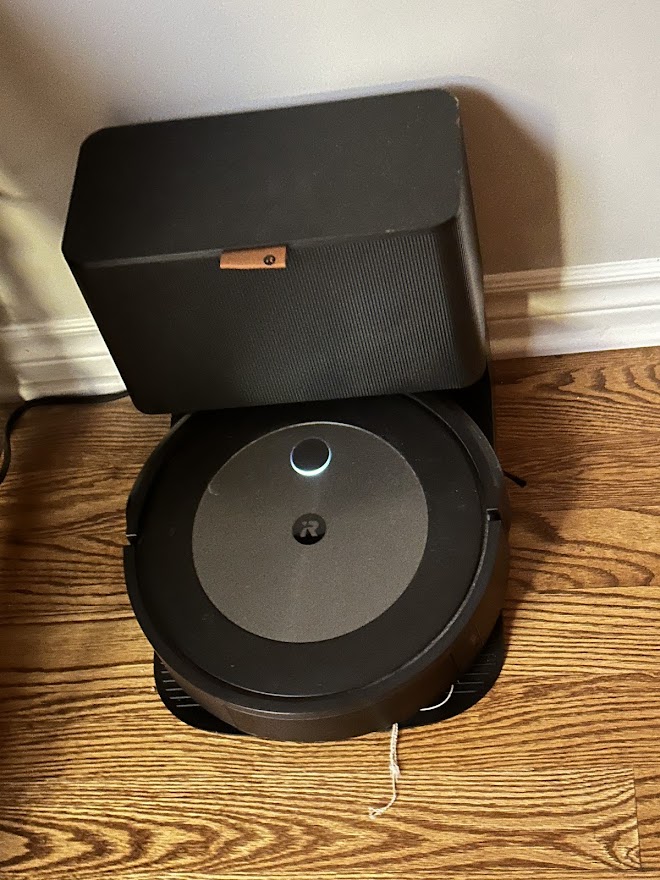
It was a typical Sunday morning. Kathy brewed some coffee, and then she and I scrolled through our iPhones, reading about the world’s problems, which put us in a negative mood. Instead, I suggested we leave reading the news and let Roomba, our iRobot, which we call Matilda, do some cleaning, and we have breakfast. Kathy agreed it was a good idea, so I switched the news channels on my iPhone to the Roomba app to start a “new job”. An iPhone is essential for accomplishing anything in today’s environment.

However, Matilda was in a cranky mood and sent me a voice message saying I needed to “blow out” the dirt from its previous job. It didn’t work at first; perhaps Matilda wasn’t quite awake. However, after ten minutes of troubleshooting accompanied by rich critical verbal expressions, I got it working. Listening to my running commentary on robots, AI, and techies, Kathy suggested a male name might be more fitting for our robot; a male’s early-morning grumpiness would more accurately reflects the robot’s behaviour this morning. So, we decided to rename the robot Mathis. The name was not a nod to Johnny Mathis; both of us are fans of his music.

But first, we had to clear the floor so Mathis could move around and clean. This meant putting the laundry basket, a few backpacks, slippers, and books lying on the floor onto the bed, in the bedroom. In the office, Kathy moved the office chair out of the way and the yoga equipment into another room. Finally, we were ready for Mathis to do his job.

Mathis struggled to navigate out of the dining room, which was full of obstructions. The room had five chairs and two tables, totaling twenty-eight legs that could interfere with Mathis’ movement. At one point, it seemed like he was lost as he moved back and forth, but he eventually found his way to the bedroom and the office. But his movements were inefficient overall, wasting significant battery power to reach the work sites.

For Mathis to work efficiently, it would be best to have an empty house with no furniture. Without obstacles like chair legs, he wouldn’t need to make detours and could make a clean sweep of the entire floor.

After some reflection, I decided to find a better home location for Mathis, with fewer obstructions on his way to reach the rooms in the house. A more central location in the house would avoid obstacles such as chair and table legs. So I moved Mathis’s home base to a new, central spot.

However, this change posed a potential problem: would Mathis feel at home in this new location after being accustomed to his previous spot? Are the floor plans in his memory tied to where he used to rest, or would he adjust and recognize the new location since he initially mapped our house from another place?

To test this new setup, I decided to give Mathis a “new job.” I asked him to clean the kitchen and the dining room after I turned all the chairs there upside down and placed them on the tables.

To see Mathis’s navigation skills in this new environment, I observed his movements. He seemed a bit lost at first, wandering around the living room before entering the dining room. However, he soon got to work, methodically cleaning the dining room by going back and forth, and then found the kitchen and cleaned it.

Overall, Mathis did an excellent job, and I considered rewarding him with a treat, such as a dog biscuit or candy, but how could I do it? This made me think that the brilliant designers of these robots should also provide rewards for good robotic behavior. Rewards could help robots learn from completed tasks and boost future performance.

Comments on Book “Enemy Contact” by Tom Clancy

August 17, 2025

I read many of Clancy’s books, such as The Hunt for Red October, and enjoyed them. This book, Enemy Contact, entertained but frustrated me. Published in 2019 and written by Mike Maden under Clancy’s name, this book leads the reader through numerous locations around the world and has multiple plots. But it does not hang together and leaves many questions to the reader’s imagination.

The best thing about the book is that it has a lot of action, and it’s a page-turner. Many of the chapters contain complete short stories but with further reading in the book, one understands how these fit into the overall theme. For example, in chapter one, the action takes place in Argentina and is a complete story. The context of how it fits into the overall narrative becomes clear later on. This happens many times in the book. I found this truncated structure frustrating, but it may be a popular trick to draw the reader further into the book.

The story unfolds in numerous locations, including Luanda, Angola, Gdansk, Poland, Washington, DC and Berlin, Germany. I have no problem with different parts of the world described, except that each location includes description of its architecture and streetscape. I understand the author needs to provide background and context, but the amount of information seems overkill.

And it is not only the description of all the locations, but the politics of the region is also covered. If you are a news hawk, then you are aware of many of the situations described, such as those in Angola, where the Chinese are building their “road and infrastructure” program using Chinese labor that creates friction with available local labor in the country.

The major theme connecting all the local stories revolves around an international crime syndicate involved in the production and distribution of drugs. Another theme involves a super sleuth, who is utilizing data mining techniques on secret U.S. cloud storage sites to gather and sell this information. The connection between these two themes is tenuous and artificial but I read the book for its entertaining value and did not spend time on trying to follow the logic of the stories.

The characters in the book are all unique. They include brothers who served in the French Foreign Legion; a visionary who developed a world-leading security system used by the U.S. government, and his attractive wife, who oversees technical development for the company and recruits the best programmers in the world. Among these programmers is a Chinese individual who was raised in the U.S. and whose friend in Thailand is undergoing gender transition. I wondered why eeverybody in the book has to be a unique character, the best programmer, a good-looking woman techie, and ex-French Foreign Legionnaires. Couldn’t. there be average people accomplishing challenging tasks?

There are several loose ends in the story that feel unfinished to me. For instance, Jack Ryan, the main character in the book, and his his attrctive female assistant in Poland develop a close friendship. He visits her home for dinner and bonds with her toddler. This friendship hints at a potential future relationship between Jack and the assistant. However, when she is drowning, she asks Jack to care for her young son, but nothing further develops. I found this aspect of the story incomplete.

And then there are some situations that are hard to believe; that are not realistic. When Jack arrives in the high mountains of Peru to honor a commitment he made to a friend who died in action, he gets drunk in a local pub, still nursing his guilt, feeling responsible for the death of his Polish assistant. A group associated with the international crime syndicate beat him up in his sleep and rob him of everything. Still, when he wakes up, he scrounges some clothing and climbs another few thousand feet to the top of the mountain without food, water and proper shoes and clothing. I hiked Machu Pichu and let me tell you, the air is thin, and it is cold and it is hard to believe that Jack, beaten up and without supplies, could accomplish the feat described. But reading the story is good entertainment.

The ending of the narrative felt brief and disappointing. As expected, the criminals are killed or imprisoned. There are no excting chases, or long-drawn-out tracking of the bad guys. The ending is just twenty pages long and comes quickly of a four-hundred-sixty-page book. An example is the end of Jack’s archenemy, a former French Foreign Legionnaire. Once located in Benghazi, Jack travels to Libya and shoots the Legionnaire, and that’s it. This resolution unfolds over just a couple of pages, which to me was a quick and decisive action but did not include a leadup with Jack’s feeling towards this gangster and the satisfaction that he undoubtedly drew from fionishing him off.

Overall, I thought the book was entertaining. It contains numerous plots, an abundance of colorful characters, and happens over a wide range of global locations. Additionally, it addresses an excessive number of current topics—political, moral, and technical—that could each have been developed into a story of their own.

While reading the book provided instant excitement, it was ultimately forgettable. It does not hold up to Clancy’s earlier works, which were much more focused in terms of geography and subject matter.