The Illusion of a Bilingual Canada

November 13, 2021

The Illusion of a Bilingual Canada

The Montreal Forum was rocking with the Canadiens’ followers, hollering with every goal the team scored. My French teacher accompanied me so that I could get a better understanding of Quebec culture, not least of which was the buzz at the game. Not that I had not seen a hockey game before, it was to learn hockey expressions in French. My presence at the game was courtesy of the Canadian federal government. They sent me to Montreal for a three-week intensive course to learn French one on one with the teacher. Thank you, government.

The official bilingual policy mandated all federal government managers, where I worked, to communicate with a subordinate in his/her chosen language (the Official Languages Act was enacted in 1969). So, from a simple supervisory level up to managing hundreds of people, you had to learn French. It was part of the job description.

I am not convinced that the cost of my French education was an excellent investment by the government. They hired me based on my skills. And even when I tried to speak French, employees responded in English. To fully communicate on technical issues, conversational French was not sufficient. I often felt guilty when on language training, thinking that I was not performing my job but enjoying myself learning and socializing in French.  

I had lived in Canada for many years before I experienced the French fact: the political sensitivity in dealing with the two official languages of Canada. In Vancouver, where I had lived for several years, if I heard a language other than English, it was likely Chinese. French simply was not an issue.

After studying and working in the U.S., I came back to Canada in 1971 and applied for a job in Montreal. I thought Montreal would be a great city to live in, having visited Expo ’66. It was disappointing to find out the lack of French language knowledge was a barrier to employment with the City of Montreal. With its large English population, I thought a knowledge of English was a useful skill in Montreal. Not so if you wanted employment with the City. They did not even ask if I was willing to learn French!

My next experience looking for a job in Canada provided additional insight into dealing with official bilingualism. When Central Mortgage and Housing Corporation (CMHC) offered me employment in Ottawa, they invited me to meet staff and asked me to give a brief talk on myself. When I stood up to speak, someone whispered to me to be sure I say a few words in French. That stopped me cold but had the presence to ask what was this about. I was told that it is a courtesy to say a few words in French before I give a talk in English.

Surprised, my mind worked overtime to discover what words I knew in French. I ended up with a “bonjour, tout le monde” and followed in English. Later I inquired about this custom and learned it is important to recognize the linguistic duality of Canada even if there are no francophones in the audience. If there were any French-speaking people at my presentation, they were bilingual, because bilingualism works both ways. I thought it was a gratuitous gesture and, had I been a francophone, this shallow and artificial pretense of recognition would have insulted me. But that was the accepted and expected behavior, and it still is in government circles.

When I realized the importance of knowing French in my governmental career, I signed up for all the French courses offered by the government. Some of these courses were fun, taught by well-qualified teachers, while others were boring focusing on grammar. I remember one ex-nun who could not speak a word of English and spent all the time on conjugations and memory work. By the end of all my courses, my French improved substantially. These courses improved my French reading skills, but I still needed practice in speaking. That is how I ended up in Montreal for three weeks with a private teacher.

Although the government program was aimed at creating a bilingual environment, the language of work remained English. Only twenty percent of Canada’s population is French-speaking; most of them live in the Province of Quebec. So providing service in French outside Quebec has limited usefulness.

I found the whole language program more of a cultural enrichment than a necessity for my work. Others considered the language program a benefit to the francophones in the Ottawa area, where I worked. Promotions favored bilingual people. People living outside the province of Quebec faced an enormous challenge in obtaining positions and promotions with the federal government.

My memory awakened last week when the CEO of Air Canada gave a talk in English only in Montreal and was nastily attacked by the media. The attack was followed up by local and federal politicians calling his speech an insult to French-speaking people. The Prime Minister commented on the inappropriateness of the speech. Yet, a few months ago, the Prime Minister appointed a Governor-General with no French knowledge. Oops, sorry, the GG gave a bilingual talk at her acceptance speech: it was in English and Inuktitut. She is considered a native person and a woman. She checked out two boxes on the virtue-signaling scale.

The Governor-General represents all the people of Canada while the CEO of Air Canada manages an international private company. The CEO’s talk gave a boost to the company’s stock price, showing his mettle in managing Air Canada; the reason they hired him for the job. What incredible hypocrisy by the politicians!

I still think that the federal bilingual policy is expensive, creates divisions among the employees with limited usefulness. What do you think?
Reduced Access to Our Healthcare

November 7, 2021

Reduced Access to Our Healthcare System

On the last day in Myrtle Beach, my wrist started swelling and became painful. What made it more painful was changing a flat tire on the road trip home on Interstate 40 going towards Raleigh. I heard a pulsating noise from the back tire: I thought it was a rock caught in the tire grooves. But the noise increased and came closer and closer until I told Kathy it sounds like a helicopter that was about to land on the roof of the car. I stopped and exchanged the flat tire mostly without using my left hand, which has become quite weak from the pain in the wrist. I suspected it was a spider bite and considered going to an urgent care clinic in North Carolina but delayed it, knowing that we’ll be at home in a couple of days and then I would see my family doctor.

We arrived back home on Friday night. Early Saturday, when I called, I discovered our clinic was closed on the weekends. The mission statement of the clinic claims the provision of a: “patient-centered approach that ensures access promptly”. This must be creative writing, since there was no service on the weekends. In response to my subsequent inquiry, they advised I should go to a walk-in clinic or the emergency ward of a hospital when they are closed. OK. My recently retired family doctor always had a backup.

Since by then my hand was extremely painful, my next task was finding an open clinic. So I went on the internet and searched for area walk-in clinics. I found out that some required appointments altho they were called walk-in clinics. Doctors were on duty at different times, but not on this Saturday.

Carlingwood shopping center had a clinic that I visited previously and drove over there. They told me they deal with only “their” patients, the clinic had capped their clientele and they would not see me. At the next walk-in clinic, I saw no receptionist. One other patient was waiting for consultation; he told me he saw no one when he came in but there was a doctor behind the walls. I was not sure how he knew that, but I waited, so together we waited and waited. Other people came and left after seeing no one at the reception desk. After an hour, I left as well for the next walk-in clinic at College Square where I was told they were fully booked for the day, but they took my contact info to have a doctor call me after 4 pm. He did and prescribed an anti-inflammatory. It took the entire day to get healthcare.

With the swelling gradually going down but still concerned, and afraid a walk-in clinic would not alert my family doctor about my treatment, I contacted my family doctor on Monday. They informed me she was fully booked that week but offered a virtual initial appointment with a substitute. The virtual consultation was very difficult: trying to describe a swelling verbally. I could not understand why they would not see me in person, but the remote consultation was the best they offered that week. It resulted in a requisition for an x-ray for arthritis and a prescription for an anti-inflammatory. The anti-inflammatory worked its magic in over a week, but I never heard back on the results of the x-ray! Some healthcare.

My access to general healthcare has changed substantially over the last few years, starting with the retirement of my family doctor and my switch to a group practice. The retiring doctor had a paper file on me over an inch thick and he had known me for decades and could just about to see what was wrong with me when I walked in to see him. My new doctor at the group practice had an introductory meeting with me when we met. I was surprised to learn that she was not interested in my files; No, she said, she does not need my previous history. She sat behind a computer and was typing on it more than looking at me sideways.

This new relationship with my family doctor is via the receptionist at the group practice: I write a note to the reception desk that I need an appointment and specify what my problem is such as pain. Reception transmits the email to my doctor, who responds sometimes a week later. The response could be to arrange for a virtual or physical meeting or I receive a requisition for tests or an x-ray. It may be a week or weeks before the results of the tests are in and I receive an email from reception telling me how the doctor wants to follow up.

If the follow-up is a physical meeting, a fifteen-minute consultation is arranged. I found these meetings are too short; by the time the doctor logs into my file on the computer and catches up on my situation, the useful time is less than ten minutes.. There is no time to discuss lifestyles or bring up other medical issues. The tone of these meetings is transactional and specific: I should follow this or that diet, monitor my blood pressure, and report back to her. Until a few years ago, the government paid for an annual check-up which provided the opportunity to have a wide-ranging discussion about my health. I find these new consultations limiting, leaving no opportunity to discuss issues that I have. When I brought up some other potential problems at one of these meetings, she advised me to set up another meeting. The fifteen-minute consult is to review and solve one problem. This way of working may result from how doctors get paid by the government. But is this “patient-oriented” care? When do we get an overall view of my health?

I mentioned to a hematologist friend my belief that the quality of healthcare in Canada is going down. She said that may be true for the general practitioners since Covid appeared a couple of years ago: family doctors have had to develop safe systems to deal with infected patients that limited access to them. The same theme was echoed by friends who all expressed frustration with accessing medical care in recent months. Access to healthcare has been reduced over the last couple of years. Just my opinion. What do you think?

The 15-minute neighborhood

October 27, 2021

Test driving the new city planning religion: the 15-minute neighborhood.

The City of Ottawa Planning Committee approved a new planning concept for the city: a 15-minute neighborhood where one can walk in 15 minutes to the local school, pick up essential groceries, and get to communal facilities like a coffee shop for socializing. The focus is on your ability to pick up all essential goods and services by walking only 15 minutes and avoiding using the car. And the concept envisions a variety of housing at various levels of affordability to provide people with the opportunity to live close to where they work. Wow! If that was that simple.

Besides walking, bicycling is also allowed, but only for 15 minutes, to get to the necessities. Could bicycles be the answer in Ottawa? We have bicycles, but the weather is cold here for six months of the year, and there is snow or ice on the ground. Plus, the snow clearing is not always on time and I, for one, would not want to compete with cars cycling in the snow on the roadbed. Of course, cyclists argue you can do it in Ottawa year-round, but I am yet to see it beyond some adventurous souls in the winter, bundled up in parkas with heavy gloves and face masks to protect themselves from the viciously chilly wind.

Some people even argue that you can go shopping on a bike and carry panniers. One person went further and even suggested a cart attached to your bike that can carry all the groceries for a week for a family of four. I am looking for volunteers so I can take pictures of them.

So, we are left, the average joe, using our two legs to bring to life the 15-minute neighborhood concept. Your legs can carry you for a kilometer in 15 minutes. So our neighborhood extends one kilometer from our home.

The suggestion that we could also consider public transit in the 15-minute period is a non-starter in Ottawa: just walking to a bus stop and waiting for the bus would take 15 minutes.

Now how do you apply this concept to the City of Ottawa, already built? The city will grow, but today it is a physical, built landscape. What happens when I suddenly discover I do not have a Starbucks next to my home or a Tim Horton’s within a kilometer? Do I go to Starbucks and ask them to please come to my neighborhood and open a coffee shop? The city will grow, and assuming vacant land exists in my neighborhood, the city can make the vacant land attractive to Starbucks and similar businesses by zoning and incentives. And in time, in years, the neighborhood could gain these amenities if demand exists. Are our city planners carving up the city into neighborhoods today and identifying what amenities and necessities are missing in each neighborhood?

I thought I’ll test-drive this concept in my neighborhood. It certainly would be an attraction to buy a home with a school in the middle of your neighborhood if you have school-age children at home. There are four school boards in Ottawa: the public English and French boards. And there are the Catholic Boards, both English, and French. Is it reasonable to assume that there would be four primary schools in every one-kilometer radius? You can half the need if you assume English people would move into English areas and the same for the French, so they would have to be two schools in each neighborhood. But I recall that with demographic changes, some neighborhoods emptied of children while the newer growth areas required new schools. And then some of the old schools were taken over by private schools such as the Islamic School in the Fisher Heights area, which used to be a public primary school. Now, there are no primary schools in my neighborhood. But now we have children of primary school age who are bussed. Twice a day there is a caravan of school buses parading across my neighborhood. The 15-minute concept for education is not alive in my neighborhood. The question is; will it ever be?

And the believers of the 15-minute concept also envision a variety of housing styles and price ranges to allow for people to live and work in these neighborhoods at distinct stages of their lives and corresponding to their income levels. Well, the city zoned my neighborhood residential; so, we have an extensive area, subdivided into standard lots with comparable homes on them. Prices are similar for these homes, and people with similar incomes occupy these homes. There is no variety in housing catering to different people; in fact, people like to move into neighborhoods where they find people like themselves. Zoning creates homogeneous areas; you would not find a Tim Horton’s in the middle of a residential zone. You find commercial facilities at the edges of neighborhoods, lining arterial roads. My neighborhood does not have a variety of housing stock, and there are no employment opportunities for our residents. There are service jobs along the arterials and some office jobs further away.

So, what will city planners do in Ottawa? Carve up the city to try rationalizing neighborhoods into amenity-rich neighborhoods? What is the next step in implementing this new concept? The Globe and Mail did a study a year ago looking at the larger cities in Canada and identifying neighborhoods that satisfy criteria comprising a matrix of amenities. The authors found that only 23 percent of Canada’s neighborhoods conformed. In Ottawa, it was 20 percent of the neighborhoods, while the highest percentage was in Vancouver with 72 percent of the neighborhoods.

Where are some examples of this concept? I remember visiting Porthmadog and Criccieth in North Wales, where I saw a variety of stores along the main drag such as a butcher, a bakery, a grocery store, and all the essentials that one needs to live. And I imagine most people worked there as well. There was adequate housing for people of all ages. But these communities are small: Criccieth has a population of 2000, and Porthmadog 4000 people.

Parts of Vancouver, BC, where I lived for eight years, would qualify as well, such as those along Broadway (9th Avenue), 4th Avenue, and Denman Street. There are many small stores along those streets and if one lived close by, one could access all the essential services. But I lived in suburban Washington, DC, Norfolk, VA, and other North American cities, where, without a car would have been difficult to manage. The concept is sustainable in large and dense urban cities and rural small towns, but nowhere in between.

Another issue could throw a monkey-wrench into this concept: the two-income families where husband and wife work far from each other. One couple I knew bought a home in Maxville, ON, halfway between Ottawa and Montreal, over two hundred kilometers, because the husband worked in Ottawa and the wife in Montreal. After a long commute by both, I do not think they walked around in Maxville after work.

Yes, the concept spawns nostalgia in me for the small and self-sufficient towns of the 1950s where you could live and work in a walkable community; but is it sustainable today? What do you think?

How a government policy stressed me out

September 10, 2021

My heart was not in it. I thought it was too much hassle to go. The attraction was to visit with my brother-in-law and his family, who invited us to Myrtle Beach, South Carolina, where they had rented a condo on the beachfront. I love walking on the oceanfront and listen to the crashing waves. As well, I could carry on political talk with my brother-in-law – where we usually express our disagreements with each other – over drinks at 5 pm cocktail hour and sample the expert cooking of my sister-in-law. In addition, I could also visit with my two sons living in Durham and Charlotte, North Carolina. Yes, I wanted to see all of them not having seen them in almost a couple of years because of the pandemic.

But, because of the Canada/US border shut down by the US Government for Canadians to cross into the US by car, I had only one option: I could fly. The policy permitted flying. Kathy could drive into the US having dual citizenship. We thought of a pragmatic way to go south: I could fly into a US city close by interstate 81 (I81), the major highway going south, and she could drive the same day and pick me up along the way so we could share the driving south. Since Ottawa had no international flights, I would first have to get to Montreal or Toronto to depart. I discovered I had some great options: I could fly to Syracuse, NY – three hours from Ottawa along I81 – via Montreal, New York City or Toronto, Detroit. Or I could fly to Harrisburg – also along I85, six hours from Ottawa – via similarly far flights with transfers. So I had to get to Montréal, or Detroit first, by plane, by train or by driving to begin my trip. On top of all of this, I had to obtain a negative covid test within seventy-two hours before the international flight. This resulted from US Government policy! These requirements were not only were expensive to live up to but also time-consuming. What government genius came up with a policy of cross-border travel that permitted flying but not driving, going south? What was the logic behind this? I thought the flying option was much more expensive than driving, keeping less privileged Canadians at home, not allowing them to take a vacation in the US. Not fair.

The solution I was waiting for was for the US to change its policy and let Canadians drive across the border so I could share driving with Kathy going south. US policy was decided on this issue once a month, the 21st of the month, so I waited until August the 21st hoping for open border crossings by car into the US. But it did not happen, and it left me with the dilemma of deciding to fly and reserve a flight in a few days or not going at all; the condo was available that week and the next for the visit.

The pressure came on for me to make a quick decision when my son and daughter told me that Kathy, my wife, alerted them she was going no matter what, and I could either stay home or fly. My daughter even offered to pay for the trip. Shamed by all this, I made a reservation from Montreal to Dulles Airport near Washington, DC, on Monday for a Thursday flight. Kathy was going to drive on the same day to meet me at a hotel near Dulles.

Since Greyhound Bus lines stopped its service going from Ottawa to Montreal, it narrowed my choice to the train. We discussed this whole subject with our good friends, the Burnhams, the previous weekend at the cottage and Ray offered even to drive me to the Montreal airport. I thought this offer was way beyond what friends are expected to do for each other. I immediately refused. But after deciding to go south and making flight reservations, I called Ray sheepishly to make sure that he meant his offer. He agreed to drive me to the airport on Thursday for my flight that day.

On the way to Montreal, Ray and I discussed the requirements for travel; by planes, which included a negative covid test. I looked up the variety of tests available and found the subject confusing since you need different tests depending on where you want to go. And then, of course, find a place where they give the test. I ended up in Quebec and paid C$200 only to find out that I need a test that costs C$150. But then some friends told me they had to pay more than that at a pharmacy in Ottawa. Why are there different prices for the same test given by different outlets? Somebody is making a lot of money! The test takes a few seconds, and the analysis may take a few minutes; I received my results in a couple of hours. This subject interested Ray since they also plan to travel to Europe this fall and will have to get tested.

I found the Montreal airport almost empty; I went through the customs to the US area alone in an enormous waiting room with several customs officers, where I was the only passenger. The airport came to life after 5 pm when a few planes departed, including the one I took. My seat surprised me; it was large compared to the ones I used to fly on until I realized it was a business class seat. Because I reserved three days before the flight, the only seats available were business class seats. That is why I paid close to a thousand dollars for a two-hour flight! But the service was business class as well, free. I had a relaxing time reading and enjoying a scotch. When I got outdoors at the airport, I saw the minibus with the Hilton logo go by and ran after it to find its official stop. Kathy took ten hours to drive down from Ottawa and was already in the hotel room when I got there around nine pm.

Reflecting on this entire process and knowing that I wanted to go to the beach and always have fun seeing family, I realized I am getting lazy and comfortable in my way of life. One has to shake up things to get moving and get involved with an active lifestyle, despite poorly conceived government policies (or by the lack of understanding of the underlying politics that spawned these policies).

Closing the Cottage

October 15, 2021

It was dark. It was pitch black and only seven o’clock in the evening. But it was October and Thanksgiving in Canada and time to close the cottage. It is an annual ritual. We usually close the cottage by Thanksgiving. The good thing about being dark early is that I can set a fire in the fireplace that creates a warm ambiance altho one does not need the heat: it is still warm. But, the day we arrived to close the cottage, we needed the heat. We jumped into the lake in the afternoon, with our short wet suits on, and had a refreshing swim. I am not sure why, but the cold water always puts me in a positive and energetic mood; one has to swim hard to keep warm in the cold water. When I came out of the water, I did not feel cold at all. It comes half an hour later when your body fully registers the cooling effect of the water. By that time, my fire was roaring and the tiles in the stove were radiating warm air.

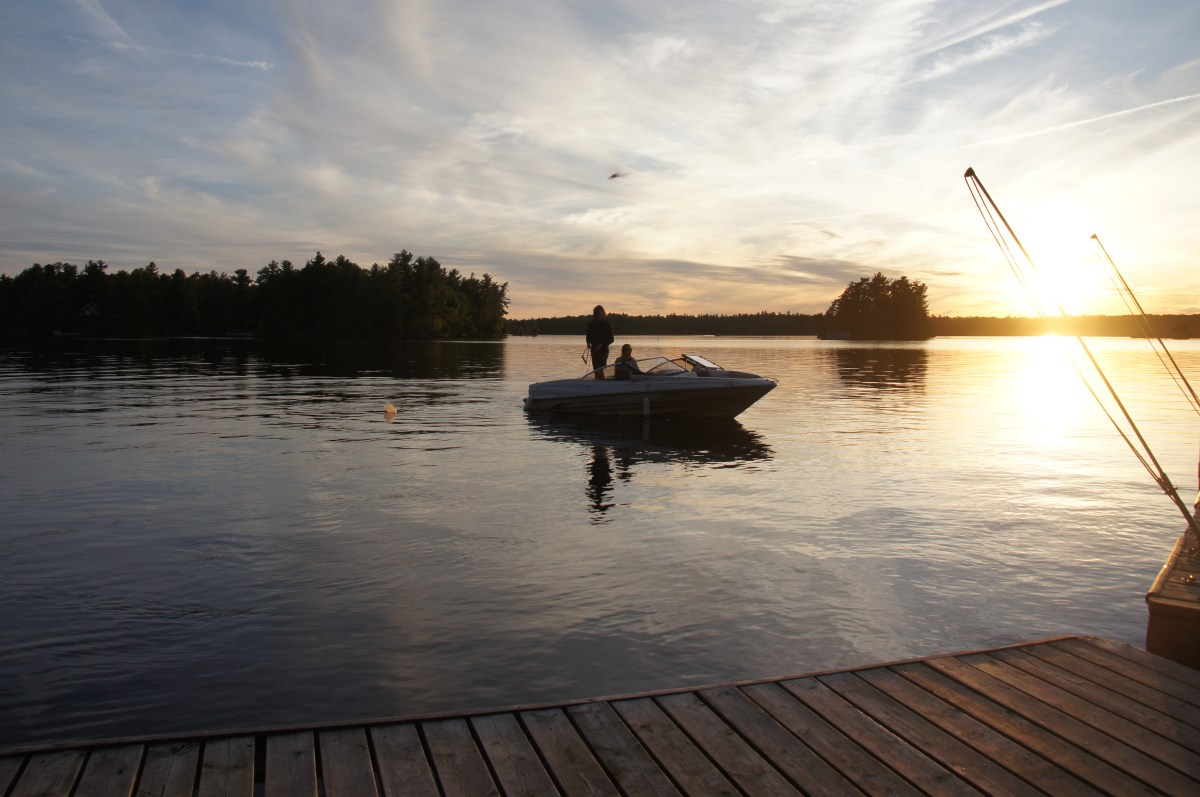
We discuss when to close the cottage every year. On the island where we have the cottage, it is very inviting to stay late into the Fall: few people are around; the leaves are turning many colors, and we see the occasional deer. Walking is a refreshing way to pass time there. And since we bought wetsuits, we challenge ourselves to keep going into the lake later and later in the season. Especially when in October there are hardly any boats and the water is perfectly still like a mirror, inviting you for a dip. But city activities start and I do not want to miss my friends at the gym and the community center playing bridge. On balance, though, we end up at the cottage a few days longer, the swims and walks win out.

This year, we had an unpleasant start arriving at the cottage for closing it; the boat would not start. The cottage is on an island, and we take a boat from the marina to get to the island. The battery had no power to start the boat. It was a Friday night when the marina was closed. We felt abandoned and considered going home. But Kathy negotiated with some other islanders who just arrived that they could drop us off at their cottage and we would walk on the island to get to ours. Fortunately for us, our friends, marina workers living next to the marina, were going out to Kingston, saw us stranded, and obliged us by changing the battery before they left.

Although we used to have turkey for Thanksgiving, the last few years we skipped it; there is much to be done without carrying food to the island and then taking the leftovers home. Instead, we prefer to use up what we have in the fridge. But a memory came back to me. I remembered the time when I prepared a turkey at the cottage only to find that our stove element burned out. Lateral thinking triggered unexpected action. Take the large dish with the turkey in it to a neighbor’s kitchen. The neighbors were not there. I climbed thru a window to take the turkey into the neighbor’s house, to cook. I hoped the neighbors would not show up. After the turkey was cooked, I opened all the windows to get rid of the smells, hoping nobody would arrive until the next day.

Cottage closing is usually the last visit to the cottage for the year. This year, I had already done some closing chores: took off the “sail” sunshade that was over the deck and returned the aluminum fishing boat to the marina for winter storage, leaving us the inboard/outboard boat for moving back and forth between the cottage and the marina. And I have already disconnected the portable air-conditioner. But we had to lay the carpet and arrange the furniture in the sleeping cabin, which just received a new roof the previous week. A few weeks ago, we pulled up the carpet and moved the furniture to avoid water damage awaiting roof replacement.

But the closing of the cottage is much more than the physical work of wrapping up the outdoor furniture, placing the kayaks and canoes next to each other, putting away the paddles, lifting the swimming ladder onto the dock, cleaning inside, etc. It is a mind shift from summer to fall activities. It is the end of a season where many friends came out to the cottage and shared good times with us when we discussed politics with those who would discuss it without getting into useless arguments and enjoyed BBQs on the deck overlooking the lake. It is the end of the hot season when all the fans in the cottage worked to keep us moderately comfortable without dipping into the lake to cool off. It is the end of boating, sailboarding, waterskiing, and just taking long swims across the bay to visit our friends, who offered us a gin and tonic while standing up in the water in front of their cottage. As well, this year we welcomed back our American friends who could not come to Canada the previous year because of Covid but appeared the first day they were allowed in on August 9. Closing the cottage means the end of summer activities. But it also means the beginning of planning the Fall activities going forward Xmas. We thought of visiting family in the US for Thanksgiving. That was a troublesome thought since the US border was not open for car travel by Canadians, but just last night the White House announced that they’ll open the Canadian border to fully vaccinated Canadians in early November. So now we can plan our trip South. We covered the furniture in the cottage with plastic sheets to protect it from dust that would accumulate for the next six months; emptied the bar fridge and the food fridge, and shut the main breaker. The last item leaving the cottage was to place mice poison in a couple of locations.