Troubleshooting iMac to MacBook Air: A Personal Experience


April 17, 2026

You’d think it is easy to upgrade your computer gear. Just buy a new computer, plug it in, and that’s it. Well, let me share our experience replacing an old iMac. Not to give you the conclusion of our story, but just to say that it took us one week to get the new MacBook Air functional, while using words not appropriate in polite company.

It began when Kathy’s 14-year-old iMac couldn’t load the Revenue Canada files needed to prepare taxes. We tried her 2-year-old iPad, which easily downloaded them, but it wasn’t suitable for doing taxes. The iMac had security issues, so I suggested that it was time for a new computer.

The first question was whether she wanted another 28-inch iMac. She decided to switch to a smaller one, perhaps a laptop. Since she was using Apple devices, we went to the Apple store to shop. She insisted that we get someone knowledgeable to set up her new computer and migrate the info from the old to the new device.

I said, ” Sure, let’s have someone do the entire installation, and the geniuses at the Apple store will do it for us.” Entering the store, a pleasant lady asked what we were there for and, upon learning that we’d like to buy a laptop, called another person to help us.

The young gentleman who came to assist us was very personable and provided the choices for screen size, color, and data storage on the computer. Once Kathy selected her choices, the salesman wrote up the order and brought out the selection from the back and led us to a table where another genius helped us start the computer and enter the date, time, email, and other basic information.

When finished with the initial tasks, I asked, “How do you transfer the data from the old iMac?” The fourth person, replacing the previous helper who went on her lunchtime, explained that we could do it at home, or bring in our mammoth 28inch iMac from home, and they would do it. Then he checked with the geniuses in the back, who advised that our iMac is too old to migrate its content to the new shiny MacBook Air. The explanation, if I understood it, was that they would download the iMac’s content to a storage device and then upload it to the new laptop, except that they did not have the appropriate storage device, or our iMac was too old for the task.

Instead, they advised us to call Apple support to do it ourselves. Ok, so we went home, and the first thing was to hook up the laptop to our internet service. And then the trouble started. We discovered that Apple, of course, has iCloud installed for its email system, but Kathy uses Gmail, which is not installed on an Apple device. So, we tried to install the Gmail program. And we tried and tried and tried again to no avail. No password that we knew was accepted.

Ended up calling Apple support and talked with a very courteous woman who advised us to go through the same steps we just did a dozen times to no avail. She concluded that it was a Google issue, not an Apple issue, so we should talk to Google.

I started with a Google chatbot, which, or should I say who, asked a dozen questions, very courteously in a mellifluous tone, and then decided to refer me to an actual person. The final instruction from the bot was to sign on a plan to pay five dollars, refundable, I was told, before I could talk to a real person. When I read the fine print on the plan, I discovered it would cost $90 a month, with cancellation at any time. I do not like signing up for these plans. I sometimes forget how many plans I have until I notice the charges on my VISA card, and then I have to hunt down the account to cancel it. So I just exited the chatbot.

My next line of attack was to have someone come to our house. She showed up late. After she tried to follow the instructions to install Gmail, just as we did before, and was unsuccessful, as we were, she left, suggesting that we figure out our passwords and have her come back for another visit.

We still needed help, so I left messages with a couple of service outfits. Surprisingly, many of these technical shops opened at 10am and closed at 3pm. I thought private industry would be more diligent and work longer hours.

Then I found one shop that had a timetable for making appointments online, and, more surprisingly, there were empty time slots for the same day. The tech expert at the store explained that Google had locked us out because we had tried to change the password 5 times. But he suggested that using our home internet service would recognize our Google account, and we could change the password there. He came to our house, came up with a new password, and started migrating data from the old iMac to the MacBook Air. It took all night to complete the migration.

It was a frustrating experience finding expert service and taking time to be present to answer questions about passwords. (Needed Face ID or fingerprint ID every time you logged in to either computer, or a password for the device, for your Apple account, and for Google). I had a steady supply of coffee and offered some to the tech expert, but he did not drink coffee or tea. He was from Mumbai; coffee or tea may not be a popular drink there.
Is There a Role for AI in Healthcare? Exploring Its Potential


February 25, 2026

A talk I listened to on how AI works with healthcare left me puzzled. A PhD working at the hospital explained LLMs (Large Language Models), such as Co-Pilot, ChatGPT, and Gemini, and compared them to search engines like Google and Bing. I thought I understood the difference: while search engines provide sources for queries, such as links or URLs, LLMs combine multiple sources into text and provide a human-like form of written communication.

According to the speaker, search engines maintain up-to-date information by constantly crawling the web, while LLMs remain current only up to the time they were trained, that is, the information they were given. This is so because not all LLMs are tied to the internet, so they do not have up-to-date information. So, I took it that search engines are good for research, while LLMs offer text and context to a query.

Both tools share the same starting point: the prompt. A question or prompt to a search engine would bring up links and URLs, while an LLM would generate a complete essay on the subject.

I was aware of much of this information; I have used search engines for years, and in the last year, I tried my hand at using some LLMs, for example, Co-Pilot, which is built into the MS Office suite. But how does all this technology relate to healthcare? That was the title of the presentation. So, I asked for an example at the end of the lecture. I said I see a cardiologist sitting at a computer, an MRI image on the screen, and a patient on the side. What does he do to use AI? Does he use a prompt about the MRI taken of the patient sitting next to him? Instead of a direct answer, the speaker explained that the infrastructure for using AI is not yet complete; for example, the hospital must have its own storage for the data, it cannot use storage elsewhere due to privacy concerns.

Also, I did not find answers to how doctors are trained to use AI or what percentage of them are currently using it. Anecdotally, I remember that when I last visited my ophthalmologist, he was concerned and dubious about computerizing his patients’ information. I wonder how long it may take for the medical profession to embrace and use computer technology, especially AI.

Coming back to a live example of how the medical profession may use AI, would he/she ask AI to examine the MRI and identify any medical problem shown on the image? The speaker emphasized that AI is only a tool to use and ultimately, the doctor decides on treatment, potentially using information gleaned with AI tools. After the lecture, I told the speaker that a few examples of medical professionals using AI would have been useful.

To test what I learned, I came home and used a prompt: “Write 300 words on the Vatican Museum”, and asked Google and Co-Pilot, to respond. To my surprise, both apps wrote a nice essay. It appears that the boundaries between search engines and LLMs are blurring, especially as technology advances and these tools integrate.

However, while both can provide information, their use in the specialized, privacy-sensitive field of healthcare remains challenging. There is potential, but also barriers in infrastructure, training, and trust.

PS. In today’s Washington Post, February 24, there is an article by a doctor about how to use AI in medical practice. “AI didn’t replace me as a doctor. It made me better.” By Ashish K. Jha

https://www.washingtonpost.com/opinions/2026/02/24/health-care-ai-doctors-chatbots/

Exploring the Value of Personal Interaction in Today’s Digital World


January 20, 2026

At the local box store I visited, the young salesperson from Gujarat showed me a slew of laptops and described their capacities. He was very knowledgeable. In the ensuing conversation, I learned that he is a graduate student in engineering and has been seeking a permanent job while pursuing his studies. I prefer to make informed decisions, so I told him I’ll go home and review the computers he recommended online.

On driving home, I stopped at another box store and had a similar experience with another salesperson, another immigrant, this one from Africa. The computer sales personnel in both box stores were immigrants, to my surprise. Many immigrant students pursue studies in science and engineering and support themselves financially by selling technical products.

He showed me several suitable laptops: lightweight, with a terabyte of storage, lots of RAM, and a fast chip. My preferred model was only available as open box, with a 10% discount. I wanted to check online reviews and asked the salesperson to hold the open-box model overnight.

When I returned the next day to buy the model based on the good reviews, the Christmas sale was still on, but the open box model was unavailable. Instead, they found a new one and, after some discussion, offered me the same 10% discount due to their earlier promise.

While waiting to finalize the sale, I noticed a sign advertising the credit card for this box store. According to the ad, you get a 10% discount on your first purchase. Wow! I decided to get another credit card and filled out the paperwork to receive my additional 10% discount on the computer.

I thought about the process of buying a laptop, driving home. No question that I spent hours talking with numerous salespeople, a time-consuming process. But I learned from the conversations, and, more importantly, I enjoyed them. It was satisfying to speak with people rather than scan websites like Amazon and buy a laptop online.

Although a stretch, this experience contrasts with a recent coffee purchase at McDonald’s, where I just went up to the screen to order, then waited, and picked up the coffee at the counter without speaking to anyone. I found it much more satisfying to purchase merchandise by talking with people. But I understand that businesses may prefer cutting out people-to-people communication to streamline the sales process and speed up business transactions.

The other thought that crossed my mind was whether businesses like to cater to retired people who may have time on their hands to study promotions and sales.  They can be selective in their buying habits and are often more demanding customers than younger people with jobs and families.

On reflection, I found talking with people while transacting business was thoroughly satisfying. I wondered whether the trend to simplify business transactions by moving them online would have negative consequences for conversational skills and social interaction (I fail to see the digital world, or what is called social media, as a replacement for face-to-face contact, including Zoom). Remote work is gaining popularity, especially since Covid, and with consumer goods available online, one can stay home and get by without face-to-face interaction with the outside world for months. Would this trend lead to more isolation and loneliness?

How to Optimize Your iRobot Roomba for Efficient Cleaning


November 24, 2025

It was a typical Sunday morning. Kathy brewed some coffee, and then she and I scrolled through our iPhones, reading about the world’s problems, which put us in a negative mood. Instead, I suggested we leave reading the news and let Roomba, our iRobot, which we call Matilda, do some cleaning, and we have breakfast. Kathy agreed it was a good idea, so I switched the news channels on my iPhone to the Roomba app to start a “new job”. An iPhone is essential for accomplishing anything in today’s environment.

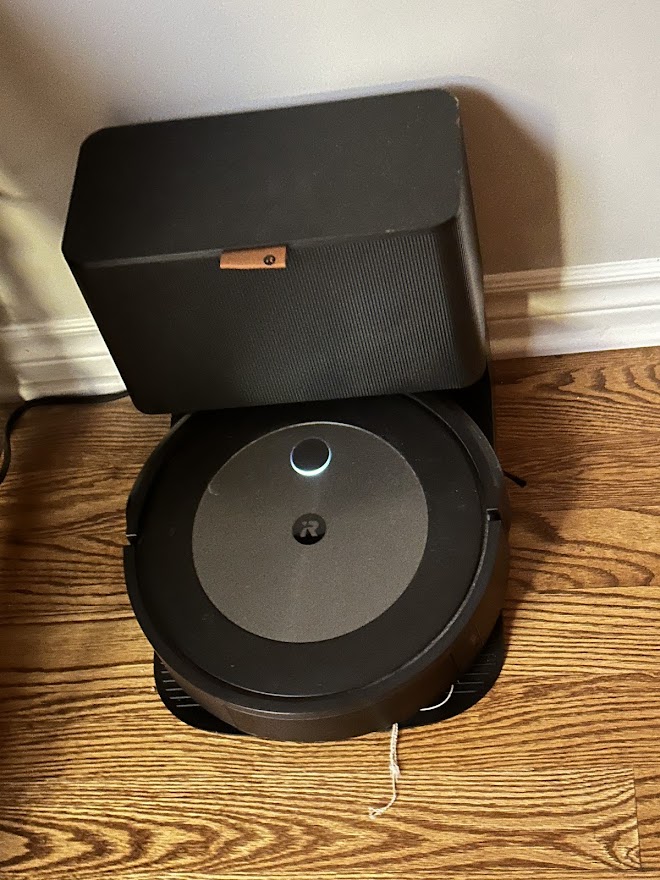
However, Matilda was in a cranky mood and sent me a voice message saying I needed to “blow out” the dirt from its previous job. It didn’t work at first; perhaps Matilda wasn’t quite awake. However, after ten minutes of troubleshooting accompanied by rich critical verbal expressions, I got it working. Listening to my running commentary on robots, AI, and techies, Kathy suggested a male name might be more fitting for our robot; a male’s early-morning grumpiness would more accurately reflects the robot’s behaviour this morning. So, we decided to rename the robot Mathis. The name was not a nod to Johnny Mathis; both of us are fans of his music.

But first, we had to clear the floor so Mathis could move around and clean. This meant putting the laundry basket, a few backpacks, slippers, and books lying on the floor onto the bed, in the bedroom. In the office, Kathy moved the office chair out of the way and the yoga equipment into another room. Finally, we were ready for Mathis to do his job.

Mathis struggled to navigate out of the dining room, which was full of obstructions. The room had five chairs and two tables, totaling twenty-eight legs that could interfere with Mathis’ movement. At one point, it seemed like he was lost as he moved back and forth, but he eventually found his way to the bedroom and the office. But his movements were inefficient overall, wasting significant battery power to reach the work sites.

For Mathis to work efficiently, it would be best to have an empty house with no furniture. Without obstacles like chair legs, he wouldn’t need to make detours and could make a clean sweep of the entire floor.

After some reflection, I decided to find a better home location for Mathis, with fewer obstructions on his way to reach the rooms in the house. A more central location in the house would avoid obstacles such as chair and table legs. So I moved Mathis’s home base to a new, central spot.

However, this change posed a potential problem: would Mathis feel at home in this new location after being accustomed to his previous spot? Are the floor plans in his memory tied to where he used to rest, or would he adjust and recognize the new location since he initially mapped our house from another place?

To test this new setup, I decided to give Mathis a “new job.” I asked him to clean the kitchen and the dining room after I turned all the chairs there upside down and placed them on the tables.

To see Mathis’s navigation skills in this new environment, I observed his movements. He seemed a bit lost at first, wandering around the living room before entering the dining room. However, he soon got to work, methodically cleaning the dining room by going back and forth, and then found the kitchen and cleaned it.

Overall, Mathis did an excellent job, and I considered rewarding him with a treat, such as a dog biscuit or candy, but how could I do it? This made me think that the brilliant designers of these robots should also provide rewards for good robotic behavior. Rewards could help robots learn from completed tasks and boost future performance.

Unboxing My New iRobot: A Weekend Adventure


January 12 2024

The new iRobot arrived from Amazon, but I delayed opening the box. Things were about to get difficult.

That old iRobot developed some bad habits. Like older people, it got cranky; sometimes it worked, sometimes it did not. The situation was far more frustrating than the word suggests when the machine spun around in a circle and went home like a dog refusing a walk. So, it was time to get a new one.

There I was, examining the sizable box holding my new iRobot. When I receive a new product, I usually empty the box to see all the items sent and then look for the one-page instructions.

Assuming that the new one needed powering up, I plugged it in. I then consulted the instructions, but the print was too small to decipher. With a magnifying glass, I discovered that of the dozens of pages, only two were in English. The other pages had identical text in dozens of languages, each two pages long.

Besides the instruction manual, I found two cards with QR codes. I have an iPhone, so I had no trouble taking a picture of the codes and reading the instructions. But what if I had no iPhone?

No other instructions were provided beyond the miniature English text and QR codes. From the two pages of text, I learned to charge the machine until the swirling white circle around the start button stopped. The other and more critical instruction was to “pair” my iPhone with the iRobot. Once I paired my phone with the cleaning genius, instructions arrived.

The first command received was to give my machine a name. We discussed the name. We didn’t intend to imply cleaning is women’s work, but finding a gender-neutral name souncing good to both of us proved difficult. The current recognition of multiple sexes makes using “(he/she)” after names too lengthy. Our old iRobot, Matilda, has a namesake: our new iRobot.

Soon enough, my iPhone indicated Matilda was ready to clean. I punched the starter button, and Matilda came off her base. Then she took off towards the bedroom, changed her mind, and returned to crank around her base. After that, she seemed to meander aimlessly in different rooms until it ran out of juice, returned, and mounted her base for a refill.

I was disappointed by the short amount of time Matilda spent cleaning. At this rate, she will need three or four charges to clean the main floor. The old and faithful Matilda did the entire floor with only two charges.

By now, not knowing what to do next and in a frustrated mood, it was time to call customer service. Connecting with a very courteous gentleman with a foreign accent did not take long. A nagging question about his location tugged at my mind, though I felt no desire for interaction in my current mood. He told me to charge Matilda three hours before starting. I had charged it for less than an hour because my iPhone informed me Matilda was ready to dance. The swirling was slow, and my iPhone said Matilda was ready.

Another key information I learned from the representative was to press the “map” button first so Matilda could survey our house, measure the rooms, and map them in her memory. The first time around, she will not clean, he said. I asked where the map button was. I saw the word map next to the Google symbol for maps, but when I touched the symbol, Matilda jumped off the base and started cleaning. No, the customer service gentleman said. Just touch the words “map,” not the symbol. And so, we made friends with Matilda, and once charged for the third time, she cranked around the entire main floor, mapping our house without cleaning.

She mapped our house into her memory and even called the rooms by their names. For example, there was a living room, bedrooms numbers one and two, and so forth. She correctly identified our Christmas tree, calling it ” the Holiday Tree,” the accepted word for it by today’s standards. How the hell could she recognize it? The star-shaped footing for the tree may have given her the information around which she had to circumnavigate. Very smart. And if I did not find the floor plan realistic, I could correct it on my iPhone.

Now that Matilda had our floor plan in her plastic body, I could enter a ‘new project,’ check the rooms to be cleaned, and then punch the start button.

Opening the box, figuring out the instructions, calling for customer help, and waiting for Matilda to charge and recharge took most of the weekend. Now, with the floor plan in Matilda’s mind, I can still change. I understand how to use the new iRoboy and could retire old Matilda to the basement should she return to life.  

Phew! I relaxed and poured myself a glass of wine, celebrating success. Then the realization hit me: did we not get this model because it is not only self-cleaning but also “mops.” (Self-cleaning means we do not have to empty the dustbin. She does it herself by having a massive blow into the base when she finishes the assigned project and returns to the base). Yes, she does mop with water! Aha, that is why there was another gadget for mopping in the box, into which we put some water. Boy, I’ll need another weekend to figure out how to mop with Matilda! I’ll sit on it for a week before initiating another adventure with Matilda.