My Journey Through Various Cars: A Personal Reflection

June 21, 2025

A blogger’s description of his experiences with cars over the years sparked memories of myown time with the vehicles I’ve driven.

Like many others, I wanted to have a car when I was a student in Vancouver, British Columbia. With limited funds, I searched for something within my budget. I had my heart set on the curvy Mustang, which I found appealing in design. However, when I started looking, the used models began at $2,000, far beyond what I could afford.

On another used car lot, I came across a Peugeot 403 priced at $800. This was more manageable for me, and the car was in good condition with no rust. For me, the Peugeot had some interesting features, including a hand crank to assist with starting the engine in colder weather. You had to be careful with the crank; if you didn’t let go as soon as the car started, it could potentially injure you by taking your arm out of its shoulder socket.

The Peugeot 403 received excellent service from European mechanics in Vancouver, and parts were easily accessible. When properly tuned, the car purred like a sewing machine. The situation changed, though, when I drove my Peugeot to Chapel Hill, North Carolina, where I entered graduate school. My route took me south to California, where I joined Route 66 and journeyed east across the Mojave Desert to North Carolina. The car performed well in temperatures above 120 degrees.

During my stay in North Carolina, snow arrived only once, and I was able to use the crank successfully. However, problems arose when I needed repairs. The mechanics seemed puzzled when they saw my Peugeot; they had never encountered this model before. More importantly, they didn’t have any parts, and the parts that I needed were in the metric system, not the imperial system. This meant that no North American part would fit. Fortunately, the mechanics were resourceful and managed to install General Motors parts that worked in some fashion, but only for a short time. The car sputtered, but it continued to run until it eventually broke down on a rural highway. I removed the license plates, left the vehicle on the shoulder, and hitchhiked back into town.

With my first professional job and a better salary in Norfolk, Virginia, I sought a stylish car. A yellow hardtop Dodge Coronet 440 caught my eye, equipped with a powerful V8 engine that rumbled in a confident roar. The black leather hardtop contrasted sharply with the yellow body, making it look sharp!

The car performed beautifully and even had air conditioning, which was a big deal since I didn’t have AC at my graduate dorm in Chapel Hill. We also lacked air conditioning at our rental unit in Norfolk, where temperatures often soared into the 100s.

I will never forget the rental furniture in Norfolk; the bed was made of Styrofoam! It was uncomfortably hot at night without air conditioning. The only relief we had during that time was from large fans and open windows, but we could always take a drive in the car with its AC system to escape the heat.

We later moved to Washington, DC, and then to Ottawa in this car. It was a reliable vehicle that took our family, which included three children under ten at the time, and our dog on several trips to Florida. With a two-door sedan, we had to push the children and the dog into the back seat before we could get going. We enjoyed car camping and visited various sights along Highway 95 as we headed south. One of our favorite stops was the Battleship North Carolina in Wilmington, NC.

At this point, we needed a second car to transport the children to their separate sports events. I purchased a used VW Squareback, which was economical, and I found the standard gear shift to be fun to use. However, the gas heater proved to be a challenge! Imagine driving the VW in minus twenty-degree temperatures during winter. The gas heater took time to start working. While waiting for it to warm up, I had to open the windows to prevent them from fogging up with my breath in the car. To cope with the biting cold wind coming through the windows, I wore a heavy parka, a tuque, and gloves. Unfortunately, the Squareback was not built for the freezing winters of Ottawa.

The car was lightweight, and even with snow tires, I slid into an intersection where oncoming vehicles collided with me one day. That was the end of the VW. The worst part was that my neighbors witnessed the wreck with me init, and the gossip in my neighborhood was about how incompetent I was at driving on ice.

A similar situation ensued with my fancy Dodge SE, a V8 that boasted ample power and a fabulous interior. This car had been given to me by my father when he retired, and I had it transported by train from Vancouver to Ottawa. It was a gem, but in humid weather, it was challenging to start. I am not sure why. I kept a screwdriver with a long stem in the glove compartment to help me short-circuit the starter engine in humid weather. Unfortunately, sliding on ice on a curvy road led me to crash into a tree, ending the life of this remarkable car.

After joining an international telecom company in the high-tech sector and becoming an executive, I rewarded myself with a Toyota Camry, which I dubbed the “silver bullet” because of its shiny silver color. It was a trouble-free car, and I drove it for an impressive 300,000 miles.

In a memorable event, I hit black ice on a rural road one night and flipped the car, leaving me hanging upside down by the seatbelt. Once I got my brain into gear, I opened the window and shut down the engine that was still running. Then I tried to figure out how to extricate myself from being upside down without banging my head when I unhook the seatbelt. Once I turned myself right up, I climbed outside through the window and flagged down a motorist. The insurance company paid for the rehabilitation of the car.

Before our next driving vacation, I had the vehicle inspected by service professionals to ensure it was still in excellent condition. They called me back in half an hour to inform me that the engine was about to fall out of the chassis at the next pothole due to the rusty frame.

We traded our Camry, with its limited value, for a Mercury Cougar station wagon to accommodate our hockey gear. The large hockey bags require plenty of space. I was impressed by the salesman’s story that the previous owner was the football coach of the Ottawa Roughriders. Despite the incessant rattle of loose parts, the car served us well.

When the Cougar became a rattletrap, we moved on to a Chevrolet Caprice Estate, another spacious station wagon. My most vivid memories with this car were transporting the boys to soccer tournaments from Montreal to Toronto, Syracuse, and various locations in between.

One trip left a lasting impression. The boys played cards in the back, sitting in a circle, when suddenly, the card game devolved into a farting contest. I had to open all the windows to let the foul smell escape, and when the boys continued to pass gas, I stopped the car and told them to control themselves or risk missing a game. That worked!

When we became empty-nesters, we decided to upgrade to a leased Honda CR-V. Now, we are on our third CR-V. The leasing arrangement allows us to get a new model every three to four years. Our current vehicle is a hybrid, and while the fuel efficiency is excellent, I was shocked to find out that it doesn’t come with a spare tire—the battery occupies that space. Fortunately, we’ve experienced very few flat tires on the road, so the absence of a spare may not be a significant issue. Keep your fingers crossed!

Overall, the quality of cars has improved considerably over time. At the same time, the number of gadgets and the use of chips in vehicles have increased substantially. I used to enjoy working on cars in the past, tinkering with things like changing spark plugs, but that has become too complex for me now. Thankfully, the newer cars tend to be more reliable.

Exploring the Ismaili Imamat: A Cultural Landmark in Ottawa

June 13, 2025

The Canadian Headquarters of the Aga Khan, known as the Delegation of the Ismaili Imamat, is situated at 199 Sussex Drive in Ottawa. The Ottawa Imamat itself is a secular building. However, the Aga Khan serves as the spiritual and hereditary leader of the Nizari Ismaili branch of Shia Islam, tracing his ancestry back to Muhammad.

The Delegation of the Ismaili Imamat Building on Sussex Drive

The Aga Khan once noted that, in the West, religion is often viewed separately from social and economic initiatives. In contrast, the Ismaili tradition sees helping the poor and fostering connections between people and cultures as integral to the practice of religion.

Sussex Drive, often referred to as the “ceremonial route,” is also home to the embassies of Kuwait, Saudi Arabia, France, and Japan. The award-winning National Gallery, designed by Moshe Safdie, is located nearby, adjacent to the Canadian Mint and across from the Notre-Dame Cathedral Basilica. Additionally, the Prime Minister’s official residence is located at 24 Sussex Drive, which is currently awaiting renovations.

The arrival of the Ismailis in Canada goes back to Pierre Trudeau, a friend of the Aga Khan IV, invited the Ismaili community to Canada when Idi Amin expelled them from Uganda. Currently, approximately 2,000 Ismailis reside in Ottawa and around 80,000 across Canada, out of a global population of approximately fifteen million.

The architecture of the Imamat left a lasting impression on me during my visit. Designed by the Pritzker Prize-winning Japanese architect Fumihiko Maki, the project originated from a three-page letter from the Aga Khan, in which he requested Maki to design the building. He sought a design concept inspired by the visual qualities of rock crystal, emphasizing its transparency, translucency, and opacity.

Maki and his team carefully analyzed the letter to grasp the Aga Khan’s intentions fully. To gain further insight into the characteristics of a crystal, Maki even brought his wife’s diamond ring into the office to study its reflections from different angles. The Aga Khan’s request was for the building to be mysterious, esoteric, and intriguing, yet aesthetically pleasing, incorporating themes of Islamic architecture.

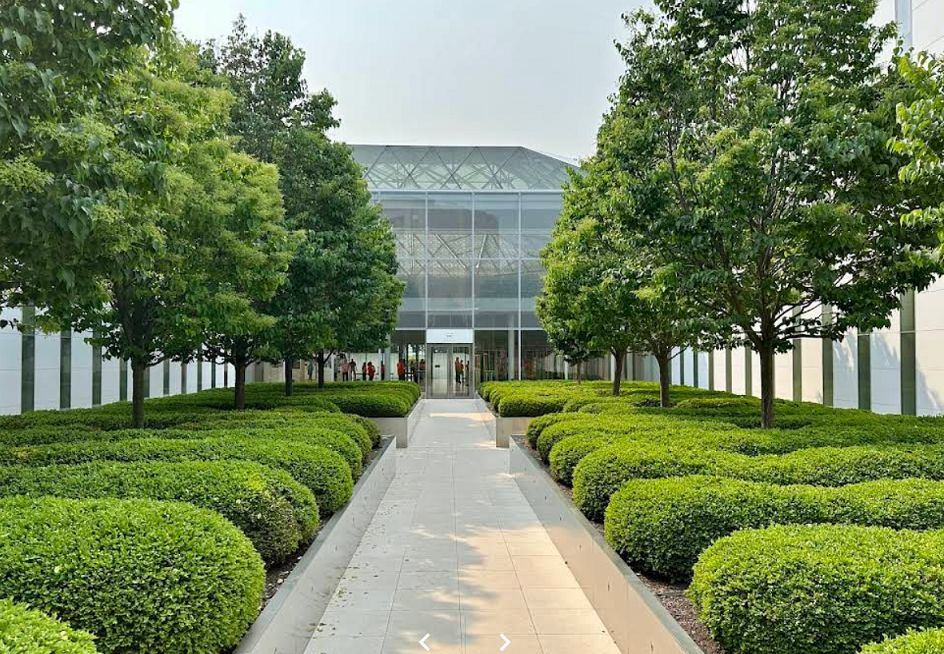
The Imamat features a large atrium crowned with a multi-faceted dome and includes a courtyard that contains an Islamic garden known as a Char Bagh. Additionally, the building provides office space for the staff of the Aga Khan Development Network (AKDN) and serves as a residence for the Aga Khan when he visits Ottawa.

The AKDN operates numerous educational, conservation, social, and economic programs in Africa and Asia, spending approximately one billion dollars annually. For instance, AKDN founded a university in Karachi, which initially focused on Islamic studies but has since expanded to include liberal arts education. Additionally, the organization has launched a microfinance program designed to support small businesses. This emphasis on helping the less fortunate aligns with the objectives of the Ismaili sect.

Related to the Aga Khan’s interest in architecture, he established a triennial architectural competition for works of Islamic design, including residential, religious, and conservation projects.

The Char Bagh

The purpose of the atrium is to host conferences, meetings, and study groups that focus on improving the condition of humankind worldwide. It features a patterned screen made of cast aluminum that reflects themes of Muslim architecture. The atrium’s floor is composed of maple wood tiles arranged in a seven-square pattern in both directions, with each square approximately ten feet by ten feet. This configuration results in a total of forty-nine squares, symbolizing that the current Aga Khan IV is the forty-ninth Imam of the Nizari Isma’ili sect. The use of mathematical concepts also serves as a symbol in Islamic architecture, reminiscent of the mathematical ratios seen in the gardens of the Taj Mahal.

The three-layered glass dome, composed of panels in various shapes, illuminates the atrium while diffusing direct light through a patterned layer of glass. The glass panels attach directly to the structural frame without the use of hardware. The design of the dome originated in Toronto, with the glass sourced from Austria, the structural steel from Poland, and the panels fabricated in Germany. The construction was completed in Canada. The multi-sourcing of the dome represents “pluralism,” a core principle of Ismaili Shia philosophy.

When I visited the Imamat, I felt relaxed as if I was at home. The parquet-like maple flooring created a warm ambiance, and the filtered lighting was visually soft. The hexagonal pattern of the cast aluminum screens hanging around the walls added a sense of enclosure and intimacy. People were seated around the perimeter of the atrium on large, comfortable couches, enjoying the peaceful atmosphere.

The acoustics in the atrium were excellent, even with many people conversing. The wood floor, screen wall, and triple glass ceiling effectively absorbed sound. The gentle buzz of conversation in this relaxing environment was pleasant, leading me to reflect on the life of Aga Khan IV, who passed away in February 2025.

I learned from the tour guides on the floor that he was born in Switzerland and held citizenship in that country, as well as in the UK, France, and Portugal. He was also an honorary citizen of Canada. In his youth, he was part of the Iranian Olympic skiing team and later earned a degree in Islamic studies from Harvard University. Throughout his life, he became a prominent horse breeder and achieved significant success in business, with his estimated wealth reaching around $12 billion as of 2024.

If you find yourself in Ottawa, I recommend visiting the Imamat not only to appreciate its stunning architecture but also to gain intellectual insight by learning more about the Ismaili community.

‘Long Bright River’ Review: Thrills and Shortcomings

June 5, 2025


I read a book that isn’t typically in my usual genre, but I reviewed it nonetheless. I will first summarize the book, followed by my mostly negative comments, reflecting my bias towards this genre.


“Long Bright River” by Liz Moore is a captivating blend of biography, thriller, and social commentary. Published in 2022, it became a New York Times bestseller. Set in Philadelphia’s Kensington neighborhood, the story centers on two sisters raised by their grandmother after their mother’s drug overdose causes their guilt-ridden father to abandon them.


Kacey, the social and outgoing sister, succumbs to addiction, while her introverted and intelligent sister, Michaela, becomes a police officer. Michaela’s life experiences and thoughts about her neighborhood, sister, and colleagues are woven into the narrative, which includes a biographical element and her self-analysis and introspection.


Michaela narrates the story in the first person. As their grandmother struggles to raise them, Kacey ends up living on the streets. Meanwhile, Michaela patrols the neighborhood where her sister now lives. Despite having shared a bed and a close bond during their childhood, the sisters are now separated by their very different lifestyles. When Kacey disappears, Michaela searches for her but finds that Kacey is avoiding her, partly due to feelings of shame about her situation.

Interwoven with the story of the two sisters is the troubling issue of the murders of four women living on the streets. Michaela fears Kacey may become the next victim. A significant twist occurs when Kacey gives birth to a boy fathered by Michaela’s boyfriend; Michaela then adopts the child. As a single mother, Michaela faces many challenges, including securing housing, finding babysitters, and balancing these responsibilities with her work as a police officer.


The plot builds to a crescendo as Michaela searches for her sister, while the police work to uncover the identity of the killer. During her investigation, Michaela discovers her father in Delaware after finding information in her grandmother’s files. As the story unfolds, a new theme of reconciliation between Michaela and Kacey emerges. The grand finale takes place in an abandoned church, where Michaela confronts her sister, her sister’s boyfriend, and the killer. In the end, the father and the sisters reunite, leading to a happy conclusion.


Having enjoyed works by Clive Cussler, Ken Follett, John Grisham, and others, I found this book to be lacking in sophistication in terms of plot, excitement, and context. It explores themes of a dysfunctional family and police work, including rogue cops—topics that are quite prevalent today.


Almost 500 pages, I found the first half of the book boring, as it delves into excessive detail about the sisters’ upbringing. The author could have described the girls and their environment more concisely.


The book’s structure is gimmicky, employing a non-linear format that alternates between the past and present, jumping back and forth. This structure feels tiresome and artificial. Why couldn’t the author have told the story chronologically? I don’t believe it would have diminished the narrative.


Another structural choice the author makes is to speed up the events towards the end, building up to a crescendo that is far more exciting than the first half of the book. Many thrillers I’ve read are thrilling and eventful from start to finish, making them true page-turners.


This book uses common tropes found in the police/detective thriller genre. For instance, every writing course I’ve taken recommends starting with a hook to capture the reader’s attention, such as a murder, which indeed occurs right at the beginning of this book. Thrillers often involve identifying multiple suspects through mistaken accusations before revealing the real criminal. This story follows a familiar pattern, presenting three false leads before unveiling the actual perpetrator. The author’s tried-and-true storyline was a winning formula—the formula I have seen before.

One major issue with this book is that the identification of the murderer lacks a proper investigation. There is no detailed explanation proving the suspect’s guilt; the police simply name the guilty party, providing no evidence. In most other books I’ve read, there is a thorough investigation that uncovers evidence supporting the conclusion of guilt. This book deviates from the usual pattern of these types of stories, which typically involve a more comprehensive investigation.

I also find it interesting that a New York Times bestseller addresses a wide range of arguably unpleasant social and economic issues, such as prostitution, fentanyl, corrupt police officers, dysfunctional family structures, out-of-wedlock childbirth, abandoned houses, decaying neighborhoods, and addiction. Do all these social problems need to be included to create a “bestseller”? Or would one or two of these topics be sufficient to form the foundation for a successful book?

I’m not saying this isn’t a good book; many people have enjoyed it, which is why it became a bestseller. The writing flows well and captures the interest of some readers. Although I wouldn’t personally buy this book since it’s not my preferred genre, I can understand how it might appeal to others seeking entertainment. It’s the kind of book one would read on a long airplane ride, which is precisely what I did when I flew from Ottawa to Vancouver and back.

Exploring Point Grey Road: Vancouver’s Luxurious Real Estate

June 2, 2025

Montreal has Westmount, Toronto has Rosedale, Ottawa has Rockcliffe Village, and Vancouver has Point Grey Road. The north side of Point Grey Road features elegant, architecturally designed residences. This location is attractive due to its expansive ocean views, framed by mountains in the background and Stanley Park across English Bay, highlighting the Vancouver skyline to the east.

Talk about privacy from the road!

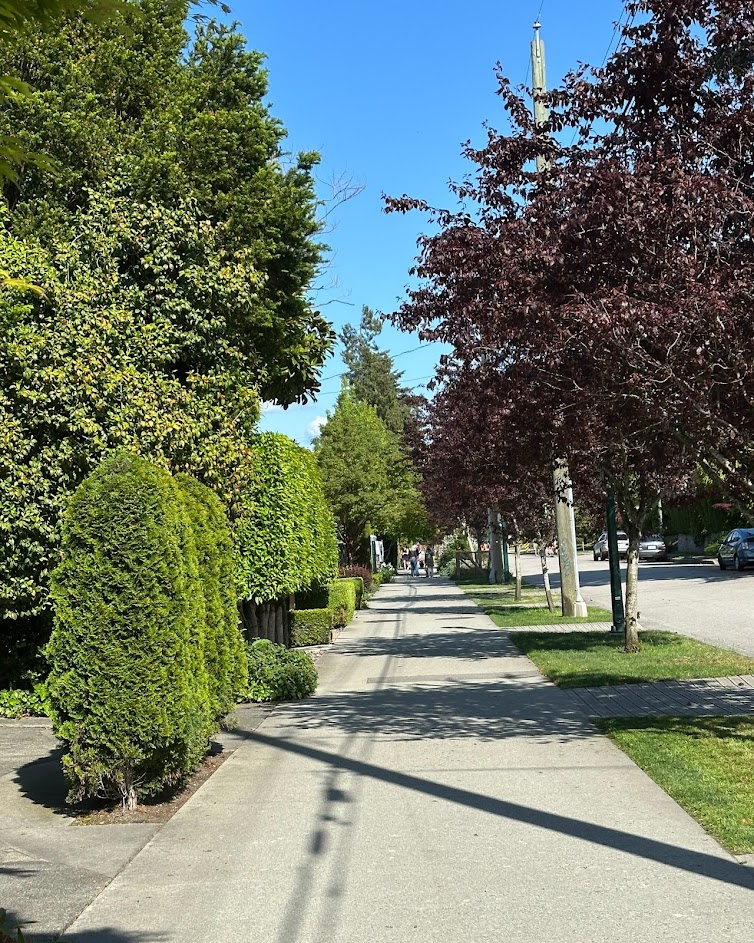
We walked from my brother’s place in Kitsilano to Point Grey Road to explore the area, where the sidewalks were wide, complemented by attractive street furniture, including benches, light posts, and trash cans. The roadway was also spacious, reserved for walkers, joggers, and commuting cyclists traveling from downtown to the University of British Columbia.

   Point Grey Road sidewalk

I understand that Mike Harcourt, a former mayor of Vancouver, envisioned creating a continuous park on the north side of the street. To achieve this, he purchased available residences. He transformed them into parks that front Point Grey Road, extending to the shoreline to provide stunning views of the ocean and the Vancouver skyline. However, homeowners living along Point Grey Road opposed this initiative, and with rising real estate prices, the project ultimately came to a halt.

View from mini-park, the Vancouver skyline

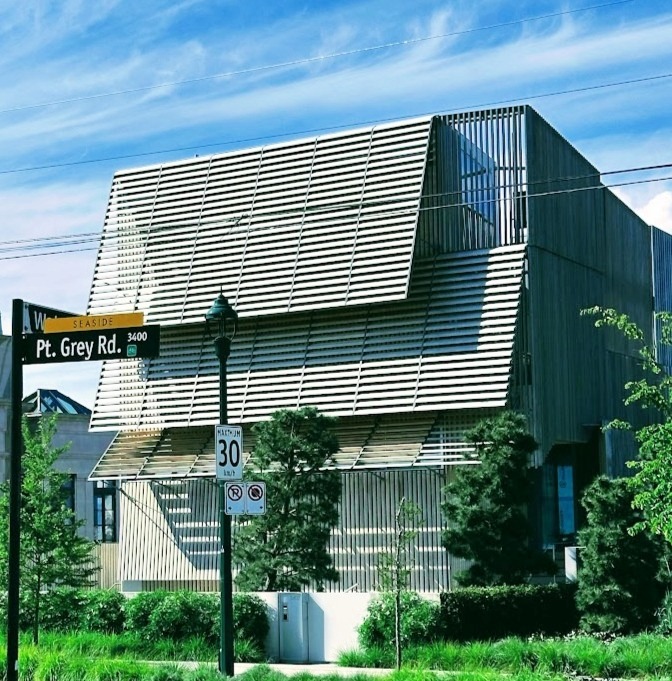
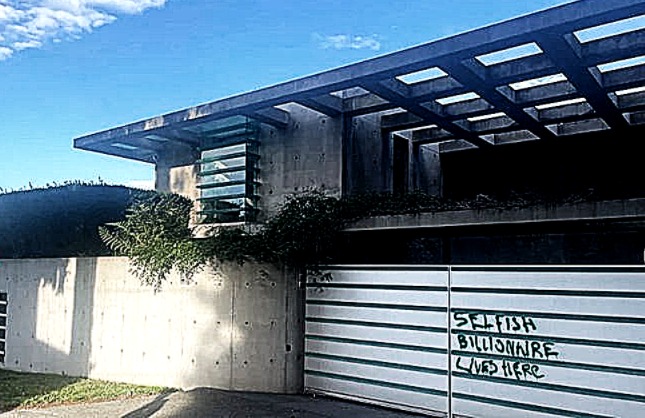
A stroll along the upscale residences made me wonder who owns these homes. I found some online. One notable resident is Chip Wilson, the founder of Lululemon, a popular athleisure clothing brand. His property was valued at over $82 million in 2024, making it one of the most expensive real estate holdings in Canada. While Wilson has gained significant wealth from his clothing line, he has also stirred controversy with some of his comments.

      Chip Wilson’s place, totally private from the road

He faced accusations of racism for the name “Lululemon,” which features three “l’s.” He said he chose this name because he found it amusing to consider how Japanese people would pronounce it, given that there is no “l” in the Japanese alphabet.

Additionally, he was criticized for being “fatphobic” after suggesting that not all women are suited for his designs. He pointed out that women who do not have a gap between their thighs could cause the fabric to become sheer or translucent, leading to backlash for implying that those women were overweight.

People have also slammed him for stating that he has no issue with children working. He mentioned that his children have worked for his company and argued that there is nothing wrong with this. He was specifically referring to Asia, where much of his clothing line is produced by child labor.

His comment reminded me of children we saw in Myanmar, rolling cigarettes, sitting on the floor with inadequate lighting. When I inquired about why children work, I learned that many would starve without their jobs and that, for some, working is preferable to having nothing to do, especially when they are not attending school.

      An architectural home

Dr. David Suzuki is another fascinating figure who lives on Point Grey Road. He had a long-running, popular show on CBC called “The Nature of Things.” As an environmentalist, he advocates for living in harmony with nature. However, I find it hard to reconcile the idea of living in harmony with nature while owning a multimillion-dollar house on Point Grey Road, especially considering that he also possesses two other properties. Nonetheless, his educational broadcasts have been excellent and have been aired in forty countries.

Still, another homeowner on Point Grey Road was Nelson Skalbania, who took a chance on signing the seventeen-year-old Wayne Gretzky to the Indianapolis Racers hockey team and later on starring withe the Edmonton Oilers. As we know today, Gretzky has become arguably the greatest hockey player in history. The team’s owner, Skalbania, was interested in sports franchises; he bought and sold teams and even purchased the Atlanta Flames before relocating them to Calgary.

Continuing with the hockey theme, Trevor Linden owns a house on Point Grey Road. He played for the Vancouver Canucks and served as team captain and General Manager after his playing career ended.

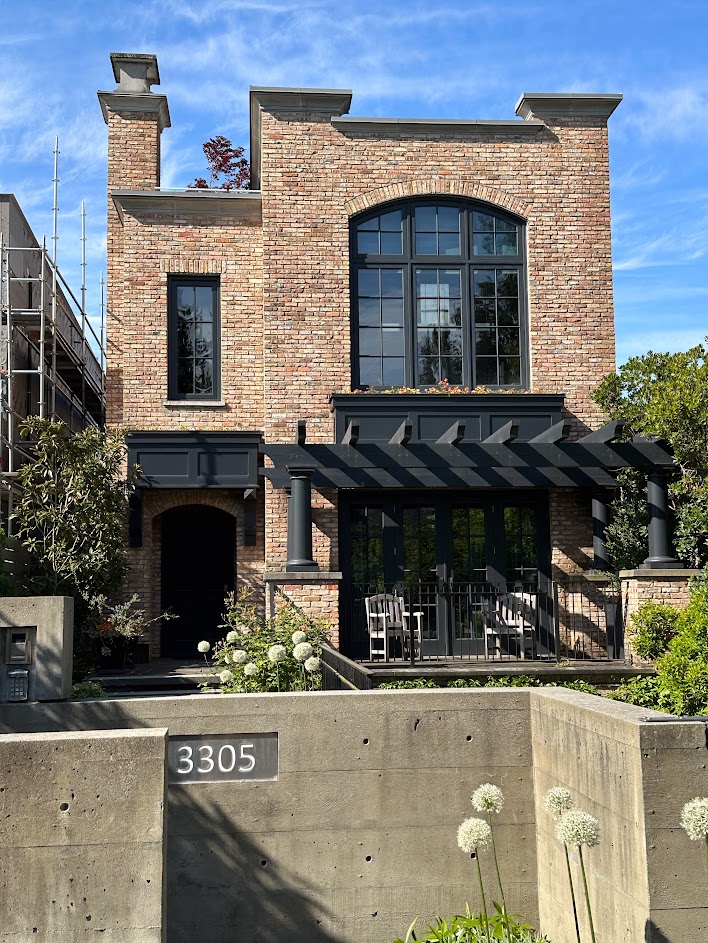
Strolling along, I took a picture of what I thought was a very attractive house. After searching online, I discovered that it was designed by one of my classmates from the School of Architecture at the University of British Columbia in the 1960s. Paul Merrick was an exceptionally talented designer during our time in architecture school, and he established his firm in Vancouver after graduation. The article I read on this residence did not mention the owner’s name.

Designed by Paul Merrick

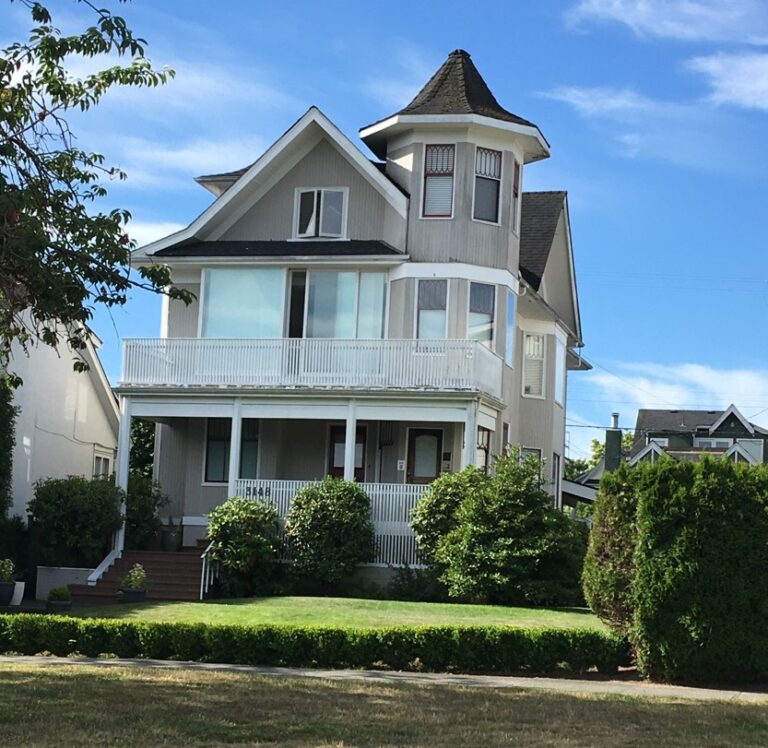
Another renovated old house on the south side of Point Grey Road, at number 3148, is known as the “Peace House.” The name originates from its use during the 1960s by peace activists who lived there and protested against the storage of nuclear weapons at the Comox RCAF base. This house also attracted the wandering hippie crowd of the era, known as the Love-In Generation, including notable figures such as Timothy Leary, the Grateful Dead, who even performed a concert there, Baba Ram Dass, and Allen Ginsberg. Recognizing these names indeed reveals my age!

The “Peace House”

These beautiful, high-value homes are designed by architects and surrounded by meticulously maintained landscaped yards. I thought it would be a great experience to visit these homes inside. Would the homeowners be willing to open their houses for viewing?