Exploring the Art and Wine at Chateau La Coste

November 1, 2023

A jazz trio played forties tunes on the deck of a vineyard, where we sat down after a tiring bicycle ride in the finger-lakes area of New York State. We relaxed by sampling the wine and listening to the music. It was a fall afternoon with the sun going down, illuminating the vinifera below us. Before leaving, we bought some wine for the night to enjoy at our hotel. These are the type of situations my lasting memories are made of.

The first such memory was when I finished university and helped my younger brother learn to drive when he turned sixteen. When he passed the driving test, I convinced him to drive with me from Vancouver to California. I explained to him that he’d do the driving for practice, and I’d do some wine-tasting on the way. He did not need much convincing. And it was a memorable trip.

More recent memories were at vineyards in North Carolina, where after a warm welcome, the hosts offered lunch in addition to the tasting session. What I liked about these visits were driving into an attractive estate with lush vinifera surrounding us, entering an ornate Italianate building or a large historic mansion where the winemaking took place, and partaking in a guided tour of winemaking before sitting down for the tasting session.

So, when we visited Provence in France a month ago and discovered that Chateau La Coste, a well-known vineyard was on our route, I jumped at the opportunity to visit it and bought entry tickets. Chateau La Coste is famous for art, architecture, and wine. The owner, Paddy McKillen, an Irishman, who bought the estate in 2001, commissioned artists to create artwork in the garden and hired world-famous architects to design the buildings (Frank Gehry, Oscar Niemeyer, and others). So my expectations were high only to be disappointed after the visit. Let me explain.

We approached the Chateau driving through fields of vinifera only to arrive at a large, open, unpaved parking lot, with recently planted trees. By talking to other tourists and asking questions, we found our way to the building where our tour started. Nobody welcomed us, nobody provided directions. It was not a promising beginning.

Our group of eleven people was taken on a guided tour of the wine-making plant. Well, production took place in a building that looked like half a barrel on its side, with interesting finishes, mostly aluminum, but nothing else (designed by Jean Nouvel). To me, it looked like any commercial building, like a Quonset hut, huge, but still only a simple shape, a half-barrel sitting on its side. Is this good architecture? The shape conjured up winemaking barrels, was that the idea?

We pondered the front of the building, listening to the guide, standing on a gravelly field, next to a massive excavation, which, I gathered, was going to be the location for a hotel. The surrounding for the hotel and the plant was not what I expected to be a campus-like atmosphere with attractive landscaping.

Once inside the half-barrel, though, the guide gave a detailed tour of the wine-making process and equipment. Surprising to me were the huge metal barrels holding the fermenting wine; I had seen wooden barrels in other vineyards previously (although, admittedly, the other vineyards were smaller than this one).

Wine tasting, the event we all looked forward to, was next and we entered a small nondescript building. We gathered around a U-shaped table, sitting on bar stools. At the open end of the U was the guide and at the bottom of the U were six bottles of the Chateaus brand.

Talking about the qualities of the first bottle, the guide poured a couple of ounces of wine into a wine glass placed in front of each of us. If you did not like it, you could pour it into a tumbler sitting next to the wine glass. The purpose of the tumbler became more obvious as we tasted the next few wines and became a bit tipsy. I began to pour half of my samples into the tumbler, I wanted to walk out at the end, although I did not drive, Kathy drove in Provence.

The two young Australian couples facing us across the U loved their wine and peppered the guide with questions. The three Israeli tourists next to us enjoyed their wine quietly. The two young women from New  York City talked to each other about the wines. Kathy and I practiced our wine-tasting skills by swirling the wine around the glass, smelling it, and observing the prominence of legs in the samples indicating alcoholic content.

During our discussion with the guide, we learned that Le Chateau produces excellent roses because of the soil in the area. And the wines are not scored for sweetness like we do in Canada. We also found out that of the million liters of wine produced annually, a third goes to North America, a third to Europe, and a third is sold domestically. The guide even mentioned some of the best years for each sample we tasted, should we decide to purchase some.

When we discovered, after sampling all six wines, that the fourth was the most expensive, many of us looked ruefully into the tumbler into which we poured some of it; we were all becoming a bit mellow after tasting four samples. But the sampling was a success indicated by how our conversation had become loud and animated, and as a result, in the end, we all tipped the guide. On the way out I bought a bottle of wine that we liked during the tasting, to enjoy at night at the hotel.

By now it was getting late in the afternoon, and we had to drive to Aix-en-Provence for our accommodation that night. We felt it prudent to eat before driving after consuming so much wine and tried one of the restaurants, set in a lovely garden. We were not disappointed with the quality of the food.

On leaving, we went by the gardens and noticed some of the artwork in the distance. When we tried to walk closer, a guard snapped at us and asked for our tickets. We did not know that we had to pay, we saw nothing indicating that on the way in and assumed that our wine-tasting ticket covered the whole vineyard. It was too late to go back to the entrance to buy tickets, so we left without seeing all the artwork. I understood it would take a few hours to see the artwork and the buildings designed by renowned architects, spread across the large estate. I was disappointed; we had seen parts of the vineyard, much of it under development but missed some of the finished areas with the work of famous artists and architects. Next time we come by, I’ll make sure we have sufficient time to fully explore Chateau La Coste.
The Death of the Single-Family Home on a Quarter-Acre Lot

February 3. 2023

The house on a quarter-acre lot, which has been the Canadian dream, is under vicious attack. The quarter-acre lot in planning terms is the R1 zone, which occupies over half of the land of Canadian cities. In Ottawa, the R1 zone occupies over 50% of the land; in Toronto, Calgary, Edmonton, and Vancouver, it is over 60%, while in Montreal it is 45%.

But the R1 zone is “exclusionary” cry social advocates, citing the shortage and unaffordability of housing, to absorb people arriving in Canada’s cities from the hinterland, and from abroad. R1 is the culprit and therefore, it must be eliminated to permit higher densities, putting two and three dwellings on the quarter-acre lot.

But how can the R1 zone be “exclusionary” when more than half of the land used in cities is zoned R1? To me, the word exclusionary conjures up images of elite golf clubs; high-end tennis clubs, and similar facilities with entrance requirements that a minority of people possess. And by a minority, we usually talk about the “top” five percent or even the top one percent of people.

In 2016, fifty-three percent of dwellings were single-family detached homes in the R1 zone in Canada, and I would not call this metric exclusionary. The rest of the Canadians live in apartments and condominiums.

I realize municipalities could use zoning for excluding certain groups of people by specifying  minimum lot and house sizes, which could make purchasing a house unaffordable for some people. It happened to blacks in parts of the United States (until it became illegal to do so), but I have seen nothing in Canada to illustrate that zoning has been used to exclude a specific group of people from a community.

I studied city planning at the University of North Carolina where Professor Chapin wrote and taught the classic and long-used textbook “Urban Land Use Planning”. According to him, zoning has been a tool to regulate development, generated by employment growth, creating a need for housing, schools, and commercial development.

We have been fortunate in Canada to date, being able to expand the urban boundaries of our metropolitan areas, to provide for growth and reasonably priced housing. Now, suddenly, we find that environmental concerns, greenbelts, and natural boundaries like water and mountains constrict some of our cities concurrent with our radically exploding immigration intake, creating an unprecedented demand for housing.

The government solution to the housing crisis is to densify our communities, and one approach is to permit the doubling or tripling of dwellings that occupy half the land of our cities. And that is the R1 zone. Conclusion: it has to be done away with. Ontario recently introduced legislation to triple the population of the R1 zone by allowing three dwellings on the quarter-acre lot instead of one, starting in the summer of 2023.

I think that by doing so, we’ll destroy some of our attractive and historical districts. Allowing three dwellings where there is one now will lead to a haphazard and unsightly streetscape. Instead of the usual one car per dwelling, we’ll have four of five cars on the same piece of land and lacking parking space on the quarter-acre lot, on the streets. Traffic will increase on roads designed for low-density residential districts. Schools will have to be renovated to serve more children on limited sites.

So, you ask, what is the solution for the burgeoning demand for additional housing? I think that we’ll have to develop some new towns and/or attract our future development into peripheral small towns around our metropolitan areas.

Failing that approach, I suggest that densification in our single-family communities should be allowed gradually in places where the installed infrastructure permits additional development, or until after governments build the required infrastructure.

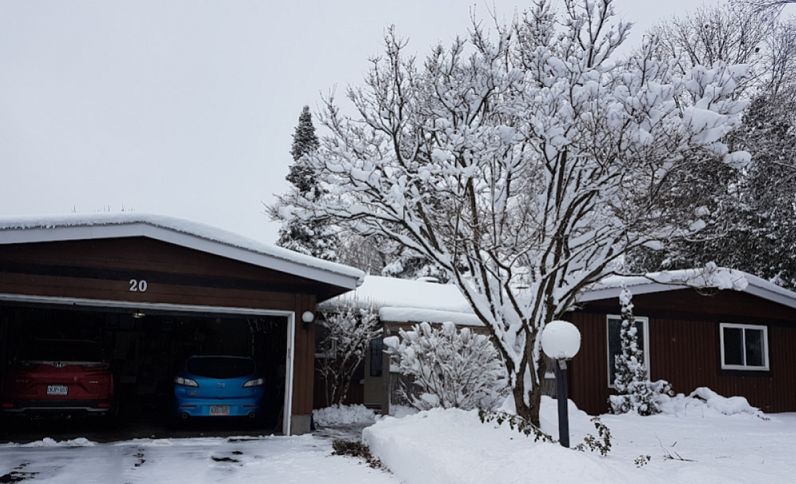
But the demise of the single-family dwelling on a quarter-acre lot has already started. In my community, doubles have replaced single-family units. In one situation, someone purchased two lots, demolished the homes on the land, and constructed three units. These small-scale redevelopments, to date, have bordered our community, but I foresee some enterprising homeowners in the middle of our community replacing their dwellings with a duplex or triplex, creating increased traffic and destroying the family-oriented nature of the community.

Towards Solving the Housing Affordability Gap in Ottawa: The Vacant Unit Tax

January 15, 2023

Can a family afford to buy a house in Ottawa? The average family income in Ottawa is $80,000. If they had the money for a 20% down payment for an average Ottawa home costing $620,000, the monthly mortgage cost would be over $2,000. In addition, they would have to pay for utilities, food, and other living costs. The other option, next to buying, would be to rent a house or an apartment, and the family with two children would pay a $2,500 monthly rental cost (a house or a 3-bedroom apartment).

I think there is an affordability gap in Ottawa, or, there is a shortage of housing. Same thing. Economics teaches us that if we increase the supply of a product, it may decrease its price. Home builders built ten thousand dwellings in Ottawa in 2022, a record, but not enough to satisfy demand. Are there other options to increase the supply of housing?

The City of Ottawa thought of another way to increase the supply of housing and introduced a “vacant unit tax” (VUT) on January 1, 2023. There are 20,000 vacant units in Ottawa, five percent of the housing stock. Carrying the higher cost of an investment property may motivate owners and investors to rent or sell their vacant units, increasing the housing supply, and reducing its cost.

The tax is one percent of the assessed value of the property if it is vacant for over six months of the year. Although some people with deep pockets may pay the tax, others would sell or rent it out, perhaps to family members to avoid paying the tax.

How will the City of Ottawa identify vacant units? Following examples in Toronto and Vancouver, with similar taxes for vacant investment properties, Ottawa issued a form letter to all property owners asking them to declare whether their property is their prime residence, rented or vacant. We must submit the declaration by the middle of March. Failing that, the tax is added to the property tax the following year.

What happens if owners claim they rent the property, but it is vacant? How will Ottawa follow up and audit, and enforce the VUT? Would the City check water, gas, and electrical consumption for the dwellings? The City has not disclosed how they intend to audit and enforce its new tax; it could be an arduous process.

The City projects to raise seven million dollars a year from the VUT, which translates into over 1,100 dwellings subject to the new tax ($7 million is one percent of the assessed value of the vacant homes averaging $620,000).

It appears the City is inconveniencing 100 percent of property owners by requiring a declaration to increase the supply of housing by 0.3 percent (1100 units added to the existing 380,000 occupied units). Is it worth inconveniencing the people of Ottawa for such a small gain? Is this just a tax grab, impacting middle-class people?

What I find more objectionable is the creeping regulations limiting our freedom; why could I not have two homes and have one empty without being taxed for it? For example, I could use one as my primary residence and the other as an office or a studio or the guesthouse for visiting family. Or I could live downtown, for the winter, to enjoy the cultural facilities there and move to an ex-urban area for the summer, where I could have a large lot with my vegetable garden. Would this tax encourage families to put one house in the husband’s name and the other in the wife’s name? And both could claim their houses as primary residences while living in one? What is wrong with a two-primary-home existence?

And creeping regulations could go further: following up on the logic of the VUT, Ottawa may prescribe additional living standards. For example, you may be eligible for five hundred square feet of living space per person or one bedroom per person. And come up with the LUT (large-home unit tax). If they can regulate that my dwelling must be occupied, what is stopping them from deciding how much space I am entitled to?

Reflecting on the increasing regulatory power of the City, I thought of the large house we and my neighbors occupy. Yes, my street has large homes with four or more bedrooms and multiple bathrooms occupied by two people; the children are gone but the owners are comfortable in their long-term homes, with no intention of moving or downsizing.

I was in my large basement office filling out the VUT form, thinking that the VUT may not be the efficient answer to the housing affordability gap. Mortgage rates, lack of skilled labor to build houses, and low wages may be more crucial factors to tackle before trying to convert a few vacant homes into occupied ones. Just my opinion.

US/CANADA Border Crossing Regulations for Covid End Next Week

September 29, 2022

The federal government just announced that Covid-related regulations crossing the border will end next week. It has been a nightmare to cross the border for the past couple of years. The danger of people coming to Canada with Covid infections led the government to introduce the ARRIVECAN system, mandating people to fill out a complicated form on a cell phone before arriving in Canada. The Americans responded in kind, but strangely, traveling by air into the US was allowed with a negative Covid test while traveling by car was not permitted (unless you were an American citizen). 

Resulting from the different border crossing policies, I experienced the most bizarre situation last summer. I could not drive with Kathy to Myrtle Beach, South Carolina (driving from Ottawa, one has to cross the border). Since Kathy is a dual Canadian/American citizen, she drove to Dulles airport near Washington, DC while I flew there the same day. Coming home was different; we drove together and entered the country as Canadian citizens. And, of course, we had to fill out the ARRIVECAN form before crossing the border.

I have been crossing the border for dog ages; early on, when I went to graduate school at the University of North Carolina at Chapel Hill from Vancouver, I drove south to California and then across the US on Route 66. But even before, I remember our drive to Seattle from Vancouver with my father, who informed the American border guard he’ll stay in the US as little as possible. That comment did not sit well with the official who hauled us in for questioning and then had the benefit of trying to decipher my father’s heavy accent before letting us go.

I have always had some innate fear of talking with government officials, especially police and border guards, who brought back memories of the Hungarian secret police and the aura of the heavy hand of government officials. Border crossing was a chore for me those days, not immersed in the philosophy the police and similar organizations serve you, the citizens of Canada.

I was apprehensive when, with a friend of Italian origin, we drove to Seattle with my newly minted citizenship card in the 1960s. My friend warned me that border officials would haul him in and question him because of his Italian name. Surprised to hear that, I wondered if government officials had prejudices against nationalities, including Hungarians. And so it happened; we were subject to thorough questioning, but I escaped detailed scrutiny, and they let us go. Although this incident confirmed my apprehensions, my discomfort with government officials waned in time, especially after I had joined the government in 1973.

It was easy to cross the border into the US in the old days; all you needed was identification like a driver’s license, which, of course, I always carried with me. The reverse, crossing into Canada, was the same. But sometimes you did not even need a solid piece of ID, as when my son’s friend, a recent Russian immigrant to the US, came to visit us in a rented car with neither US citizenship nor a valid driver’s license. He successfully talked his way into Canada at the border and confirmed the ease with which one could enter Canada.

Many of our family border crossings started with camping in New York State. An hour’s drive from us in upper New York State, the pine-treed campgrounds were not only cheaper to stay at than comparable Canadian facilities, but were also less crowded. And, we found wine cheaper down there and the challenge was how to import wine to Canada. Some people suggested I should fill up the water tank of our tent trailer with wine coming home, but I resisted; the water container would have had a taste of having been filled with wine, not the taste of choice of family members. (The limit for importing wine was two bottles per adult). Then we discovered ‘two-buck chuck”, the wine distributed by Trader Joe’s, the retailer in the US.

A case of two-buck-chuck, even paying the customs duties was much cheaper than anything we could buy in Canada. Most of the time, the Canadian customs officials just waved us on when we told them we had a case of wine worth US $24, altho once they told us to go into the office and fill out all the customs papers. This experience cost us ten dollars, but I found it to be a real bother and time-consuming affair as well.

My good luck of never having trouble at the border rossing nto the US ran out when I arrived at the border with my carpentry tools in the car. They immediately sent me inside and took apart my car, checking all the tools. I was going to build a deck for my son’s house, but the border officials were suspicious that I had other intentions. They were afraid that I would take jobs away from Americans. It took over an hour to get on my way; I pointed to my gray hair and said I was retired and had no intention of working and taking a job away from the locals. Further, I explained to them I had lived in the US for years but came home to Canada for my career, which was over.

Complications arose when I mentioned I had an expired draft card with a 5A rating. The younger officials knew nothing about draft cards and I tried to describe the Vietnam war and how Americans were drafted for service. This entire episode came to a hilarious end when an older border guard burst out in a boisterous laugh and explained to the younger officials what had happened in the sixties. The bottom line was that they took away the draft card I cherished and carried with me all the time when I worked in Norfolk, Virginia, in the sixties.

But the border is a two-way street and I never forget the incident when I bought a bottle of liquor at the duty-free shop coming home and the Canadian border guard asked how many ounces were in the bottle (there was a limit on how much one could bring back home). I looked at the bottle for information but could find none. I told the official I bought it at the duty-free store and had to be a size permitted for import to Canada. But he would not budge and I was ready to consume part of the bottle when he suddenly decided to just let us go, looking at the lineup behind us. As soon as we crossed the border, I felt some corrugations on the bottom of the bottle, and lo-and-behold; I found the information I had been looking for.

But next week we will go back to the old days, and a passport will be sufficient to enter Canada. The US is already open with a Canadian passport. Hurrah! Were the heavy-handed regulations preventing the entry of people with Covid useful and worth the cost of losing the tourist business? We’ll not know unless the government undertakes a study of it.