Why The Martian Might Not Impress Everyone: A Reviewer’s Insight

February 12, 2025

The book enjoyed great popularity, and I may be in the minority when it comes to criticizing it. It was initially published as a series of blog posts, released one chapter at a time in 2011 before a publisher printed it as a book in 2014. It remained on the bestseller list for several weeks and has been translated into multiple languages. A 2015 film adaptation starring Matt Damon garnered significant success as well.

The author was a computer programmer interested in space travel before writing this book.

I reflected on my reaction to the book and concluded that while I enjoyed the plot, I found the detailed science somewhat tedious. Additionally, the stereotypical portrayal of NASA’s internal bureaucratic competition and the selection of a diverse Mars probe crew detracted from the narrative; for instance, having an Indian PhD as the chief scientist and a female team leader felt forced. The protagonist’s humor came across as artificial and more suited to a college setting, and the prose was somewhat clunky.

After landing the Ares probe on Mars in 2035, a sandstorm forced the team to leave quickly, leaving one team member behind, who they thought to be dead. However, he survives in the “hab,” the tent the team set up to stay for a week. The surviving astronaut, Mark Watney, uses his scientific ingenuity to make the “hab” a livable environment for a year and a half. The book details how Mark maintains the right balance of oxygen and carbon dioxide and grows potatoes to survive until he can travel to the site of the next probe to land on Mars.

Science fiction is not my favorite genre; I prefer more realistic books grounded on Earth. As a result, I found Mark Watney’s first-person, in-depth descriptions of the science he applied to survive to be tedious and overwhelming toward the end.

While the descriptions of life on Mars from the relatable Mark and his light-hearted humor were enjoyable, they lessened the impact of the hardships he experienced for me. For instance, I did not truly feel how cold and uninhabitable Mars is. And Mark seems quite comfortable reading books at night and sleeping in his cot. I did not think he genuinely starved or ever felt cold. Notably, he also never got sick, perhaps because there are no bacteria on Mars. In other words, if there was any personal pain, physical or psychological, Mark’s narrative did not convey it effectively.

Mark faced multiple life-threatening situations but relied on his scientific knowledge to survive. He once risked burning down the tent by setting a fire inside to produce water. Despite these risks, he always succeeded in surviving. Because of this, halfway through the book, I felt that the author diminished the sense of danger that an average person on Earth would likely face in similar circumstances.

Mark is not introspective but a positive individual who focuses on problem-solving. He never expresses self-doubt, which is disappointing, as it could have added a more human dimension to his experiences of perseverance and loneliness. Perhaps astronauts are chosen for their adaptability, reminiscent of the character MacGyver from the popular TV show in 1985.

Later in the book, we encounter the NASA team overseeing the Mars probe. Their conversations seem mundane, often revolving around budget concerns and disagreements about technology on how to rescue Mark. The portrayal of bureaucratic processes feels clichéd, and the dialogues with Mark feel forced: interacting with someone millions of miles away in an informal manner feels artificial.

I appreciated the book’s compelling plot and the buildup of events toward the end. I found myself reading quickly, primarily through the scientific details. The author conducted meticulous research on the scientific aspects, which I understood for the most part. However, I don’t think all the scientific explanations are necessary unless you’re deeply interested in science. If you’re an engineer or a scientist, this book is definitely for you. However, if you want to understand why we go to Mars or whether human settlements are possible there, you won’t find those answers in this book.

Navigating US-Canada Border Crossings: Personal Insights

February 7, 2025

Trump’s views on birthright citizenship, deportations, and immigration are concerning, bringing back memories of our past border crossings from Canada. As a naturalized Canadian coming from a previously communist country, facing border guards used to make me nervous. But with time, that apprehension has passed.

Over the past few decades, we’ve made an average of four to five trips to the U.S. each year. I am now adept at being polite and cooperative when questioned by border officers. Aside from some amusing incidents, most of our crossings were pleasant.

On one recent trip, an officer checked my passport, grinned, and inquired if I was a “freedom fighter.” My passport shows I was born in Hungary, and I found his question surprising; he was aware of the 1956 Hungarian Revolution. The Revolution started in Budapest, two hundred kilometers from where we lived. The revolution’s westward expansion arrived days later, allowing my escape to Austria when the border was unexpectedly opened. No, I was not a “freedom fighter”, but could have been.

However, his comment made me feel good. He believed I was anti-Russian, which signaled to him that I was a friend of the U.S., so I felt welcomed.

Once, while crossing the border, the officer inquired, “Is this a new car? I then realized that our license plate had been scanned near the gate and entered into their system. Passport checks reveal information about your car’s license plate when you drive.

Canadians also monitor car movements into Canada. The U.S. and Canadian computer systems may work together!

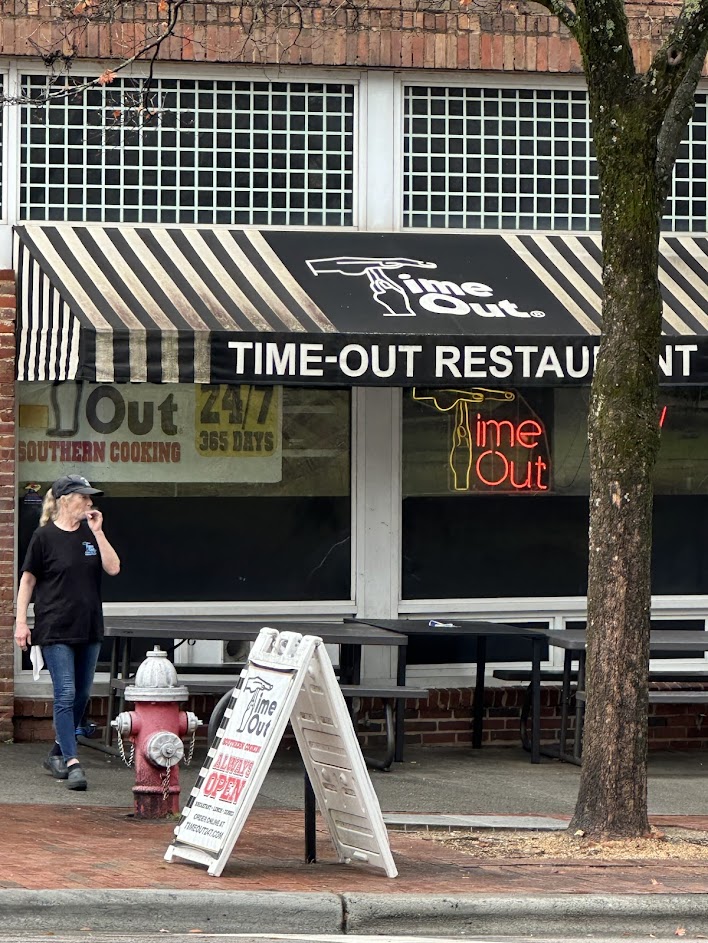
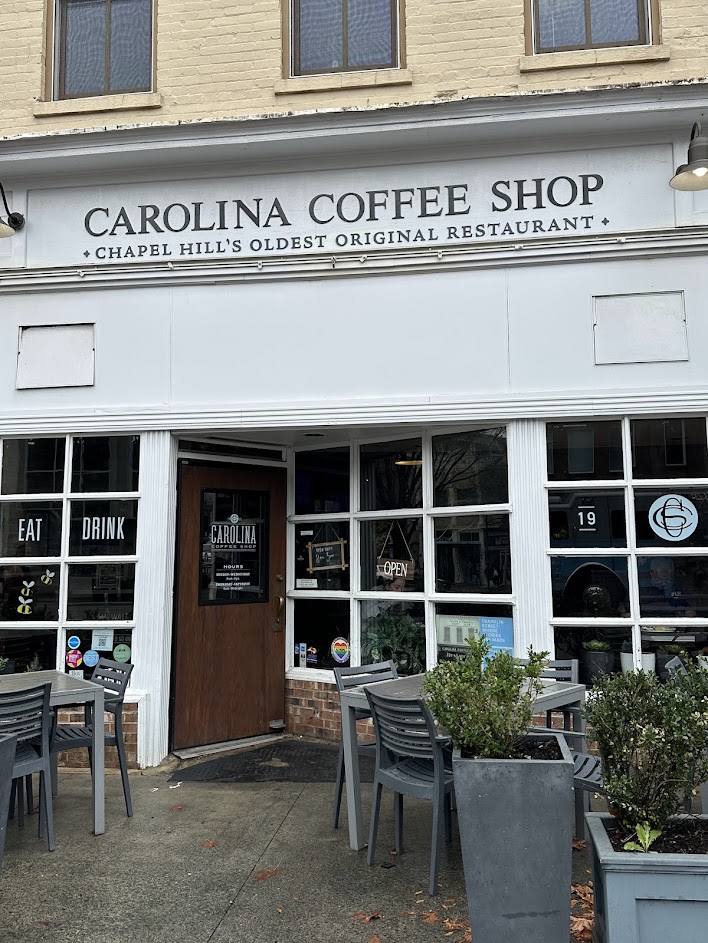
I had a more challenging time driving to Chapel Hill, NC, where my son lived. He had just bought a house, and I offered to build a deck in his backyard. My carpentry tools in the car triggered detailed questioning. The guards accused me of taking jobs from Americans. I reassured them, saying, “No, no. Look at the color of my hair—I am retired! I’m just building a deck for my son.”

Despite my explanations, they remained unsatisfied and told me to park the car and go inside. They searched my vehicle, including the hood, trunk, and undercarriage. Convincing them I wasn’t working in the U.S. took hours.

Another memorable crossing occurred when the border guard requested identification plus my passport. I’m unsure what brought that question up, but I provided my picture IDs: my Canadian driver’s license and health card. I also included my old draft card, which was a mistake! 

“What is this?” they asked. That question seemed unusual; I thought Americans would know what the draft card was. The guards conferred, and I observed from beyond the counter. I explained I had worked in Norfolk, VA, years ago, during the Vietnam War, and that everyone living and working in the U.S. had to register for the draft. Draft cards were something the young officers had never seen before.

The commotion drew the supervisor in, who, upon investigation, burst into laughter. He explained the history of the draft, which was abolished in 1973, to his colleagues. Afterward, they let me go but kept my cherished draft card.

From experience at border crossings, we discovered the standard questions asked by border guards: your destination and planned duration. Plus, declare all items you are bringing across the border: gifts, food, alcohol, and cannabis (while legal in Canada, it is illegal in many states). We carry food only for ourselves and try to remember which fruits are not allowed in the U.S.

The government’s current focus and political relations influence border guards’ behavior. For example, during the COVID-19 pandemic, vaccinations were required. At other times, they might ask about our destination only and wave us on.

What’s the border guard situation this spring? Trump has expressed a desire to make Canada the fifty-first state of the U.S., but Canada has stated its strong opposition to being absorbed. Would the border guards welcome us, or would they be more questioning?

Trump also accused Canada of allowing huge amounts of fentanyl and large numbers of terrorists to cross into the U.S. The facts, however, paint a different picture; only one percent of fentanyl and terrorists arrive in the US from Canada. Can rhetoric influence the border guards? How do these accusations affect them?

We will assess the current situation at the border soon. In a few weeks, we’ll visit family and enjoy the warm sunshine in North Carolina.

Exploring Delhi: A Day in India’s Bustling Capital

January 19, 2025


We flew to Delhi, where we spent one day—quite an introduction to India! Our hotel was outside of Delhi’s center, accessible by subway. Shyaam, our guide, led us on a subway journey to Old Delhi’s historical sites and bustling market. We followed Shyaam through the crowded streets. The heat made me wipe the sweat from my face. It felt as if we walked a long way, only to discover that the distance covered was only a few blocks.

Rubbernecking to see the small stores and fighting the jostle of people was tiresome. After a while, we were ready for a snack and looked longingly at the street vendors with their steaming foods. Shyaam cautioned us about buying from a street vendor and suggested that we wait for the next round of freshly cooked food to be ready to eat rather than take the already prepared food in bowls on a counter along the street full of flies munching on the food. So we waited ten minutes for the next round of cooking. It was worth the wait—it was delicious; I think we had chunks of lamb with spices I was unfamiliar with.


The atmosphere in that part of town differed from what I have ever experienced. Besides the teeming crowds, with the temperature hovering in the upper thirties Celsius, the smell of spices permeating the air was powerful. In this district, spice store after spice store with hundreds of spices competed for attention with fancy exhibit boxes containing almost every spice imaginable: mustard seeds, coriander, garam masala, and others. A dispute unexpectedly flared up outside a spice stand between a customer and the store owner. Almost immediately, a large crowd gathered, and yelling started. We were made acutely aware of our vulnerability and the potential for sudden violence by the crowd’s sudden outburst and rapid gathering. I told Kathy we should just move on and leave the crowded sidewalk before violence broke out.

Among the sites Shyaam took us was the Jama Masjid, the oldest mosque in India. A wall surrounded the entire mosque complex, with a football-field-sized plaza in front of the mosque, large enough to hold 25,000 people. At the entrance gate, they directed us to take off our shoes and leave them on the steps leading up to the mosque, next to hundreds of others’ shoes on the steps. I was wearing my good walking shoes and was nervous about leaving them on the steps, but we had no choice; I thought of someone just coming out of the mosque and taking my shoes by accident.

Jama Masjid

But taking off our shoes was only part of what they required. They also gave us a gown to wear over our street clothes. Inside the complex, children played and ran around in the plaza, and adults walked around in gowns. The courtyard seemed like a vast, paved urban park without trees and greenery. Aside from the gowns, it could have been anywhere.

The Jama Masjid is like other mosques we have seen; it is a large space with the women’s quarter separated upstairs. The mosque was completed in the sixteenth century in the old city. The huge mosque in Casablanca, the Hassan II, is like this one, except it has no walls around the large plaza outside and was built recently (finished in 1993). I did not get the religious vibes here that I felt visiting the Cathedral in Santiago de Compostela, perhaps because I am a Catholic and not a Muslim. We left the mosque, and I found my shoes, which I had left outside.


Following our visit to Jama Masjid, Shyaam guided us to Sheeshganj Gurudwara, one of Delhi’s nine historic Sikh temples (the name means “gateway to the guru” in Punjabi). Unlike the mosque, worshippers, women, and men gathered together on the floor in the principal room. As part of the temple’s mission, a women’s auxiliary made naan bread in a small side room to feed people experiencing poverty. They were working quietly, without speaking, a welcome respite from the hustle and bustle outside. They invited Kathy to sit on the floor and join them in making naan. She did it for a while to learn how to make naan, which was more challenging than it looked.


Leaving the Gurudwara, we took Delhi’s spotless subway to Connaught Place, the center of New Delhi. Shyaam escorted us onto the subway train, gave us directions on how to return to our hotel using the subway, and left us to explore. Connaught Place differed from Old Delhi. It was a large circular park with benches on a grassy field. Seven major roads radiated from the perimeter into the urban fabric of New Delhi. Its street-level stores and mid-rise office buildings around the circle reminded me of North American cities. Unlike in Old Delhi, the streets were uncrowded, and the stores were spacious.


Feeling confident in our navigational abilities, we took the subway back to our hotel. I found the subway extremely clean, although crowded. Upon entering a station, all passengers underwent a security check similar to those in airports: a metal detector check and a baggage check. They allowed no food or drink. This rule and its enforcement ensured cleanliness. It was impressive. We got off at the right subway stop; however, with no idea of the geography and, I guess, not having paid enough attention to our surroundings when Shyaam had accompanied us downtown, we had no idea whether to go left or right when we got off and stood there like the lost tourists we were. Luckily, many Delhi residents speak English, and a very kind man helped us find our hotel. This gentleman’s helpfulness, in retrospect, did not surprise us, as we have found in our travels that Indians are friendly people.

Exploring Panjim and Old Goa’s World Heritage Sites

January 2, 2025


Arriving in Panjim, the capital of Goa, we made our way to our small hotel in the downtown area. Our contact there arranged a driver to go sightseeing.


The next day, the driver took us to Old Goa, where UNESCO declared a large area as a World Heritage Site in 1986. Sultanates ruled old Goa, founded in the fifteenth century on the banks of the Mandavi River until the Portuguese captured it in 1510. The Portuguese ran their colony from Old Goa until they moved the viceroy’s residence to Panjim in 1759. During their stay, the Portuguese had built several Catholic churches in and around Old Goa. With the viceroy’s departure, Old Goa’s religious significance diminished.

We walked over to the UNESCO World Heritage Site, which contains seven historical churches, one in ruins and the others in different stages of renovation. The builders constructed the churches in the Baroque architectural style. Although we found this site significant, it is less interesting architecturally. We have seen several more interesting World Heritage Sites in India (thirty-eight such sites in India).


Half a day spent wandering the buildings was adequate for us. It was a hot day with temperatures in the thirties (over 100 degrees Fahrenheit). We walked with our water bottles in the sun on the heritage site’s grassy field.

I recommend seeing the Basilica of Born Jesus on this World Heritage Site. It is famous for containing the remains of St. Francis Xavier, founder of the Jesuit Order, and associated artifacts, including his casket.


The other edifice we enjoyed was the Chapel of St. Catherine, a small building needing renovations but uncrowded and surrounded by vegetation providing welcome shade. Alfonso de Albuquerque built this chapel when he took possession of Goa in 1510 on Saint Catherine’s Day (November 25th). We took a hydration break at a small kiosk and called our driver for the return trip.


While heading back to Panjim, approximately ten kilometers down the road, the driver paused to grab a jacket upon getting a phone call. He said the police were monitoring taxi drivers further up the road, and the law required drivers to wear a formal dress or pay a hefty fine. I thought this regulation concerned creating a professional image for tourists.

According to the driver, in Goa, people view being a police officer as rewarding due to their ability to stop and search individuals for any reason. And people will negotiate and pay cash to avoid being fined. Applicants to the police force will pay bribes to get an interview. Families join to raise money for a family member who, if successful in becoming a police officer, supports the entire family

We walked around Panjim, which has a population of about 100,000. It has a European feel, with low-rise buildings and curvy streets. We enjoyed the many small stores lining the streets and stopped by an optometrist whose prices were low compared to prices in Canada. They offered us a plan whereby we gave them our prescriptions, and they would fill them at any time at a low cost for an annual fee. We considered it but decided against it, thinking of the time it would take to get glasses mailed to us. Shoppers and passersby were helpful with directions to the Bishop’s Palace; however, the impressive, two-story building was closed on our arrival.

The next day, we visited a beach, a major tourist attraction in Goa. Thinking an hour would get the smell and atmosphere of the beach; we told the driver to wait. Upon stepping onto the sandy beach, hawkers surrounded us, trying to rent umbrellas, sell refreshments, and offer massages. I struggled to shake them off without resorting to discourtesy. It was not a pleasant experience. Their presence stemmed from business opportunities.

Understanding the language, I listened to the Russian tourists on the beach availing themselves of the full range of services. Also noticeable were the women in long sarees, which they wore into the water with their children. An early bedtime preceded our 4:30 AM flight. My anxiety grew with each passing moment as the cab failed to arrive. I called the driver several times and was told he was on the way. He explained his tardiness one hour late: the airport was only 30 minutes away, and a few flights meant no rush. He was right, and we boarded Qatar Airways to Doha and Washington, DC, connecting with a United Airways flight to Ottawa. We arrived on the same day as the day we left, even though we had twenty hours of flying time with five hours’ waiting time in between flights.

Cultural Insights from a Kerala Tour Guide


December 27, 2024

Heavyset, with an average height and a dark face, Dinesh was our guide in Kerala. He grew up in Kochin, his birthplace. Malayalam, the official language of Kerala, was his mother tongue, although he spoke English but with an Indian accent. Over a couple of weeks, we had gotten to know him. Married with two small children; his family surely missed him while he traveled constantly for work. We found him easy-going, affable, personable, and eager to please us.

Everything about him was clean; he wore a clean shirt daily, befitting a professional chauffeur and guide. Although I never asked him, it impressed me how he got his impeccably starched shirts every day. He must have carried many shirts or had them cleaned overnight. Similarly, his car was shiny and always impeccably clean, and the interior was spotless. No objects, like the newspapers we read on the road, were ever left behind. His company’s car was like a jewel to him, and he hoped to buy it soon. Years later, I saw him showing off “his” car on Facebook.

Proud of his country, he showed and described it to us in glowing terms. His work was very important to him, and he related his experience with the English chef Gordon Ramsey collecting recipes for a book on Indian cooking. Dinesh showed us a photograph of Ramsey, his crew, and himself for emphasis. Impressed, Kathy bought a copy of that book in Kerala.


I noticed he was conscious of his class, a reality in some countries, including India. He deferred to others, whom I assumed he considered high-class people. It always happened when we invited him to eat lunch with us. He excused himself by claiming to be busy.


But once, we asked him to take us to a local Indian restaurant, a highway stop. There, we had thali food on grape leaves filled with curries. Looking around, I noticed that most of the people looked like laborers. He did not hesitate to sit with us and explain our food. After we ate with our fingers, local style, we washed our hands in the sink at the end of the dining hall.

At another time, we invited him to dinner to discuss the next day’s plans. He did not want to join us, perhaps because it was a more expensive restaurant. We were forceful and did not take no for an answer. He obliged us. When the waiter came, he gave Kathy and me menus, but not Dinesh. Even the local people knew and discriminated according to what class they were serving.

I requested an extra menu for Dinesh, which the waiter provided. We were all served, but I knew Dinesh was uncomfortable throughout the dinner. He remained silent, avoiding eye contact. Later, I realized we may have asked too much of him by insisting he eat with us. What we thought was normal was not for him.

 After days of traveling with Dinesh, I noticed he did not come into the hotels with us; he dropped us off. I remember the Tharawad Homestay, where he left us with the details of when he would pick us up the following day. Drivers were not permitted to park in high-end residential areas or obstruct driveways. We learned he slept in the car every night.

We were on a tour, and the tour operator paid for all our hotels but provided no accommodation for our guide. He had to find a place to park and sleep overnight. I do not know how he looked so fresh every morning, drove us around Kerala, and provided knowledgeable comments. I follow him on Facebook.