Exploring Corsica’s Abandoned Homes and Ghost Towns

October 24, 2023

The Alfa Romeo climbed the winding road effortlessly. Kathy drove and I admired the landscape, occasionally grabbing the door handle when rounding a 180-degree turn with a drop into a valley on my side. But I kept my mouth shut. I spoke up only when Kathy stopped at a viewpoint, the front of the car facing a huge drop into a valley in front of us, pressing only the brake instead of putting the gearshift into park.

The GPS in the car showed the curves in the road ahead. Driving was slow because of the turns every few hundred feet, the narrowness of the road, and the traffic punctuated by numerous cyclists going almost at our speed. Turnouts helped us to stop and let faster drivers go by us. Overall, the drivers showed restraint; we could not go faster than fifty kilometers per hour.

We rented the Alfa at Figari Airport and drove to Porto Vecchio to shop for supplies to last us four days in the mountains where our daughter and son-in-law rented a house. The mountains began just when we left Porto Vecchio. Although we drove only just over sixty kilometers, it took us two hours to reach our destination. The scenery along the trip got my iPhone camera busy; the jagged mountains were stunning, reminding me of the Rockies. We drove through small towns like Levie, Zonza, and Quenza to reach Sorbonella, a town of 68 people, where our house was; the speed limit through the towns was thirty kilometers.

It surprised me to see all the boarded-up houses in the towns; shutters covered windows and doors. Where were the inhabitants? People sitting in street cafes were tourists, many had bikes leaning against their chairs. I decided to walk around Quenza the next day to check out the boarded-up houses. And what I saw confirmed what I had seen, most of the homes, even along the main street were tightly shut; the gardens were unkempt, and gates shut tight with a chain and lock on them. So, what gives?

I searched the internet and found one answer: there were 613 houses in Quenza (population of 235), of which 110 were occupied; 494 were secondary units (this is the expression used by the local statistical agency) and 9 vacant units, in 2007 (I discovered the French government keeps detailed statistics). The secondary units were mostly owned by native Corsicans who left for career or other reasons and kept their family home, according to some people I talked with in Quenza.

The next day we drove to Aulene (population 179), where we found houses boarded up similar to those in Quenza. According to French statistics, there were 421 houses in 2007, of which 81 were occupied; 333 were secondary units, and 7 were vacant. After a short walk around town, we settled into a small café for the traditional café allonge, next to tourists.

Holiday homes owned by people living in France and foreigners represent forty percent of all real estate in Corsica, according to local authorities. And, according to INSEE, the French statistics collection agency, there were 7000 holiday homes in Corsica in 1968, ratcheting up to over 71,000 holiday homes in 2007. Looking at holiday homes for sales ads in Corsica indicated that the desirable units are along the ocean, where, I assume, the foreigners bought. In the mountains, where we were, I assume that most of the boarded-up homes were owned by Corsicans.

The Mediterranean climate has attracted people to buy real estate in Corsica thereby elevating real estate prices. That made purchasing property by local people difficult. In response, the local government brought in legislation in 2014 to require five years of residency in Corsica for outside purchasers except for native Corsicans living abroad.

Talking with some French people from outside Corsica, we understood that the French people are not welcome to buy Corsican real estate, except when they are tourists and spend money locally. Corsicans are proud people and consider themselves different from the French people; their feelings towards the French have been demonstrated by setting fire to French-owned holiday homes. But the island remains a popular destination for vacationers.

Seasonal homes are shut down most of the time and there was an overabundance of them in the small towns driving through the mountains. With their shutters, they gave me a feeling of abandoned places, like ghost towns (similar to abandoned mining towns in British Columbia, Canada). It was a bit eery. Not only were there the shuttered homes but also the abandoned gardens and very few people on the streets except for cycling tourists. But we enjoyed the serenity of the quiet streets, punctuated by the occasional cafe along the sidewalk. The one grocery store in Quenza, one room, shut down between the hours of 12:30 to 4 p.m. There was no other commercial establishment here, we had to look up where the nearest gas station was seven kilometers away.
Navigating Aix-en-Provence: A Travel Experience

October 8, 2023

The travel agent reserved a place for us in Aix-en-Provence and the GPS in the Peugeot 208 indicated a map showing how to get there. The rush-hour traffic engulfed Kathy driving the car and I assisted navigating the road. Crowds of people walking across the street made driving more challenging. And the roundabouts, of which there were more than traffic lights, complicated driving by sprouting many exits and lanes that we had to assess in trying to find the right exit.

Some exits were just lanes. Once the GPS directed us to take the next right, which was a lane that took us into an underground parking that we toured searching for the exit. On exiting, the inserted ticket triggered the gate to open, and we sped out.

The car rental agent switched the GPS to English from French and a serious-sounding, deep-voiced female directed us to our destination with a UK accent. We learned some new expressions such as “bear right” which means to turn right.

The rush of traffic, the crisscrossing pedestrians, and listening to the deep UK-accented voice combined to make us highly nervous driving in a town new to us, and we wanted to get to our place fast. But that was not to be.

The GPS, with the hotel address typed into it, directed us to turn left into a lane right after going around the Rotunda, a central square in Aix. In the fast-moving traffic, we did not notice the small lane quickly enough and missed our turn in the rush-hour traffic. We were frustrated and used some words inappropriate in a blog. After recalculating, the GPS moved us around a few kilometers to come back to the Rotunda again. By this time, with our nerves totally frazzled, we missed the turn lane yet again, being pushed by the cars behind us on our tail.

The third time around Kathy slowed down ignoring the honking behind us and we entered the single lane promising to lead us to our hotel. The next left turn ordered by the GPS left us facing bollards not allowing us into the single lane. Stumped, we stopped trying to analyze the situation before the honking became overbearing and people yelling at us to get a move on. We had no choice. We moved on while Kathy, in her utter frustration showed a finger to the woman driver behind us yelling at us.

At this point, having driven around for over an hour and a half, I said, hell with the hotel reservation, let’s take another hotel anywhere in Aix. Then we realized that we needed gas to continue our search. I clicked on Waze on my cellphone and looked for the nearest gas station. Still in rush-hour traffic, we missed a few gas stations because we could not get to the right lane from the middle lane fast enough.

We filled up at the gas station that we finally reached, where a friendly soul directed us to a suburban hotel twenty minutes away. We were happy with a full tank of gas and redirected the GPS to find the hotel.

Khalid, the hotel receptionist, was sorry but said his hotel was full and he came with me to two adjacent hotels to speak French to the other receptionists, which he said would help us, poor Canadians, find a place to sleep. Walking back and forth among the hotels afforded me time to discover that Khalid came from Tunisia, and he became excited to hear that I loved Tajine.

The horrible option of sleeping in the car came to my mind, should we not find a hotel. But that idea also created a problem; where to find a place to park? Parking in Aix seemed nonexistent. When I shared this idea with Khaled, he would not hear of it, he said he would make sure to find a place for us.

The nearby hotels were full as well. Khalid called another ten hotels to no avail. By this time, it was dark, and we were totally tired out and the unwelcome scenario of finding a quiet spot to park and sleep in the car has become a real option. Instead, Khalid suggested we leave the car at his hotel’s parking garage and take a taxi to our hotel, wherever it was. Since it was an offer to park free in the garage, and we were too tired to think, we accepted his offer. We took our overnight bags and waited for the taxi he called.

The taxi followed the route we had taken previously around the Rotunda, but instead of going where we had gone three times, the driver took the next right which was Cours Mirabeau where our hotel was. When confronted with bollards at the entrance – Cours Mirabeau is closed to traffic except for delivery vehicles and taxis – the driver inserted a card into a slot on a post next to him to make the bollards sink into the ground. And then we drove onto rue Mirabeau and found our hotel.

The next morning, after surveying where we were, we took a taxi to retrieve our car and returned to park it in the nearby parking garage. The instructions to our hotel would have been clearer if directed to seek a garage, and not the hotel, which was inaccessible by car. But since the hotel has a street address, the GPS took us on a futile trip.

In retrospect, the travel agent should have told us to park first with an address for a garage and instructions on how to reach the hotel next. Instead, the address to the hotel was provided with the suggestion that we park in the nearest parking garage.

Finding the hotel was a rough experience that tired us out and frazzled our nerves. But, I must say, it was exciting going around Aix three times, discovering the city, observing rush-hour traffic and blending into a very urbanized environment. And the relaxation we felt after the taxi found our place and we settled in, was immense and very satisfying. We will cherish and remember this adventure for a long time. Our place was in the middle of a major boulevard bordered by exquisite old mansions and sporting a lively atmosphere; lots of cafes and people mingling late into the night. The next morning we went down for a coffee (espresso) and croissant right along our door.

The Challenge of Tipping at the Taj Mahal and Other UNESCO World Heritage Sites

January 16, 2023

We caught an early Indian Railways train in Delhi to get to the Taj Mahal in Agra. There was a substantial breakfast served by a dapper, uniformed porter on the two-hour train ride. We joined a long line of people waiting for the opening when we arrived at the Taj at 7:00 am. Inside, several official guides competed for our attention.

One guide, a small man with a starched white shirt and tie and formal manner, offered to show me where to take the best photo shots, including where the shots in the James Bond movie Octopussy were taken. Believing he was a government employee on the Taj grounds, I thought his services were free.

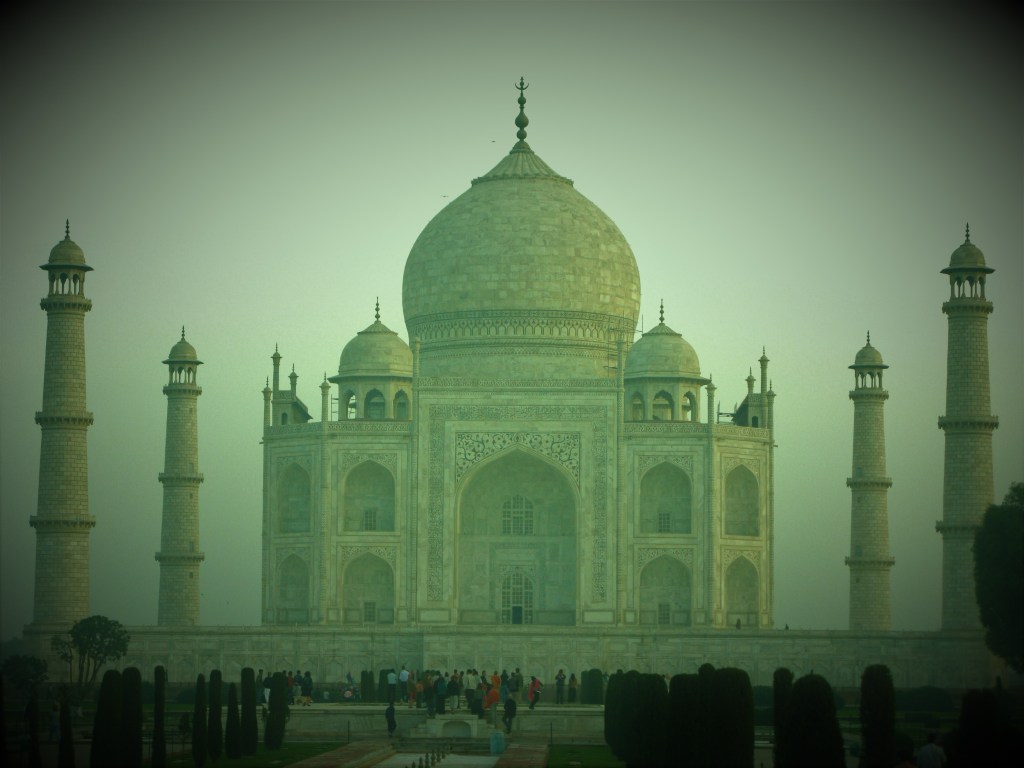
He took me on an extensive tour that lasted more than half an hour. He knew the story of the Taj. And he showed me a glorious spot to take a picture of the Taj, from an arcade looking at the front of the Taj, framed by an arch above. It is a novel snapshot that shows the Taj with the minarets at the four corners. It was early in the morning, and the white marble building showed unforgettable translucency in the rising sun.

I thought that even though he was a government employee, I should at least offer him a tip for his tour and offered as much as the entrance fee. He asked me what it was for. I said I wanted to show my appreciation for his time with a tip.

He stared at me in astonishment, then laughed and explained that I did not realize what an expert story he shared with me and that at least ten times what I offered would be a minimum to pay for his expertise. His gall and arrogance astonished me. I was going to negotiate but got my back up at hearing what I thought was an outrageous demand. I told him he had never said that he expected remuneration and that if I had been aware that he would expect so much money, I would have refused his offer for the tour. And I started walking away.

He called after me and negotiated to double my original offer. I chalked up this encounter as an experience in traveling at world-famous tourist sites.

This incident reminded me of an episode we had in Jaresh, Egypt, where we paid for a guided tour. The guide was excellent, and I offered what I thought was a generous tip, which he pooh-poohed and told me to give it to the paperboy and explained in a loud voice that he was worth ten times as much. I finally just started walking away from him, leaving an amount equal to the entrance fee that the guide then threw to the boy selling trinkets at the gate.

From these two experiences, I gathered that, as an initial gambit, the guides ask ten times what you offer, but are happy to accept less than half the suggested tip. I found tipping an unpleasant task with educated and experienced guides.

Traveling in Morocco (Fez) and Egypt (Karnak), the distinguished-looking guides, those with a suit and a tie, had a much more sophisticated approach to earning money. These guides took us on tours that ended up in a gift store, where they expected us to buy artifacts in the store made by local artisans. I noticed that when we left; the guides had a few words with the owners of the stores, and my strong suspicion was that the guides received a kickback, a percentage of the amount we spent in the store.

Some of these guides are professional historians and provide excellent guided tours. But they are also aggressive in securing huge tips by shaming the Westerners, who are often seduced by suave guides with a suit and a tie on, university professors moonlighting as tour leaders.

I found group tours are better, in that they include tips in the price, although the guides always expect additional money.

Regardless of such annoyances, the Taj is a great place to visit. It is a unique building that has an eerie, light feeling in the sun and is surrounded by a well-maintained garden. When leaving, the guards at the gate told us that there are always lots of tourists there.

The Friendly Americans

May 19, 2022  

We were driving along highway 37 in upstate New York when there was a beep and the dashboard in the car flashed a message that our tire pressure was low. A few weeks ago, I had the regular tires installed replacing the winter tires, and thought the mechanics checked tire pressure automatically. Our destination was a thousand miles south, and we had to fix the tires.  

We stopped at the next gas station and looked for an air pump. Not seeing one, I asked a couple of fellows working on a truck if they knew whether the station had an air pump. They pointed to the back of the station but warned that the pump had no pressure gauge built into it and asked whether I had a pressure gauge. I said I did not have one. But I backed up to the pump and thought of putting some air into all the tires anyway. To get the warning light off. 

As I backed my car to the air pump, one fellow I talked with came over and handed me a new pressure gauge, still in a paper package. I opened the package, and, using the gauge, discovered that the right rear tire had less pressure than the other three tires, so I put some air into it.  

When I finished pumping the tire, I went to return the gauge, only to find the two fellows had left. At the gas station, I inquired whether the gauge came from there and if so, I wanted to pay for it. But the clerk said the fellow purchased the gauge costing over five dollars. So, a total stranger bought the gauge for me! What a friendly and helpful gesture that was.  

Why would someone purchase a tire pressure gauge for a total stranger? If he had one, he would have let me use it. But buying one? Perhaps I looked totally inept, and he tried to help me by buying it. But maybe he was just being friendly and trying to help a stranger who needed help? I was totally taken by this friendly gesture. And that friendliness extended to the clerk at the station who chatted with us and went out of her way to check the price of the gauge.  

This was not the first time someone stopped on the highway to help us. We were driving north on I40 a hundred miles south of Durham, North Carolina when I blew a tire and stopped on an off-ramp. Before I finished calling the AAA, a friendly person stopped at our side and in less than ten minutes, changed the tire expertly, loosening the lugs; cranking up the car on the side and putting on the spare.  

Not only on the highways but elsewhere too, helpful experiences await you in the US. At the local grocery chain store in Baton Rouge, Louisiana, comparable to our Loblaws chain in Ontario, store people asked me how they could help find items without prompting. It is often difficult to find a store clerk at Loblaws in Ottawa and I have never been approached by a clerk offering help.  

I found the same walking on the streets of Baton Rouge this morning; people said hello and how are you, meeting you. Back home, people are more reserved and often pass you without even acknowledgment.  

I think that friendliness is baked into the DNA of Americans. It may be a historical, cultural trait, borne out of hardships in occupying the country and building communities. Whatever is the root of this characteristic, it triggers a warm feeling inside of you.