Boldt Castle Visit: History and Architecture Unveiled

October 22, 2025

October 11. We played tourists today. Although we live just an hour and a half’s drive from Boldt Castle, we had never visited it until now. I’ve heard of the castle, of course, but it’s located on Heart Island, in the Thousand Islands region of New York State, on the St. Lawrence River. Visiting from Canada requires a passport, and since we don’t carry our passports with us every day, we never thought about making the trip.

One can visit the castle from Alexandria Bay in New York State or from Canada, with ferries departing from Gananoque and Rockport, Ontario. We decided to go from Rockport to save time, as driving to Alexandria Bay takes longer.

Upon arriving in Rockport, we noticed eight large tour buses. To my surprise, many tourists from China started disembarking. A local who was familiar with the area explained that Chinese workers are often rewarded with tours to Canada, and many of them visit Montreal, or Toronto, making a side trip to Rockport on their way to Niagara Falls. We also encountered other visitors in the parking area, including a couple from Toronto who were making the long drive back home the same day. We met another couple from Pennsylvania, who decided to sightsee in Canada before visiting the castle. I hadn’t realized how popular the castle is as a tourist attraction. A guide told me that five hundred to two thousand people visit the castle each day.

The boat trip to Heart Island takes about half an hour and passes by some extravagant cottages that resemble large houses more than typical summer homes. Upon landing on Heart Island, we went through U.S. border control, which took a while due to the long lineup of visitors. After we cleared the U.S. border, where they took a photo of us without hats and with our glasses off, we had a couple of hours to explore the island and the castle. Then, we returned to the dock for our trip back.
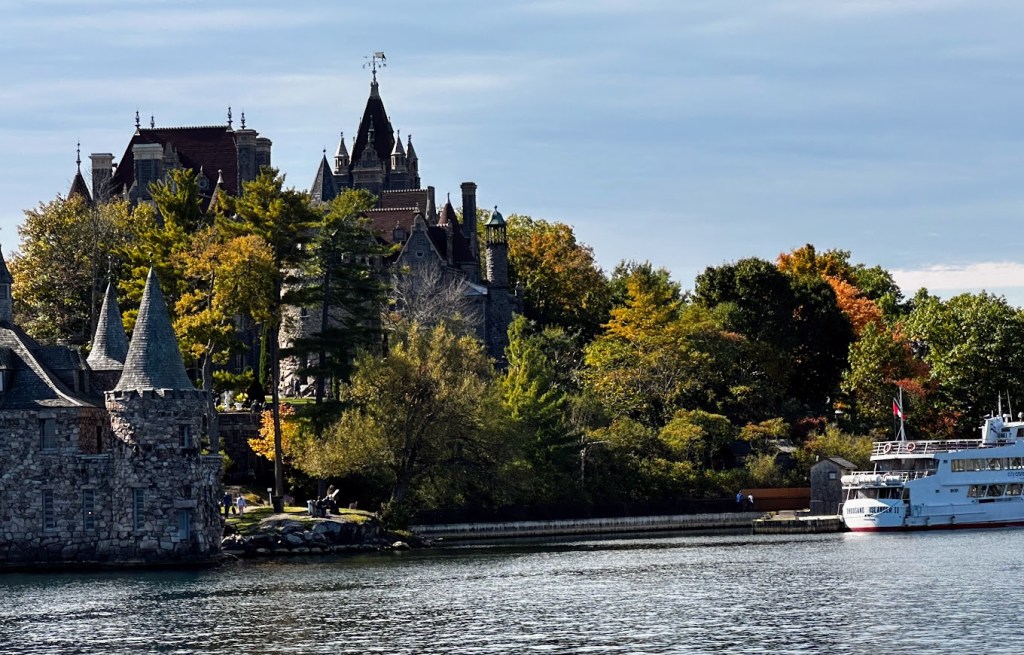
The view from the ferry

As we approached the castle, we saw a wedding on the front lawn and were asked to leave by the organizers. Fortunately, the castle was open, so we explored the large central hall and the enormous dining room before heading upstairs to see the bedrooms. The castle has a total of one hundred and twenty rooms.

The main hall

On the second floor, we watched a short film about the history of George Boldt and the castle. George Boldt emigrated from Prussia to the US at the age of thirteen. He started working in the kitchen of a hotel in Philadelphia and quickly rose through the ranks to manage the hotel at a young age. He became the manager of New York’s Waldorf Hotel and merged it with the Astoria Hotel across the street, becoming the well-known Waldorf Astoria Hotel.

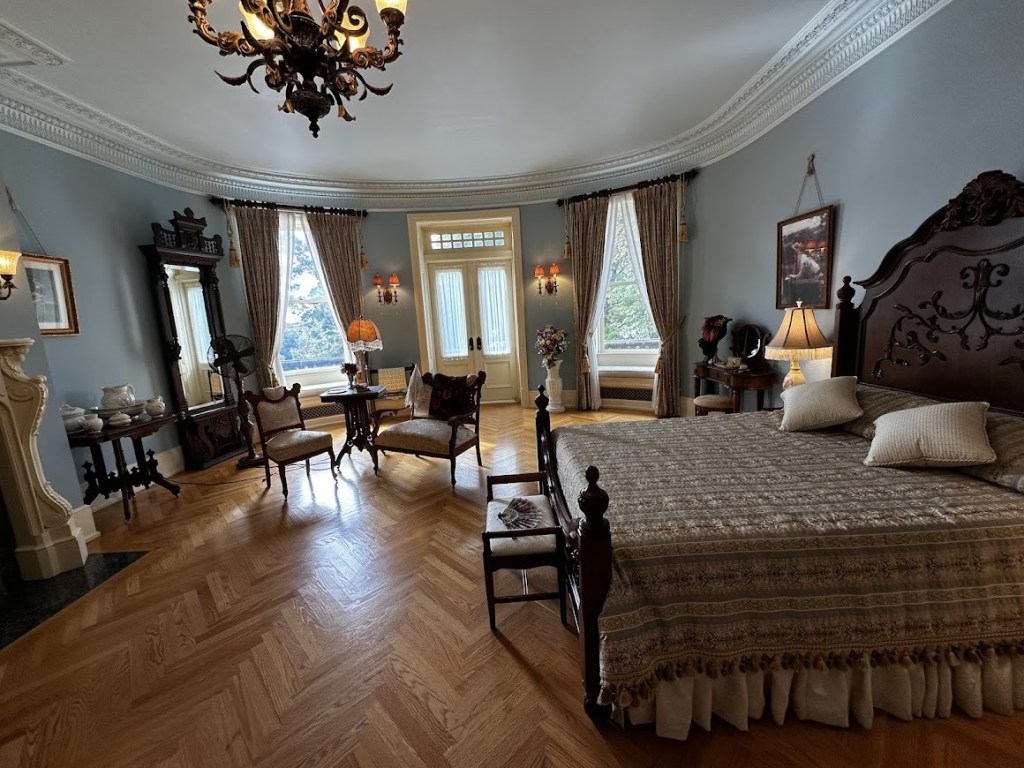
The dining room and a bedroom

As part of his heritage, Boldt is credited with popularizing the “Thousand Island” salad dressing in his hotel. The name originated in the Thousand Islands region of upstate New York, and its original version was made with mayonnaise, ketchup, and pickles. He also created the Waldorf salad, a classic American dish made with diced apples, celery, and mayonnaise.

The Boldt family spent their summers in upstate New York, where George Boldt decided to build a castle on Heart Island for his wife. He was going to give the castle to her on Valentine’s Day. The architecture resembles a Rhineland castle. Construction began at the turn of the century. However, in 1904, tragedy struck when George’s wife passed away unexpectedly. He called off the construction and laid off the three hundred workers who had been building the castle. George never returned to the island, and the castle remained untouched for seventy-three years, falling into a ramshackle state. In 1977, the Thousand Islands Bridge Authority took over the property and invested millions of dollars in its rehabilitation, preserving it for public enjoyment.

Also on the second floor, we saw the rehabilitated bedrooms decorated in period style, belonging to George, his wife, and their children. The floors above have not yet been fully renovated; they currently hold architectural drawings and additional information about the castle.

The garden is also worth visiting, featuring an Italian garden and professionally landscaped grounds with benches. We sat on one of the benches to enjoy our lunch, grateful for a moment of rest after climbing the stairs. It’s important to note that the ceiling heights in the castle are much higher than the typical eight-foot ceilings found in residential homes; climbing four floors felt more like going up six to eight floors in a standard building today.

On the return ferry trip, I bought a cold drink from the bar, which was refreshing and helped me process everything I had seen. If you have visited castles in Europe, this one may not impress you much. However, North America has very few buildings like this one, the Biltmore Estate in Asheville, NC, or Hearst Castle in San Simeon, CA. Visiting this Castle is certainly educational, especially for children. It is also steeped in history and serves as an essential example of the architectural style built during the Gilded Age. I recommend it as a great family outing on a sunny day.

Exploring the Ismaili Imamat: A Cultural Landmark in Ottawa

June 13, 2025

The Canadian Headquarters of the Aga Khan, known as the Delegation of the Ismaili Imamat, is situated at 199 Sussex Drive in Ottawa. The Ottawa Imamat itself is a secular building. However, the Aga Khan serves as the spiritual and hereditary leader of the Nizari Ismaili branch of Shia Islam, tracing his ancestry back to Muhammad.

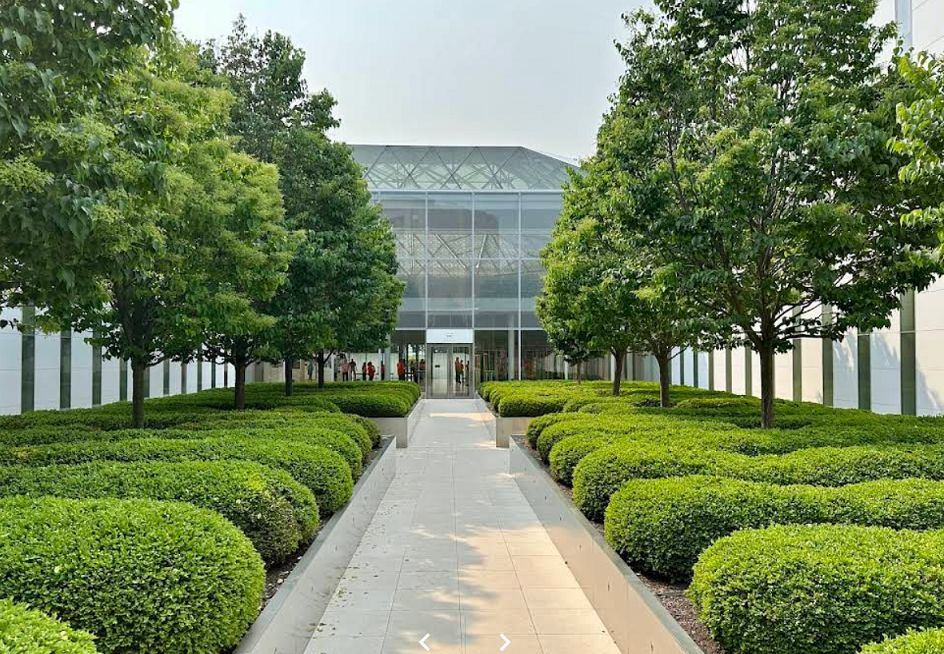
The Delegation of the Ismaili Imamat Building on Sussex Drive

The Aga Khan once noted that, in the West, religion is often viewed separately from social and economic initiatives. In contrast, the Ismaili tradition sees helping the poor and fostering connections between people and cultures as integral to the practice of religion.

Sussex Drive, often referred to as the “ceremonial route,” is also home to the embassies of Kuwait, Saudi Arabia, France, and Japan. The award-winning National Gallery, designed by Moshe Safdie, is located nearby, adjacent to the Canadian Mint and across from the Notre-Dame Cathedral Basilica. Additionally, the Prime Minister’s official residence is located at 24 Sussex Drive, which is currently awaiting renovations.

The arrival of the Ismailis in Canada goes back to Pierre Trudeau, a friend of the Aga Khan IV, invited the Ismaili community to Canada when Idi Amin expelled them from Uganda. Currently, approximately 2,000 Ismailis reside in Ottawa and around 80,000 across Canada, out of a global population of approximately fifteen million.

The architecture of the Imamat left a lasting impression on me during my visit. Designed by the Pritzker Prize-winning Japanese architect Fumihiko Maki, the project originated from a three-page letter from the Aga Khan, in which he requested Maki to design the building. He sought a design concept inspired by the visual qualities of rock crystal, emphasizing its transparency, translucency, and opacity.

Maki and his team carefully analyzed the letter to grasp the Aga Khan’s intentions fully. To gain further insight into the characteristics of a crystal, Maki even brought his wife’s diamond ring into the office to study its reflections from different angles. The Aga Khan’s request was for the building to be mysterious, esoteric, and intriguing, yet aesthetically pleasing, incorporating themes of Islamic architecture.

The Imamat features a large atrium crowned with a multi-faceted dome and includes a courtyard that contains an Islamic garden known as a Char Bagh. Additionally, the building provides office space for the staff of the Aga Khan Development Network (AKDN) and serves as a residence for the Aga Khan when he visits Ottawa.

The AKDN operates numerous educational, conservation, social, and economic programs in Africa and Asia, spending approximately one billion dollars annually. For instance, AKDN founded a university in Karachi, which initially focused on Islamic studies but has since expanded to include liberal arts education. Additionally, the organization has launched a microfinance program designed to support small businesses. This emphasis on helping the less fortunate aligns with the objectives of the Ismaili sect.

Related to the Aga Khan’s interest in architecture, he established a triennial architectural competition for works of Islamic design, including residential, religious, and conservation projects.

The Char Bagh

The purpose of the atrium is to host conferences, meetings, and study groups that focus on improving the condition of humankind worldwide. It features a patterned screen made of cast aluminum that reflects themes of Muslim architecture. The atrium’s floor is composed of maple wood tiles arranged in a seven-square pattern in both directions, with each square approximately ten feet by ten feet. This configuration results in a total of forty-nine squares, symbolizing that the current Aga Khan IV is the forty-ninth Imam of the Nizari Isma’ili sect. The use of mathematical concepts also serves as a symbol in Islamic architecture, reminiscent of the mathematical ratios seen in the gardens of the Taj Mahal.

The three-layered glass dome, composed of panels in various shapes, illuminates the atrium while diffusing direct light through a patterned layer of glass. The glass panels attach directly to the structural frame without the use of hardware. The design of the dome originated in Toronto, with the glass sourced from Austria, the structural steel from Poland, and the panels fabricated in Germany. The construction was completed in Canada. The multi-sourcing of the dome represents “pluralism,” a core principle of Ismaili Shia philosophy.

When I visited the Imamat, I felt relaxed as if I was at home. The parquet-like maple flooring created a warm ambiance, and the filtered lighting was visually soft. The hexagonal pattern of the cast aluminum screens hanging around the walls added a sense of enclosure and intimacy. People were seated around the perimeter of the atrium on large, comfortable couches, enjoying the peaceful atmosphere.

The acoustics in the atrium were excellent, even with many people conversing. The wood floor, screen wall, and triple glass ceiling effectively absorbed sound. The gentle buzz of conversation in this relaxing environment was pleasant, leading me to reflect on the life of Aga Khan IV, who passed away in February 2025.

I learned from the tour guides on the floor that he was born in Switzerland and held citizenship in that country, as well as in the UK, France, and Portugal. He was also an honorary citizen of Canada. In his youth, he was part of the Iranian Olympic skiing team and later earned a degree in Islamic studies from Harvard University. Throughout his life, he became a prominent horse breeder and achieved significant success in business, with his estimated wealth reaching around $12 billion as of 2024.

If you find yourself in Ottawa, I recommend visiting the Imamat not only to appreciate its stunning architecture but also to gain intellectual insight by learning more about the Ismaili community.

Towards Solving the Housing Affordability Gap in Ottawa: The Vacant Unit Tax

January 15, 2023

Can a family afford to buy a house in Ottawa? The average family income in Ottawa is $80,000. If they had the money for a 20% down payment for an average Ottawa home costing $620,000, the monthly mortgage cost would be over $2,000. In addition, they would have to pay for utilities, food, and other living costs. The other option, next to buying, would be to rent a house or an apartment, and the family with two children would pay a $2,500 monthly rental cost (a house or a 3-bedroom apartment).

I think there is an affordability gap in Ottawa, or, there is a shortage of housing. Same thing. Economics teaches us that if we increase the supply of a product, it may decrease its price. Home builders built ten thousand dwellings in Ottawa in 2022, a record, but not enough to satisfy demand. Are there other options to increase the supply of housing?

The City of Ottawa thought of another way to increase the supply of housing and introduced a “vacant unit tax” (VUT) on January 1, 2023. There are 20,000 vacant units in Ottawa, five percent of the housing stock. Carrying the higher cost of an investment property may motivate owners and investors to rent or sell their vacant units, increasing the housing supply, and reducing its cost.

The tax is one percent of the assessed value of the property if it is vacant for over six months of the year. Although some people with deep pockets may pay the tax, others would sell or rent it out, perhaps to family members to avoid paying the tax.

How will the City of Ottawa identify vacant units? Following examples in Toronto and Vancouver, with similar taxes for vacant investment properties, Ottawa issued a form letter to all property owners asking them to declare whether their property is their prime residence, rented or vacant. We must submit the declaration by the middle of March. Failing that, the tax is added to the property tax the following year.

What happens if owners claim they rent the property, but it is vacant? How will Ottawa follow up and audit, and enforce the VUT? Would the City check water, gas, and electrical consumption for the dwellings? The City has not disclosed how they intend to audit and enforce its new tax; it could be an arduous process.

The City projects to raise seven million dollars a year from the VUT, which translates into over 1,100 dwellings subject to the new tax ($7 million is one percent of the assessed value of the vacant homes averaging $620,000).

It appears the City is inconveniencing 100 percent of property owners by requiring a declaration to increase the supply of housing by 0.3 percent (1100 units added to the existing 380,000 occupied units). Is it worth inconveniencing the people of Ottawa for such a small gain? Is this just a tax grab, impacting middle-class people?

What I find more objectionable is the creeping regulations limiting our freedom; why could I not have two homes and have one empty without being taxed for it? For example, I could use one as my primary residence and the other as an office or a studio or the guesthouse for visiting family. Or I could live downtown, for the winter, to enjoy the cultural facilities there and move to an ex-urban area for the summer, where I could have a large lot with my vegetable garden. Would this tax encourage families to put one house in the husband’s name and the other in the wife’s name? And both could claim their houses as primary residences while living in one? What is wrong with a two-primary-home existence?

And creeping regulations could go further: following up on the logic of the VUT, Ottawa may prescribe additional living standards. For example, you may be eligible for five hundred square feet of living space per person or one bedroom per person. And come up with the LUT (large-home unit tax). If they can regulate that my dwelling must be occupied, what is stopping them from deciding how much space I am entitled to?

Reflecting on the increasing regulatory power of the City, I thought of the large house we and my neighbors occupy. Yes, my street has large homes with four or more bedrooms and multiple bathrooms occupied by two people; the children are gone but the owners are comfortable in their long-term homes, with no intention of moving or downsizing.

I was in my large basement office filling out the VUT form, thinking that the VUT may not be the efficient answer to the housing affordability gap. Mortgage rates, lack of skilled labor to build houses, and low wages may be more crucial factors to tackle before trying to convert a few vacant homes into occupied ones. Just my opinion.