Skip to content

  • Welcome!
  • Home Page
  • Blog Posts
  • Travel
  • Contact
  • About
  • Welcome!
  • Home Page
  • Blog Posts
  • Travel
  • Contact
  • About

Tag: public engagement

An Open Letter to Ottawa City Planning

February 15, 2023

I linked up to a “public engagement” zoom meeting on a proposal to build a one-story medical imaging facility at 1485A Merivale Road, replacing the current facility a short distance away.

The proponents presented a most unsatisfactory site plan, resulting from the shape of the site, which is accessible only via a two-lane driveway. It is a back lot, facing a major arterial, Merivale Road. And a vacant and decaying one-story building is on one side of the driveway and a gas station is on the other. If this project goes ahead, I could just conjure up a garish sign advertising the imaging facility, because it will be invisible from Merivale Road.
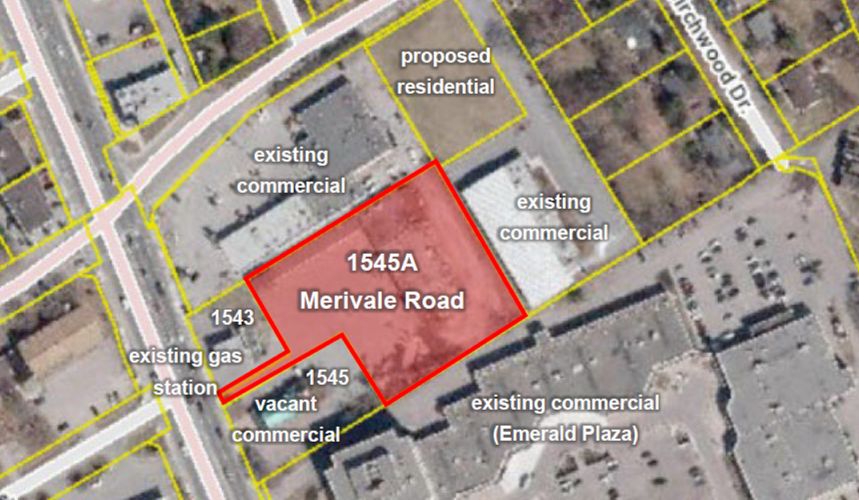
And access to the site is only possible by driving north on Merivale. Considering the over seventy parking stalls proposed for the development, I can envision a few hundred cars making a right turn entering and leaving this facility each day.

Complicating access to the proposed facility is the gas station next door, which also has hundreds of cars turning in and out, and a traffic light a hundred meters away that causes the stacking of lanes on Merivale every time the light turns red. I have always experienced long waiting times trying to get onto Merivale from the gas station because of the traffic congestion. The proposed facility will only make this situation worse.

Since I would drive south on Merivale to visit this proposed facility from my house, I would have to make a U-turn to drive north on Merivale to enter it. I would think twice about using this facility the second time and choose another imaging center, more accessible to me.

One could ease the traffic problem by opening a driveway on the east side of the property and working with the owner of the adjacent shopping center (behind the Barley Mow) to continue with the driveway behind the shopping center, exiting onto Capilano Drive. Turning left onto Capilano would bring you to the traffic light on Merivale, from where both south and northbound turns are possible. I strongly recommend opening a driveway on the east side of the property, exiting onto Capilano, and providing a second access and exit point to the site.

Besides access problems, the siting of the proposed building is unattractive. Why should a modern medical building be accessed via a long driveway surrounded by a gas station and a vacant building and then a parking lot before entering it? The scheme reminds me of shopping centers with acres of asphalted surface parking up front along the road, with strip malls behind. Surely, we can do better than that!

I understand the owners of this property also own the land occupied by the vacant building (1485 Merivale Road); why not combine this lot with the subject one accessible only via a driveway and locate the medical facility closer to Merivale Road? A sign on the building would provide identification and relegate parking to the back of the site. Part of the additional lot could be used as a park fronting Merivale Road, providing an attractive green entrance to the medical facility.

Much discussion at the zoom meeting focused on the proposed use that is not the “highest and best” use of the land; that a much taller building is allowed on this site. But the owners, two doctors, demurred; they said they are not developers and not interested in building more than the medical facility. Is it possible that zoning in Ottawa allows more development than there is demand for it? That all arterial roads zoned for highrise development is overkill?

Merivale Road will not benefit from this proposal from an urban design point of view, and it will make traffic much worse. But, what is confusing or missing is, what is the role of our city planning department in all of this – are they not empowered to look at the project in a more holistic way, rather than each individual project at a time without regard to what else may be being proposed in the nearby area which impacts not only on the traffic but the “neighborhood look’?

The lesson I learned from this experience is that, unfortunately, each proposal is looked at without reference to the surrounding community. So, each site has to have its unique entrance. That kind of thinking leads to many driveways, one to each property, and an awful lot of unnecessary paving.  For example, look at the Salus development on Capilano Drive, close to this proposal. That project has its driveway paralleling the long driveway to the Curling Club. Would not a combined driveway save pavement?

In conclusion, the traffic issue could be alleviated by making a driveway on the east side of the property and continuing it to exit onto Capilano Drive, providing another access to the site. Further, adding the vacant property would enhance the view of the building from Merivale, used either as a park or by locating the proposed building closer to Merivale.

In the current proposal, the Emerald Plaza Shopping Center has a service drive right adjacent to this property. Would there be a way to use and combine the service drive with the entrance to this site? Yes, I know, different property owners, etc. But we should be thinking more in terms of “planned unit developments”, contiguous areas, and not in terms of individual lots. Just my opinion.
Share this:

  • Click to share on X (Opens in new window) X
  • Click to share on Facebook (Opens in new window) Facebook
  • Click to share on LinkedIn (Opens in new window) LinkedIn
Like Loading...
Unknown's avatarAuthor andrasthehunPosted on February 15, 2023Categories architecture, Ottawa developmentTags access, back lot, canada, city planning, ottawa, planned unit development, public engagement, traffic congestion, urban design, zoningLeave a comment on An Open Letter to Ottawa City Planning

Experience with “Public Engagement” in the City of Ottawa

January 21, 2023

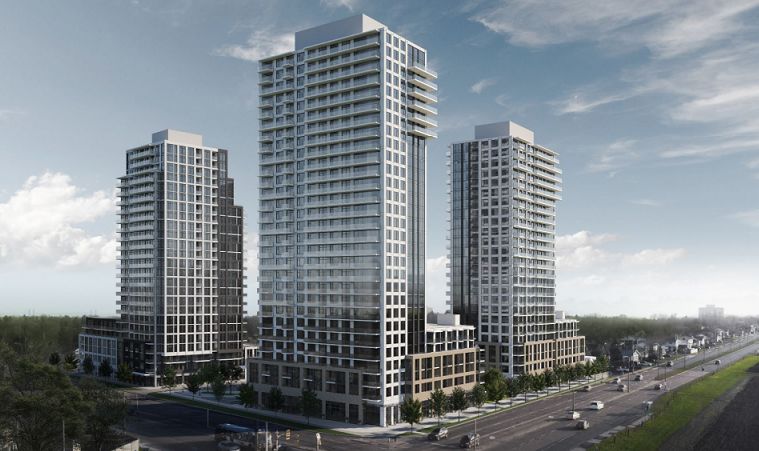
My local City Councilor invited me to a “public engagement” meeting on a rezoning application for a development proposal in my neighborhood. The meeting, held by zoom, was scheduled for 7:00-8:30 pm. The purpose of the meeting, we had been told, was to present and provide feedback on changes that had been made to the original proposal by the developer presented at our first meeting a few months earlier and gain public input. The original proposal was for two 25 and one 28-story towers sitting on a six-story podium at the intersection of two arterial roads. Single-family, mostly bungalows, surround the site on three sides.

But, right at the beginning of the meeting, the moderator reduced the meeting to an exchange of information, informing us that the only questions from the audience (whom he estimated to be around 80) would be by writing them in a Question and Answer Chat room for a response after all the presentations. In the meantime, the moderator limited us to listening only, a lesser event than discussing the merits of the proposal.

Then he insulted the audience by asking them to behave civilly and respectfully, conjuring up the image of the rough Liverpool waterfront pub in the 19th century. Mr. Moderator, we are polite Canadians; we are courteous and mostly low-keyed. We do not need a lecture from you on how to behave. At any rate, the audience was muted for the entire evening – so what opportunity would there have even been to be loud and rowdy? I found these actions – the lecture and the muting – to be disrespectful to the audience, who are all ratepayers and have a right to be heard.

The session began with my Councilor, who gave his views on the development and on the City of Ottawa’s planning goal for densification to provide for future population growth. It continued with presentations by the planner, architect, engineer, Ottawa City Planner, and the developer. These presentations took up over an hour of the allotted meeting time, leaving precious little time for the hundred-plus comments that accumulated on the “chat line” and some in the Q&A column during the zoom call. So, with limited time available for the audience to engage in the discussion, and with the audience all muted, the moderator summarized what he believed to be related questions from the ‘chat line” and Q&A column, and referred them to the panelists for a response. The members of the audience had no opportunity to express their views in their own words and address the proponents directly.

Following the earlier “public engagement” session, the new proposal reflected some of the public’s comments from that earlier meeting; reduced the podium from six to four levels to blend better with the surroundings, but increased the height of the buildings to two 28-story and one 32-story building, adding over one hundred units, with the total project to accommodate 998 units. The new height proposed is over 5 times what is currently permitted in the zoning code.

With no proper opportunity to engage with the proponents, this process was not engaging the public by any stretch of the imagination. Listening for over an hour to an information dump and being required to submit questions in writing over zoom, not knowing if the question will be answered or allowing any opportunity for follows-clarifications is certainly not public engagement. People want to express their thoughts in their own words, address their comments to specific individuals and not have their comments lumped together with other comments and interpreted by a moderator.

I am both an architect and a city planner by training and so understood most of the “professional” presentations – but I wonder how many did without an opportunity to seek clarification?

As a city planner, I both participated in and conducted “public engagement” in both Canada and the United States, at various levels, including municipal. The essence of these meetings was to present the proposal in a few minutes to allow maximum time for audience questioning and participation. At least three-quarters of the time was devoted to public input. This meeting was the opposite: three-quarters of the time was spent on describing the proposal and the rest by the moderator interpreting the public comments.

I give credit to the Councilor and the city to organize this “public engagement” zoom meeting. It is desirable and useful to inform the neighborhood people and canvas the residents for their comments; they will have to live with the development. But I question the usefulness of this session: was there anything in that meeting that would help people come to an amicable resolution? To me, this exercise was more like checking the box for “public engagement”.

This was a weird zoom meeting in that only the panelists – the Councilors, consultants, developer, and the City of Ottawa official – were shown on the screen while people like me were back in our homes staring at our computer screens and listening. We did not see who else was listening. I always see all zoom participants in other such meetings I have joined. It was one-way communication; we never had a live word. The moderator combined and interpreted the questions that we put on the “chat” line. I found it very dissatisfying.

 My impression is that the city will probably process this rezoning application with some minor tinkering with the height of the towers, landscaping, and other issues but will not materially change it, such as, for example, bringing it into conformance with the current zoning envelope. Having checked off the “public engagement” box, the city has not really shown an interest in finding out what the public thinks about how this proposal could be made into a quality project consistent with the character of the neighborhood and the larger surroundings. (For example, how about a medical office complex in proximity to the proposed huge hospital development just north on Fisher Avenue)? The developers appear to have their way in this city; they propose, and the city massages the proposal for approval. Just my opinion.

Share this:

  • Click to share on X (Opens in new window) X
  • Click to share on Facebook (Opens in new window) Facebook
  • Click to share on LinkedIn (Opens in new window) LinkedIn
Like Loading...
Unknown's avatarAuthor andrasthehunPosted on January 21, 2023January 21, 2023Categories UncategorizedTags architects, canada, citizen participation, engineers, expressing opinions, housing, Liverpool, ottawa, planners, public engagement, zoning, zoom meetingLeave a comment on Experience with “Public Engagement” in the City of Ottawa

The All-Candidates Meeting

October 10, 2022

I walked into the community center hall and found a chair in the back row joining a couple of dozen white-haired folks. They were the burghers of Ottawa West, homeowners, of course. Five of the seven candidates showed up, vying to become Councilor at the upcoming election for Ward 9, in Ottawa.

What I would learn at this meeting would not change my voting since I had already voted in the advance poll. I came to hear the candidates in person; I had already heard them and their pitch on one of the news channels

Although I looked forward to a lively debate, the moderator cautioned us to be civil with each other and have respect for all opinions, even if we strongly disagreed. OK, no fireworks.

On the way in, they told me to wear a mask and offered one, but I always carry one with me. I thought we were beyond masking, but according to the organizers; we protect each other by wearing one. This was a relevant notion considering the age of the audience.

Most of us were over seventy years of age and retired – who else would attend a political meeting? Interest in local elections tends to be low; at the last local election, only forty percent of people voted.

The President of the local community association opened the meeting by thanking the Anishinaabe tribe for letting us use their land (I understand all of Ottawa is on unceded tribal lands). It has become de rigor to remind us of the natives’ goodwill by letting us use their lands. I think it is an attempt to express our guilt for past injustices meted out to natives in Canada.

This recent custom has never failed to u irritate me no end since I had never heard of the Anishinaabe until a few years ago. And when I bought our house, nobody told me I would live on the unceded territory of the Ashininaabi or explained what the implications were, if any.

I consider I own the land on which the house is, and that I paid for the land when I bought the house. What does it mean that I live on unceded land? Does this situation call for a resolution? And, if so, who is working on it?

After we masked up and paid homage to the Ashininaabi, the moderator asked the audience to state in a few words what their issues were. Not in any order of priority, people identified; housing shortage, especially affordable ones, thru-traffic, transportation, taxes,the environment, and police transparency. I called attention to the residential twenty-five-storey high-rise proposals springing up that, in my opinion, do not fit into a single-family neighborhood.

Now we were ready to listen to the candidates, who each had three minutes to describe their priorities for Ward 9. The one common theme from all of them was that they will represent and work hard for the community. An original notion!

But then they distinguished themselves: one emphasized that he would work with all levels of government and the community collaboratively. Another brilliant notion: I ask you, is there any other way to work on the City Council? He did not seem to have a vision or substantive ideas on what exactly we should be doing in our community, except that we should work together.

Another candidate distinguished himself by admitting he has no community activist experience and said that if we want a community activist on Council, then he is not the one to vote for. An honest but perhaps not a winning strategy.

The next candidate focused on the debt the city had accumulated and explained that his financial and business experience will help him on Council to curb this outrageous spending that quadrupled the debt in four years.

The remaining candidates were “community activists” and have been presidents of their local community associations, a highly desirable experience for this election in their views. I may have missed it, but the community activists had not described their achievements during their service to the community,

A firestorm erupted when one candidate accused another one of informally associating himself with ten other councilors to vote as a block, should they all get elected. The implication was that this candidate may not take his cue from the community serving local interests but vote with his allied partners. Further, the accuser called his competitor a leftie and suggested the city would end in never-never land with even more debt if that woke group of councilors get voted in. The discussion had become heated and loud with angry words being exchanged, not only by the candidates but included audience participation. The moderator interrupted by raising his voice, calling for quiet; he ordered the candidates to talk about their platforms and forbade them to attack each other. I thought I gained additional information by listening to the accusation. And I enjoyed the interchange as well as the raw emotions that was demonstrated, showing strong opinions.

The next kerfuffle began with an environmental expert asking if the candidates would support the city’s $60 billion-dollar environment plan, which, in his opinion, was untenable and unrealistic; for example, by calling for forty square kilometers of a solar panel farm. He also argued the federal government has jurisdiction in this area and the City’s role is limited at best. Some in the audience called the speaker a climate-denier and told the speaker to shut up and sit down, while the speaker insisted on his right to speak. The moderator had to step in again and first drew attention that the speaker had no mask on,well, he was speaking, and that he had enough time to expose his thesis.

According to one candidate, the city has responsibility to at least provide generators for emergencies such as the derecho this Spring and the hurricane a few years ago. I thought that was a good suggestion; we lost a freezer full of meat this Spring when the derecho came with no electricity for over a week, an expensive experience.

The protection of R1 zoning was probably the most important issue for this audience. R1 zoning refers to single-family housing that occupies most of our community. The candidates hemmed and hawed and the American dream of a house with a backyard where the children can play was brought up. But the candidates also talked about a housing shortage and the only solution is  densification and intensification recommended by the City’s planners. That was pure political posturing. There is no room in our community for additional housing except by demolishing existing homes to make room for multi-family development.

According to the City’s planners, the only alternative to densification is urban sprawl, a decisively bad option creating costly infrastructure extension and additional traffic, generating pollution. Urban sprawl is an anti-environmental solution. As a city planner, I wondered why nobody considered a third option: “new towns”, such as those built in Britain as well as in the US. Why could we not grow our surrounding communities, such as Kanata, Stittsville, and Manotick, and attract residential development to satisfy future housing needs?

No, instead of developing new towns, we will destroy established single-family residential areas by allowing high-rise towers with their attendant traffic congestion. Our community is zoned R1, called “exclusionary zoning” now, intimating it is an elite zone where the poorer people cannot afford to live. Since when was single-family housing considered elite? Forty percent of Ottawa is occupied by such housing so how can this be elitist? You draw your conclusions.

I came away from the meeting feeling threatened by a future that will encroach on my community with high-density development. Developers have already submitted applications to the city for twenty-five storey and higher buildings So far, the developers seem to have the upper hand. The city planners do not seem to have the gumption to scale back the high-density development proposals despite strong local opposition; I attended many zoom meetings on “site plan approvals” submitted by developers for high-rise towers. The planners recommend “densification” to allow for the additional 400,000 people projected to occupy Ottawa by 2050. I do not know how the projections were made, since current population growth numbers do not justify the projection. But this set of candidates did not question the planners’ proposals.

Share this:

  • Click to share on X (Opens in new window) X
  • Click to share on Facebook (Opens in new window) Facebook
  • Click to share on LinkedIn (Opens in new window) LinkedIn
Like Loading...
Unknown's avatarAuthor andrasthehunPosted on October 10, 2022Categories UncategorizedTags city planners, densification, elite r1 zoning, kerfuffle, local election, ottawa, public engagement, ward 9Leave a comment on The All-Candidates Meeting
  • December 2025
  • November 2025
  • October 2025
  • September 2025
  • August 2025
  • July 2025
  • June 2025
  • May 2025
  • April 2025
  • March 2025
  • February 2025
  • January 2025
  • December 2024
  • November 2024
  • October 2024
  • September 2024
  • August 2024
  • July 2024
  • June 2024
  • May 2024
  • April 2024
  • March 2024
  • February 2024
  • January 2024
  • December 2023
  • November 2023
  • October 2023
  • August 2023
  • July 2023
  • June 2023
  • May 2023
  • April 2023
  • March 2023
  • February 2023
  • January 2023
  • December 2022
  • November 2022
  • October 2022
  • September 2022
  • August 2022
  • July 2022
  • June 2022
  • May 2022
  • April 2022
  • March 2022
  • February 2022
  • January 2022
  • December 2021
  • November 2021
  • October 2021
  • October 2020
  • December 2019
  • Welcome!
  • Home Page
  • Blog Posts
  • Travel
  • Contact
  • About
  • Welcome!
  • Home Page
  • Blog Posts
  • Travel
  • Contact
  • About
Blog at WordPress.com.
  • Subscribe Subscribed
    • andrasthehun.ca
    • Join 34 other subscribers
    • Already have a WordPress.com account? Log in now.
    • andrasthehun.ca
    • Subscribe Subscribed
    • Sign up
    • Log in
    • Report this content
    • View site in Reader
    • Manage subscriptions
    • Collapse this bar
 

Loading Comments...
 

    %d