Democracy in Action

October 23, 2022

On August 24, municipal election signs sprouted in Ottawa faster than flowers in the spring. Like overnight. They set the election for October 24. The candidates heavily sprinkled all major street intersections with signs in assorted colors. And there were a few humongous signs, noticeable from a distance; the candidate probably thought a few large signs are as good as numerous small ones.

I have followed the candidate debates in the media and in person, and I attended a meeting with the local ward candidates organized by my community association. My local candidates avoided arguing with each other at the request of the moderator, making it less of an interesting meeting except for a few eruptions when one candidate threw mud on another one.

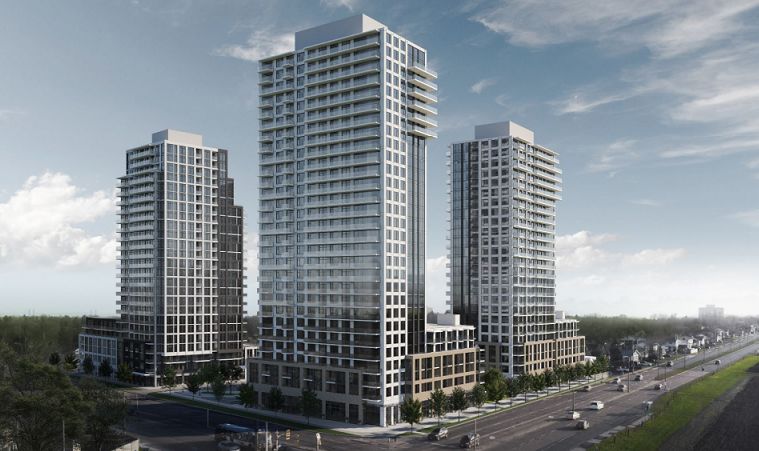
Then I attended a larger, ward-wide meeting with all the local candidates, which attracted up to a hundred interested, and polite residents. I could almost read the attendee’s priorities from their comments – they were homeowners wishing for no property tax increases. As well, they expressed concern over densification via high-rise development and attendant construction with all the mess that comes with it. So the key issue to these attendees was to conserve the single-family residential character of our ward by preserving the R1 zone.

Although lip service was paid to affordable housing, the attendees had only a passing interest in the subject. They were homeowners.

Judging by the age of the participants many retired, with a car at home – better bus service, or the construction of the light-rail transit (LRT), serving downtown were of mild concern. Especially considering that direct access to the LRT will be very limited for most residents of Ward 9.

Most candidates seemed to echo the attendees’ sentiments, hoping to garner support.

But these local objectives within wardscreate hard choices for the mayoral candidates who must deal with housing and transportation issues. For example, ridership pays for only forty-five percent of the city’s transportation budget. Should fees be raised? One candidate proposes to provide free transport for all people under seventeen years of age; that would create additional costs for the city’s transportation budget.

The two leading candidates have published detailed plans for housing, transportation, the environment, the economy, and the growth of Ottawa. With few exceptions, I found a large overlap between the two candidates’ proposals. For example, there is talk about net-zero buildings, electric buses, and the LRT in the campaign literature of both candidates. The differences are in the way the proposals would be implemented.  

The leading mayoral candidate in this very close race is a two-time councilor who calls herself “they”, and proposes to increase the city’s budget by ten percent, which includes a plan for a 250-million dollar build-out of a bicycle system for Ottawa. Considering that Ottawa is not a bicycling town for six months of the year, this is a questionable proposal at best.

The other leading candidate has never been a publicly elected official, comes from a business and media background, and promises to keep the property tax to the two to two and a half percent annual increase. And he proposes a “balanced” transportation budget, improving streets and addressing the inadequate bus system.

I believe the choice between the two leading candidates comes down to additional spending versus fiscal discipline. And I think your voting preference most likely wouldfollow your stage in life. If you are young and live in an apartment with limited resources and starting a family, then you would be interested in affordable housing and bicycle paths, and good urban transportation. If you already have a house and a backyard for your children, or are an empty-nester and maybe retired, then you would be interested in keeping property taxes at current levels.   

And again, there are the candidates ’personalities and backgrounds that may be important to voters. One is a Centretown activist whose platform reflects the values of downtown residents (either single, childless, and most likely apartment dwellers), who have also declared that they (she) would accept no donations from developers. The other leading candidateis a family man and marathon runner with a long history in the volunteer sector who has yet to disclose his donation list.

There is a real choice for Ottawans between two candidates in this election. One is a “progressive” leaning towards additional expenditures for city services while the other one is more to the middle, leaning towards fiscal discipline. I believe demographics and voter turnout may be decisive factors in who will win.  

US/CANADA Border Crossing Regulations for Covid End Next Week

September 29, 2022

The federal government just announced that Covid-related regulations crossing the border will end next week. It has been a nightmare to cross the border for the past couple of years. The danger of people coming to Canada with Covid infections led the government to introduce the ARRIVECAN system, mandating people to fill out a complicated form on a cell phone before arriving in Canada. The Americans responded in kind, but strangely, traveling by air into the US was allowed with a negative Covid test while traveling by car was not permitted (unless you were an American citizen). 

Resulting from the different border crossing policies, I experienced the most bizarre situation last summer. I could not drive with Kathy to Myrtle Beach, South Carolina (driving from Ottawa, one has to cross the border). Since Kathy is a dual Canadian/American citizen, she drove to Dulles airport near Washington, DC while I flew there the same day. Coming home was different; we drove together and entered the country as Canadian citizens. And, of course, we had to fill out the ARRIVECAN form before crossing the border.

I have been crossing the border for dog ages; early on, when I went to graduate school at the University of North Carolina at Chapel Hill from Vancouver, I drove south to California and then across the US on Route 66. But even before, I remember our drive to Seattle from Vancouver with my father, who informed the American border guard he’ll stay in the US as little as possible. That comment did not sit well with the official who hauled us in for questioning and then had the benefit of trying to decipher my father’s heavy accent before letting us go.

I have always had some innate fear of talking with government officials, especially police and border guards, who brought back memories of the Hungarian secret police and the aura of the heavy hand of government officials. Border crossing was a chore for me those days, not immersed in the philosophy the police and similar organizations serve you, the citizens of Canada.

I was apprehensive when, with a friend of Italian origin, we drove to Seattle with my newly minted citizenship card in the 1960s. My friend warned me that border officials would haul him in and question him because of his Italian name. Surprised to hear that, I wondered if government officials had prejudices against nationalities, including Hungarians. And so it happened; we were subject to thorough questioning, but I escaped detailed scrutiny, and they let us go. Although this incident confirmed my apprehensions, my discomfort with government officials waned in time, especially after I had joined the government in 1973.

It was easy to cross the border into the US in the old days; all you needed was identification like a driver’s license, which, of course, I always carried with me. The reverse, crossing into Canada, was the same. But sometimes you did not even need a solid piece of ID, as when my son’s friend, a recent Russian immigrant to the US, came to visit us in a rented car with neither US citizenship nor a valid driver’s license. He successfully talked his way into Canada at the border and confirmed the ease with which one could enter Canada.

Many of our family border crossings started with camping in New York State. An hour’s drive from us in upper New York State, the pine-treed campgrounds were not only cheaper to stay at than comparable Canadian facilities, but were also less crowded. And, we found wine cheaper down there and the challenge was how to import wine to Canada. Some people suggested I should fill up the water tank of our tent trailer with wine coming home, but I resisted; the water container would have had a taste of having been filled with wine, not the taste of choice of family members. (The limit for importing wine was two bottles per adult). Then we discovered ‘two-buck chuck”, the wine distributed by Trader Joe’s, the retailer in the US.

A case of two-buck-chuck, even paying the customs duties was much cheaper than anything we could buy in Canada. Most of the time, the Canadian customs officials just waved us on when we told them we had a case of wine worth US $24, altho once they told us to go into the office and fill out all the customs papers. This experience cost us ten dollars, but I found it to be a real bother and time-consuming affair as well.

My good luck of never having trouble at the border rossing nto the US ran out when I arrived at the border with my carpentry tools in the car. They immediately sent me inside and took apart my car, checking all the tools. I was going to build a deck for my son’s house, but the border officials were suspicious that I had other intentions. They were afraid that I would take jobs away from Americans. It took over an hour to get on my way; I pointed to my gray hair and said I was retired and had no intention of working and taking a job away from the locals. Further, I explained to them I had lived in the US for years but came home to Canada for my career, which was over.

Complications arose when I mentioned I had an expired draft card with a 5A rating. The younger officials knew nothing about draft cards and I tried to describe the Vietnam war and how Americans were drafted for service. This entire episode came to a hilarious end when an older border guard burst out in a boisterous laugh and explained to the younger officials what had happened in the sixties. The bottom line was that they took away the draft card I cherished and carried with me all the time when I worked in Norfolk, Virginia, in the sixties.

But the border is a two-way street and I never forget the incident when I bought a bottle of liquor at the duty-free shop coming home and the Canadian border guard asked how many ounces were in the bottle (there was a limit on how much one could bring back home). I looked at the bottle for information but could find none. I told the official I bought it at the duty-free store and had to be a size permitted for import to Canada. But he would not budge and I was ready to consume part of the bottle when he suddenly decided to just let us go, looking at the lineup behind us. As soon as we crossed the border, I felt some corrugations on the bottom of the bottle, and lo-and-behold; I found the information I had been looking for.

But next week we will go back to the old days, and a passport will be sufficient to enter Canada. The US is already open with a Canadian passport. Hurrah! Were the heavy-handed regulations preventing the entry of people with Covid useful and worth the cost of losing the tourist business? We’ll not know unless the government undertakes a study of it.

Homelessness in Ottawa; an Election Issue

September 22, 2202

One of our mayoral candidates in the municipal election, for Ottawa this fall,

vows to end chronic homelessness in Ottawa, in four years. This is a bold and noble goal. Does this mean that there will be no homeless in Ottawa in four years? Do we know how many homeless people we’ll have in Ottawa in four years? No, we do not. But, OK. This is a lofty goal, and we should not get hung up on details.

I found statistics on homelessness in Ottawa difficult to understand. The best information I gathered is there are between 1400 and 1800 homeless in Ottawa, on an average day.

Compared to other Canadian cities, the size of Ottawa’s homeless population is not the worst. The homeless population in Red Deer is 0.31 percent of the population; in Vancouver and Edmonton, it is 0.27 percent, while in Ottawa, it is 0.18 percent.

Homeless people concentrate downtown Ottawa to the huge displeasure of the area’s residents, while the problem is much less apparent elsewhere in the city.

In a survey conducted on October 27 and 28, in Ottawa, 55 percent of the homeless used shelters while 9 percent slept on the streets. Others bunked down with friends. (Over half of the homeless were racialized, and of all the homeless, over 25 percent were Canadian natives).  

 The mayoral candidate proposes to build “supportive” housing for 250 individuals and provide housing “allowances” for another 250 people and families. Although it is good to have a specific proposal, the downside is that there may be more homeless in four years, in which case, the candidate will not achieve the stated goal.

But, to me, the more important question is whether a sustainable long-term solution to the homeless problem is achievable by building and subsidizing housing. Why have people become homeless in the first place? Surveys show that although housing is important, substance abuse, poverty, mental health issues, and low wages are common characteristics among the homeless. I think these underlying issues will have to be dealt with before finding a sustainable solution. Otherwise, this proposal will be nothing more than a bandaid for the short term.

And if the word spreads that Ottawa is kind to the homeless and provides housing for them, the homeless from other parts of Canada may flock to Ottawa. The homeless population may balloon.

The City of Portland OR is an example, where a sympathetic Mayor tolerated tent encampments to such an extent that in some neighborhoods people are afraid to walk on the streets. Vandalism and robbery have become common. I am sure Ottawan does not want to follow the Portland example.

Providing subsidized housing is one answer to homelessness, but until governments deal with mental health issues, substance abuse, education, and the availability of sustaining jobs, I do not believe homelessness will be solved any time soon.

Experience with Doctors and Pharmacists

September 10, 2022

In late August at the cottage, I had a few cups of black coffee before breakfast. Soon after finishing my coffee, I felt queasy and dizzy. I had to lie down to get my mojo back; it took a few hours to get rid of the dizziness.

The next unpleasant experience occurred during the drive home from the cottage, when I suddenly felt like blacking out, with my vision blurring and experiencing weakness. It took a few deep yoga breaths to get my composure back. Fortunately, I was on the passenger side.

These scary experiences led me to an urgent visit to my medical clinic. There, the nurse practitioner gave me requisitions for blood testing, a Holter monitor (heart monitor) for seventy-two hours, a stress test and an ECG.

The next morning, I still felt dizzy and that made me go to an emergency room (ER) where they put me thru a thorough blood test, urine test and an ECG. After six hours the emergency doctor gave me a clean bill of health and suggested that I follow up with my family doctor should I continue to experience dizziness.

If my heart is all right, what might cause the morning dizziness (by the afternoons the dizziness subsided)? I became suspicious of one new pill I take, prescribed for me a few months ago, and I stopped at my pharmacist to check if some of the meds I take may work against this new pill. The pharmacist found this pill contradicts in its effect with another one I take and recommended a change to one of them. The next day I saw the prescribing doctor, who immediately agreed with the pharmacist’s  advice and gave me a substitution, another pill.

In some ways I was stunned the doctor did not question the advice from the pharmacist at all: but it made me think, do doctors know and understand what they prescribe? What damage could wrong prescriptions cause to patients?

My appreciation for pharmacists went up a few notches; they are knowledgeable of pharmaceuticals and decided that they know more about meds than doctors.

Based on the results of my visit to the ER, we decided to follow up on our vacation plan to go to Myrtle Beach, SC, and meet with family for a few days. It was a two-day trip, and we enjoyed the vacation until I received an email to phone my medical office immediately. When I contacted them, they told me to go to an emergency department ASAP. It was a terrible downer for me, and I asked what the cause or the reason was for going to ER, ASAP. I explained that I was in South Carolina and despite my Canadian medical insurance, it could be an expensive affair. I talked with a nurse at the clinic who did not know why I should go to ER immediately but promised to email the doctor to find out the reason: what was I going to say to the local ER, what was wrong with me which brought me to ER?

The nurse responded by email in an hour, and repeated that I should go to ER and attached two reports and told me to print them out to take with me – the results of the ECG and the results of the Holter report. We consulted with two acquaintances, both doctors, one is an ER doctor, and sent them the Holter report and the ECG, which they found not super urgent to attend to.

Confused by all these views, we decided to see how I felt the next day and still feeling bad in the morning we decided to drive home.

The next phase of my adventure was even more strange; we went to a different hospital ER in Ottawa, where I went thru all the testing again only to be told the Holter and ECG reports did not justify leaving our vacation early. This ER doc consulted with a cardiologist, so the news I received was very comforting to me.

So, what do I make of all of this when my family doctor says I am in dire need to visit an ER and two other docs and a second ER visit give me a clean bill of health? One must conclude that the medical advice from my clinic was misguided or plain wrong. Perhaps the attending doctor on duty at my family clinic was not fully knowledgeable how to interpret Holter monitoring results?  But why did he/she not call me to explain why my situation was bad? Is this expecting too much?

But, if I had gone to a local ER in the U.S. and if they had found my visit unnecessary, my insurance would not have paid for the visit, potentially costing me thousands of US dollars. And it may have given me a black mark in my record for future travel insurance, having a heart issue identified, even if it was wrong.

I think it was wrong of the attending doctor at my clinic not to check with other doctors or a cardiologist before ordering me to visit an ER, ASAP.   But, perhaps more importantly, he should have communicated in person, by phone, to tell me the “dire” news.

Although I felt much better being at home, I still felt a bit weak the next few days in the mornings, and now I was beginning to suspect that it must be my meds that are the problem, since I was fully examined and tested in two ERs over a two week period. So, what do I do? I looked at my meds again and talked to two pharmacists to check out how my meds may interfere with each other and what side effects they may have.

Both pharmacists immediately identified that I should not take two of my pills at the same time and suggested that I take one in the morning and the other in the evening. Not rocket science if you know your pharmaceuticals.

Lessons learned: do not immediately believe what your doctors tell you; ask for explanations. And check with your pharmacist regarding your pills. My appreciation for pharmacists had jumped astronomically after these recent experiences with them.