Are We Panicking About Housing?

November 27, 2023

Current headline news bombards us with titles like: “housing shortage”, “unaffordable housing”, and “people die on the streets for lack of housing”. These housing-related issues have materialized since 2015; we did not have these topics at that time.

However, all of these headlines spawn questions. For example, what is affordable housing? One metric the Central Mortgage and Housing Corporation (CMHC, the Canadian mortgage insurance company) uses is that no more than forty percent of after-tax family income should be used for housing. But does this metric apply today?

The median family income in Ottawa is just over $100,000 today, and the average house price is slightly over $600,000. The minimum downpayment is five percent for the first half million dollars, ten percent for the next half million, which translates into $35,000 for the average house in Ottawa. So, with this downpayment one needs a mortgage of $565,000 that would cost today circa $4.000 per month. The annual cost, $48,000, would therefore be over forty percent of the annual income of the average Ottawa family income. Which means housing is, in fact, unaffordable, unless one has a larger downpayment to reduce the monthly mortgage payment.

One way to look at housing issues is to identify factors creating demand for, and supply of, housing. Either decreasing demand, increasing the supply of housing, or doing both, would alleviate the current housing problem.

The major factors on the demand side are immigration and the entry of foreign students. Canada let in 430,000 immigrants and 550,000 foreign students in 2022. All of the housing demand can be attributed to these two classes of newcomers to Canada: there are 424 housing units per 1000 people in Canada, so the close to one million newcomers alone needed 400,000 units in 2022 when Canada builds only 250,000 units per annum (Census and CMHC statistics).

While the last two classes of newcomers are beneficial to Canada, they create a huge stress on the housing markets. They are beneficial in that Canadian fertility rates are below replacement rate, hence the rationale for increased immigration. Similarly, Canada is short of skilled construction workers, and therefore welcomes immigrants with such skills. And foreign students pay two or three times the university fees Canadian students pay and therefore contribute to the universities’ bottom line. But we must balance our priorities and perhaps providing housing is more important today than other objectives.

Most of the supply issues can be attributed to the shortage of skilled workers and the lack of land for development. Land is especially a major issue in some of our large cities. Vancouver is surrounded by water and mountains. Toronto’s expansion is limited on one side by water.

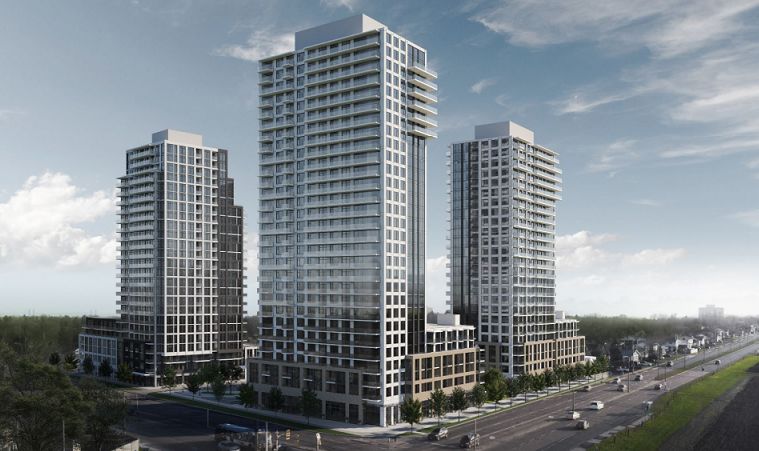
Densification has become the key word today to accommodate the increasing population. Densification requires rezoning by municipalities, that takes years. And vacant land development, where available, also takes years for approval.

Are there any solutions? On the demand side, the federal government could reduce the flow of immigration and the intake of foreign students to alleviate demand and pressure on housing. And municipalities could accelerate the approval process to increase the supply of housing.

The two levels of government, working in tandem, could alleviate the housing problem. However, both initiatives would also create negative consequences; Canada needs skilled people and universities favor foreign students. And an acceleration of municipal approvals may weaken environmental reviews and public engagement – both important review elements in the development process and expected by Canadians.  

The bottom line is that increased coordination between the different levels of government would go a long way to streamline the process of welcoming immigrants and foreign students entering Canada by making sure that housing is available.

The danger I see is that a panicky response today encouraging a hugely accelerated house construction program could result in an oversupply of housing in the next few years during which the federal government may change its priorities and reduce targets for immigration and the entry of foreign students.

The Good Life in Canada in Peril

April 9, 2023

I walked into the garage and stumbled in the dark towards the garage door handle to release it from the cable so that I could push up the garage door by hand; the power was out. We had an ice storm yesterday and the local hydro was still fixing the lines. It was getting cold in the house when we woke up in the morning without power.

When I pushed the garage door up, I saw our neighbor walking towards me up the driveway with a cup of coffee in his hand. And I heard a loud generator working in his driveway, explaining his coffee. He came to offer coffee or whatever we needed. That was nice of him. I told him we were just going to find an open restaurant to warm up and enjoy our coffee and breakfast.

Over our meal, I wondered what a nice lifestyle our neighbor has living in a five-bedroom house with one child. And he works at home allowing him to take a bicycle ride for a break and do chores around the house during working hours.

Canada offers a charmed life for many people, educated here and with a job. I socialize with them and enjoy their company most of the time. They are relaxed and enjoy the good life, although some are smug.

And their smug attitude in believing they deserve what they have bothers me. They truly believe that they worked and earned their status in life. And their good life makes this generation comfortable, less ambitious, and more complacent. Less achieving. I think that this is sad. This attitude, in my view, has pervaded the way Canadians and government look at issues.

I thought of the immigrants coming into this country and fully understand why they want to come here when they see what some people here have. But the immigrants have challenges. They do not speak the language fluently, if at all; they are not familiar with local culture; they have no local experience. And no local contacts.

And now the country allows half a million immigrants a year into the country for the next few years; bumping up the population when a recession threatens, there is a housing shortage and affordability gap, on top of a healthcare crisis. All these issues affect immigrants.

Although we identify these issues with some recalcitrance,we resolve them slowly, if at all. Often, we ignore them, thinking it doesn’t affect us, so no need to do any planning.

Potholes on the streets? No problem, it is the weather. This view is nonsense. The northern states in the US have similar climates with excellent roads.

Healthcare crisis? No problem, we’ll let in more foreign nurses and doctors, ignoring the fact that they have to be locally licensed, a time-consuming exercise that can take years.

Housing crisis? No problem, we’ll let in more construction and tradespeople, forgetting that they also need local licensing, and we also need land to build on.

No land to build on? No problem, we’ll just make our cities denser. We’ll let three units be built on single-family lots in Ontario, starting this summer, which will destroy some older, attractive neighborhoods.

Food price inflation? No problem, the government provides a subsidy; prints money, and just increases the national debt. Debt is for future generations to resolve.

It may be only me but methinks we do not solve problems but delay them, thereby creating fresh problems.

I think the country has become too complacent and downright lazy. We havelost our edge, our dynamism. We sloganeer about equity, diversity and inclusion, and LGBTQ…., matters, and forget that these ideals are impossible to materialize without creating jobs and opportunities and investing in technology and the future. You cannot have equity, diversity, and inclusion in the abstract, it exists in organizations employing people.

So, let’s get back our work ethic and get off our collective fat butts and build the economy by providing the opportunity for future generations.

The Death of the Single-Family Home on a Quarter-Acre Lot

February 3. 2023

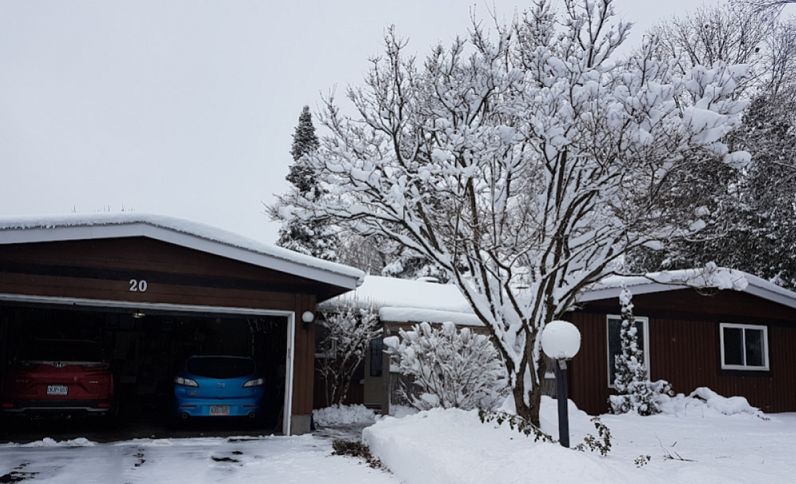
The house on a quarter-acre lot, which has been the Canadian dream, is under vicious attack. The quarter-acre lot in planning terms is the R1 zone, which occupies over half of the land of Canadian cities. In Ottawa, the R1 zone occupies over 50% of the land; in Toronto, Calgary, Edmonton, and Vancouver, it is over 60%, while in Montreal it is 45%.

But the R1 zone is “exclusionary” cry social advocates, citing the shortage and unaffordability of housing, to absorb people arriving in Canada’s cities from the hinterland, and from abroad. R1 is the culprit and therefore, it must be eliminated to permit higher densities, putting two and three dwellings on the quarter-acre lot.

But how can the R1 zone be “exclusionary” when more than half of the land used in cities is zoned R1? To me, the word exclusionary conjures up images of elite golf clubs; high-end tennis clubs, and similar facilities with entrance requirements that a minority of people possess. And by a minority, we usually talk about the “top” five percent or even the top one percent of people.

In 2016, fifty-three percent of dwellings were single-family detached homes in the R1 zone in Canada, and I would not call this metric exclusionary. The rest of the Canadians live in apartments and condominiums.

I realize municipalities could use zoning for excluding certain groups of people by specifying  minimum lot and house sizes, which could make purchasing a house unaffordable for some people. It happened to blacks in parts of the United States (until it became illegal to do so), but I have seen nothing in Canada to illustrate that zoning has been used to exclude a specific group of people from a community.

I studied city planning at the University of North Carolina where Professor Chapin wrote and taught the classic and long-used textbook “Urban Land Use Planning”. According to him, zoning has been a tool to regulate development, generated by employment growth, creating a need for housing, schools, and commercial development.

We have been fortunate in Canada to date, being able to expand the urban boundaries of our metropolitan areas, to provide for growth and reasonably priced housing. Now, suddenly, we find that environmental concerns, greenbelts, and natural boundaries like water and mountains constrict some of our cities concurrent with our radically exploding immigration intake, creating an unprecedented demand for housing.

The government solution to the housing crisis is to densify our communities, and one approach is to permit the doubling or tripling of dwellings that occupy half the land of our cities. And that is the R1 zone. Conclusion: it has to be done away with. Ontario recently introduced legislation to triple the population of the R1 zone by allowing three dwellings on the quarter-acre lot instead of one, starting in the summer of 2023.

I think that by doing so, we’ll destroy some of our attractive and historical districts. Allowing three dwellings where there is one now will lead to a haphazard and unsightly streetscape. Instead of the usual one car per dwelling, we’ll have four of five cars on the same piece of land and lacking parking space on the quarter-acre lot, on the streets. Traffic will increase on roads designed for low-density residential districts. Schools will have to be renovated to serve more children on limited sites.

So, you ask, what is the solution for the burgeoning demand for additional housing? I think that we’ll have to develop some new towns and/or attract our future development into peripheral small towns around our metropolitan areas.

Failing that approach, I suggest that densification in our single-family communities should be allowed gradually in places where the installed infrastructure permits additional development, or until after governments build the required infrastructure.

But the demise of the single-family dwelling on a quarter-acre lot has already started. In my community, doubles have replaced single-family units. In one situation, someone purchased two lots, demolished the homes on the land, and constructed three units. These small-scale redevelopments, to date, have bordered our community, but I foresee some enterprising homeowners in the middle of our community replacing their dwellings with a duplex or triplex, creating increased traffic and destroying the family-oriented nature of the community.

Towards Solving the Housing Affordability Gap in Ottawa: The Vacant Unit Tax

January 15, 2023

Can a family afford to buy a house in Ottawa? The average family income in Ottawa is $80,000. If they had the money for a 20% down payment for an average Ottawa home costing $620,000, the monthly mortgage cost would be over $2,000. In addition, they would have to pay for utilities, food, and other living costs. The other option, next to buying, would be to rent a house or an apartment, and the family with two children would pay a $2,500 monthly rental cost (a house or a 3-bedroom apartment).

I think there is an affordability gap in Ottawa, or, there is a shortage of housing. Same thing. Economics teaches us that if we increase the supply of a product, it may decrease its price. Home builders built ten thousand dwellings in Ottawa in 2022, a record, but not enough to satisfy demand. Are there other options to increase the supply of housing?

The City of Ottawa thought of another way to increase the supply of housing and introduced a “vacant unit tax” (VUT) on January 1, 2023. There are 20,000 vacant units in Ottawa, five percent of the housing stock. Carrying the higher cost of an investment property may motivate owners and investors to rent or sell their vacant units, increasing the housing supply, and reducing its cost.

The tax is one percent of the assessed value of the property if it is vacant for over six months of the year. Although some people with deep pockets may pay the tax, others would sell or rent it out, perhaps to family members to avoid paying the tax.

How will the City of Ottawa identify vacant units? Following examples in Toronto and Vancouver, with similar taxes for vacant investment properties, Ottawa issued a form letter to all property owners asking them to declare whether their property is their prime residence, rented or vacant. We must submit the declaration by the middle of March. Failing that, the tax is added to the property tax the following year.

What happens if owners claim they rent the property, but it is vacant? How will Ottawa follow up and audit, and enforce the VUT? Would the City check water, gas, and electrical consumption for the dwellings? The City has not disclosed how they intend to audit and enforce its new tax; it could be an arduous process.

The City projects to raise seven million dollars a year from the VUT, which translates into over 1,100 dwellings subject to the new tax ($7 million is one percent of the assessed value of the vacant homes averaging $620,000).

It appears the City is inconveniencing 100 percent of property owners by requiring a declaration to increase the supply of housing by 0.3 percent (1100 units added to the existing 380,000 occupied units). Is it worth inconveniencing the people of Ottawa for such a small gain? Is this just a tax grab, impacting middle-class people?

What I find more objectionable is the creeping regulations limiting our freedom; why could I not have two homes and have one empty without being taxed for it? For example, I could use one as my primary residence and the other as an office or a studio or the guesthouse for visiting family. Or I could live downtown, for the winter, to enjoy the cultural facilities there and move to an ex-urban area for the summer, where I could have a large lot with my vegetable garden. Would this tax encourage families to put one house in the husband’s name and the other in the wife’s name? And both could claim their houses as primary residences while living in one? What is wrong with a two-primary-home existence?

And creeping regulations could go further: following up on the logic of the VUT, Ottawa may prescribe additional living standards. For example, you may be eligible for five hundred square feet of living space per person or one bedroom per person. And come up with the LUT (large-home unit tax). If they can regulate that my dwelling must be occupied, what is stopping them from deciding how much space I am entitled to?

Reflecting on the increasing regulatory power of the City, I thought of the large house we and my neighbors occupy. Yes, my street has large homes with four or more bedrooms and multiple bathrooms occupied by two people; the children are gone but the owners are comfortable in their long-term homes, with no intention of moving or downsizing.

I was in my large basement office filling out the VUT form, thinking that the VUT may not be the efficient answer to the housing affordability gap. Mortgage rates, lack of skilled labor to build houses, and low wages may be more crucial factors to tackle before trying to convert a few vacant homes into occupied ones. Just my opinion.