How to Optimize Your iRobot Roomba for Efficient Cleaning

November 24, 2025

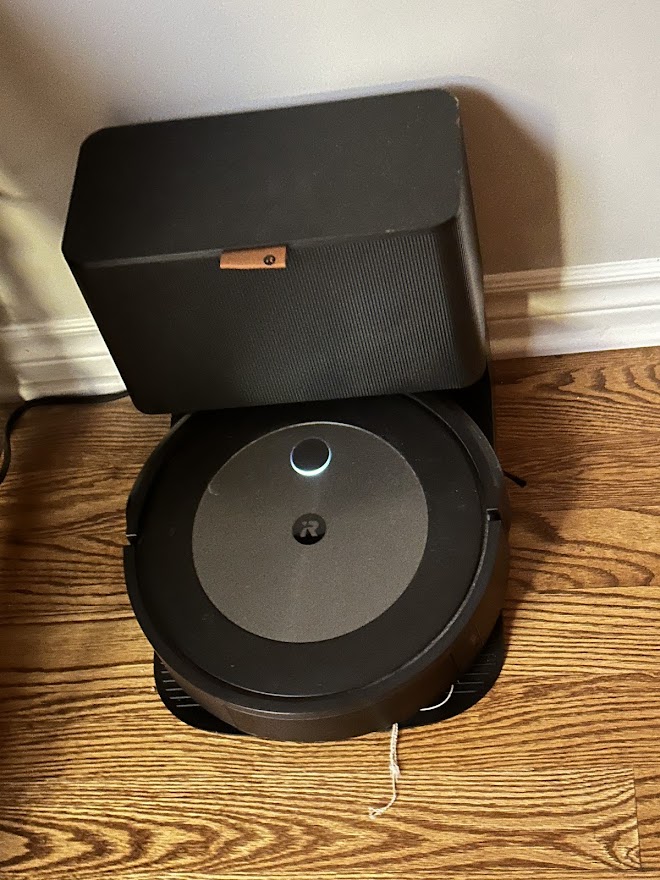
It was a typical Sunday morning. Kathy brewed some coffee, and then she and I scrolled through our iPhones, reading about the world’s problems, which put us in a negative mood. Instead, I suggested we leave reading the news and let Roomba, our iRobot, which we call Matilda, do some cleaning, and we have breakfast. Kathy agreed it was a good idea, so I switched the news channels on my iPhone to the Roomba app to start a “new job”. An iPhone is essential for accomplishing anything in today’s environment.

However, Matilda was in a cranky mood and sent me a voice message saying I needed to “blow out” the dirt from its previous job. It didn’t work at first; perhaps Matilda wasn’t quite awake. However, after ten minutes of troubleshooting accompanied by rich critical verbal expressions, I got it working. Listening to my running commentary on robots, AI, and techies, Kathy suggested a male name might be more fitting for our robot; a male’s early-morning grumpiness would more accurately reflects the robot’s behaviour this morning. So, we decided to rename the robot Mathis. The name was not a nod to Johnny Mathis; both of us are fans of his music.

But first, we had to clear the floor so Mathis could move around and clean. This meant putting the laundry basket, a few backpacks, slippers, and books lying on the floor onto the bed, in the bedroom. In the office, Kathy moved the office chair out of the way and the yoga equipment into another room. Finally, we were ready for Mathis to do his job.

Mathis struggled to navigate out of the dining room, which was full of obstructions. The room had five chairs and two tables, totaling twenty-eight legs that could interfere with Mathis’ movement. At one point, it seemed like he was lost as he moved back and forth, but he eventually found his way to the bedroom and the office. But his movements were inefficient overall, wasting significant battery power to reach the work sites.

For Mathis to work efficiently, it would be best to have an empty house with no furniture. Without obstacles like chair legs, he wouldn’t need to make detours and could make a clean sweep of the entire floor.

After some reflection, I decided to find a better home location for Mathis, with fewer obstructions on his way to reach the rooms in the house. A more central location in the house would avoid obstacles such as chair and table legs. So I moved Mathis’s home base to a new, central spot.

However, this change posed a potential problem: would Mathis feel at home in this new location after being accustomed to his previous spot? Are the floor plans in his memory tied to where he used to rest, or would he adjust and recognize the new location since he initially mapped our house from another place?

To test this new setup, I decided to give Mathis a “new job.” I asked him to clean the kitchen and the dining room after I turned all the chairs there upside down and placed them on the tables.

To see Mathis’s navigation skills in this new environment, I observed his movements. He seemed a bit lost at first, wandering around the living room before entering the dining room. However, he soon got to work, methodically cleaning the dining room by going back and forth, and then found the kitchen and cleaned it.

Overall, Mathis did an excellent job, and I considered rewarding him with a treat, such as a dog biscuit or candy, but how could I do it? This made me think that the brilliant designers of these robots should also provide rewards for good robotic behavior. Rewards could help robots learn from completed tasks and boost future performance.

Notes on Canadian Healthcare

August 23, 2025

While sitting on the porch facing the lake with my laptop open on the table, healthcare unexpectedly came to mind. It was a perfect summer morning, and with a coffee in hand, I thought about how true it is for a healthy life to live with and enjoy nature.

 Canadian healthcare has a good reputation, particularly outside the country. Although it is a universal system, accessibility remains an issue, especially for those without a family doctor. Twenty percent of Ontario families have no family doctor. These individuals end up seeking medical assistance in emergency departments, where there is a shortage of emergency physicians and nursing staff. Because of that, many emergency departments have been forced to close for a day or even a week.

A tragic example highlights this issue: a sixteen-year-old boy arrived at an emergency unit and was triaged as a “second” priority patient. This designation means that a doctor should ideally see him within fifteen minutes. The boy received attention only several hours later. He ultimately passed away due to the delay.

Not in the same horrid category as the above example, I had experience with our healthcare system recently that raised some questions in my mind. I twisted my leg, which made walking quite painful. After a few days with no improvements, I visited my family doctor, who provided requisitions for an X-ray and an ultrasound to determine what was wrong with my knee. However, I expressed my concerns about the long wait times for an ultrasound— the imaging center near us has openings in six months. She heard from other patients about the long wait times and suggested an imaging place on the east end of Ottawa, where one of her patients had the treatment in a month. I wondered if I really had to wait that long to find out what was wrong with my leg before any treatment could begin.

In the meantime, the doctor gave me Voltaren to help alleviate the pain, but it didn’t work for me. As a result, I scheduled an appointment with a physiotherapist, who used needling and massage techniques on the painful area and prescribed some exercises. I noticed significant improvement within just a few days.

I went to the doctor with the expectation that she would diagnose the issue and recommend a treatment plan. Instead, she provided me with requisitions for further investigations. Since the pain has been subsiding with exercise the physiotherapist suggested, I have not followed up with the requisitions. The doctor did not mention physiotherapy as a treatment.

While speaking with my family doctor, I requested a prescription for an EpiPen. I had one previously, but it had expired. She informed me that my records did not indicate a need for an EpiPen, so she was unable to prescribe one. I do not know what policies exist for prescribing EpiPen. I reminded her that I had used an EpiPen for ten years. However, she reviewed my records with this medical group that goes back six years, and there was no documentation of my previous EpiPen use. (We joined this medical group when our previous family doctor retired, and the practitioner we initially started with did not request my medical records although I offered to get it). I also mentioned to her that I had a wasp sting incident after stepping on a wasp nest. Following that, an allergist gave me shots for a few years to build my resistance to wasp stings and prescribed an EpiPan for ten years.

Following my explanation, the doctor gave me a prescription for an EpiPen. Still, this experience made me realize that a lifetime healthcare data system would be highly beneficial. Everyone should have their complete health history in one place.

I have access to my health history that is on multiple data systems. Two of the three hospitals that I visited in Ottawa use a system called “MyChart” that includes all my testing and hospitalization data. The third hospital in Ottawa uses another system called “ConnectedCare” and has my history with this hospital. Then I use a lab for blood work and other tests, and I subscribe to their data system to access their results. And, of course, my family doctor receives data from all of these systems. What is missing is the history from my retired family doctor, when most of the data was handwritten.

But beyond medical results, we use other health-related experts. We visit dentists, optometrists, physiotherapists, personal trainers, and other health care professionals. Wouldn’t it be beneficial to have all of this information together in one system?

Regaining Your Mojo After Tick Illness

July 22, 2025

Have you ever lost your mojo? Your ability to function? Do you enjoy making decisions and following through, but have lost the ability to do so? Have you ever felt in the dumps, with no ambition to do anything? Tired and spent, and the only thing you can do is sit around and maybe have coffee? In other words, you have lost interest in life and feel incapable of accomplishing anything, searching for a sense of purpose.

What would cause such a state? Perhaps you lost your job, were reorganized out of a job, or what they call today, the organization was right-sized! You may have lost your home to one of the out-of-control fires that have been spreading in many states and provinces. I lost my mojo due to a tick, a small bugger no bigger than a poppy seed. They are small, and most of the time, when they find you, you do not feel them. But when they get hold of you, they gorge on you and swell up, and that is when you can see them. If you discover them within twenty-four hours, you should liberate your body from them and go to a pharmacist who will give you a double dose of prophylactic, and that is the end of it. If, however, you never see and feel them, they can create havoc with your body.

I suffered the consequences of one of those nasty critters, ending up in the hospital for four days, trying to get my health back via IVs dripping medicine into my veins and also taking doxycycline for over a week. Yes, I lost my mojo for a few weeks; I was tired all the time, with no ambition to do anything.

When I was well enough to leave the hospital and, in a week, return to the cottage, most bothersome was my paranoia about walking in the tall grass around the cottage, the natural home for ticks, and fearing another one of those tiny monsters crawling on me again. I did not want to go through the hospital routine once more. So, what could I do?

I discovered a jacket in one specialty store that is both mosquito-proof and, more importantly, tick-proof. I had to have one of those. Based on this finding, I searched for other clothing that is tick-proof but could not find any, except for a pair of pants called “bug pants”, in an outdoor store, that are designed to protect against bugs. So, I had to have one of those. To protect my head, I decided to use my wide-brimmed Tilley hat, which I sprayed with an anti-tick chemical. Now I was ready to tackle the outdoors again. Once dressed, I felt as if I were in a hazmat suit. The bug pants and the protective jacket were hot, especially during the heatwaves.

I was still paranoid going to the cottage because that is where I think the tiny and nasty critter attached itself to me, sending me to the hospital. The problem was the tall grass that I had to cut back and trim down. Although I have a corded weed eater, I decided to buy a battery-powered one to reach every corner of the yard, both up front and in the back. There was no question in my mind that I had to clear the entire property of tall grass to make sure ticks would not feel at home there.

In addition to buying protective gear, I learned that I should also pull up my socks over my pants to create a firm closure so no ticks can wander onto my skin. Another tip I learned was to visually inspect myself when entering the cottage to detect any ticks on my clothing that I should remove, and also to check my body for ticks at night while showering. And place all the clothing I wore outside into the dryer to kill any ticks that may be on it.

Whenever I went outside the cottage to cut the grass, dressed up with all the protective gear, I felt nervous. But I knew that I had to overcome this fear and try to regain my mojo, the confidence to take care of the yard as I used to do before. And I am succeeding; the more times I work outside, the more comfortable I feel now.

My Emergency Room Journey: Insights and Reflections

July 6, 2025

I discovered I lost seven pounds. It was not a diet; I spent four days at the hospital, a day in the emergency observation unit, and then three days on a ward. What took me there was high fever alternating with chills in between and a general crappy feeling.

Kathy dropped me off at the Emergency entrance of the Civic Hospital, where I showed my health card and was told to sit down and join the fifty other patients in the waiting room. I observed with interest the people, some of whom did not seem to be sick at all, while others were in wheelchairs. There were people of all ages, and all ethnicities dressed informally.

The elderly gentleman, with a white beard and a black t-shirt featuring a giant fox on the front, impressed me because he wore a t-shirt befitting a teenager while having the demeanor of an academic. His partner gently guided him along while he also brandished a cane.

And then a huge African Canadian man squeezed himself into the narrow chair next to me, in a cloud of perfume, wearing multiple chains around his neck with his long hair neatly braided. Excuse me, I thought there were signs advising against using any perfume. Then he got up when the loudspeaker system called for Josephine.

Then the triage nurse took my vital health signs and gave me a bottle for a urine sample, assuming I could void at that time. I rejoined the waiting room after completing what I was instructed to do. An hour later, I was called to the registration station, where an agent placed a paper bracelet on my wrist with my DOB, name, and ID number.  

Then it was back to the waiting room again, where a sudden commotion broke out with three large policemen pushing a hollering woman into the room. Many people averted their eyes while I wanted to see why she was yelling, “I cannot take this anymore.” The policemen waited for the staff to take the hollering individual off their hands.

Complicating this atmosphere of general buzz, a young girl was throwing up, and people were getting up to register at different windows. Ambulance drivers were also pushing gurneys through the waiting room. You would think that waiting for treatment would be boring; I found the entire scene fascinating to observe. It appeared to be controlled chaos. 

I thought of getting a cup of coffee and some food to carry me through after a few hours of waiting, only to discover that the vending machines were not working. Kathy went outside and entered the main hospital door, where there were fast food places, and picked up some food for me. I wondered how people without a companion would obtain food without missing their turn when called. Finally, they called my name and instructed me to follow the yellow dots on the floor, which led to the “urgent care” door. Nine colored dots were running in parallel and then peeling off in different directions.

In one of the examining rooms in the urgent care unit, they took my blood from both arms and put me through tests. An hour later, a medical student interviewed me and said he would advise the emergency doctor, who would then advise me on the next steps. In the meantime, I socialized with my neighbor, a young woman with sepsis, who showed me a portion of her arm from where four skinny hoses hung out of a port. I did not think I wanted to further our medical conversation about her history of sepsis.

 I had been here for over five hours when the Emergency Department doctor showed up and explained that I seemed to be alright overall but had an infection and ordered a CT scan of my pelvic region. My mind did not connect the CT scan with my complaint that brought me in here; it was beyond my comprehension. I just waited to have the scan completed and then waited again until the nurse showed up with a couple of pages of text and a prescription for two medicines. One was an antibiotic, while the other had something to do with acid reflux and GERD; the latter was a complete mystery to me. But I was drained and happy to get out after seven hours in the ED without asking any further questions.

The antibiotic prescription did not work; after four days, I still had a fever and chills. I found antibiotics to work in a day or so in the past, so it was time to go back to the hospital, this time to another one, the Queensway Carleton. After seeing the triage nurse, I was pleasantly surprised when a young attendant quietly asked me if I was Andy. When I said that it was me, she asked me to follow her into the ED observation rooms, where they put me in a cubicle. I asked the attendant how she knew who I was and found out that I looked my age and was the only one of my age in the waiting room, one benefit of growing old.

They performed all the blood work and testing again, and then it was a matter of waiting again. However, I knew I could ask for some food that they provided for lunch, a nice feature. In this ED, a doctor came around to discuss my symptoms, and later the internal medicine doctor came and provided a diagnosis that was satisfying, knowing that he was pretty convinced I had a tickborne infection called anaplasmosis. The reason the previous antibiotic did not work, in his opinion, was that it did not address this infection; it targeted Lyme disease. By the way, I have recently read several articles about the proliferation of ticks in the Northeast, attributed to the warming climate.

So, the treatment started with an IV drip and doxycycline pills, a double attack to begin the healing, while waiting for the blood analysis proving that it was anaplasmosis. Start the treatment and save time while waiting for confirmation.

Now, if you have ever been in an ED space overnight, you know that it is not the place for a quiet sleep. The traffic was constant all night, in addition to the nurses taking your vital signs every couple of hours. So, little snippets of sleep, each two hours in duration, was my night. The next day, they found a room for me upstairs, advising me that my infection had to improve before they would let me go home.

I was miffed to find out that I was in a geriatric ward until my daughter informed me that I was one of them chronologically, if not by physical condition.

Sleeping in the ward was a bit better than sleeping in the ED space, although bells were ringing all night, patients were requesting attention, and the nurses still checked my vitals every three hours, day and night.

Furthermore, I found out I was in a ward with Alzheimer’s patients, and my next-door neighbor was either yelling, listening to a radio, or crying. I heard the nurse coming, informing her colleagues that she brought some “great” music for the gentleman next door: Nat King Cole and Dolly Parton. Fortunately, I enjoy a wide range of music. By the way, I couldn’t leave the ward without someone taking me, due to the type of ward I was in.

And then the nurse came in with the news that I would have to wear a pulsating sleeve on my leg, powered by an air pump, to prevent a blood clot from forming due to lying in bed all day (the name of the gadget was a sequential compression comfort sleeve). Wait a minute, I said, what do I do when I have to void at night? No problem, the nurse said, “You just take off the sleeve. I didn’t like the idea at all, since I get up a few times a night. Without saying another word, the nurse left and consulted with someone. When she returned, she explained that instead of the sleeve, I would get a shot in my belly to thin my blood. I had no choice at this time.

With the daily blood work showing improvement, they decided to let me go home in three days with a doxycycline prescription for another four days. And a follow-up visit with the infectious disease doctor.

Overall, I would have preferred not to have the experience. But going from feeling awful to good was worth it. The amount of attention I received from the nurses and doctors was genuinely excellent at the Queensway Carleton Hospital. Also impressive is the amount of paperwork I found on my account, which documents all the tests and the extensive reporting by doctors on X-rays, CT scans, ECGs, and the opinions of specialists in emergency medicine, internal medicine, and infectious diseases. And don’t forget, I’m still down seven pounds!
Understanding the Brain: Insights from Dr. Schwartz’s Book

April 13, 2025

Neurosurgeon Dr. Theodore Schwartz argues in his 2024 book, Gray Matters, that your brain defines you. He contends that “soul” and “mind” are English language constructs without scientific foundation.


Millions of neurons, the brain’s nerve cells, transmit messages that store a person’s memories, knowledge, habits, and sensory details. These clusters of neurons form different lobes or regions of the brain, each responsible for specific functions such as vision, hearing, language comprehension, and pain perception.


I’m fascinated by how neurosurgeons chart brain functions using electrodes and electrical pulses in individual lobes. For example, stimulating one lobe with an electrode can cause leg movement or relieve a cramp. By repeating this procedure, neurosurgeons create a detailed brain map, akin to a world atlas, showing areas connected to sensory and other stimuli.


Personal decisions and actions are shaped by neurons storing one’s identity, history, and knowledge. People can broaden these factors by learning, traveling, and having new experiences.


This thought process is reminiscent of artificial intelligence (AI). AI can solve problems and generate responses based on information stored in its memory, derived from sources like the Internet. Our decision-making processes mirror AI’s use of available data, the data we have stored by neurons in our brains.


Dr. Schwartz raises a thought-provoking point: Are our decisions truly free, given the information constraints within our brains, limited by what is stored in the neurons in one’s brain? Decisions are often shaped by information from sources such as car salespeople or tour guides. Their insights, combined with our resources and aspirations stored in neurons in our brains, lead us to our conclusion. This prompts the question of whether our decisions are truly free or predetermined.

Dr. Schwartz concludes with a chapter on “brain-computer interfaces” (BCI). This emerging field allows electrodes to connect with the brain, and future technologies may enable wireless connections to the brain. Surgeons implant electrodes in the brain to treat Parkinson’s disease; these electrodes stimulate motor function neurons to improve movement control. While BCI holds promise for enhancing intelligence and physical performance, its early development raises complex ethical questions relative to changing human behavior. Employing BCI in this manner is rather disturbing.

However, Gray Matters encompasses significantly more than just describing brain mapping and discussing free will and BCI. Dr. Schwarz also describes the history of neurosurgery and training neurosurgeons in easy-to-read language, sharing anecdotes about well-known individuals who have undergone neurosurgery resulting from shootings and sports accidents, including JFK and President Biden. He also examines the crucial choices neurosurgeons face in emergencies, choices with potentially severe outcomes.


Neurosurgeons are interesting because they can perform long surgeries without breaks, which requires excellent physical stamina. The author portrays brain surgery as “the ultimate in mindful meditation,” where surgeons ignore all bodily needs, even the urge to use the restroom, until the operation is finished.

Despite its length of five hundred pages on a complex subject, the book targets the general reader. The illustrations show the brain’s parts and neurosurgical instruments. Learning that early practitioners used drills and saws to open skulls for brain access is fascinating. Today, however, computerized equipment has become the standard. I found the book extremely interesting because of what its content portends for our future as individuals. Neurosurgeons will be able to change personality by influencing brain functions. Would these changes be initiated by the individuals themselves, or could some authorities mandate them? These are troublesome questions that need a response.