Cultural Insights from a Kerala Tour Guide


December 27, 2024

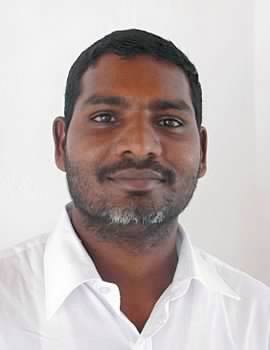
Heavyset, with an average height and a dark face, Dinesh was our guide in Kerala. He grew up in Kochin, his birthplace. Malayalam, the official language of Kerala, was his mother tongue, although he spoke English but with an Indian accent. Over a couple of weeks, we had gotten to know him. Married with two small children; his family surely missed him while he traveled constantly for work. We found him easy-going, affable, personable, and eager to please us.

Everything about him was clean; he wore a clean shirt daily, befitting a professional chauffeur and guide. Although I never asked him, it impressed me how he got his impeccably starched shirts every day. He must have carried many shirts or had them cleaned overnight. Similarly, his car was shiny and always impeccably clean, and the interior was spotless. No objects, like the newspapers we read on the road, were ever left behind. His company’s car was like a jewel to him, and he hoped to buy it soon. Years later, I saw him showing off “his” car on Facebook.

Proud of his country, he showed and described it to us in glowing terms. His work was very important to him, and he related his experience with the English chef Gordon Ramsey collecting recipes for a book on Indian cooking. Dinesh showed us a photograph of Ramsey, his crew, and himself for emphasis. Impressed, Kathy bought a copy of that book in Kerala.


I noticed he was conscious of his class, a reality in some countries, including India. He deferred to others, whom I assumed he considered high-class people. It always happened when we invited him to eat lunch with us. He excused himself by claiming to be busy.


But once, we asked him to take us to a local Indian restaurant, a highway stop. There, we had thali food on grape leaves filled with curries. Looking around, I noticed that most of the people looked like laborers. He did not hesitate to sit with us and explain our food. After we ate with our fingers, local style, we washed our hands in the sink at the end of the dining hall.

At another time, we invited him to dinner to discuss the next day’s plans. He did not want to join us, perhaps because it was a more expensive restaurant. We were forceful and did not take no for an answer. He obliged us. When the waiter came, he gave Kathy and me menus, but not Dinesh. Even the local people knew and discriminated according to what class they were serving.

I requested an extra menu for Dinesh, which the waiter provided. We were all served, but I knew Dinesh was uncomfortable throughout the dinner. He remained silent, avoiding eye contact. Later, I realized we may have asked too much of him by insisting he eat with us. What we thought was normal was not for him.

 After days of traveling with Dinesh, I noticed he did not come into the hotels with us; he dropped us off. I remember the Tharawad Homestay, where he left us with the details of when he would pick us up the following day. Drivers were not permitted to park in high-end residential areas or obstruct driveways. We learned he slept in the car every night.

We were on a tour, and the tour operator paid for all our hotels but provided no accommodation for our guide. He had to find a place to park and sleep overnight. I do not know how he looked so fresh every morning, drove us around Kerala, and provided knowledgeable comments. I follow him on Facebook.

Exploring Alleppey: A Journey Through Kerala’s Backwaters

December 23, 2024

We drove from Munnar to Alleppey in five hours. Our journey through Kerala’s backwaters led us across numerous canals to Alleppey, a city with a population exceeding 300,000. Alleppey district, with over two million inhabitants, boasted a 96% literacy rate and harmonious religious coexistence, according to our guide Dinesh. Hindus comprised half; Christians and Muslims, a quarter each.

Reclaimed lakes around Alleppey formed a backwater area for rice paddies and coconut groves. Manual labor initiated the first reclamation in the late nineteenth century. The second reclamation wave of the early 1900s relied on steam engines, while electric motors powered the final, larger phase of that same century. Reclamation efforts resulted in the canals and rice paddies. Today, the backwater area spans over three hundred square kilometers.


Rice paddies and coconut groves formed the economic foundation of this region. The canals served as transportation routes. Rice barges were the conveyances used to bring the rice to Alleppey; this area is the rice bowl of Kerala. The coconut groves created the coir industry. I was unfamiliar with the word “coir,” but Kathy believed it was identical to sisal, a material her seafaring relatives, including her father, used to craft carpets aboard ships during their downtime. However, sisal comes from a species of flowering plant native to southern Mexico, according to Wikipedia, cultivated and naturalized in many other countries. Like coir, it produces a rigid fiber suitable for rope-making.

In contrast, coir or coconut fiber is a natural fiber extracted from the outer husk of coconut and used in products such as floor mats, doormats, brushes, and mattresses. Coir is the fibrous material found between the hard internal shell and the outer coat of a coconut. Brown coir, derived from mature coconuts, also finds use in upholstery padding, sacking, and horticulture. White coir, harvested from unripe coconuts, makes finer brushes, string, rope, and fishing nets. This material doesn’t sink, so it’s useful in deep water at long lengths without weighing down boats and buoys.

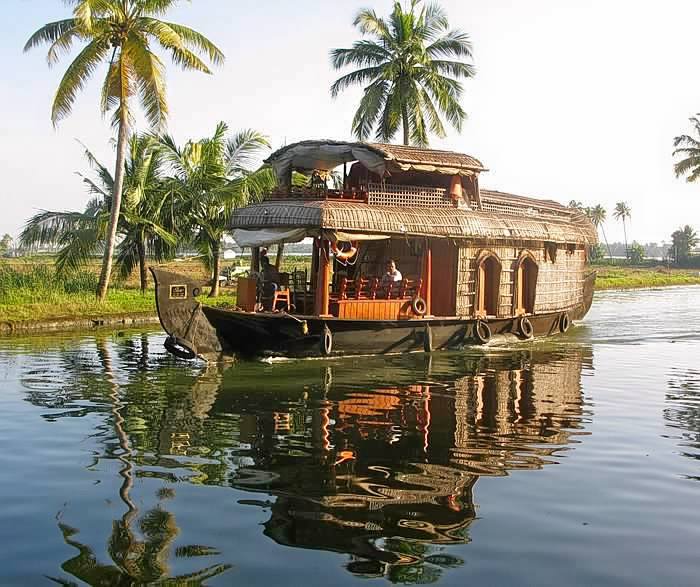
The Alleppey area has always been popular with domestic and international tourists because of its climate. When the rice markets collapsed in the 1960s, rice farmers converted rice barges into houseboats for tourists. There are more than one thousand houseboats now, also called kettuvallams. Coir ropes tied in knots hold the entire boat structure together. This boat uses no nails. Instead, the boat comprises vast planks of Jackwood or Aanjili joined with coir.


Dinesh explained the coir industry has become a significant economic force in the Alleppey area. After giving us all this information, Dinesh took us to the port where we would embark on a Kerala backwater cruise on a kettuvallam. A backwater cruise was our principal attraction when we came to Kerala, and we had grand expectations.

Dinesh left us by the houseboats, docked side-by-side and connected to the port via gangplanks. We started walking toward the kettuvallams, and it was such a major disappointment! At the water’s edge, a dirt path ran alongside the port’s bulkhead. The path extended several hundred meters, with boats moored at the bulkhead and trees bordering the water. Garbage lined the entire pathway. The path was littered with paper boxes, wrappers, and empty soda cans!

I expressed my disgust to Kathy, declaring my intention to leave. Given this awful beginning, what good outcome can we expect from this trip? They advertised Alleppey as notable for its backwater cruises.

But then, a young fellow approached us and asked if we were his passengers. We said that we were waiting for our cruise. We crossed a gangplank to his boat, and the atmosphere suddenly changed. Inside, the boat featured teakwood lounge chairs, a bedroom, and a bathroom, all spotlessly clean. Two boatmates and a chef stayed in the kitchen area.

We departed, gliding along the canal toward a massive lake. Relaxing on this lavish boat allowed me to contemplate the stark difference in condition between the decrepit shoreline and the well-maintained boat. Was it because the coastline and its maintenance are a municipal responsibility, and no money is available to upgrade it? Perhaps boat owners prioritize tourist competition and maintaining boats while lacking resources or desire for approach improvements. I think boat owners should be more keenly interested in a pleasant and attractive approach to their boats.


We were not the only ones getting into the canal system; several houseboats were leaving, and it looked like a busy street with lots of traffic. The blue sky and summer weather were lovely, but many people following the same routine detracted from the trip’s special quality. Despite that, we sat in lounge chairs and enjoyed the scenery. And the entire trip was like that; enjoyment depended on your perspective.

There were minor drawbacks. For example, the boat lacked alcoholic beverages, such as beer, but I could purchase some in the small villages along the way. People complained about the lack of Western channels on the boat’s TV. Television viewing hadn’t crossed my mind. I  took a positive approach and enjoyed every moment.

We cruised until we stopped for lunch by the shore, joining other boats in line. But the lunch was ample and delicious, consisting of local fish we enjoyed. We also stopped and bought fresh prawns for our dinner. It was in addition to the full vegetarian meal included with the trip. The cabin crew provided tea and banana fritters for a snack. We had ample food for dinner, including chapati, del curry, aloo gobi, cabbage, a vegetable salad, and vendakka. The chef prepared the food with local spices and heat.

The waterway offered a view into daily life: women in vibrant sarees washing clothes, children returning from school, and people fishing or traveling by small boat. Observing children playing in the water, we guessed the polluted water must have built up their immunity. We also saw commercial barges moving rice. The people along the shore waved at us.

Travelers we spoke with later expressed different views on the boat tours. Some thought an hour would be sufficient. Others found the trip dull. In contrast, we enjoyed the private time we had on the boat. The boat trip offered a relaxing, mosquito-free evening. We observed the morning rush hour in the tiny village where our houseboat docked. Boatloads of children went to school; others were readied for fishing. The chef served us breakfast of idli with sambar and tea. Then, the captain took us back to the dock to disembark, where Dinesh awaited us.

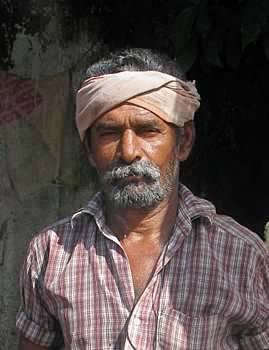
Dinesh took us to the fish market next. I have always liked fish markets, seeing the variety of fresh fish caught in the area, and the Alleppey market was no exception. Photographing the busy fishmongers proved rewarding. Several looked like genuine characters with enormous mustaches and used their long knives to clean fish expertly. Before taking their picture, I asked them if they would mind. Nobody refused.

Having walked around the fish market, Dinesh took us to the Tharavad Homestay, where we would spend the night, leaving us at the door for the evening. He mentioned he could not park overnight in the guesthouse driveway. I suspected hired drivers could not leave their cars in this neighborhood even though we were traveling in an unmarked SUV.

The hosts, Maria and Zac, received us at the homestay, and they were the most hospitable people I had met anywhere. They showed us our bedroom, which was large and spartanly furnished with a bathroom that was not modern but functional. Breakfast was included in our reservation, however, dinner was at our own expense. Although we were the only guests there, Maria provided us with a choice of menus for the night. She was an excellent cook serving local dishes.

During dinner, conversation with our lively and insightful hosts covered all aspects of Alleppey and Indian culture. They were well-traveled, and we discussed politics. The election of a communist government in Kerala surprised everyone, including our hosts, making it one of the first Indian states with such a government. The hosts were involved in the coir industry and had a son in the United States.

The next day, we visited the coir museum and saw lots of coconut remnants used to make the coir in the area. After breakfast, Dinesh picked us up and drove us to Kanyakumari.


Cooking the Turkey for Thanksgiving

October 17, 2024             

It was the Friday before Thanksgiving weekend, and we had no plans or turkey to look forward to. We used to close the cottage this weekend, including a turkey dinner, but the weather forecast was unfavorable this year, so we decided to close the cottage a week earlier. So we were at home with no plans or turkey.

I love turkey and the atmosphere that comes with celebrating Thanksgiving. Preparing meals from leftovers is also a pleasure. To cook a turkey is not new to me; I had cooked a couple of turkeys over the past years, so I told Kathy I’d roast one. Since she has done it many times before with the family and knows the amount of work that comes with it, she said, “Go ahead and do the entire dinner.” I understood her feelings, especially doing it for only two people. My thoughts focused on roasting the turkey, ignoring side dishes then. And that is how the weekend started.

The first challenge was looking for turkey sales. I found the stores sold it not by exact weight as they used to but for a fixed price in a weight range. For example, turkeys were between three to five kilograms, five to seven kilograms, and so on. I did not think much of it, but Kathy thought it was a trick; if you bought one at the upper weight limit, you paid less per kilogram than if you bought it at the lower weight limit. I said no problem and found one at the upper weight limit. I purchased 6.3 kilograms, or close to fourteen pounds, for CAN$ 22 or US$16.

It was a frozen one, cheaper than fresh turkey, that was twice as expensive, and we never buy butterball turkeys. The frozen turkey led me to the next challenge: thaw it in less than two days. According to the cookbooks I read, the rule of thumb was that one needs one day, or twenty-four hours, to thaw four pounds of turkey in the fridge. I did not have three days, so I went to the cold-water method of thawing the frozen turkey, which would take seven hours, according to the cookbooks. I put the turkey in the sink for four hours and then in the fridge for two nights, which did the thawing trick.

On Sunday, I pulled out the neck from inside the bird and looked at cookbooks for the next steps. It was not rocket science; I had to quarter an apple, a lemon, and an onion and put them into the belly of the bird. Then, I brushed the outside with melted butter before placing the dish into the oven.

I felt happy with my progress until I realized some side dishes would also be desirable. Kathy came with me to the store, and we picked up some potatoes, green beans, carrots, and parsnips. She decided she was going to fix the vegetables. But we needed dressing and gravy; both were available at the store in ready-made form. I believe in easy cooking and was going to buy them until Kathy put them back and strongly expressed that those items were way too expensive and she could fix both for a fraction of their cost. And that was that.

With both of us working in the kitchen, we took a moment to reflect that our family lives in the States and cannot join us for dinner when we have six kilograms of meat. But, of course, US Thanksgiving will come soon, at the end of November, and we usually join one of them for the celebration.

Then we considered who of our friends would be in a similar situation and dropped them a short note asking if they were alone for Thanksgiving and that they should consider joining us for dinner. It turned out that they were either traveling or were out of town visiting family; at any rate, it was short notice, and we did not expect positive responses.

In three hours, I took the golden-brown bird out of the oven and opened a bottle of bubbly.

It was a great, chaotic weekend deciding to cook a turkey on the fly. But it felt good to end the summer and start the fall, symbolically, with this dinner; the weather turned cool and windy. With the cottage closed, we will now concentrate on the garden at home: covering the outdoor furniture, clipping back the bushes, raking up the leaves, and cutting the grass again. The fulcrum for this change-over was the Thanksgiving dinner.

The Power of a Throwaway Comment

October 7,2024

It is always a treat to visit with an old friend, especially one from my university days, which, in my case, goes back decades. And especially those friends I have not seen in years who live far away from me. But that happened in June of this year when we visited my friend in Portland, OR. I last saw Levente over twenty years ago. And it is always amazing that when we see each other, we talk with each other as if time has not passed between our visits, as if we continue with our conversation from yesteryear.

When I phoned him about our upcoming visit, he surprised me with his solicitous comments about the foods we like, the wines we prefer, and what we would like to see in Portland. I assured him we are very flexible and enjoy all kinds of food. Depending on his available time, we would enjoy quiet conversations about our shared experiences at the University of British Columbia.

Levente welcomed us warmly in the same house we visited over twenty years ago. He bought this house when his job took him to Portland from Vancouver, British Columbia, and kept it when he moved to Huntsville, AL, with his job for many years. When he retired, he moved back to his house in Portland, and now, he enjoys the West Coast lifestyle and mild weather.  

We accepted his offer for lunch, and he began preparing for it as a management consultant, that he was for his career. “I am going to organize lunch,” he said, explaining that he’d open the fridge and see what cheeses and cold cuts he would find for us. Then, he offered a variety of breads and asked if anyone was vegan. And, of course, there was a choice of coffees that he said we could fix on his machine after describing how it worked.

I was surprised at his deliberate lunch organization, especially when he followed up by setting the table formally. At home, we usually consume an informal lunch with leftovers or whatever is quickly available.

After a day of visiting the famous Japanese gardens in Portland, we returned home to a surprise. Levente, it turned out, was going to cook dinner. Seeing him with ingredients, a cookbook, and pots on the stove was a revelation. Given his previous career, I couldn’t help but ask when he had started this hobby.

His wife answered my question with a few words. Having cooked for the family for decades, she was bored and tired of deciding on a menu every day and suggested to Levente that they share cooking: she cooks a week, and Levente cooks the following week. So, how did this idea go down? Levente considered the proposition as a retired management consultant, thought it was fair, and started cooking every second week. He said it was tough slogging for a few months, but following cookbooks with help from his wife, my old friend’s skill level improved to preparing entirely satisfactory meals.

Our conversation about Levente’s cooking arrangement was brief, but it left a lasting impression. I knew our kitchen dynamics were about to change, and I was ready to embrace it. My wife didn’t take long to broach the subject, and I was more than willing to go along with the idea.

I sometimes prepare breakfast, lunch, and an occasional dinner in our household, following recipes. My meals are simple compared to my wife’s excellent meals; she is a superb cook and enjoys cooking when she has the time. In addition to meal preparation, I also share doing the dishes. The idea of sharing dinner cooking was infectious, and if that idea worked for my friend, it should also work for us.

The idea materialized upon our return to Ottawa. At first, my wife continued to prepare the main meal, and I did some breakfasts and lunches, but one night, Kathy was tired and said it was time for me to take over for a week. I said, “Alright, but my meals may be simple.” She said she did not care; I could even bring home take-out foods. I said, “Alright, I’ll do the next five days’ dinners.”

I agreed to this arrangement because many ready-made foods are available now, so I thought providing five-day meals would not be difficult. Much of the grocery shopping is my territory, and I know my way around most grocery stores in our area, including Costco, where shopping is almost fun with all the samples offered.

My limited cooking skills have produced soups (I have made vegetables, cabbage, and lentil soups), green salads, sheet-pan chicken, and baked fish (I like Atlantic salmon and tilapia from Costco).

The first few days went well with me preparing the meals. Then Kathy joined her cooking club the next night, and the following days, we closed the cottage for the season. But we’ll likely proceed as agreed to, in spurts.

Preparing a dinner was new to me; I have done it. What was new was that my friend from college described how he and his wife share cooking, and a brief conversation on this subject suddenly made a massive difference for my wife and me. It gave a legitimizing impetus to pursue the sharing of the meal’s preparation more formally – all because of a throwaway comment by my old friend’s wife.

Is Touching Wrong?

January 16, 2024

The service at our favorite Sunday breakfast place was disappointing today. Usually, the hostess welcomes us, leads us to a table of our choice, and in a minute a waitress appears with coffee, ready to take our order.  Not today. We sat down and waited and waited.

Getting impatient to get our morning caffeine fix, Kathy asked a waiter walking by if we could get some service. In another five minutes, a waitress appeared and asked us if would like some coffee and said she would be back in a minute to take our orders. After a rather long time, coffee materialized on our table, but no order was taken.

In the past, the waitress asked if we were ready to order when delivering the coffee, but not this time. Since we have been coming here for years, we know what we like and order when the waitress appears. This sportsbar with multi-TVs on the walls showing hockey and other games, is doing phenomenal breakfast business on Sundays, and ordering early gets our food on the table before finishing our first cup of coffee.

Other customers came in and sat across from us and our waitress came with coffee and asked if they were ready to order while we were still waiting. That was upsetting; we were there long before the new customers and several others in “our zone” had even come and had waited patiently for service, assuming that the waitress was busy with other customers.

To get the waitress’s attention in the loud buzz, instead of shouting, which would have been impossible anyway because of the din, Kathy tapped the waitress’s arm. That did get her attention, and she turned around and told Kathy in an abrasive tone: “Do not touch me”!

Her reaction and tone of voice surprised me, but we asked her if she would take our order before filling the others. I also told her that the service today was inferior to what we were used to at the restaurant.  Offended, she claimed that she had other tables to serve as if we did not know that and as if that were an excuse for the poor service, without so much as an apology for overlooking us, which would have been understandable.   But then she hustled off to place our order in the kitchen without going back to the other customers to take their orders.

She never came back after this incident to fill up our coffee cups but hustled around a few times filling the cups of the other customers all around us. She studiously avoided making eye contact with us.

Another waitress came to fill up our coffee and delivered our orders to our table.  The second time she came to refill our cups, I asked her if she was now our waitress waitress. She seemed surprised that we did not know but confirmed that she was, and offered to fetch the manager if we had some issues with the service today. I had the impression that there was more to the story from the waitress’s comment.

We said “Sure”, and the manager appeared in a minute and profusely apologized for the service today, explaining that our first waitress “felt uncomfortable” by Kathy touching her arm and asking for another waitress. A friendly discussion ensued, and we assured her that we had always enjoyed our breakfast experience at the restaurant up until today. On leaving, the manager touched both Kathy and me a few times on the arm in a friendly, reassuring manner.

Although possible, I cannot believe that a young woman, a waitress doing her job, touched by someone who could be her grandmother, would feel uncomfortable by the physical contact. In a busy restaurant, there are ample opportunities for physical contact, intentional or not. I rather think that she took offense at us for having the temerity to ask a waiter to get service, implying that she was not doing her job.

Although we enjoyed our breakfast after the second waitress took over, what bothered me was the expressions used in this incident: “Do not touch me” and “The touching made her uncomfortable”. I have heard many stories recently taken up by human rights commissions about physical, psychological, and sexual abuse, bullying, discrimination, and similar accusations. I could see this young waitress following up on an incident like this and creating a huge hew-haw for nothing. Where do these young people today acquire this attitude of righteousness, to give expression to their dislike of being told to do their job? She was slow in providing service and wrong in not serving clients in the order they came in. Surely one can make mistakes, we all do, and the simple solution is to apologize.