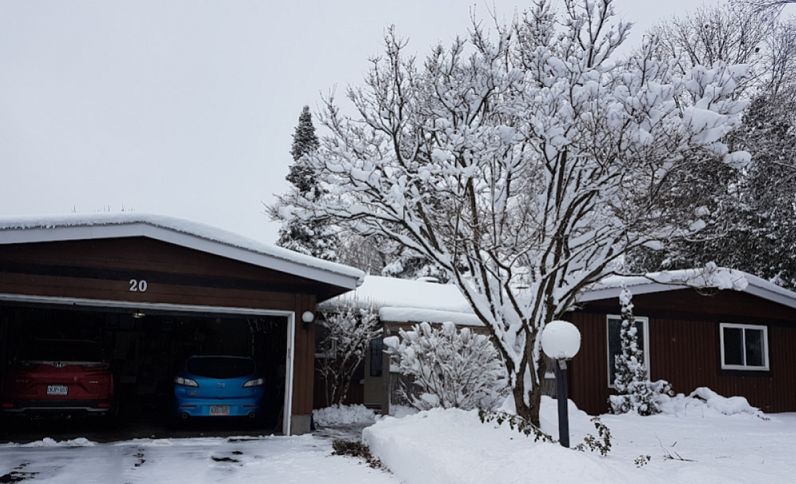
The Death of the Single-Family Home on a Quarter-Acre Lot

February 3. 2023

The house on a quarter-acre lot, which has been the Canadian dream, is under vicious attack. The quarter-acre lot in planning terms is the R1 zone, which occupies over half of the land of Canadian cities. In Ottawa, the R1 zone occupies over 50% of the land; in Toronto, Calgary, Edmonton, and Vancouver, it is over 60%, while in Montreal it is 45%.

But the R1 zone is “exclusionary” cry social advocates, citing the shortage and unaffordability of housing, to absorb people arriving in Canada’s cities from the hinterland, and from abroad. R1 is the culprit and therefore, it must be eliminated to permit higher densities, putting two and three dwellings on the quarter-acre lot.

But how can the R1 zone be “exclusionary” when more than half of the land used in cities is zoned R1? To me, the word exclusionary conjures up images of elite golf clubs; high-end tennis clubs, and similar facilities with entrance requirements that a minority of people possess. And by a minority, we usually talk about the “top” five percent or even the top one percent of people.

In 2016, fifty-three percent of dwellings were single-family detached homes in the R1 zone in Canada, and I would not call this metric exclusionary. The rest of the Canadians live in apartments and condominiums.

I realize municipalities could use zoning for excluding certain groups of people by specifying  minimum lot and house sizes, which could make purchasing a house unaffordable for some people. It happened to blacks in parts of the United States (until it became illegal to do so), but I have seen nothing in Canada to illustrate that zoning has been used to exclude a specific group of people from a community.

I studied city planning at the University of North Carolina where Professor Chapin wrote and taught the classic and long-used textbook “Urban Land Use Planning”. According to him, zoning has been a tool to regulate development, generated by employment growth, creating a need for housing, schools, and commercial development.

We have been fortunate in Canada to date, being able to expand the urban boundaries of our metropolitan areas, to provide for growth and reasonably priced housing. Now, suddenly, we find that environmental concerns, greenbelts, and natural boundaries like water and mountains constrict some of our cities concurrent with our radically exploding immigration intake, creating an unprecedented demand for housing.

The government solution to the housing crisis is to densify our communities, and one approach is to permit the doubling or tripling of dwellings that occupy half the land of our cities. And that is the R1 zone. Conclusion: it has to be done away with. Ontario recently introduced legislation to triple the population of the R1 zone by allowing three dwellings on the quarter-acre lot instead of one, starting in the summer of 2023.

I think that by doing so, we’ll destroy some of our attractive and historical districts. Allowing three dwellings where there is one now will lead to a haphazard and unsightly streetscape. Instead of the usual one car per dwelling, we’ll have four of five cars on the same piece of land and lacking parking space on the quarter-acre lot, on the streets. Traffic will increase on roads designed for low-density residential districts. Schools will have to be renovated to serve more children on limited sites.

So, you ask, what is the solution for the burgeoning demand for additional housing? I think that we’ll have to develop some new towns and/or attract our future development into peripheral small towns around our metropolitan areas.

Failing that approach, I suggest that densification in our single-family communities should be allowed gradually in places where the installed infrastructure permits additional development, or until after governments build the required infrastructure.

But the demise of the single-family dwelling on a quarter-acre lot has already started. In my community, doubles have replaced single-family units. In one situation, someone purchased two lots, demolished the homes on the land, and constructed three units. These small-scale redevelopments, to date, have bordered our community, but I foresee some enterprising homeowners in the middle of our community replacing their dwellings with a duplex or triplex, creating increased traffic and destroying the family-oriented nature of the community.
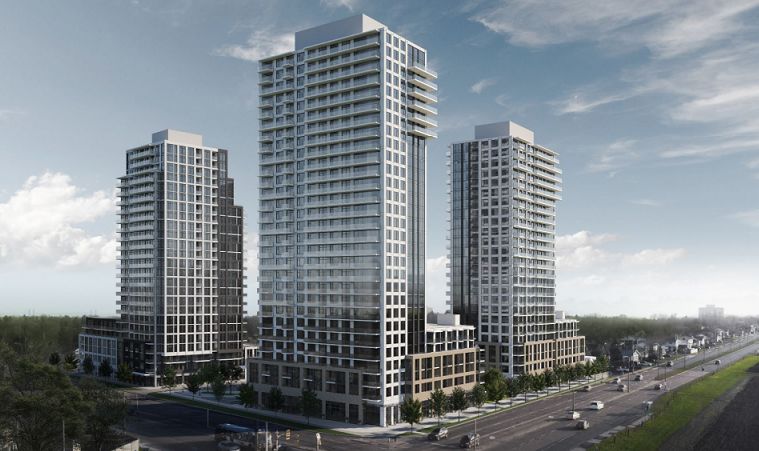
Towards Solving the Housing Affordability Gap in Ottawa: The Vacant Unit Tax

January 15, 2023

Can a family afford to buy a house in Ottawa? The average family income in Ottawa is $80,000. If they had the money for a 20% down payment for an average Ottawa home costing $620,000, the monthly mortgage cost would be over $2,000. In addition, they would have to pay for utilities, food, and other living costs. The other option, next to buying, would be to rent a house or an apartment, and the family with two children would pay a $2,500 monthly rental cost (a house or a 3-bedroom apartment).

I think there is an affordability gap in Ottawa, or, there is a shortage of housing. Same thing. Economics teaches us that if we increase the supply of a product, it may decrease its price. Home builders built ten thousand dwellings in Ottawa in 2022, a record, but not enough to satisfy demand. Are there other options to increase the supply of housing?

The City of Ottawa thought of another way to increase the supply of housing and introduced a “vacant unit tax” (VUT) on January 1, 2023. There are 20,000 vacant units in Ottawa, five percent of the housing stock. Carrying the higher cost of an investment property may motivate owners and investors to rent or sell their vacant units, increasing the housing supply, and reducing its cost.

The tax is one percent of the assessed value of the property if it is vacant for over six months of the year. Although some people with deep pockets may pay the tax, others would sell or rent it out, perhaps to family members to avoid paying the tax.

How will the City of Ottawa identify vacant units? Following examples in Toronto and Vancouver, with similar taxes for vacant investment properties, Ottawa issued a form letter to all property owners asking them to declare whether their property is their prime residence, rented or vacant. We must submit the declaration by the middle of March. Failing that, the tax is added to the property tax the following year.

What happens if owners claim they rent the property, but it is vacant? How will Ottawa follow up and audit, and enforce the VUT? Would the City check water, gas, and electrical consumption for the dwellings? The City has not disclosed how they intend to audit and enforce its new tax; it could be an arduous process.

The City projects to raise seven million dollars a year from the VUT, which translates into over 1,100 dwellings subject to the new tax ($7 million is one percent of the assessed value of the vacant homes averaging $620,000).

It appears the City is inconveniencing 100 percent of property owners by requiring a declaration to increase the supply of housing by 0.3 percent (1100 units added to the existing 380,000 occupied units). Is it worth inconveniencing the people of Ottawa for such a small gain? Is this just a tax grab, impacting middle-class people?

What I find more objectionable is the creeping regulations limiting our freedom; why could I not have two homes and have one empty without being taxed for it? For example, I could use one as my primary residence and the other as an office or a studio or the guesthouse for visiting family. Or I could live downtown, for the winter, to enjoy the cultural facilities there and move to an ex-urban area for the summer, where I could have a large lot with my vegetable garden. Would this tax encourage families to put one house in the husband’s name and the other in the wife’s name? And both could claim their houses as primary residences while living in one? What is wrong with a two-primary-home existence?

And creeping regulations could go further: following up on the logic of the VUT, Ottawa may prescribe additional living standards. For example, you may be eligible for five hundred square feet of living space per person or one bedroom per person. And come up with the LUT (large-home unit tax). If they can regulate that my dwelling must be occupied, what is stopping them from deciding how much space I am entitled to?

Reflecting on the increasing regulatory power of the City, I thought of the large house we and my neighbors occupy. Yes, my street has large homes with four or more bedrooms and multiple bathrooms occupied by two people; the children are gone but the owners are comfortable in their long-term homes, with no intention of moving or downsizing.

I was in my large basement office filling out the VUT form, thinking that the VUT may not be the efficient answer to the housing affordability gap. Mortgage rates, lack of skilled labor to build houses, and low wages may be more crucial factors to tackle before trying to convert a few vacant homes into occupied ones. Just my opinion.

Disappointing Impressions on my Return to Ottawa from Charlotte, North Carolina

January 5, 2023

Driving along Merivale Road, in Ottawa, my neighborhood looked run down and dirty at the end of December. Yes, the melted snow was dirty gray bordering Merivale. And the road was full of potholes. As well, it was overcast and gray and the designless and helter-skelter development that has sprung up over the years along

Merivale showed its age and need for updates.

I felt depressed and found the contrast with sunny Charlotte with its clean, well-maintained streets and shiny new shopping centers dispiriting. I left Charlotte the day before.

Ottawa’s infrastructure has deteriorated, and maintenance declined over the years. For example, the snowplows cleaned a wide swath of roadbed years ago compared to the narrow lane left today after the snowplows drive by.

Has the quality of my neighborhood gone down? You be the judge. I’ll just describe what has been happening in my neighborhood, along with my biases.

First off, we have “cash marts” stores just around us, stores I consider cater to people who are hard up and must cash cheques to survive on a day-to-day basis. Sure, there are people like that, but I thought my neighborhood was a more stable, middle-income area with expensive homes.

A block from us, a cannabis store opened and there are a few more of them, less than a mile away. Again, there must be a market for such outlets, but I did not think my neighbors were into drugs. Maybe I am getting old and out of phase with today’s reality.

I do not cotton to cash marts and cannabis outlets in my neighborhood, especially when we also have bottom-feeder consumer outlets like “dollaramas” and used clothing establishments like “value village”. Should I go further?

There is nothing wrong with cash marts, cannabis outlets, and hand-me-down clothing stores. There is a market for those. But coming back from well-maintained Charlotte where I did not see any of these (cannabis stores are not allowed in North Carolina), driving along Merivale Road, with the dirty snow along the road and navigating around potholes on a rainy, gray day, was a downer for me.

But wait, are there any bright spots? I drove by a plethora of ethnic food establishments, which I like, including Chinese, Japanese, Korean, Indian, Mexican, and Italian, besides traditional English fare. The neighborhood also boasts two sports pubs and takeout places for pizza and chicken. And we have several food store chains near us, three in walking distance (Walmart, Loblaws, and Food Basics). These are great conveniences, along with a Starbucks and a couple of fast food/hamburger places (A&W and Harveys). None of these outlets are fancy; they are run-of-the commercial chains. Maybe I should not say that these are bright spots, but I cannot complain about the lack of eateries or grocery stores in my neighborhood.

But beyond the food scene and the usual gas stations, banks, and a couple of gyms, there are no upscale retail stores or cultural/entertainment facilities at all. The area just does not, or could not, attract fashion, electronics, furniture, or other upscale stores over the years. I am not sure why.

Is my neighborhood on the downslide? Maybe not. Maybe it is in transition; the low-slung, decaying buildings are probably rented at reasonable rates, therefore many family-run ethnic outlets can thrive.

But we also have a sea of parking lots and with the growth of the city, further development via densification will happen. We’ll be looking at mixed highrise buildings, with commercial establishments on the lower levels topped by residential units above.

Last fall, I joined zoom meetings with developers and Ottawa city planning staff, reviewing development proposals. In this process called “public engagement”, the City attempted to draw out public opinion on private proposals. In the proposals we reviewed, there were thousands of residential units in highrise buildings, within walking distance from my place, all containing commercial uses at the lower levels.

I drove home and after thinking about the planned developments I saw in Charlotte; I decided I much prefer those to the haphazard, aging, and messy character of my neighborhood. Unfortunately, my area will change, and I am not sure it will be for the better. I am afraid unaffordable rents in the future may squeeze out my favorite small mom-and-pop food operations, unique in my neighborhood. On that gray day after my return from sunny Charlotte, I felt in the dumps driving along Merivale Road.

The Minister of Immigration’s Foggy Response to my Questions on Inreased Immigration to Canada

December 2, 2022

I wrote to the Minister asking if he considered the impact of his bumped-up immigration targets on the Canadian housing market (where there is a severe shortage) and on Canadian healthcare (which is bursting at the seams).

Although it is desirable to have more immigrants to grow our economy, can we provide housing and healthcare to them when Canadians are experiencing a housing shortage, and millions are without a family doctor?

I received an automatic acknowledgment, promising a response in six weeks if my questions are worthy of a response:

“Thank you for your email addressed to the Honourable Sean Fraser, Minister of Immigration, Refugees, and Citizenship. Please note that all comments and questions are taken seriously, and although Immigration, Refugees and Citizenship Canada (IRCC) cannot provide a personalized response to every message, we will review and consider all comments received.”

“…the service standard for a response to correspondence addressed to the Minister is six weeks if it is determined that a reply is warranted. “

A couple of weeks later, I received a form-letter providing officious government bumph but no response to my questions.

“The Government of Canada is committed to an immigration system that contributes to economic growth, supports diversity, and helps build vibrant, dynamic and inclusive communities. The 2023-2025 Immigration Levels Plan, tabled in Parliament on November 1, 2022, projects continued growth in permanent resident admissions with targets of 465,000 in 2023; 485,000 in 2024; and 500,000 in 2025.”

“The Levels Plan sets out a path for responsible increases in immigration targets to support economic growth and address labour market shortages. Over half of all planned admissions are dedicated to the economic class.”

“In 2022, Canada is on track to welcome 431,645 new permanent residents, and the 2023-2025 Levels Plan builds on this momentum. Increasing immigration will help cement Canada’s place among the world’s top destinations for talent, while reuniting family members with their loved ones and fulfilling Canada’s humanitarian commitments, including on Afghanistan resettlement”.

“For further information, I invite you to read the 2022 Annual Report to Parliament on Immigration.

Ok. There is no mention of the availability of housing for immigrants, or the ability of our current healthcare system to provide healthcare to immigrants.

But wait, I thought there may be more information in the 2202 Annual Report to Parliament on Immigration. So I read the entire report and found the only remotely relevant text under “settlement and integration services”:

“IRCC supports the successful integration of immigrants to Canada through a suite of settlement and integration services. In 2021–22, IRCC funded more than 550 service provider organizations and provided settlement services to more than 428,000 clients. Services include pre-arrival and post-arrival orientation and information services, needs and assets assessment and referrals, language training, employment-related services including mentorship and apprenticeship programming, and services that help newcomers connect and contribute to their communities.” 

Again, nothing on housing and healthcare for immigrants.

Canada’s population of 38 million occupies 16 million housing units, with an average occupancy of 2.3 people per household. Applying this number to the 500,000 immigrants to be welcomed annually in a few years, we would need over 200,000 housing units annually, just for immigrants. But that is the number of units that Canada builds in a typical year. Even if we assume immigrant families double up, the housing shortage would get worse, resulting in even more unaffordable housing prices than we have today. Has the Minister not thought about the availability of housing for immigrants at affordable prices?

What about healthcare? Canada has 2.7 physicians per 1,000 population (in 2021) compared to the Organization for Economic Co-operation and Development (OECD) average of 3.5 (2017 or the nearest year). We do not compare well to OECD countries relative to the number of doctors per 1,000 population.

Applying the ratio of 2.7 physicians per 1,000 population, the half a million immigrants the Minister wants to bring to Canada each year would require 1,350 additional physicians. Would Canadian healthcare deteriorate further due to increased immigration? Would the 2.7 ratio be reduced?

Half a million immigrants annually would require thousands of housing units and doctors if they wanted to live the life that Canadians are used to. The Minister has not responded to my questions on how he would house the immigrants given the already shortage of, and high price of, housing in Canada. And he has not responded how our already overburdened healthcare system would grapple with an annual inflow of half a million of immigrants. Were these subjects an oversight by the Minister? Are we muddling ahead without an analysis of the consequences of our actions?