February 3. 2023
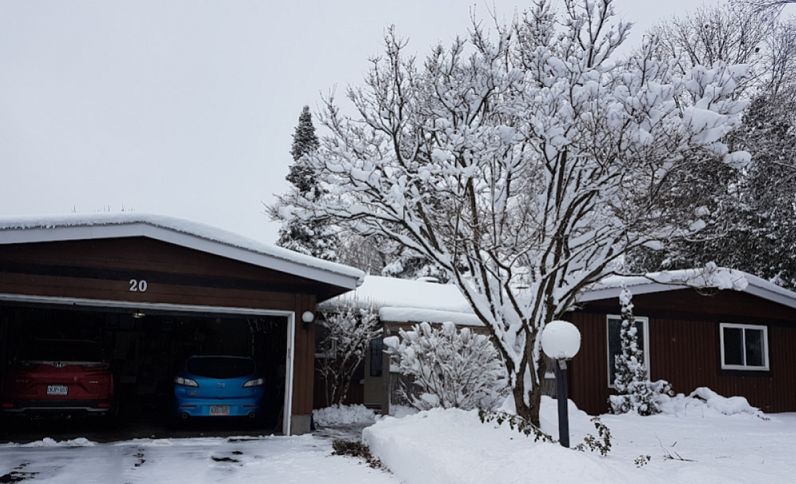
The house on a quarter-acre lot, which has been the Canadian dream, is under vicious attack. The quarter-acre lot in planning terms is the R1 zone, which occupies over half of the land of Canadian cities. In Ottawa, the R1 zone occupies over 50% of the land; in Toronto, Calgary, Edmonton, and Vancouver, it is over 60%, while in Montreal it is 45%.
But the R1 zone is “exclusionary” cry social advocates, citing the shortage and unaffordability of housing, to absorb people arriving in Canada’s cities from the hinterland, and from abroad. R1 is the culprit and therefore, it must be eliminated to permit higher densities, putting two and three dwellings on the quarter-acre lot.
But how can the R1 zone be “exclusionary” when more than half of the land used in cities is zoned R1? To me, the word exclusionary conjures up images of elite golf clubs; high-end tennis clubs, and similar facilities with entrance requirements that a minority of people possess. And by a minority, we usually talk about the “top” five percent or even the top one percent of people.
In 2016, fifty-three percent of dwellings were single-family detached homes in the R1 zone in Canada, and I would not call this metric exclusionary. The rest of the Canadians live in apartments and condominiums.
I realize municipalities could use zoning for excluding certain groups of people by specifying minimum lot and house sizes, which could make purchasing a house unaffordable for some people. It happened to blacks in parts of the United States (until it became illegal to do so), but I have seen nothing in Canada to illustrate that zoning has been used to exclude a specific group of people from a community.
I studied city planning at the University of North Carolina where Professor Chapin wrote and taught the classic and long-used textbook “Urban Land Use Planning”. According to him, zoning has been a tool to regulate development, generated by employment growth, creating a need for housing, schools, and commercial development.
We have been fortunate in Canada to date, being able to expand the urban boundaries of our metropolitan areas, to provide for growth and reasonably priced housing. Now, suddenly, we find that environmental concerns, greenbelts, and natural boundaries like water and mountains constrict some of our cities concurrent with our radically exploding immigration intake, creating an unprecedented demand for housing.
The government solution to the housing crisis is to densify our communities, and one approach is to permit the doubling or tripling of dwellings that occupy half the land of our cities. And that is the R1 zone. Conclusion: it has to be done away with. Ontario recently introduced legislation to triple the population of the R1 zone by allowing three dwellings on the quarter-acre lot instead of one, starting in the summer of 2023.
I think that by doing so, we’ll destroy some of our attractive and historical districts. Allowing three dwellings where there is one now will lead to a haphazard and unsightly streetscape. Instead of the usual one car per dwelling, we’ll have four of five cars on the same piece of land and lacking parking space on the quarter-acre lot, on the streets. Traffic will increase on roads designed for low-density residential districts. Schools will have to be renovated to serve more children on limited sites.
So, you ask, what is the solution for the burgeoning demand for additional housing? I think that we’ll have to develop some new towns and/or attract our future development into peripheral small towns around our metropolitan areas.
Failing that approach, I suggest that densification in our single-family communities should be allowed gradually in places where the installed infrastructure permits additional development, or until after governments build the required infrastructure.
But the demise of the single-family dwelling on a quarter-acre lot has already started. In my community, doubles have replaced single-family units. In one situation, someone purchased two lots, demolished the homes on the land, and constructed three units. These small-scale redevelopments, to date, have bordered our community, but I foresee some enterprising homeowners in the middle of our community replacing their dwellings with a duplex or triplex, creating increased traffic and destroying the family-oriented nature of the community.
 andrasthehun.ca