Exploring the Ismaili Imamat: A Cultural Landmark in Ottawa

June 13, 2025

The Canadian Headquarters of the Aga Khan, known as the Delegation of the Ismaili Imamat, is situated at 199 Sussex Drive in Ottawa. The Ottawa Imamat itself is a secular building. However, the Aga Khan serves as the spiritual and hereditary leader of the Nizari Ismaili branch of Shia Islam, tracing his ancestry back to Muhammad.

The Delegation of the Ismaili Imamat Building on Sussex Drive

The Aga Khan once noted that, in the West, religion is often viewed separately from social and economic initiatives. In contrast, the Ismaili tradition sees helping the poor and fostering connections between people and cultures as integral to the practice of religion.

Sussex Drive, often referred to as the “ceremonial route,” is also home to the embassies of Kuwait, Saudi Arabia, France, and Japan. The award-winning National Gallery, designed by Moshe Safdie, is located nearby, adjacent to the Canadian Mint and across from the Notre-Dame Cathedral Basilica. Additionally, the Prime Minister’s official residence is located at 24 Sussex Drive, which is currently awaiting renovations.

The arrival of the Ismailis in Canada goes back to Pierre Trudeau, a friend of the Aga Khan IV, invited the Ismaili community to Canada when Idi Amin expelled them from Uganda. Currently, approximately 2,000 Ismailis reside in Ottawa and around 80,000 across Canada, out of a global population of approximately fifteen million.

The architecture of the Imamat left a lasting impression on me during my visit. Designed by the Pritzker Prize-winning Japanese architect Fumihiko Maki, the project originated from a three-page letter from the Aga Khan, in which he requested Maki to design the building. He sought a design concept inspired by the visual qualities of rock crystal, emphasizing its transparency, translucency, and opacity.

Maki and his team carefully analyzed the letter to grasp the Aga Khan’s intentions fully. To gain further insight into the characteristics of a crystal, Maki even brought his wife’s diamond ring into the office to study its reflections from different angles. The Aga Khan’s request was for the building to be mysterious, esoteric, and intriguing, yet aesthetically pleasing, incorporating themes of Islamic architecture.

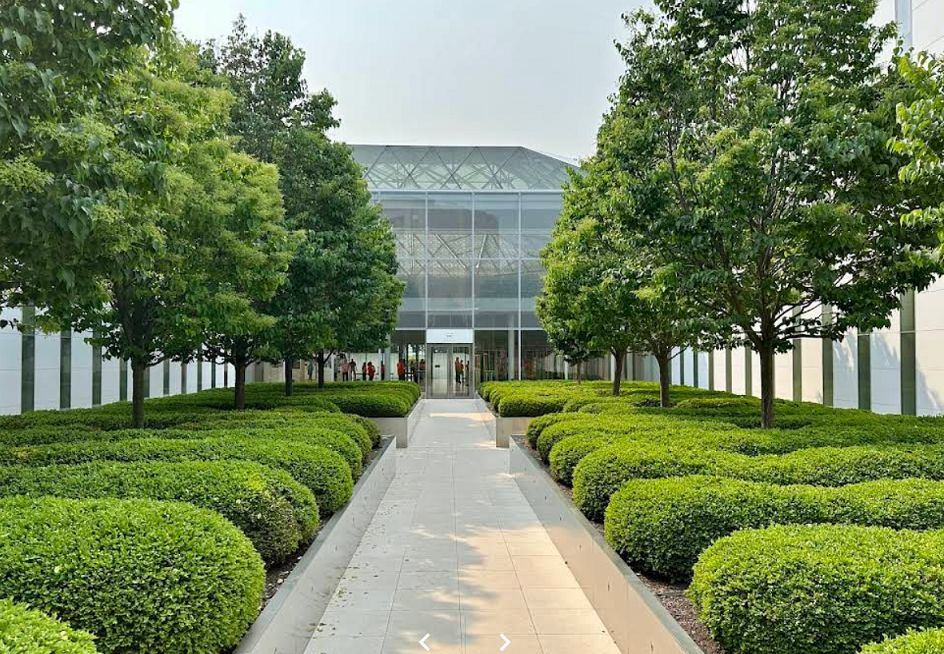
The Imamat features a large atrium crowned with a multi-faceted dome and includes a courtyard that contains an Islamic garden known as a Char Bagh. Additionally, the building provides office space for the staff of the Aga Khan Development Network (AKDN) and serves as a residence for the Aga Khan when he visits Ottawa.

The AKDN operates numerous educational, conservation, social, and economic programs in Africa and Asia, spending approximately one billion dollars annually. For instance, AKDN founded a university in Karachi, which initially focused on Islamic studies but has since expanded to include liberal arts education. Additionally, the organization has launched a microfinance program designed to support small businesses. This emphasis on helping the less fortunate aligns with the objectives of the Ismaili sect.

Related to the Aga Khan’s interest in architecture, he established a triennial architectural competition for works of Islamic design, including residential, religious, and conservation projects.

The Char Bagh

The purpose of the atrium is to host conferences, meetings, and study groups that focus on improving the condition of humankind worldwide. It features a patterned screen made of cast aluminum that reflects themes of Muslim architecture. The atrium’s floor is composed of maple wood tiles arranged in a seven-square pattern in both directions, with each square approximately ten feet by ten feet. This configuration results in a total of forty-nine squares, symbolizing that the current Aga Khan IV is the forty-ninth Imam of the Nizari Isma’ili sect. The use of mathematical concepts also serves as a symbol in Islamic architecture, reminiscent of the mathematical ratios seen in the gardens of the Taj Mahal.

The three-layered glass dome, composed of panels in various shapes, illuminates the atrium while diffusing direct light through a patterned layer of glass. The glass panels attach directly to the structural frame without the use of hardware. The design of the dome originated in Toronto, with the glass sourced from Austria, the structural steel from Poland, and the panels fabricated in Germany. The construction was completed in Canada. The multi-sourcing of the dome represents “pluralism,” a core principle of Ismaili Shia philosophy.

When I visited the Imamat, I felt relaxed as if I was at home. The parquet-like maple flooring created a warm ambiance, and the filtered lighting was visually soft. The hexagonal pattern of the cast aluminum screens hanging around the walls added a sense of enclosure and intimacy. People were seated around the perimeter of the atrium on large, comfortable couches, enjoying the peaceful atmosphere.

The acoustics in the atrium were excellent, even with many people conversing. The wood floor, screen wall, and triple glass ceiling effectively absorbed sound. The gentle buzz of conversation in this relaxing environment was pleasant, leading me to reflect on the life of Aga Khan IV, who passed away in February 2025.

I learned from the tour guides on the floor that he was born in Switzerland and held citizenship in that country, as well as in the UK, France, and Portugal. He was also an honorary citizen of Canada. In his youth, he was part of the Iranian Olympic skiing team and later earned a degree in Islamic studies from Harvard University. Throughout his life, he became a prominent horse breeder and achieved significant success in business, with his estimated wealth reaching around $12 billion as of 2024.

If you find yourself in Ottawa, I recommend visiting the Imamat not only to appreciate its stunning architecture but also to gain intellectual insight by learning more about the Ismaili community.

My Impressions of Three Frank Lloyd Wright Houses

December 1, 2024

Frank Lloyd Wright’s Martin House in Buffalo, built in 1904, would inspire any young man seeking a career in architecture (Darwin Martin was the CEO of the Larkin company). Stepping from the entrance porch, sheltered by a low overhang, into the lobby with a much higher ceiling conveyed a sense of warmth as if coming in from the cold outside. A massive fireplace dominated the right side of the lobby. A pergola, visible through a stained glass window, pointed towards the coach house. Entering, the lobby was dark with the surrounding walls made of sculptured stonework, using local materials.

The house layout was logical and straightforward; the reception room for entertaining guests opened on the left of the lobby. On the right was a large and extended room divided into the dining area, the living room, and the library at the other end. What gave elegance to all the spaces were windows all along the walls facing the outside, with colored patterns embedded in them. The windows illuminated the rooms and allowed occupants to view the surrounding landscaping designed for viewing from inside. Walking through the rooms was very comforting; I wanted to sit in the living room and enjoy the view through the windows.  

FLW was a total architect, designing not only the outside but also the inside of the house with most of the furniture, sometimes conflicting with the client’s wishes. For example, he created the bed for Mr. and Mrs. Martin in the main bedroom. It was esthetically pleasing but so short that Mr. Martin remarked that he could use it only while lying diagonally across the bed. Mrs. Martin had real trouble with the bed and decided to move to another bedroom with a larger bed in a few months.

Another example of the architect pushing his ideas was the grand piano the Martins wanted in their living room. FLW demanded that the piano be made of a specific wood to match the room’s color scheme. The piano would have taken a long time to manufacture and was so expensive that the Martins decided to buy one from a store, ignoring its color.

The design of the library floored me, I didn’t see any books. The books were in casbinets, designed by the architect, that swiveled to provide access to the books. It also surprised me that the library was furnished with a large table in the middle, against which were two bench seats facing away from the table on opposite sides. It seemed as if the architect did not want people to face each other when reading.

Impressed by the Martin House, we saw another FLW design, “Fallingwater,” a summer home for the Kaufman family of Pittsburgh, of department store chain fame. Fallingwater is one of FLW’s best-known designs, with a waterfall running through the building, built in 1936. Expansive balconies overhang cascading water; used in a famous building picture. The Kaufmans had one son, and the humongous living room was the most striking impression I had of walking through the summer house, created for only three adults. It was a vast open space with a few chairs and a massive balcony up front overhanging the waterfall. Windows covered three sides of the room. Against the back wall was a dining table of ordinary size with four chairs dwarfed by the oversized living room.

After seeing the main level of the house, the guide took us upstairs. Curiously, the staircase leading to the bedrooms had bookshelves; I understood that the son loved reading and insisted on having open bookshelves along the stairway and in his room, a design the exact opposite to the one in the Martin House library. However, his creative furniture design was evident in all the rooms; FLW designed a lamp for the night tables next to the beds with a vertical V-shaped wood construction that could be swiveled to throw light on a book when one read in bed. Equal attention was paid to window design; corner windows could swivel to open to let in air from two sides of the house and let the sound of the waterfall in from below.

In contrast to the two large houses designed by FLW, the Martin House and Fallingwater, we visited a 2.100 square foot Kentuck Knob, close to Fallingwater, also designed by him. The project was built in 1956 for the Hagan family for $90,000, who made their fortune in the dairy business.

The critical elements of the typical FLW style are all here: the house growing out of the land, situated to take advantage of the landscape, bringing natural elements into the house, and using local materials. It has long horizontal lines with a large overhanging roof. However, the design style has changed; the house has hexagonal instead of rectangular rooms. Designed by FLW, a long bench runs along the back wall of the elongated hexagonal living room, facing a window wall that overlooks the valley below. Sitting on the bench provides an excellent view of the panorama below. There are a couple of uncomfortable-looking chairs designed by FLW in the otherwise empty room. The long bench along the back wall was bizarre; would ten people sit side by side to watch the view in front? Not likely. A living room for me conjures up arrangements of chairs in a circle or in small groupings, where intimate conversations could take place.

Extending from the living room along the window wall, the dining room provides access to the kitchen and bedroom wing. The hexagonal kitchen features a twelve-foot-high ceiling and a skylight. The original design for the kitchen did not please Mrs. Hagan, who was an excellent cook and liked cooking meals (there were no servants in this household) and insisted that the kitchen be enlarged. The redesign narrowed the hallway connecting the kitchen to the bedrooms. The idea crossed my mind that FLW did not cook and did not have a high opinion of women to design such a miserly kitchen, especially without an outside window. That would be standard today.

Kentuck Knob is now owned by Lord Palumbo, a British property developer from London, England. Even at 89, he still visits the guest house on the property for a month every year. Today, according to our guide, this building, with a market price of three million dollars, would cost one million dollars to build. Kentuck Knob is meticulously maintained and in excellent condition, operating as a tourist attraction.

These buildings, and others designed by FLW, are national treasures, the product of arguably the most talented American architect. The architect’s ability to seamlessly integrate the last two buildings into the hillside, while capturing the best views of the surrounding countryside, really impressed me (in contrast, the Martin House sits on a suburban lot). The architect’s meticulous attention to detail, designing everything from the exterior and interior to the furniture, really impressed me.

Designing all the furniture came with some consequences, though. All three houses had surprisingly small bedrooms. As a result, the architect’s design, which included beds, nightstands, and built-in cabinets, made it impossible to use any furniture from the previous home. It’s not surprising that FLW’s strong personality caused friction with some members of his clients’ families.

FLW’s clientele consisted of three wealthy businessmen, all of whom had attained success in previous endeavors. Do people living in architecturally stunning homes experience greater success and happiness? We don’t. know. The only thing we know is that it was expensive to hire a renowned architect. After comparing architect-designed houses to basic shelters during my travels in Asia, the Middle East, and South America, I noticed that most people live in simple homes, making the field of architecture seem not so important in a global context.  

Exploring North Carolina: Vineyards, Memories, and Family

May 15, 2024

Sitting in the sun, shaded partly by an umbrella at Shelton’s vineyard in North Carolina, was hugely relaxing. Helping the relaxation was the Cabernet Sauvignon that we sipped. The food was average: pulled pork on an open sandwich base, or perhaps it was a pizza. I am not sure, but it tasted like pub food, appropriate in the setting.

Driving away from the lush meadows of the Yadkin Valley where Shelton’s grows its grapes, my thoughts turned towards the many times we visited North Carolina over the last few decades, and my memory lane took me back to the first time I drove to Chapel Hill, NC.

That was when the Dean of the Graduate School of City Planning welcomed me with an open smile; Jack Parker welcomed each planning student. His intimate reception touched me, and he generated a feeling that I’d succeed in my studies. It was a competitive program, but I have known no one who failed. The UNC Planning School admitted me for the January session; I applied to many other Ivy League schools, but UNC took me mid-year, and I accepted the offer, not waiting for the other schools to respond. But let me explain how I decided to attend planning school.

After graduating from the School of Architecture at the University of British Columbia in Vancouver, Canada, I worked with a small architectural firm in Vancouver. I lasted six months before getting bored with mundane designs of lobbies for high-rise buildings put up by developers. Another job with an even smaller firm was more interesting: designing a recreation center for a specific location in Vancouver. This project came about as a request for proposals for a competition our firm did not win.

After my brief experience with two architectural firms, I decided that I did not fit the mold of an architect. Architecture envisions plenty of attractive and well-appointed living spaces unavailable for most people worldwide. Architecture is irrelevant to people who have no choice but to tolerate less attractive environments. So, that was the impetus for me to search for a new field of endeavor. City planning appeared to be a related field, so I started applying to graduate planning schools in the fall, which is how I ended up in Chapel Hill in January.

When I arrived, I felt I was in paradise, experiencing southern hospitality and the positive energy generated by, and friendships made with, the planning students. Living at a campus-type university was another positive for me; UBC was a city university where moststudents lived off-campus. In contrast, campus life at UNC was rich with lectures and performances I could attend. For example, at the annual Jubilee Music Festival in the spring, I listened to Johnny Cash while sitting with thousands of students on the ground of the quadrangle. It was a memorable concert. 

Another primary reason North Carolina holds deep memories is that I spent considerable time with my future wife during our second year there. Although we met in Washington, DC, where we both had summer jobs, upon returning to UNC for our second year, we saw each other daily, starting with breakfast in thestudent dining room,Lenoir Hall, when it cost forty cents. And we spent many evenings talking late into the night at the Rathskeller, a student pub in Chapel Hill. We married at year’s end at the Anglican Church on the campus with family and all my classmates in attendance. The audience had a big laugh when the newlyweds left in the car with a colossal ruckus created by the rocks my friends put into the hubcaps of our vehicle.

A career launch and meeting my lifelong partner provide deep roots in North Carolina. But there is more to it. Our three children applied to US universities after finishing high school in Ontario. Although they did get into Canadian universities, they thought going to American schools would be more adventurous, perhaps influenced by their parent’s experience there. The upshot of their leaving Canada was that Tony and David attended UNC in Chapel Hill, while Megan graduated from Duke University in Durham.

They married after graduating from university; the two boys married North Carolina girls and settled in Charlotte and Durham. Further, Kathy’s brother, Huw, retired from Washington, DC to Winston-Salem, near where his wife had grown up. Our recent visits to North Carolina span from Charlotte to Winston-Salem to Durham, all of these locations along Interstate 40, within three hours of driving time.

Innumerable opportunities have existed to visit our children and their growing families in North Carolina, share a vacation, help them move, or see them. Over the years, I wore out several car tires along Interstate 81, driving from Ottawa to North Carolina. However, the visits have also provided opportunities to see the state and enjoy what it offers.

Huw and Judy introduced us to vineyards while driving around Wiinston-Salem. With the decay of the tobacco industry, growing grapes had taken over the rich agricultural soil. My attraction to visiting vineyards goes beyond sipping wines; they happen in areas with lush vegetation on rolling hills, with a lake and a fountain facing the tasting room.

Having visited Shelton’s vineyard, where the wine was tasty, but the food was not the best, we decided to visit Shadow Springs Vineyards with Huw and Judy on our last visit before returning to Ottawa. They do not have a restaurant, and since we do not sip wine without some food at lunchtime, we stopped at the Shiloh General Store in Hammondville to pick up a sandwich.

Amish people run the store, and the owner, Phil Graber, was on cash. I learned from him that the area has over fifty Amish families. Phil and his wife Mary established the store in the early 2000s and expanded it to over thirty-five hundred square feet. The store sells homemade products with fresh ingredients, such as pickled vegetables, dry soup mixes, Amish noodles, pretzels, and crackers.

They made a tasty sandwich for us. I found their order-taking fascinating. You choose on a piece of paper the type of bread, meat, spread, vegetables, and sides you want and place it in a window. Then, they prepare the sandwich and call your name. There was no limit on what you could ask for, and I thought, why not order pulled pork and chicken under meats? And low and behold, my sandwich had both meats!

Armed with our sandwich, we entered Shadow Springs’ tasting room. Judy selected a 2022 Seyval Blancand a2022 Chardonnay while we settled at a table on the lakefront, cranking up the umbrella to provide shade from the sun’s heat at midday. The chatty hostess in the tasting room described how Chuck Johnson, the owner, decided to retire from his corporate job to his home state and look for another career opportunity after missing too many of his son’s ball games. Chuck and his wife Mary went winetasting upon their return to NC and decided that winemaking might be an excellent opportunity for starting a new life. They looked at dozens of farms for sale until they found this piece of land with the proper orientation and soil qualities to make wine. They started making wine in 2005.

And we were not disappointed with their wines. We spent the two-hour lunch sipping wine in sunny weather, sitting outside with a huge fountain making a bubbling sound in the middle of the lake next to us. What a way to spend our last day in North Carolina before returning to Ottawa, where the trees were getting leafy.  

Exploring the Art and Wine at Chateau La Coste

November 1, 2023

A jazz trio played forties tunes on the deck of a vineyard, where we sat down after a tiring bicycle ride in the finger-lakes area of New York State. We relaxed by sampling the wine and listening to the music. It was a fall afternoon with the sun going down, illuminating the vinifera below us. Before leaving, we bought some wine for the night to enjoy at our hotel. These are the type of situations my lasting memories are made of.

The first such memory was when I finished university and helped my younger brother learn to drive when he turned sixteen. When he passed the driving test, I convinced him to drive with me from Vancouver to California. I explained to him that he’d do the driving for practice, and I’d do some wine-tasting on the way. He did not need much convincing. And it was a memorable trip.

More recent memories were at vineyards in North Carolina, where after a warm welcome, the hosts offered lunch in addition to the tasting session. What I liked about these visits were driving into an attractive estate with lush vinifera surrounding us, entering an ornate Italianate building or a large historic mansion where the winemaking took place, and partaking in a guided tour of winemaking before sitting down for the tasting session.

So, when we visited Provence in France a month ago and discovered that Chateau La Coste, a well-known vineyard was on our route, I jumped at the opportunity to visit it and bought entry tickets. Chateau La Coste is famous for art, architecture, and wine. The owner, Paddy McKillen, an Irishman, who bought the estate in 2001, commissioned artists to create artwork in the garden and hired world-famous architects to design the buildings (Frank Gehry, Oscar Niemeyer, and others). So my expectations were high only to be disappointed after the visit. Let me explain.

We approached the Chateau driving through fields of vinifera only to arrive at a large, open, unpaved parking lot, with recently planted trees. By talking to other tourists and asking questions, we found our way to the building where our tour started. Nobody welcomed us, nobody provided directions. It was not a promising beginning.

Our group of eleven people was taken on a guided tour of the wine-making plant. Well, production took place in a building that looked like half a barrel on its side, with interesting finishes, mostly aluminum, but nothing else (designed by Jean Nouvel). To me, it looked like any commercial building, like a Quonset hut, huge, but still only a simple shape, a half-barrel sitting on its side. Is this good architecture? The shape conjured up winemaking barrels, was that the idea?

We pondered the front of the building, listening to the guide, standing on a gravelly field, next to a massive excavation, which, I gathered, was going to be the location for a hotel. The surrounding for the hotel and the plant was not what I expected to be a campus-like atmosphere with attractive landscaping.

Once inside the half-barrel, though, the guide gave a detailed tour of the wine-making process and equipment. Surprising to me were the huge metal barrels holding the fermenting wine; I had seen wooden barrels in other vineyards previously (although, admittedly, the other vineyards were smaller than this one).

Wine tasting, the event we all looked forward to, was next and we entered a small nondescript building. We gathered around a U-shaped table, sitting on bar stools. At the open end of the U was the guide and at the bottom of the U were six bottles of the Chateaus brand.

Talking about the qualities of the first bottle, the guide poured a couple of ounces of wine into a wine glass placed in front of each of us. If you did not like it, you could pour it into a tumbler sitting next to the wine glass. The purpose of the tumbler became more obvious as we tasted the next few wines and became a bit tipsy. I began to pour half of my samples into the tumbler, I wanted to walk out at the end, although I did not drive, Kathy drove in Provence.

The two young Australian couples facing us across the U loved their wine and peppered the guide with questions. The three Israeli tourists next to us enjoyed their wine quietly. The two young women from New  York City talked to each other about the wines. Kathy and I practiced our wine-tasting skills by swirling the wine around the glass, smelling it, and observing the prominence of legs in the samples indicating alcoholic content.

During our discussion with the guide, we learned that Le Chateau produces excellent roses because of the soil in the area. And the wines are not scored for sweetness like we do in Canada. We also found out that of the million liters of wine produced annually, a third goes to North America, a third to Europe, and a third is sold domestically. The guide even mentioned some of the best years for each sample we tasted, should we decide to purchase some.

When we discovered, after sampling all six wines, that the fourth was the most expensive, many of us looked ruefully into the tumbler into which we poured some of it; we were all becoming a bit mellow after tasting four samples. But the sampling was a success indicated by how our conversation had become loud and animated, and as a result, in the end, we all tipped the guide. On the way out I bought a bottle of wine that we liked during the tasting, to enjoy at night at the hotel.

By now it was getting late in the afternoon, and we had to drive to Aix-en-Provence for our accommodation that night. We felt it prudent to eat before driving after consuming so much wine and tried one of the restaurants, set in a lovely garden. We were not disappointed with the quality of the food.

On leaving, we went by the gardens and noticed some of the artwork in the distance. When we tried to walk closer, a guard snapped at us and asked for our tickets. We did not know that we had to pay, we saw nothing indicating that on the way in and assumed that our wine-tasting ticket covered the whole vineyard. It was too late to go back to the entrance to buy tickets, so we left without seeing all the artwork. I understood it would take a few hours to see the artwork and the buildings designed by renowned architects, spread across the large estate. I was disappointed; we had seen parts of the vineyard, much of it under development but missed some of the finished areas with the work of famous artists and architects. Next time we come by, I’ll make sure we have sufficient time to fully explore Chateau La Coste.

My Takeaways from a Graduation at Georgia Tech. in Atlanta

May 26,2023

We drove from Ottawa to Atlanta, a distance of close to 2000 kilometers, to see our granddaughter, Susanna, graduate in architecture at Georgia Institute of Technology.

How could we miss our granddaughter’s graduation? We did not but made me think we have a grandson graduating next year in Oregon; a granddaughter graduating, I think, in Colorado in two years, and another grandson graduating in Virginia the year after. Should we follow this precedent, that would be quite a travel plan for the next few years! Unfortunately, we missed the graduation of our eldest granddaughter who graduated from the University of North Carolina during the Covid shutdown.

Arriving in Atlanta during rush hour, exciting enough, was made even more challenging when we missed our destination, despite using Google Maps on my cell phone. The Google Map showing arrival in seconds just before my wrong turn, suddenly turned into seventeen minutes and a fifteen-mile drive. My four-letter word vocabulary quickly expanded, but it did not help. We had to get back on the interstate and circle back.

In the meantime, my son, Tony, was messaging us inquiring about our whereabouts. By the time we arrived back to where we should have turned left, Tony was standing on the street corner waving to us to be sure to make the left turn to arrive at our hotel, the Midtown Garden Hilton. 

The hotel was within walking distance of the Bobby Dodd Stadium in Atlanta, where the 2023 commencement exercises took place, and we walked to the stadium early in the morning.

The closer we got to the stadium, the more people joined us, forming a veritable migration by the time we stopped at the entrance to the stadium where a metal detector gate let people through, one by one. The only items allowed to be taken in were cameras, cell phones, and wallets, and I noticed that some people sported a new and useful product to enter metal detector gates: a plastic see-through purse carried by women.

The wall-to-wall crowd at the entrance gate exuded enthusiasm, I heard people talking proudly about their offspring getting a university degree from one of the elite institutions in the United States. Many of them were formally dressed while others donned jeans. We wore casual, informal clothing matching the early summer weather.

Once inside, we saw the graduating class sitting in rows of chairs in the middle of the stadium floor, facing the end of the football field, where a covered podium was constructed, above which a huge TV screen showed the action on stage. By the time we walked around the stands to the front, close to the podium, the stadium was a third full of its 55,000 capacity. The buzz in the air was loud and palpable, and we had to shout to communicate.

All the best seats were taken, especially those with a backrest. So, we rushed forward, up a few levels, and then down, trying to find seats from where we could take the best pictures of the President shaking hands with the graduates one by one, congratulating them on their achievement. We even found private boxes which had a good view of the ongoing events, but these rooms were glassed in, and we could not hear clearly what went on downstairs. After investigating the layout of the stadium and searching for good seats, we took seats close to the front of the football field.

Although it was not pronounced, I detected a slight accent listening to university president, Angel Cabrera’s introductory speech. He hails from Spain and received his Ph.D. from Georgia Tech in 1995, a nice elevation from student to president in twenty-four years. The Glee Club sang the national anthem following Dr. Cabrera’s speech.

Harrison Butker, the commencement speaker, surprised or perhaps shocked the audience with his recommendation on what the graduating students should do with their lives: he said they should get married and have a family. Now Harrison is not only an NFL hero, a football player with the Kansas City Chiefs, who wears two Super Bowl Rings, but also a Georgia Tech graduate who played football for the university. But his advice on how to conduct your future life created a stir in the audience; my other two granddaughters, college-age, immediately reacted with: “Who is he to tell me to get married? And you do not have to be married to have a family!”

Harrison’s argument centered on what he called the loneliness experienced by today’s youth, despite the connectedness people think they have through social media. He said you will not be happy with whatever you accomplish unless you share it with someone. To him, the sharing was with his wife and family that motivated him today and made him happy.

I thought Harrison was entertaining when he talked about teamwork and perseverance but disappointed when he brought religion into the commencement address, by recommending marriage. But his comments were no surprise, Harrison is a devout catholic and belongs to a conservative group that promotes the practice of an older version of Catholicism, including the belief that sermons should be in Latin.

Dr. Cabrera thanked Harrison for his speech and wondered aloud, with understated humor, how many marriage proposals would take place today.

The graduates were called onto the stage, to shake hands with the president, and proceed to pose before the “Rambling Wreck”, for an official photo. (The Rambling Wreck is a fully renovated Model T Ford, the school’s mascot that is driven around the stadium before each football game.)

The activity on the stage was projected onto the large screen above it for us to see each graduate walk by with their name on the screen.

I was dumbfounded in the beginning, seeing all the Asian and South Asian names following one after the other; of the first fifty graduates called to the podium, I counted twenty-nine Asian names. What is the ethnic composition of the student body here, I asked myself. According to recent statistics, twenty percent of the students are Asian or South Asian. Then I realized that the first to be called were the computer science graduates.

Much as I tried to get ready to take pictures of Susanna when she came by the Rambling Wreck, I had both my camera and cell phone ready, I missed the perfect shot. The pictures I took are out of focus. No matter. We joined up with her after the ceremonies at the architecture building, and took some pictures of her in her gown, along with family.

To celebrate her life milestone, the family went for dinner at NoMas! Cantina. The Cantina served Mexican fare in a space furnished with artifacts from Mexican artists, all of which are available for purchase. A unique place. I thought it was funky with umbrellas hanging from the ceiling, and masks and artifacts decorating the walls. Consistent with the Mexican theme, we started with a margarita, served in a two-foot-tall glass bottle, bulging at the bottom. It was sufficient for eight people.

The dinner punctuated a successful four years of study. So what is next Susanna? I asked. Following a stint with a large architectural firm in Atlanta this summer, she said she will attend Clemson University in South Carolina to study for a master’s degree in architecture.