Disappointing Impressions on my Return to Ottawa from Charlotte, North Carolina

January 5, 2023

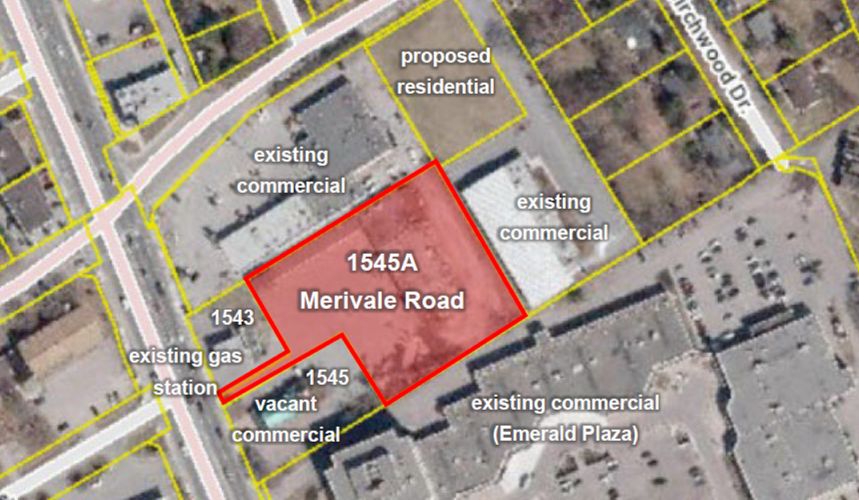
Driving along Merivale Road, in Ottawa, my neighborhood looked run down and dirty at the end of December. Yes, the melted snow was dirty gray bordering Merivale. And the road was full of potholes. As well, it was overcast and gray and the designless and helter-skelter development that has sprung up over the years along

Merivale showed its age and need for updates.

I felt depressed and found the contrast with sunny Charlotte with its clean, well-maintained streets and shiny new shopping centers dispiriting. I left Charlotte the day before.

Ottawa’s infrastructure has deteriorated, and maintenance declined over the years. For example, the snowplows cleaned a wide swath of roadbed years ago compared to the narrow lane left today after the snowplows drive by.

Has the quality of my neighborhood gone down? You be the judge. I’ll just describe what has been happening in my neighborhood, along with my biases.

First off, we have “cash marts” stores just around us, stores I consider cater to people who are hard up and must cash cheques to survive on a day-to-day basis. Sure, there are people like that, but I thought my neighborhood was a more stable, middle-income area with expensive homes.

A block from us, a cannabis store opened and there are a few more of them, less than a mile away. Again, there must be a market for such outlets, but I did not think my neighbors were into drugs. Maybe I am getting old and out of phase with today’s reality.

I do not cotton to cash marts and cannabis outlets in my neighborhood, especially when we also have bottom-feeder consumer outlets like “dollaramas” and used clothing establishments like “value village”. Should I go further?

There is nothing wrong with cash marts, cannabis outlets, and hand-me-down clothing stores. There is a market for those. But coming back from well-maintained Charlotte where I did not see any of these (cannabis stores are not allowed in North Carolina), driving along Merivale Road, with the dirty snow along the road and navigating around potholes on a rainy, gray day, was a downer for me.

But wait, are there any bright spots? I drove by a plethora of ethnic food establishments, which I like, including Chinese, Japanese, Korean, Indian, Mexican, and Italian, besides traditional English fare. The neighborhood also boasts two sports pubs and takeout places for pizza and chicken. And we have several food store chains near us, three in walking distance (Walmart, Loblaws, and Food Basics). These are great conveniences, along with a Starbucks and a couple of fast food/hamburger places (A&W and Harveys). None of these outlets are fancy; they are run-of-the commercial chains. Maybe I should not say that these are bright spots, but I cannot complain about the lack of eateries or grocery stores in my neighborhood.

But beyond the food scene and the usual gas stations, banks, and a couple of gyms, there are no upscale retail stores or cultural/entertainment facilities at all. The area just does not, or could not, attract fashion, electronics, furniture, or other upscale stores over the years. I am not sure why.

Is my neighborhood on the downslide? Maybe not. Maybe it is in transition; the low-slung, decaying buildings are probably rented at reasonable rates, therefore many family-run ethnic outlets can thrive.

But we also have a sea of parking lots and with the growth of the city, further development via densification will happen. We’ll be looking at mixed highrise buildings, with commercial establishments on the lower levels topped by residential units above.

Last fall, I joined zoom meetings with developers and Ottawa city planning staff, reviewing development proposals. In this process called “public engagement”, the City attempted to draw out public opinion on private proposals. In the proposals we reviewed, there were thousands of residential units in highrise buildings, within walking distance from my place, all containing commercial uses at the lower levels.

I drove home and after thinking about the planned developments I saw in Charlotte; I decided I much prefer those to the haphazard, aging, and messy character of my neighborhood. Unfortunately, my area will change, and I am not sure it will be for the better. I am afraid unaffordable rents in the future may squeeze out my favorite small mom-and-pop food operations, unique in my neighborhood. On that gray day after my return from sunny Charlotte, I felt in the dumps driving along Merivale Road.

Interactions with the City of Ottawa

July 17, 2022

I witnessed a bylaw officer exercising his power by writing a ticket for a car pulling away from the curb, occupied by a hurried mother dropping off her child at day camp. On the same day, I also experienced an unbelievably friendly outreach by OC Transpo. Let me describe my day.

Although bylaws are necessary, and I support them, sometimes I find them heavy-handed when enforced to the letter of the law. A case in point is a situation I witnessed yesterday dropping off my granddaughter at a soccer camp by the University of Ottawa, which upset me to such an extent that I wrote to the Mayor of the City, Jum Watson, about it.

“Jim, I witnessed an outrageous incident this morning. Dropped off my granddaughter for soccer camp at the University of Ottawa Minto field on Templeton this morning when one of your meanest and nastiest bylaw officers wrote down the license plate of an unfortunate parent, going to work after dropping off her child. Yes, she was in a no-stopping zone and yes, the officer did what they pay him for. But…

Parents have to walk onto Minto field with the child to register, so one has to park and walk the child to the field, which takes a few minutes. Now I have the time to park a block away and walk back to register my granddaughter, but many parents work and try to drop off the child by putting on the flashers. This poor woman I saw running back to her car and getting in while the bylaw officer wrote the ticket. She drove away, and the officer was still writing the ticket. What a mean-spirited attitude!

I wrote this in the heat of my anger but received the following reply:

Thank you for your correspondence. Your feedback and concerns are always appreciated. I have shared your feedback with the Mayor and his staff for their review and consideration.

There you have it. Courteous and brief but will go nowhere. Perhaps they will copy their human resources group to train bylaw officers to use their power judiciously, considering the individual situation.

The same day, my granddaughter discovered double-decker buses in the city when we drove to her soccer camp. She wanted to ride one. Not knowing which routes these buses run and at what time, my wife contacted our local councilor, who referred our request to OC Transpo, the agency running the bus service. In a couple of hours, we received an email:

 “Hello, Katherine. Thanks for reaching out. We have an idea that might be the most flexible in your needs to get your granddaughter on a double-decker bus. I understand why she likes them. They are very different and fun to ride. It would be much easier to talk a plan through by phone. Please give me a call at your nearest convenience and we can discuss it. “

The upshot of the phone conversation was that a transit supervisor met us at 5 pm at Baseline station and flagged a double-decker bus for us, shepherded us into the bus, and recommended that we take the bus to the end station and wait and come back on the same bus, which took a different route to where we parked our car. The supervisor suggested we sit on the top deck, on the left, so that we can enjoy the view of the Ottawa River. We had a scenic ride that the supervisor recommended, almost a tour of a part of the city. My granddaughter was beside herself.

This was much more than we expected; all we wanted to know was where and when the double-decker buses run so we could take a ride on one. OC Transpo went beyond our expectations to assist us.

Lessons learned? The city provides numerous services; do not judge its performance by any individual activity. In one case, the city was client-oriented, while in the other, it was not.

Are Public Consultations Useful?

June 11, 2022

Are Public Consultations Useful?

Responding to an ad in the local community newsletter, I registered for a virtual meeting to discuss the future of Confederation Heights, an Ottawa employment hub for the federal government. The ad caught my attention, having been a city planner. Reading the ad, I realized this was the second meeting on this, aimed at getting public feedback.

The Canada Lands Company (CLC) was the lead on this project and hired consultants to carry out the work.

Before joining the second meeting, I read a detailed report: the consultants prepared a summary of the discussion at the first zoom meeting entitled “Realize the potential”. I describe the “key themes” gleaned from the meeting further down.

I looked forward to the zoom meeting with interest: they built Confederation Heights in the 1950s and it is time to reevaluate the aging buildings and sprawling parklands with an eye for improvements and future development (the Greber plan of 1949 recommended the idea of an employment hub). Several of the original buildings, built in the 1950s, have received heritage designations, on this 640-acre site.

The site today includes two extensive parks managed by the National Capital Commission, a recreation complex run by federal employees, the Headquarters for Canada Post, and several federal office buildings, some empty. Three four-lane thoroughfares cross the site, as well as a CN railway line.

The meeting started with the speaker acknowledging the Algonquin Anishinabe people, for having lived in the area for a millennium, and for their cultural and other contributions to the Ottawa area. I’ll have to do some research to find out what these contributions are. I am not aware of any.

Government agencies in Ottawa start public meetings with this introduction. I have experienced this in the past few months. In my opinion, it is a cruel hoax that raises expectations but is unlikely to result in anything material for the natives. But the artificiality of this hollow gesture pains me.

Since this was a presentation by federal government officials, the meeting had to be bilingual. I knew that from my previous work in the federal bureaucracy. But the interpretation services failed occasionally, and we had to listen to the English and then to the French speeches covering the same subjects.

The consultants began by describing the multi-year process to develop a plan for the next thirty years. I have trouble with long-range plans, which seldom produce the results desired. Many unanticipated events may interfere. Long-range plans should provide broad options, adaptable to future changes. I look forward to seeing the final product in a year.

The consultants also explained the site has many uses that will not change. The parks will stay and the RA Center and its playing fields are likely to stay along with the designated heritage buildings, which may be renovated for new uses.

Major city roads occupying extensive areas, crisscrossing the site with many access ramps, will have to remain. They will also preserve woodlots. Potential new buildings will have to blend into the roadwork, the woodlots, and the heritage buildings, a creative challenge for architects.

So what were the “key themes” derived from the first public engagement exercise that will guide the future development? The first theme was “mix of use, i.e.., shopping, housing, open spaces/parks, community amenities”. But is not mixed-use what you have in all cities, excluding suburbs? This is the reality of most large-scale urban development today.

The second highest priority theme was “sustainability”. What does that mean? Is it related to the woodlots that may house wildlife? Is there more to “sustainability”?

The next theme was “housing affordability and active mobility”. Would you define housing affordability? My interpretation of affordability is that housing prices are too high for the average income earner. But I am not sure urban planning is as suitable to deal with housing affordability, whatever it is, as government subsidy programs. And active mobility refers to bicycle and walking paths; most communities wish to have those.

The next two “themes” were “making public transit a priority” and “high-quality urban design”. Are these unique objectives or are these, really, objectives that should be taken for granted? Some people with cars may not consider public transit a priority. And others may not have an esthetic eye for urban design. But if you asked people and were given the choice, who would want poor public transit and low-quality urban design?

Are these “themes” anything more than motherhood statements? The same ideas propped up at the second meeting in which I took part, hoping to learn more useful information. Instead, I heard more jargon about “vibrant and diverse” communities with “tree-lined streets”, walking/cycling paths, and underground shopping malls to deal with winters in Ottawa (similar to what is in Montreal).

I wondered about the usefulness of these consultations. Have the consultants learned anything that would be useful in their design of the land beyond dreamy visions? But, perhaps, that was the purpose of these public engagements: to hear the public out on their dreams for the development of this site. The concepts which emerged from the public feedback could apply to any large-scale urban development in any city in North America. I cannot recall any comments that specifically relate to Confederation Heights.

The future of this property will depend on economic and population trends, and the resulting demand for commercial and residential properties. Nobody can foresee these trends with any clarity thirty years ahead.

I think the consultants will identify usable development parcels on the site and propose land uses and building envelopes by zoning regulations (highrise, lowrise, commercial, etc.). When economic conditions are ripe, developers will bid on parcels of developable land at Confederation Heights to do what they do best: propose workable projects with public appeal. Was this exercise anything more than checking the box on: “public engagement”? Just my opinion.

Free Bus Passes for Refugees in Ottawa

May 4, 2022

Ukrainian refugees arriving in Ottawa provided moving stories in the local newspaper, and discussions with friends centered on the ongoing war in Ukraine.

These discussions moved on from the war and focussed on how to help the refugees arriving in Ottawa. It was encouraging to learn the City councillor from Kanata suggested that free transit passes be provided to the refugees for six months upon arrival. Another Councillor expanded the motion to include all refugees, to be fair. The City Council passed the motion.

A friend of mine suggested that with the free passes, the refugees may get to know the city. I asked, “are you saying that they should sight-see?” And I immediately followed up by: “come on! Refugees try to establish themselves and their lives in a new country and new city, and sightseeing is the last thing they are interested in.”

I was a refugee and my first task, beyond feeding myself and finding a place to sleep, was to learn the English language. Being a refugee is a traumatic experience and just getting used to the local scene compared to the old country: the architecture, the people, the way people dress, the food, and the smell of the ocean gave me more than enough to absorb. Sightseeing was a concept perhaps in my dreams in the long run, but certainly not in my first few months upon arrival.

Here is my story: my hostess, a nurse, who had an old, big house in the Kitsilano area of Vancouver, found out that volunteers gave English lessons to Hungarians at the YMCA in downtown Vancouver. My brother and I hustled down there to learn the language a few days after our arrival. Our host gave us some bus tickets to get to the YMCA. We learned English during the day and practiced grammar at night. We did not take or have time to sightsee. It took us a few months to converse in English sufficiently well to give us the confidence to look for a job, which was our next priority.

A few blocks from where we lived was Dueck on Broadway, a large car dealership, and cars intrigued my brother, coming from Hungary where there were few. He approached Dueck and offered to wash cars. They said that would be fine, but he also had to jockey the cars for the wash. So my brother walked to the licensing bureau and in forty-eight hours got his driver’s license. He was happy with his first job in Canada and felt like he was on top of the world.

I followed the job ads in the local paper, the Vancouver Sun, every day. In a week, I found a job with a furrier dragging animal skins to show buyers for their appraisal, hundreds of skins each day. My first huge cultural learning curve was when the appraiser gave me a huge cash tip at the end of his work, which I refused to accept, saying I was just doing my job.

In Hungary, there was no tipping, all people worked for the government (under the communist system), and there was no incentive to work hard for the possibility of additional income. The appraiser looked at me with a questioning eye, but perhaps figured me out by listening to my strange accent and probably improper English. I thought I just did what they hired me for. And this experience was an initial step in my acculturation in Canada.

I worked there until it was time to think about going back to further my education. My brother did the same and eight months after arriving in Canada, we both enrolled at the University of British Columbia.

I remembered my refugee experience when talking with my friend, and it shocked me people have so little understanding of, or empathy for, what refugees go through when they arrive in a country new to them. But why should they? It is totally outside their frame of reference.

Even if sightseeing is an option with free bus tickets, where would you go in Ottawa on a bus? Would you go to the east or west of the city, get off, and walk around? The endpoints of bus routes are not tourist spots. And the bus stops in Ottawa are not within reasonable walking distance of many homes. It could be a tough slog in the middle of a cold winter to walk to a bus stop for people arriving from tropical climates.

And the local people who host refugees have cars and take the refugees to get their health and social insurance cards and take them to medical facilities if needed. Would the refugees ever use the free bus passes?

The provision of free bus passes to recent refugee arrivals made a nice headline in the newspaper and surely, some refugees would use them. But the priority for recent refugee arrivals is to find a place to live; learn the language; get a job and gain a career via schooling or retraining.

Perhaps free bus passes for all the poor would be a better option?