How I Accumulated a Lifetime of Pictures and What to do with Them

February 28, 2024

I am sitting in front of three boxes full of a lifetime collection of pictures, trying to figure out what to do with them. But wait! What about the albums on the shelves? There are twenty-four albums chock-full of photos. But there is more: I inherited my father’s twenty-five albums, including duplicates of the images I gave him. His albums also have pictures he brought out from Hungary, containing photographs of my mom when she was young when they married and then of his three boys and grandchildren growing up. Before I forget, there are also hundreds of slides. What should I do with thousands of photographs and slides of family, travel, and events?

I digitized slides and photos that I considered memorable. Those taken with a digital camera are on my computer, on Google Cloud, with duplicates on an external storage device. I even bought a “photostick” that sucked up all my pictures from the computer to have a portable copy, but it did not have enough storage space. And I produced picture books of our travels using Shutterfly software.

So, should I dump the three boxes? When I looked at some of the old pictures in the boxes, I found some that I could not place in my digital collection. We should go through the boxes to make sure we do not dump some memorable pictures!

Although I initially used film cameras with everybody else, I started shooting exponentially more pictures when digital cameras arrived, making it easy and fast to click, edit, and store images. I bought my first digital camera, an Olympus, at Carleton Place, a small town near Ottawa. I paid over C$1500! That camera sold for half this price a year later, but I wanted to buy a digicam for our trip to Asia in 2004.

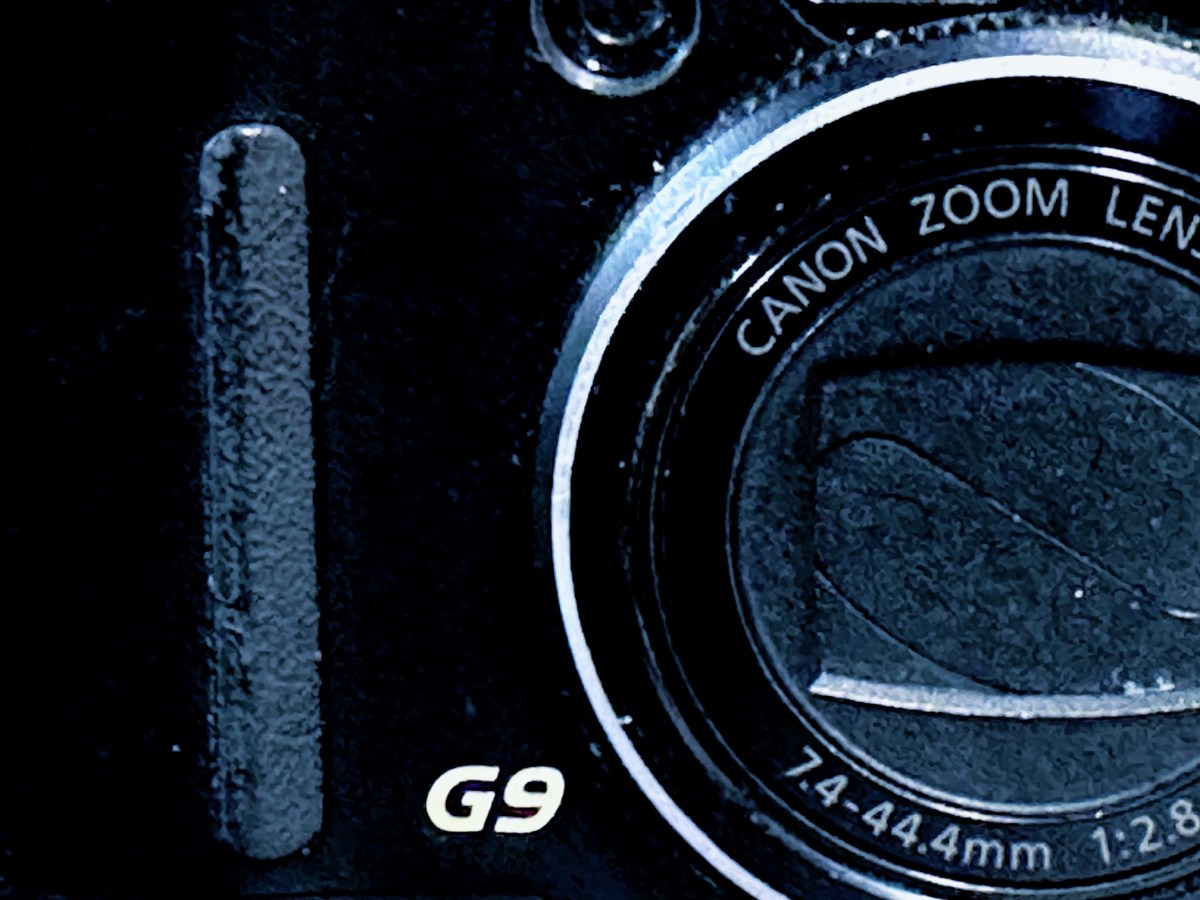
The Canon G9 was my next digital camera; it looked like a small brick and fit into my hand with a comfortable hold but was a bit larger than fitting easily into a pocket. It was light enough to carry it in my hand or backpack.

Then I moved to what I considered a professional camera, buying a Sony SLT-A55V sold as a special deal one Xmas with many filters, lenses, and other photographic equipment. I thought it was a value deal for C$1000. I used that camera on many travel trips by adding another lens that photographers call the “traveling lens,” combining short and long-distance shooting without changing the lenses. This camera came with its bag, which I had to carry in addition to other suitcases on our travels.

The Sony camera was heavy when we hiked the Camino Santiago in Spain. I was also paranoid about being robbed carrying such fancy equipment (I also took the G9 in my backpack as a backup).

An Epson Multi-Media Storage Viewer added to the weight of the camera gear I carried on our travels. I was trigger-happy snapping pictures, and I thought I needed this device to download and edit the images I snapped daily.

But technology never stops, and I began using my cell phone camera, a Samsung Galaxy, for our trip to Pune, India, in 2018. Taking pictures with the cell phone was just too easy and comfortable. As a backup to my cellphone, I replaced the G9 with a Canon G7X Markll, a tiny “pocket” camera with excellent features. It took fantastic pictures and could wirelessly transmit photos to my cellphone. The cellphone and the pocket camera were light and easily concealed, significantly improving on previous travel with the Sony and the G9.

I remember arriving in Pune and discovering that my Galaxy did not work due to getting wet from my leaking water bottle. It was scary. But I read that if you put rice in a Ziplock bag with the camera, the rice will soak up the liquid. The camera worked after twelve hours.

On our trip to Pune, I took all my pictures with my cellphone, a multi-purpose device with many benefits. For example, when someone wanted to know how much a store item cost in Canadian dollars in Pune, I just looked up the exchange rate on the cellphone (I had internet access) and converted the local price into Canadian dollars in between taking pictures. In the Fall of 2023, I upgraded my cellphone to an iPhone 14, going to Corsica, France.

 This cellphone takes excellent pictures with three lenses, making me wonder whether I would use the Sony or the G9 again. Kathy tells me the Sony Digicam still takes better images than cell phones. That may be true. But how good should pictures be? The underlying question is why do we take photographs, and how often do we look at them? I take pictures to provide memories. But after showing them to interested family and a few friends, the images lose currency. They were uninterested when we visited with family and offered to show them some travel pictures from Africa using my projector and screen.

To me, there is historical and personal value in pictures. When I take a picture, I look for a person, a building, or a landscape, and that process sharpens my mind and renders the image memorable. Storing them for the long run has value primarily for me, the picture-taker, while its value diminishes exponentially for others, in my experience.

Thinking about keeping pictures reminded me of my father’s diplomas, which I have. When he passed away, I was the only one of three sons interested in retaining them and dubious if anyone would keep them after me. The same goes for the pictures I took.

Returning to what to do with all the pictures, the digital ones on Google are always available online without storage problems at home. The ones in the albums and boxes take up space and could be pruned and offered to our family, although I do not think they would be interested. They are snapping their own pictures. It is doubtful that we would take them should we downsize. Let me know if you have encountered the same issues and how you dealt with them.

How Did You Meet Your Spouse

November 12, 2022

That was the question at a celebration of a friend’s sixtieth wedding anniversary. We were looking at pictures of the couple’s past activities going back decades when someone popped the question. After the wife related how a “blind date” experience in Montreal led to an amazing sixty years of marriage, somebody spoke up and wanted to know how others, present at the celebration, met. I had no chance to relate my story; the conversation turned to how long it took from meeting your spouse to the wedding.

So here is my story. It started with my first car: a Peugeot 403 that I bought in Vancouver, in the early 1960s. I drove my car to North Carolina to attend graduate school in January 1965.

During the summer of 1965, I, along with two other graduate students studying city planning at the University of North Carolina (UNC) at Chapel Hill, had summer jobs in Washington, DC.

Ray rented a cheap apartment painted all black; it was unbearably hot with no AC. Another classmate, Alvaro, and I rented a room at Hartnett House off Dupont Circle. It was a bit of a flophouse. Our room had a window facing inwards onto a courtyard, with no air-conditioning and no fans.

If you know Washington’s weather during the summer, you know how steamy and hot it can be. Going to the beach one weekend was a wonderful idea, and since I was the only one with a car, I drove all of us to the beach in my Peugeot.

Alvaro invited Kathy to come with us to the beach. Kathy was a graduate student as well, studying economics and political science at UNC.

As soon as we arrived at the beach, Ray and Alvaro went to play the slot machines in the arcade. Kathy and I started talking about school life and hit it off immediately; we discovered we were both newcomers to North America and shared details of our growing up here. In those days we called stealing your friend’s date “birddogging”.

During the summer, Kathy and I got to know each other while discovering Rock Creek Park, going to nightclubs with blaring music, and eating at fish bistros along the Potomac. Our relationship hit a high point when her mother invited me for dinner. She was an experienced cook; the chicken meat just fell off the bones. I enjoyed the dinner and told her so. That pleased her. I was in.

I asked her to marry me three weeks after meeting her and bought her a skinny ring that I could afford from my meagre earnings that summer. But promised that I would replace the ring with a much larger ring as soon as I could buy one; I did so later when my job took me to the Yukon, where I bought her a wide gold ring.

The summer ended, and we had to go back to university. I suddenly got worried that if I spend so much time with Kathy, my studies will suffer. But as soon as we were back at school, we saw each other every day, starting with breakfast at Lenoir Hall, the student cafeteria.

We planned the church wedding for June 7, 1966, right after graduation, in Chapel Hill. But I had a suggestion; let us get married in a civil ceremony before the church wedding. We hustled off to South Carolina so that no one would know of our marriage and got married in the courthouse by a Justice of the Peace. I did not think the props in the courthouse measured up to the significance of the event; a couple of flowerpots did not provide the right background for taking a vow for life. But it was a marriage, and we had the certificate to prove it.

Our courthouse marriage burned an unforgettable memory in my mind; two grad students in a small South Carolina town, far from family, getting married, with nobody around who knew us, casually dressed, and making a contract for life. I thought it was surrealistic but deeply emotional and tremendously exciting.

This unique experience overwhelmed us, and nothing could break our spirits, not even when my faithful old car, the Peugeot 403, broke down on the drive back to Chapel Hill and we had to hitchhike back home. We just left the car on the highway; I took the license plates off it so people could not trace the car back to me. Disposal of the car was the last thing on my mind right after our union.

I cannot describe in words how excited and happy I felt being married, nobody knowing about it, not even my family, and going back to my dorm and Kathy going back to her dorm where she was a student councilor (her dorm students would have been flabbergasted to know what their advisor/councilor just did. This was in the sixties!).

The preparations for the church wedding took some other interesting turns; the pastor at the  Chapel of the Cross Episcopal Church who was to perform the wedding ceremony asked if religion would cause a problem for us. Kathy is Episcopal and I am Catholic. I assured the pastor that religion would not be an issue; I was a non-practicing Catholic and could not see myself launching into heavy arguments over religious doctrines.

Kathy’s brother Huw, whom I just met the day before the wedding, and my friend Ray, took me out for a few drinks; explaining that it was a custom to do so. On the day of the wedding, I got up a bit groggy and searched around for my formal clothing only to find I did not have a tie. I walked down the dorm corridor hall knocking on doors until I found a classmate happy to lend me one. I was ready to marry the second time.

My entire city planning class showed up for the wedding and had a great laugh when I tried to drive off in Kathy’s car. They put rocks in front and back of the tires, and I could not drive off until I got out of the car and cleared the rocks to the laughter of all. And when I drove off, a terrible racket came from the hubcaps; my friends put rocks into them as well. I drove off and stopped a block away to take the hubcaps off to get rid of the stones before driving off to our honeymoon.

Although I did not have the opportunity at the celebration to relate my story, I reflected on a marriage that lasted over sixty years. What I found more significant is that only one percent of couples in the U.S. can celebrate 60 years of marriage. I could not find similar statistics for Canada. I also found that an average marriage lasts fifteen years in Canada. So, a sixty-year marriage is an incredible achievement. Congratulations.