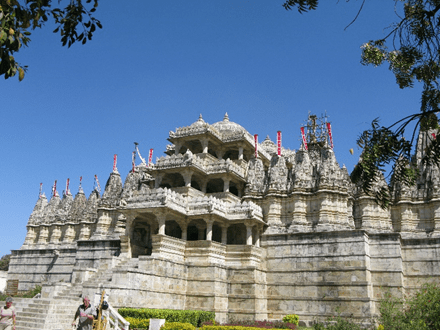
During our journey from Jaisalmer to Udaipur in Rajasthan, India, we stopped to visit a Jain temple in Ranakpur. After a long walk, we arrived at the temple’s entrance. Upon entry, the building’s dress code mandated covered knees and shoulders. Despite the temperature being in the upper 30s Celsius outside, the dress code prohibited sleeveless shirts. Fortunately, we were well-prepared to meet this requirement since we always wore long-sleeved shirts and pants while traveling.
Temple entry required removing all leather items, such as wallets and belts. Jain temples prohibit leather because producing it involves killing animals, directly contradicting the core Jain principle of “Ahimsa,” or non-violence. The temple provided lockers for visitors to store their items, and we had to improvise to keep our pants up after removing our belts.
At the entrance, we saw a sign advising women not to visit the temple while menstruating. This caught my attention, so I decided to research the source of this custom online. A social media comment explained, “In India, people are not allowed to visit a temple unbathed or in dirty or unwashed clothes.” Similarly, temple authorities prohibit any bleeding man or woman from entering, to maintain the temple’s purity and hygiene.
People have practiced Jainism, an ancient religion with more than five million followers for over five thousand years. It is based on the principle of peaceful coexistence and offers guidelines for living harmoniously with others. I was ready to become a follower. Unlike many other religions, Jainism does not worship a God; its followers revere the Tirthankaras. Jainism admires the 24 Tirthankaras—enlightened teachers or saints—for their teachings and wisdom, but does not worship them. They have achieved liberation from the endless cycle of birth and death.
A vegetarian diet is essential for all Jains, reflecting the core principle of non-violence or non-injury. Jains are very conscientious about their food choices. For example, they avoid root vegetables, such as potatoes, because harvesting them results in the death of the entire plant. Many Jains also operate animal shelters throughout India, showcasing their commitment to this principle.
We learned that the Ranakpur Temple is one of the largest and most significant temples in Jain culture, recognized as one of the five most sacred sites for Jains. Remarkably, a dream inspired Darna Shah, a local Jain businessman, to build the temple in the fifteenth century. Of the renowned artists and sculptors he invited to submit designs for the temple, architect Deepak presented a plan that profoundly impressed Darna. Deepak promised to create a temple based on Darna’s vision. The king of the province provided land for the temple and suggested building a town near the temple, which has become Ranakpur.
The temple covers an area of nearly 48,000 square feet. It includes 29 halls and 80 domes, all supported by 1,444 intricately carved marble pillars, each uniquely designed. Four distinct doorways lead into its chambers. These chambers ultimately guide visitors to the main hall, where the statue of Adinath, the first spiritual leader of the Jains, is located. Remarkably, you will arrive in the central courtyard regardless of which of the four entranceways you choose.
The temple’s architecture is so well-designed that artificial lighting is unnecessary; natural sunlight illuminates the entire building. Construction began in 1389 and finished in 1458. The numerous openings and high ceilings kept the air inside significantly cooler than the scorching temperatures outside during our visit.
Frank Lloyd Wright’s Martin House in Buffalo, built in 1904, would inspire any young man seeking a career in architecture (Darwin Martin was the CEO of the Larkin company). Stepping from the entrance porch, sheltered by a low overhang, into the lobby with a much higher ceiling conveyed a sense of warmth as if coming in from the cold outside. A massive fireplace dominated the right side of the lobby. A pergola, visible through a stained glass window, pointed towards the coach house. Entering, the lobby was dark with the surrounding walls made of sculptured stonework, using local materials.
The house layout was logical and straightforward; the reception room for entertaining guests opened on the left of the lobby. On the right was a large and extended room divided into the dining area, the living room, and the library at the other end. What gave elegance to all the spaces were windows all along the walls facing the outside, with colored patterns embedded in them. The windows illuminated the rooms and allowed occupants to view the surrounding landscaping designed for viewing from inside. Walking through the rooms was very comforting; I wanted to sit in the living room and enjoy the view through the windows.
FLW was a total architect, designing not only the outside but also the inside of the house with most of the furniture, sometimes conflicting with the client’s wishes. For example, he created the bed for Mr. and Mrs. Martin in the main bedroom. It was esthetically pleasing but so short that Mr. Martin remarked that he could use it only while lying diagonally across the bed. Mrs. Martin had real trouble with the bed and decided to move to another bedroom with a larger bed in a few months.
Another example of the architect pushing his ideas was the grand piano the Martins wanted in their living room. FLW demanded that the piano be made of a specific wood to match the room’s color scheme. The piano would have taken a long time to manufacture and was so expensive that the Martins decided to buy one from a store, ignoring its color.
The design of the library floored me, I didn’t see any books. The books were in casbinets, designed by the architect, that swiveled to provide access to the books. It also surprised me that the library was furnished with a large table in the middle, against which were two bench seats facing away from the table on opposite sides. It seemed as if the architect did not want people to face each other when reading.
Impressed by the Martin House, we saw another FLW design, “Fallingwater,” a summer home for the Kaufman family of Pittsburgh, of department store chain fame. Fallingwater is one of FLW’s best-known designs, with a waterfall running through the building, built in 1936. Expansive balconies overhang cascading water; used in a famous building picture. The Kaufmans had one son, and the humongous living room was the most striking impression I had of walking through the summer house, created for only three adults. It was a vast open space with a few chairs and a massive balcony up front overhanging the waterfall. Windows covered three sides of the room. Against the back wall was a dining table of ordinary size with four chairs dwarfed by the oversized living room.
After seeing the main level of the house, the guide took us upstairs. Curiously, the staircase leading to the bedrooms had bookshelves; I understood that the son loved reading and insisted on having open bookshelves along the stairway and in his room, a design the exact opposite to the one in the Martin House library. However, his creative furniture design was evident in all the rooms; FLW designed a lamp for the night tables next to the beds with a vertical V-shaped wood construction that could be swiveled to throw light on a book when one read in bed. Equal attention was paid to window design; corner windows could swivel to open to let in air from two sides of the house and let the sound of the waterfall in from below.
In contrast to the two large houses designed by FLW, the Martin House and Fallingwater, we visited a 2.100 square foot Kentuck Knob, close to Fallingwater, also designed by him. The project was built in 1956 for the Hagan family for $90,000, who made their fortune in the dairy business.
The critical elements of the typical FLW style are all here: the house growing out of the land, situated to take advantage of the landscape, bringing natural elements into the house, and using local materials. It has long horizontal lines with a large overhanging roof. However, the design style has changed; the house has hexagonal instead of rectangular rooms. Designed by FLW, a long bench runs along the back wall of the elongated hexagonal living room, facing a window wall that overlooks the valley below. Sitting on the bench provides an excellent view of the panorama below. There are a couple of uncomfortable-looking chairs designed by FLW in the otherwise empty room. The long bench along the back wall was bizarre; would ten people sit side by side to watch the view in front? Not likely. A living room for me conjures up arrangements of chairs in a circle or in small groupings, where intimate conversations could take place.
Extending from the living room along the window wall, the dining room provides access to the kitchen and bedroom wing. The hexagonal kitchen features a twelve-foot-high ceiling and a skylight. The original design for the kitchen did not please Mrs. Hagan, who was an excellent cook and liked cooking meals (there were no servants in this household) and insisted that the kitchen be enlarged. The redesign narrowed the hallway connecting the kitchen to the bedrooms. The idea crossed my mind that FLW did not cook and did not have a high opinion of women to design such a miserly kitchen, especially without an outside window. That would be standard today.
Kentuck Knob is now owned by Lord Palumbo, a British property developer from London, England. Even at 89, he still visits the guest house on the property for a month every year. Today, according to our guide, this building, with a market price of three million dollars, would cost one million dollars to build. Kentuck Knob is meticulously maintained and in excellent condition, operating as a tourist attraction.
These buildings, and others designed by FLW, are national treasures, the product of arguably the most talented American architect. The architect’s ability to seamlessly integrate the last two buildings into the hillside, while capturing the best views of the surrounding countryside, really impressed me (in contrast, the Martin House sits on a suburban lot). The architect’s meticulous attention to detail, designing everything from the exterior and interior to the furniture, really impressed me.
Designing all the furniture came with some consequences, though. All three houses had surprisingly small bedrooms. As a result, the architect’s design, which included beds, nightstands, and built-in cabinets, made it impossible to use any furniture from the previous home. It’s not surprising that FLW’s strong personality caused friction with some members of his clients’ families.
FLW’s clientele consisted of three wealthy businessmen, all of whom had attained success in previous endeavors. Do people living in architecturally stunning homes experience greater success and happiness? We don’t. know. The only thing we know is that it was expensive to hire a renowned architect. After comparing architect-designed houses to basic shelters during my travels in Asia, the Middle East, and South America, I noticed that most people live in simple homes, making the field of architecture seem not so important in a global context.
We drove from Ottawa to Atlanta, a distance of close to 2000 kilometers, to see our granddaughter, Susanna, graduate in architecture at Georgia Institute of Technology.
How could we miss our granddaughter’s graduation? We did not but made me think we have a grandson graduating next year in Oregon; a granddaughter graduating, I think, in Colorado in two years, and another grandson graduating in Virginia the year after. Should we follow this precedent, that would be quite a travel plan for the next few years! Unfortunately, we missed the graduation of our eldest granddaughter who graduated from the University of North Carolina during the Covid shutdown.
Arriving in Atlanta during rush hour, exciting enough, was made even more challenging when we missed our destination, despite using Google Maps on my cell phone. The Google Map showing arrival in seconds just before my wrong turn, suddenly turned into seventeen minutes and a fifteen-mile drive. My four-letter word vocabulary quickly expanded, but it did not help. We had to get back on the interstate and circle back.
In the meantime, my son, Tony, was messaging us inquiring about our whereabouts. By the time we arrived back to where we should have turned left, Tony was standing on the street corner waving to us to be sure to make the left turn to arrive at our hotel, the Midtown Garden Hilton.
The hotel was within walking distance of the Bobby Dodd Stadium in Atlanta, where the 2023 commencement exercises took place, and we walked to the stadium early in the morning.
The closer we got to the stadium, the more people joined us, forming a veritable migration by the time we stopped at the entrance to the stadium where a metal detector gate let people through, one by one. The only items allowed to be taken in were cameras, cell phones, and wallets, and I noticed that some people sported a new and useful product to enter metal detector gates: a plastic see-through purse carried by women.
The wall-to-wall crowd at the entrance gate exuded enthusiasm, I heard people talking proudly about their offspring getting a university degree from one of the elite institutions in the United States. Many of them were formally dressed while others donned jeans. We wore casual, informal clothing matching the early summer weather.
Once inside, we saw the graduating class sitting in rows of chairs in the middle of the stadium floor, facing the end of the football field, where a covered podium was constructed, above which a huge TV screen showed the action on stage. By the time we walked around the stands to the front, close to the podium, the stadium was a third full of its 55,000 capacity. The buzz in the air was loud and palpable, and we had to shout to communicate.
All the best seats were taken, especially those with a backrest. So, we rushed forward, up a few levels, and then down, trying to find seats from where we could take the best pictures of the President shaking hands with the graduates one by one, congratulating them on their achievement. We even found private boxes which had a good view of the ongoing events, but these rooms were glassed in, and we could not hear clearly what went on downstairs. After investigating the layout of the stadium and searching for good seats, we took seats close to the front of the football field.
Although it was not pronounced, I detected a slight accent listening to university president, Angel Cabrera’s introductory speech. He hails from Spain and received his Ph.D. from Georgia Tech in 1995, a nice elevation from student to president in twenty-four years. The Glee Club sang the national anthem following Dr. Cabrera’s speech.
Harrison Butker, the commencement speaker, surprised or perhaps shocked the audience with his recommendation on what the graduating students should do with their lives: he said they should get married and have a family. Now Harrison is not only an NFL hero, a football player with the Kansas City Chiefs, who wears two Super Bowl Rings, but also a Georgia Tech graduate who played football for the university. But his advice on how to conduct your future life created a stir in the audience; my other two granddaughters, college-age, immediately reacted with: “Who is he to tell me to get married? And you do not have to be married to have a family!”
Harrison’s argument centered on what he called the loneliness experienced by today’s youth, despite the connectedness people think they have through social media. He said you will not be happy with whatever you accomplish unless you share it with someone. To him, the sharing was with his wife and family that motivated him today and made him happy.
I thought Harrison was entertaining when he talked about teamwork and perseverance but disappointed when he brought religion into the commencement address, by recommending marriage. But his comments were no surprise, Harrison is a devout catholic and belongs to a conservative group that promotes the practice of an older version of Catholicism, including the belief that sermons should be in Latin.
Dr. Cabrera thanked Harrison for his speech and wondered aloud, with understated humor, how many marriage proposals would take place today.
The graduates were called onto the stage, to shake hands with the president, and proceed to pose before the “Rambling Wreck”, for an official photo. (The Rambling Wreck is a fully renovated Model T Ford, the school’s mascot that is driven around the stadium before each football game.)
The activity on the stage was projected onto the large screen above it for us to see each graduate walk by with their name on the screen.
I was dumbfounded in the beginning, seeing all the Asian and South Asian names following one after the other; of the first fifty graduates called to the podium, I counted twenty-nine Asian names. What is the ethnic composition of the student body here, I asked myself. According to recent statistics, twenty percent of the students are Asian or South Asian. Then I realized that the first to be called were the computer science graduates.
Much as I tried to get ready to take pictures of Susanna when she came by the Rambling Wreck, I had both my camera and cell phone ready, I missed the perfect shot. The pictures I took are out of focus. No matter. We joined up with her after the ceremonies at the architecture building, and took some pictures of her in her gown, along with family.
To celebrate her life milestone, the family went for dinner at NoMas! Cantina. The Cantina served Mexican fare in a space furnished with artifacts from Mexican artists, all of which are available for purchase. A unique place. I thought it was funky with umbrellas hanging from the ceiling, and masks and artifacts decorating the walls. Consistent with the Mexican theme, we started with a margarita, served in a two-foot-tall glass bottle, bulging at the bottom. It was sufficient for eight people.
The dinner punctuated a successful four years of study. So what is next Susanna? I asked. Following a stint with a large architectural firm in Atlanta this summer, she said she will attend Clemson University in South Carolina to study for a master’s degree in architecture.
It felt like, rightly or wrongly, we should take a trip. Everyone we know was going somewhere. It is winter vacation time for many of our friends as they “get away” from winter.
The winter travelers made me think: what type of past trips have we enjoyed the most, anytime? And the one that stood out was walking the Camino de Santiago in the Fall of 2012. We walked from Leon to Santiago, Spain, a distance of 320 kilometers, in 16 days, following the centuries-old pilgrimage route to the shrine of the apostle St. James in Santiago de Compostela. Thousands of people from all over the world walk it every year.
Although the Camino is often described as a religious experience, we thought more of doing the Camino for exercise, for its physical challenge, and as a cultural experience. Most people we talked with had similar goals, except for a few doing the Camino for reflection, or a pause in life, figuring out their next career move.
To me, the best feature of the walk, which made it so relaxing, was that we lived day to day with no thought of the future, with no thought of doing daily chores such as taking the garbage out, paying bills, and washing the car. We just got up in the morning, packed our stuff, and hit the road, with or without breakfast. Then we walked and walked, and stopped whenever we wanted to rest, eat, see the surroundings, or engage in a chat with locals or other pilgrims, called “peregrinos” locally. There was no past, no future, just the present.
Living in the present is wonderful. After a long day of walking, our challenge was to find a nice albergue, or hostel in English, where we took a hot shower, relaxed our tired bodies for a while, and then enjoyed the “peregrino’s” dinner. After dinner, we sat by the fireplace and socialized with other pilgrims, solving world problems. It was a glorious life!
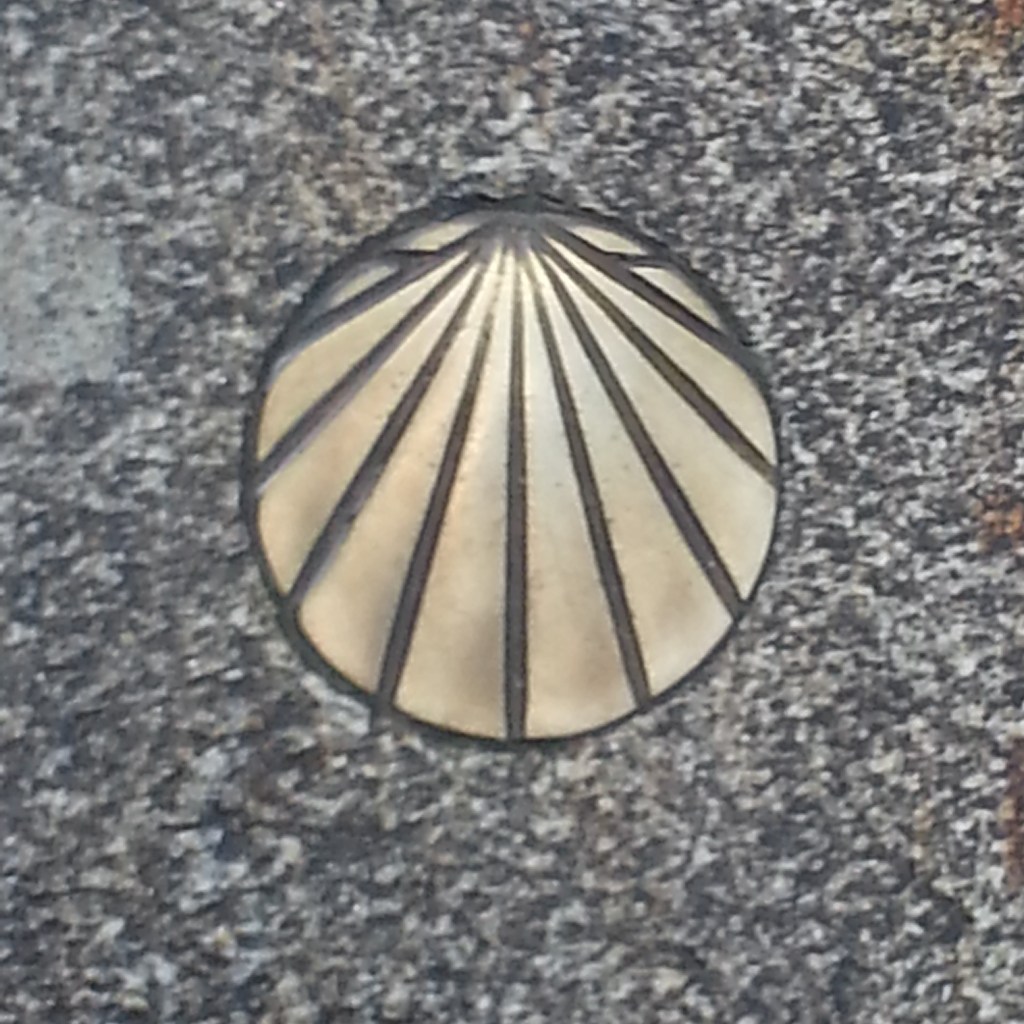
The walk is well-marked by the scallop symbol because the pilgrimage routes lead to the Galician coast, where scallops are abundant, and pilgrims would often collect these shells as souvenirs
I am not saying it was all fun. When we started in Leon, it was raining hard and we thought of delaying our start, but, who knows, the next day may be the same, so we started with our rain gear on. The first challenge was to find the scallop sign to start the walk, and talking with a local on the street, he suggested we take a bus to get to the outskirts of Leon, where the trail is marked clearly and we could start walking in the country avoiding the industrial parts of the town. We followed his advice and got on a bus with our backpacks; we did not know where to purchase a bus ticket, so we just got on and asked the driver for advice who waved us on to sit down, recognizing foreign pilgrims.
The driver beckoned us where to get off, and we followed the other pilgrims on the road. The road was wet and full of puddles and we got thoroughly soaked that day, but we found a friendly “hospedalier”, or hostel host, in an albergue in the afternoon, where we rented a private room at a slightly more expensive rate than staying in the dormitory. After changing into dry clothes, we put our wet clothes in front of a roaring fire in the living room. Once we took a shower and changed into our dry clothes, we joined other pilgrims for a “fixed dinner” at the albergue. After dinner, we sat with the other pilgrims and exchanged views on the Camino experience and whatever was happening elsewhere.
Talking with other pilgrims was entertaining, interesting, and comforting. We learned that no matter what part of the world you come from, we all have similar wishes, ambitions, frustrations, and experiences. We met someone from the UK who just went thru a divorce and came to walk the Camino to rethink his life. Another pilgrim from the US was between jobs, assessing his options; he did not want to work in his father’s company. A young woman from Brazil came to see the culture of Spain.
We walked with a Danish woman for a few days on the Canino; we walked at the same speed and spent many hours talking about the social network in Denmark. She was a teacher but got bored with teaching and just took a few months off to travel. She was not concerned at all with getting another job when she returned home and explained that she would always have a job, no matter how often she quit. During one of her breaks in her career, she learned to become a yoga instructor, and she gave us a morning yoga class, a good warm-up, before our walks.
With all fellow pilgrims, we had direct, honest, and meaningful discussions; we all realized the chances of ever meeting again were close to nil and therefore we could open up and talk from the heart. I seldom, if ever, had this type of deep-felt interaction before. Being older than most pilgrims, we felt a bit like the confessional priest as they poured out their stories.
Some people were introverted and did not stop socializing, preferring to be alone with their thoughts. That was all right as well; there was no shortage of people on the road to say hello to. We saw people behind or ahead of us all the time. A few came to experience and find religion. But most people we met and talked with came for the exercise and to soak up the local culture and enjoyed engaging with other pilgrims on the day’s journey.
Of course, we needed preparations for our trip. One was by walking longer and longer distances at home, which helped me to get used to the daily walks on the Camino, which averaged six hours. We stopped walking in the early afternoon to make sure we had a nice auberge to stay overnight.
In the light backpacks that we purchased, we carried a change of quick-dry clothing, toiletries, rain gear, and digital equipment. We minimized the amount of clothing we took with us to reduce the weight of our backpacks. One of the best recommendationsreceived was to have hiking boots that are well-worn and comfortable, and we had those.
We put the winter clothing that we needed to travel from Ottawa to Leon, Spain, in a suitcase, and sent it on the train from Leon to Santiago, where they held them fro us at the station storage area.
We also carried silk liners that we purchased in Vietnam; we used them at the albergueswhere they provided beds and covers. By using silk liners, we tried to protect ourselves from bedbugs. One in our walking group acquired such an acute case of bedbugs that she visited a doctor and delayed her trip by a week to get over the itching.
For information on the Camino, I found the slim book by John Brierley the best. Using his book, we identified rest stops where we would look for albergues for overnight stays.
When we were tired of bunk beds provided in the albergues and wanted some comfort, we went upscale to a hotel with a private bathroom. Another reason for taking a hotel room was that although the albergues gave some sort of breakfast, it was minimal and we had to leave by 7 a.m., a not-always-pleasant early departure. In one albergue, they shut the lights off at nine p.m., and locked the entrance door, which I found strange and scary; I looked for an exit in case of fire that I could not find. Locking the door for safety made sense to me, but we should have been able to open the door from the inside. That was not the case in this situation.
But most of the time, we found the albergues clean and hospitable, offering excellent dinners at a reasonable price, and providing the opportunity to meet and socialize with pilgrims from all over the world.
Our lunches included cheese, bread, and fruit, which we purchased the evening before. We learned early to buy our food supplies at the first available store; many of the small villages we crossed had no stores. Many of these villages looked abandoned or occupied by few people, perhaps because of urbanization that drew people to the cities for jobs, like what has been happening in North America.
We bought the fixed menu “peregrino’s” dinner offered in most towns, or at the albergue, frequently accompanied by other peregrinos we had met that day. These dinners were terrific, often freshly caught fish, always served with a bottle of wine on the table that was refilled when emptied, and dessert.
In Galicia, we enjoyed the locally famous “pulpo” meal of octopus, freshly boiled in front of us and served on a wooden platter cut into small disks, with a jug of wine and bread. It tasted a bit like chicken. We went back twice; the octopus was so good!
But the Camino is more than great food, genuine hospitality at the albergues, and meeting people on the Camino: it was a walk across various and attractive landscapes, from flat to hilly terrain, that was occasionally challenging.
Along the way, we visited unique architectural works that I found interesting being an architect. For example, the Santiago de Compostela Cathedral is a Romanesque-style cathedral, which was our destination. It is one of the most important pilgrimage sites in the world and is believed to be the burial place of Saint James the Great. The cathedral’s crypt is beneath the high altar and is believed to be the burial place of Saint James. A striking memory of the Cathedral is the way it is lit up at night when we can see all the rich sculptural details of the building.
The Cathedral in Santiago made an impression on me in another way as well. I am Catholic and my memories of Catholic churches in Hungary as a child did not compare with what I experienced in Santiago. We attended a service that was in Latin and performed by three priests. Right after, they burned incense in a large basket hanging from the ceiling, forty meters above the transept, halfway down from the ceiling. The basket swung back and forth, and the burning incense generated a cloud that enveloped the upper part of the church. I found that the sun coming through the windows from the sides of the transept created a mysterious effect, burning through the incense. Some people in the audience cried. I was so taken by the experience that we came back a couple of more times to relive this supernatural feeling.
In Astorga, we encountered the unique neo-gothic “Palacio Episcopal”, or the Bishop’s Palace, designed by Antonio Gaudi. every bit as fascinating as the works by him we had seen in Barcelona, characterized by curvy, flowing lines.
It was an educational experience to stay overnight at a monastery, converted to an albergue, where we slept in a cell with bunk beds designed for monks previously.We had one enormous bathroom per floor, like some college dormitories at home, and a common kitchen where all the pilgrims fixed their dinners. It was an opportunity to socialize again.
In Rabanal, we visited the 12th-century chapel, where a choir of Benedictine monks performed Gregorian chants in Latin, a unique experience in an appropriate historical building. The Knights Templar built the 12th-century Romanesque chapel and protected the pilgrims as they traveled the Camino. The chapel could not seat more than a few dozen people and smelled musty. It was dark inside, but the sound of the choir created a mysterious atmosphere, making us feel as if we were back in the 12th century.
Walking through a part of Galicia, we came across Celtic Crosses – like what we see in Wales and Ireland and learned that the Galicians were also Celts; in fact, they have their language and to this day many in the country do not speak Spanish.
While going on a cruise or spending time in warm climate resorts has appeal,there isno comparison in my mind to the satisfaction that I get from a walking tour such as the Camino, which combines physical challenges with cultural experiences; truly, to me, a very satisfying way to spend a few weeks. We walked the second half of the Camino, although we met one couple who had walked from Germany. Others divided it up into several blocks to enable them to finish the whole trail.
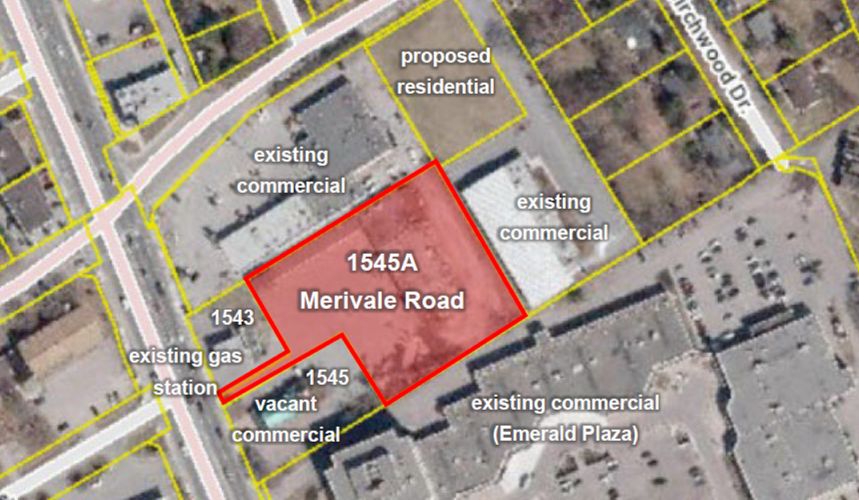
I linked up to a “public engagement” zoom meeting on a proposal to build a one-story medical imaging facility at 1485A Merivale Road, replacing the current facility a short distance away.
The proponents presented a most unsatisfactory site plan, resulting from the shape of the site, which is accessible only via a two-lane driveway. It is a back lot, facing a major arterial, Merivale Road. And a vacant and decaying one-story building is on one side of the driveway and a gas station is on the other. If this project goes ahead, I could just conjure up a garish sign advertising the imaging facility, because it will be invisible from Merivale Road.
And access to the site is only possible by driving north on Merivale. Considering the over seventy parking stalls proposed for the development, I can envision a few hundred cars making a right turn entering and leaving this facility each day.
Complicating access to the proposed facility is the gas station next door, which also has hundreds of cars turning in and out, and a traffic light a hundred meters away that causes the stacking of lanes on Merivale every time the light turns red. I have always experienced long waiting times trying to get onto Merivale from the gas station because of the traffic congestion. The proposed facility will only make this situation worse.
Since I would drive south on Merivale to visit this proposed facility from my house, I would have to make a U-turn to drive north on Merivale to enter it. I would think twice about using this facility the second time and choose another imaging center, more accessible to me.
One could ease the traffic problem by opening a driveway on the east side of the property and working with the owner of the adjacent shopping center (behind the Barley Mow) to continue with the driveway behind the shopping center, exiting onto Capilano Drive. Turning left onto Capilano would bring you to the traffic light on Merivale, from where both south and northbound turns are possible. I strongly recommend opening a driveway on the east side of the property, exiting onto Capilano, and providing a second access and exit point to the site.
Besides access problems, the siting of the proposed building is unattractive. Why should a modern medical building be accessed via a long driveway surrounded by a gas station and a vacant building and then a parking lot before entering it? The scheme reminds me of shopping centers with acres of asphalted surface parking up front along the road, with strip malls behind. Surely, we can do better than that!
I understand the owners of this property also own the land occupied by the vacant building (1485 Merivale Road); why not combine this lot with the subject one accessible only via a driveway and locate the medical facility closer to Merivale Road? A sign on the building would provide identification and relegate parking to the back of the site. Part of the additional lot could be used as a park fronting Merivale Road, providing an attractive green entrance to the medical facility.
Much discussion at the zoom meeting focused on the proposed use that is not the “highest and best” use of the land; that a much taller building is allowed on this site. But the owners, two doctors, demurred; they said they are not developers and not interested in building more than the medical facility. Is it possible that zoning in Ottawa allows more development than there is demand for it? That all arterial roads zoned for highrise development is overkill?
Merivale Road will not benefit from this proposal from an urban design point of view, and it will make traffic much worse. But, what is confusing or missing is, what is the role of our city planning department in all of this – are they not empowered to look at the project in a more holistic way, rather than each individual project at a time without regard to what else may be being proposed in the nearby area which impacts not only on the traffic but the “neighborhood look’?
The lesson I learned from this experience is that, unfortunately, each proposal is looked at without reference to the surrounding community. So, each site has to have its unique entrance. That kind of thinking leads to many driveways, one to each property, and an awful lot of unnecessary paving. For example, look at the Salus development on Capilano Drive, close to this proposal. That project has its driveway paralleling the long driveway to the Curling Club. Would not a combined driveway save pavement?
In conclusion, the traffic issue could be alleviated by making a driveway on the east side of the property and continuing it to exit onto Capilano Drive, providing another access to the site. Further, adding the vacant property would enhance the view of the building from Merivale, used either as a park or by locating the proposed building closer to Merivale.
In the current proposal, the Emerald Plaza Shopping Center has a service drive right adjacent to this property. Would there be a way to use and combine the service drive with the entrance to this site? Yes, I know, different property owners, etc. But we should be thinking more in terms of “planned unit developments”, contiguous areas, and not in terms of individual lots. Just my opinion.
 andrasthehun.ca