January 21, 2023
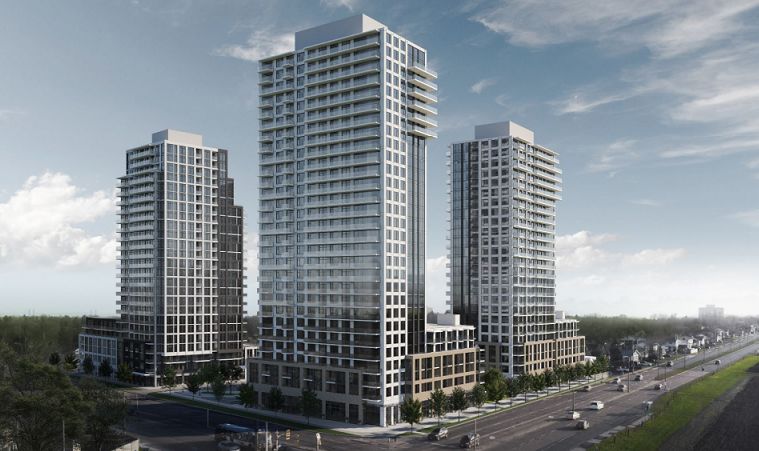
My local City Councilor invited me to a “public engagement” meeting on a rezoning application for a development proposal in my neighborhood. The meeting, held by zoom, was scheduled for 7:00-8:30 pm. The purpose of the meeting, we had been told, was to present and provide feedback on changes that had been made to the original proposal by the developer presented at our first meeting a few months earlier and gain public input. The original proposal was for two 25 and one 28-story towers sitting on a six-story podium at the intersection of two arterial roads. Single-family, mostly bungalows, surround the site on three sides.
But, right at the beginning of the meeting, the moderator reduced the meeting to an exchange of information, informing us that the only questions from the audience (whom he estimated to be around 80) would be by writing them in a Question and Answer Chat room for a response after all the presentations. In the meantime, the moderator limited us to listening only, a lesser event than discussing the merits of the proposal.
Then he insulted the audience by asking them to behave civilly and respectfully, conjuring up the image of the rough Liverpool waterfront pub in the 19th century. Mr. Moderator, we are polite Canadians; we are courteous and mostly low-keyed. We do not need a lecture from you on how to behave. At any rate, the audience was muted for the entire evening – so what opportunity would there have even been to be loud and rowdy? I found these actions – the lecture and the muting – to be disrespectful to the audience, who are all ratepayers and have a right to be heard.
The session began with my Councilor, who gave his views on the development and on the City of Ottawa’s planning goal for densification to provide for future population growth. It continued with presentations by the planner, architect, engineer, Ottawa City Planner, and the developer. These presentations took up over an hour of the allotted meeting time, leaving precious little time for the hundred-plus comments that accumulated on the “chat line” and some in the Q&A column during the zoom call. So, with limited time available for the audience to engage in the discussion, and with the audience all muted, the moderator summarized what he believed to be related questions from the ‘chat line” and Q&A column, and referred them to the panelists for a response. The members of the audience had no opportunity to express their views in their own words and address the proponents directly.
Following the earlier “public engagement” session, the new proposal reflected some of the public’s comments from that earlier meeting; reduced the podium from six to four levels to blend better with the surroundings, but increased the height of the buildings to two 28-story and one 32-story building, adding over one hundred units, with the total project to accommodate 998 units. The new height proposed is over 5 times what is currently permitted in the zoning code.
With no proper opportunity to engage with the proponents, this process was not engaging the public by any stretch of the imagination. Listening for over an hour to an information dump and being required to submit questions in writing over zoom, not knowing if the question will be answered or allowing any opportunity for follows-clarifications is certainly not public engagement. People want to express their thoughts in their own words, address their comments to specific individuals and not have their comments lumped together with other comments and interpreted by a moderator.
I am both an architect and a city planner by training and so understood most of the “professional” presentations – but I wonder how many did without an opportunity to seek clarification?
As a city planner, I both participated in and conducted “public engagement” in both Canada and the United States, at various levels, including municipal. The essence of these meetings was to present the proposal in a few minutes to allow maximum time for audience questioning and participation. At least three-quarters of the time was devoted to public input. This meeting was the opposite: three-quarters of the time was spent on describing the proposal and the rest by the moderator interpreting the public comments.
I give credit to the Councilor and the city to organize this “public engagement” zoom meeting. It is desirable and useful to inform the neighborhood people and canvas the residents for their comments; they will have to live with the development. But I question the usefulness of this session: was there anything in that meeting that would help people come to an amicable resolution? To me, this exercise was more like checking the box for “public engagement”.
This was a weird zoom meeting in that only the panelists – the Councilors, consultants, developer, and the City of Ottawa official – were shown on the screen while people like me were back in our homes staring at our computer screens and listening. We did not see who else was listening. I always see all zoom participants in other such meetings I have joined. It was one-way communication; we never had a live word. The moderator combined and interpreted the questions that we put on the “chat” line. I found it very dissatisfying.
My impression is that the city will probably process this rezoning application with some minor tinkering with the height of the towers, landscaping, and other issues but will not materially change it, such as, for example, bringing it into conformance with the current zoning envelope. Having checked off the “public engagement” box, the city has not really shown an interest in finding out what the public thinks about how this proposal could be made into a quality project consistent with the character of the neighborhood and the larger surroundings. (For example, how about a medical office complex in proximity to the proposed huge hospital development just north on Fisher Avenue)? The developers appear to have their way in this city; they propose, and the city massages the proposal for approval. Just my opinion.
 andrasthehun.ca