How a government policy stressed me out

September 10, 2021

My heart was not in it. I thought it was too much hassle to go. The attraction was to visit with my brother-in-law and his family, who invited us to Myrtle Beach, South Carolina, where they had rented a condo on the beachfront. I love walking on the oceanfront and listen to the crashing waves. As well, I could carry on political talk with my brother-in-law – where we usually express our disagreements with each other – over drinks at 5 pm cocktail hour and sample the expert cooking of my sister-in-law. In addition, I could also visit with my two sons living in Durham and Charlotte, North Carolina. Yes, I wanted to see all of them not having seen them in almost a couple of years because of the pandemic.

But, because of the Canada/US border shut down by the US Government for Canadians to cross into the US by car, I had only one option: I could fly. The policy permitted flying. Kathy could drive into the US having dual citizenship. We thought of a pragmatic way to go south: I could fly into a US city close by interstate 81 (I81), the major highway going south, and she could drive the same day and pick me up along the way so we could share the driving south. Since Ottawa had no international flights, I would first have to get to Montreal or Toronto to depart. I discovered I had some great options: I could fly to Syracuse, NY – three hours from Ottawa along I81 – via Montreal, New York City or Toronto, Detroit. Or I could fly to Harrisburg – also along I85, six hours from Ottawa – via similarly far flights with transfers. So I had to get to Montréal, or Detroit first, by plane, by train or by driving to begin my trip. On top of all of this, I had to obtain a negative covid test within seventy-two hours before the international flight. This resulted from US Government policy! These requirements were not only were expensive to live up to but also time-consuming. What government genius came up with a policy of cross-border travel that permitted flying but not driving, going south? What was the logic behind this? I thought the flying option was much more expensive than driving, keeping less privileged Canadians at home, not allowing them to take a vacation in the US. Not fair.

The solution I was waiting for was for the US to change its policy and let Canadians drive across the border so I could share driving with Kathy going south. US policy was decided on this issue once a month, the 21st of the month, so I waited until August the 21st hoping for open border crossings by car into the US. But it did not happen, and it left me with the dilemma of deciding to fly and reserve a flight in a few days or not going at all; the condo was available that week and the next for the visit.

The pressure came on for me to make a quick decision when my son and daughter told me that Kathy, my wife, alerted them she was going no matter what, and I could either stay home or fly. My daughter even offered to pay for the trip. Shamed by all this, I made a reservation from Montreal to Dulles Airport near Washington, DC, on Monday for a Thursday flight. Kathy was going to drive on the same day to meet me at a hotel near Dulles.

Since Greyhound Bus lines stopped its service going from Ottawa to Montreal, it narrowed my choice to the train. We discussed this whole subject with our good friends, the Burnhams, the previous weekend at the cottage and Ray offered even to drive me to the Montreal airport. I thought this offer was way beyond what friends are expected to do for each other. I immediately refused. But after deciding to go south and making flight reservations, I called Ray sheepishly to make sure that he meant his offer. He agreed to drive me to the airport on Thursday for my flight that day.

On the way to Montreal, Ray and I discussed the requirements for travel; by planes, which included a negative covid test. I looked up the variety of tests available and found the subject confusing since you need different tests depending on where you want to go. And then, of course, find a place where they give the test. I ended up in Quebec and paid C$200 only to find out that I need a test that costs C$150. But then some friends told me they had to pay more than that at a pharmacy in Ottawa. Why are there different prices for the same test given by different outlets? Somebody is making a lot of money! The test takes a few seconds, and the analysis may take a few minutes; I received my results in a couple of hours. This subject interested Ray since they also plan to travel to Europe this fall and will have to get tested.

I found the Montreal airport almost empty; I went through the customs to the US area alone in an enormous waiting room with several customs officers, where I was the only passenger. The airport came to life after 5 pm when a few planes departed, including the one I took. My seat surprised me; it was large compared to the ones I used to fly on until I realized it was a business class seat. Because I reserved three days before the flight, the only seats available were business class seats. That is why I paid close to a thousand dollars for a two-hour flight! But the service was business class as well, free. I had a relaxing time reading and enjoying a scotch. When I got outdoors at the airport, I saw the minibus with the Hilton logo go by and ran after it to find its official stop. Kathy took ten hours to drive down from Ottawa and was already in the hotel room when I got there around nine pm.

Reflecting on this entire process and knowing that I wanted to go to the beach and always have fun seeing family, I realized I am getting lazy and comfortable in my way of life. One has to shake up things to get moving and get involved with an active lifestyle, despite poorly conceived government policies (or by the lack of understanding of the underlying politics that spawned these policies).
Closing the Cottage

October 15, 2021

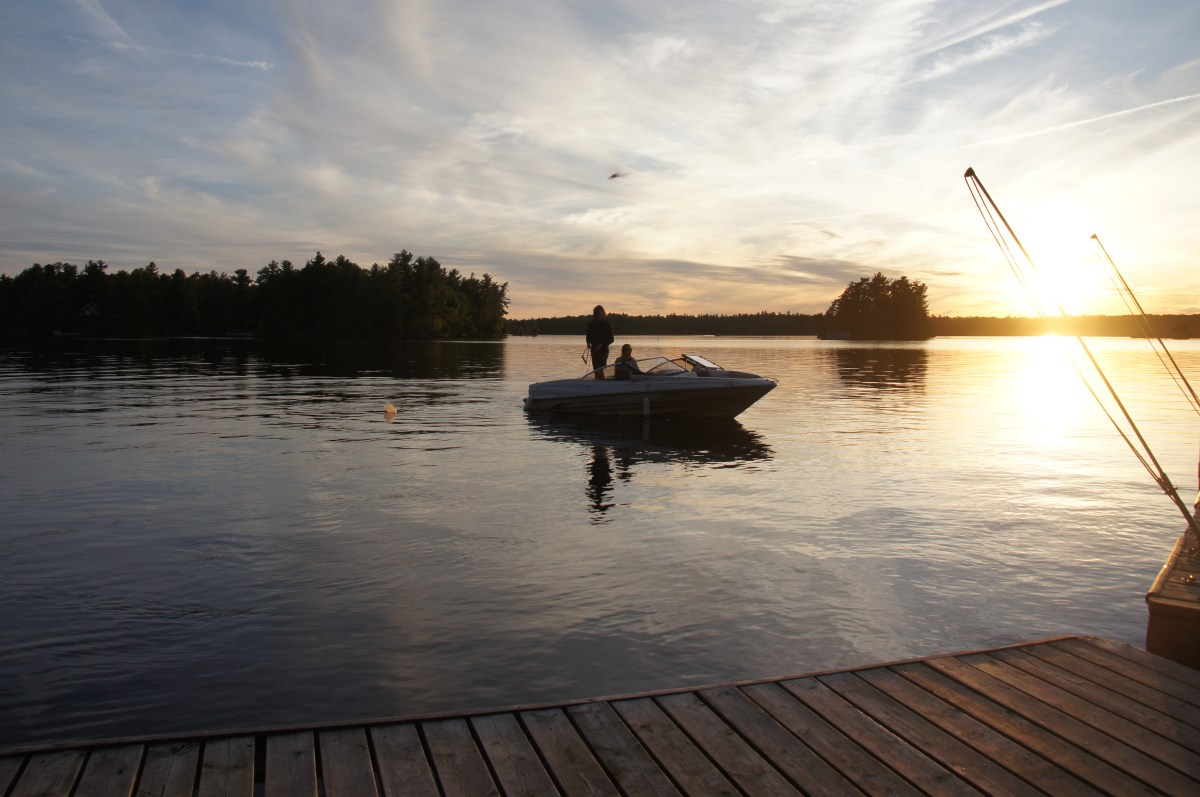
It was dark. It was pitch black and only seven o’clock in the evening. But it was October and Thanksgiving in Canada and time to close the cottage. It is an annual ritual. We usually close the cottage by Thanksgiving. The good thing about being dark early is that I can set a fire in the fireplace that creates a warm ambiance altho one does not need the heat: it is still warm. But, the day we arrived to close the cottage, we needed the heat. We jumped into the lake in the afternoon, with our short wet suits on, and had a refreshing swim. I am not sure why, but the cold water always puts me in a positive and energetic mood; one has to swim hard to keep warm in the cold water. When I came out of the water, I did not feel cold at all. It comes half an hour later when your body fully registers the cooling effect of the water. By that time, my fire was roaring and the tiles in the stove were radiating warm air.

We discuss when to close the cottage every year. On the island where we have the cottage, it is very inviting to stay late into the Fall: few people are around; the leaves are turning many colors, and we see the occasional deer. Walking is a refreshing way to pass time there. And since we bought wetsuits, we challenge ourselves to keep going into the lake later and later in the season. Especially when in October there are hardly any boats and the water is perfectly still like a mirror, inviting you for a dip. But city activities start and I do not want to miss my friends at the gym and the community center playing bridge. On balance, though, we end up at the cottage a few days longer, the swims and walks win out.

This year, we had an unpleasant start arriving at the cottage for closing it; the boat would not start. The cottage is on an island, and we take a boat from the marina to get to the island. The battery had no power to start the boat. It was a Friday night when the marina was closed. We felt abandoned and considered going home. But Kathy negotiated with some other islanders who just arrived that they could drop us off at their cottage and we would walk on the island to get to ours. Fortunately for us, our friends, marina workers living next to the marina, were going out to Kingston, saw us stranded, and obliged us by changing the battery before they left.

Although we used to have turkey for Thanksgiving, the last few years we skipped it; there is much to be done without carrying food to the island and then taking the leftovers home. Instead, we prefer to use up what we have in the fridge. But a memory came back to me. I remembered the time when I prepared a turkey at the cottage only to find that our stove element burned out. Lateral thinking triggered unexpected action. Take the large dish with the turkey in it to a neighbor’s kitchen. The neighbors were not there. I climbed thru a window to take the turkey into the neighbor’s house, to cook. I hoped the neighbors would not show up. After the turkey was cooked, I opened all the windows to get rid of the smells, hoping nobody would arrive until the next day.

Cottage closing is usually the last visit to the cottage for the year. This year, I had already done some closing chores: took off the “sail” sunshade that was over the deck and returned the aluminum fishing boat to the marina for winter storage, leaving us the inboard/outboard boat for moving back and forth between the cottage and the marina. And I have already disconnected the portable air-conditioner. But we had to lay the carpet and arrange the furniture in the sleeping cabin, which just received a new roof the previous week. A few weeks ago, we pulled up the carpet and moved the furniture to avoid water damage awaiting roof replacement.

But the closing of the cottage is much more than the physical work of wrapping up the outdoor furniture, placing the kayaks and canoes next to each other, putting away the paddles, lifting the swimming ladder onto the dock, cleaning inside, etc. It is a mind shift from summer to fall activities. It is the end of a season where many friends came out to the cottage and shared good times with us when we discussed politics with those who would discuss it without getting into useless arguments and enjoyed BBQs on the deck overlooking the lake. It is the end of the hot season when all the fans in the cottage worked to keep us moderately comfortable without dipping into the lake to cool off. It is the end of boating, sailboarding, waterskiing, and just taking long swims across the bay to visit our friends, who offered us a gin and tonic while standing up in the water in front of their cottage. As well, this year we welcomed back our American friends who could not come to Canada the previous year because of Covid but appeared the first day they were allowed in on August 9. Closing the cottage means the end of summer activities. But it also means the beginning of planning the Fall activities going forward Xmas. We thought of visiting family in the US for Thanksgiving. That was a troublesome thought since the US border was not open for car travel by Canadians, but just last night the White House announced that they’ll open the Canadian border to fully vaccinated Canadians in early November. So now we can plan our trip South. We covered the furniture in the cottage with plastic sheets to protect it from dust that would accumulate for the next six months; emptied the bar fridge and the food fridge, and shut the main breaker. The last item leaving the cottage was to place mice poison in a couple of locations.

Chinese Influence in Canada

October 20, 2021

I just have to get this off my chest. In the recent federal election, in Canada, the conservatives lost three seats in predominantly Chinese communities. Altho the losing politicians did not blame it on the leader of the conservative party and his policies towards the Chinese government, many Chinese people blamed the leader, saying that he hated the Chinese. This is ridiculous. The party platform said clearly that the foreign policy of the conservatives was not against the people of China, but against the Chinese Communist Party, the CCP. But many Chinese people in Canada took the view the conservative leader is against the Chinese people. This view was aided largely by misinformation promulgated in the Chinese Canadian social media (WeChat) by the CCP.

There are many reasons Chinese President Xi’s policies could be the target of Canadian discontent by the government and the public. In Canada, Huawei networking products are allowed, while Canada’s allies ban them. Huawei is a Chinese government-sponsored networking company that could use its products for spying. What this means is that Canada’s partners would not share sensitive information on defense and other matters. As well, Canada accused China of hostage diplomacy relating to the two Michaels, kidnapped by the Chinese, for Canada having the temerity to arrest Meng Wanzhou, the CFO of Huawei, in Vancouver. The imprisonment of the two Michaels heeled the arrest of Wanzhou. Canada does not condone hostage diplomacy. Neither human rights violations by the Chinese towards the Uyghurs. But the Conservative Party said that it is not against the Chinese people but the CCP’s policies. Very clearly. There were many articles and opinions in the papers that the three electoral districts were lost for the conservatives because the official policy of the conservatives was anti-Chinese.

I disagree with the concept that anti-Chinese government policies are synonymous with anti-Chinese sentiment. China has a long and rich history and culture, and Canadian universities are full of courses relating to China and full of Chinese students. In a recent visit to the University of British Columbia, my alma mater, I was completely flabbergasted by the number of Chinese students on the campus; I estimated that half the student population was Chinese (altho many of them could be local people from the Vancouver area). Over five percent of the population of Canada is Chinese, perhaps the largest minority today in Canada, mostly living in the Vancouver and Toronto areas. I grew up in Vancouver and the Chinese have great accommodation with other people in the city. It is the government today in China that is the object of criticism, not the people. Understandably, the Chinese people in Canada are proud of their heritage. Some people merged the conservative policy platform on China with their attitude towards the Chinese people and decided that the conservatives are against the Chinese people and three conservative Chinese politicians lost in the recent election. But that is incorrect and inappropriate.

Let me explain. I came from Hungary to Canada in 1956 and was a refugee because of the government policies in the 1950s that were against my future. But I am still proud of my Hungarian heritage. Hungarians bred many brilliant musicians, such as Bartok, Liszt, and Kodaly. They also produced the best women chess players in the world, the Polgar sisters. And there were many world-famous scientists, contributing to the atom bomb at Los Alamos, the Manhattan Project, like Szilard and von Neumann. Houdini, Lugosi, and Falk have all had Hungarian backgrounds. Did you know that Tony Curtis spoke only Hungarian until he was six years old? And Andy Grove, a Hungarian immigrant, was the founder of Intel. Charles Simonyi developed the original Office platform for Microsoft. He came out of Hungary as a teenager and Katalin Kariko developed the mRNA vaccine for BioNTech, the key component of the Pfizer covid-19 vaccine. One can be proud of one’s country’s heritage and people and disagree with its government’s policies. Just my opinion.

What does a Refugee/Immigrant owe Canadian Natives?

Just my opinion – what does a refugee/immigrant owe Canadian natives?

October 5, 2021

We are told by our government we are guilty. We, Canadians, are guilty of abusing or having abused our indigenous peoples. We’ve been told many times. We owe the indigenous groups a great deal, having stolen their land and tried to annihilate their culture. They live in poverty. They live in remote areas with no filtered water. They have poor education and health care, while we, most Canadians, live in urban areas with the best health and education facilities. And it is our fault that our natives live as they do.

What is true is that the natives live in poverty compared to the average Canadian; I have seen it personally when I worked for the federal department of Indian Affairs and visited many reserves. I saw it twenty years later when, as a volunteer, worked with natives in Labrador and traveled up north a couple of times to their community, where I witnessed their poverty and poor housing conditions. Up in their village, Natuashish, Labrador, inhabited by the Innu tribe, there is no sustainable agriculture; They import most foods from the South. While there was little in the way of fresh foods – fruits, vegetables, fresh meat, there were loads of frozen foods and manufactured foods like potato chips. Not healthy. The government built their housing to southern standards, ignoring their communal culture, which was unfortunate in my opinion. The house occupants destroyed the walls for firewood. They wanted money from the government to maintain their yards in contrast to suburban culture; where people take pride in maintaining their yards. No question there are cultural differences between the Innu and Canadian cultures and these differences have crystallized in putting an Innu community into a Canadian suburban model that the government built for them. In Natuashish, an Innu community of over 500 people, there were three miles of roads built with no connection to the south. All the Ford150s imported from the south by the Innu roared around for fun on the three miles of pavement. Bears were visible in the neighborhoods.

 In Natuashish, there was one high school graduate (I was there in the early 1990s), and the high school teachers, who taught via an interpreter since the children did not speak English,came from Toronto and the South. The children spoke their native language.

 Health care was provided by imported Health Canada personnel and the RCMP provided policing. What I found interesting was that although some of the local tribal people got out of the village and worked in Vancouver, and elsewhere in Canada, they came home. One woman told me she came back to reconnect with her local people to find support. She did not feel welcome in Vancouver and missed her origin.

Did Canadians force the natives into their poor living conditions? Of course, they did to some extent. The European immigrants pushed the natives further and further away from their settlements. Yes, the Europeans just took the plentiful land for nothing where they could, fought the natives for the land with superior weapons where the natives opposed them, and/or tried to negotiate an agreement for acquiring land by trading. Now we think we negotiated these agreements in bad faith or by offering the natives baubles and other nonsense, worthless by today’s standards. Negotiations to correct previous and perhaps devious deals with the natives have been going on for decades. There is official acceptance today the natives were often duped into letting their lands go to the white settlers for peanuts. There appears to be a Canadian group consciousness of guilt for having dealt with the natives unacceptably. We not only took away their land but also tried to assimilate them into Canadian culture, and the natives believe that there was a purposeful effort to take away their culture. Witness the residential school system. So the Prime Minister designated that the last day of September as the official “reconciliation” day, starting in 2021. He called for reflection, presumably accepting responsibility for subduing the natives, rendering them into poverty, and making us feel guilty about it.

This last point brings me to my dilemma; I came to Canada over seventy years ago with no knowledge of the history of the natives. Not only that, but I have never had any education or acquaintance with the native issue for a long time after arriving in Vancouver in 1957. I cannot recall meeting a native until much later when I worked for the federal Indian Affairs department and traveled to Saskatoon, where I saw many natives on the streets and visited reserves as part of my work, in the 1980s. Frankly, I never felt that I contributed to the misfortune of natives, that I was responsible in some ways for them living in poverty and lacking education. I did not take or steal land from the natives, I never fought the natives for land. So why should I feel guilty about their history? The history that I learned in my old country, Hungary, was that the conquerors take everything by force or by cunning. Attila the Hun took the area that Hungary occupies today by force and we were not taught that he negotiated agreements with the occupants of the land in the fifth century AD. The Ottomans ran over Hungary, followed by the Germans and then the Russians, and there were no negotiations, agreements, and contracts. So what is different in Canada? Perhaps we have new ethical standards. But I was never part of the past activities, taking the land from the natives, disenfranchising them, and contributing to their dismal living conditions. I am not saying that I have no empathy or sympathy for the natives. Via my experience working with them in professional and volunteer capacities, I have a lot of empathy for them and believe we should help to improve their status in life. But I am not presenting this proposition spawned by my guilt feeling but as my feeling towards all people who have not fully participated in what Canadian life offers – whatever the reason.

Canada’s population is 37 million; of which there are close to one million natives, first nations people; only forty percent of these live on reserves scattered across Canada. There are also over half a million Metis living mostly off-reserves and one hundred thousand Inuit, the latter living in the arctic area. So it is a small percentage of Canada’s population. But other poor people in urban and rural areas also deserve some assistance. So, should we be focusing on poverty or ethnicity? Having been an immigrant, I have never felt guilty about the condition of the Canadian natives. Considering that half of Toronto’s population is foreign-born, (and thirty percent of Ontario and BC) I wonder if those people have a pang of true guilt feeling about what the older Canadian settlers did to the natives. And, of course, poverty is not readily visible; one has to drive out to remote areas to see the reserves, it is not something one sees every day. On the very first “reconciliation” day, established by the Prime Minister, the Prime Minister showed a terrible example by going on a surfing vacation in Tofino, on Vancouver Island, instead of participating in one of the native events taking place all across the country. Just my opinion.

Introduction to my book entitled: “Elsewhere Travel, Three Trips to South-East Asia”. Published on Kindle in 2021.

Introduction

Like so many others, we did not travel during the year 2020. Not at all. Over time, we even began to feel as if we were fenced in by the closure of the border between the United States and Canada, and the reduced international air travel. When people gave us a wide berth walking past us—turning their faces away—we knew public information on the dangers of the pandemic had taken hold. Then the lockdowns came, and our trips to grocery stores and the liquor store morphed into desired outings. My gym closed, which was terrible!

            The one positive consequence of pandemic lockdown was our growing savings in the bank; without travel, we saved money. The other perception I discovered during this time was that travel had become a habit, and that we missed that habit—traveling both to known parts of the world, but also elsewhere. We missed especially the elsewhere travel.

            I am not talking about holiday or beach sojourns, but trips to countries unknown to us, discovery trips I like to call them. There is freedom in discovery trips. I take minimal stuff: a suitcase and a backpack for daily excursions. Away from home, release comes from not thinking about bills to pay, daily commitments, and routine activities, like taking out the garbage at a specific time. Freedom also comes from the fact that nobody knows you at a foreign destination. In your hometown, people know you, know where you live and what you do, and accordingly, you follow habits, norms, and expectations these people have of you. Over the last decade, some of the elsewhere trips led us to discover India. When we arrived in India, no one knew us and we were under no expectations relative to our behavior. On discovery trips like this, you can change your habits and conduct. You could even take on a different persona, not that I changed my habits when traveling, but I did find that I had more time for people in conversation than I did during my routine at home—getting to know them; making friends with strangers.

            So what was I to do with all this time once locked down in our city and missing travel? Earlier, while writing my memoir, I had discovered that I liked to rattle my fingers across a keyboard, even with all the mistakes I made—which could be corrected later. I liked going down the stairs to my man cave, where I was secluded and free from doing chores. And research was part of the writing, a part I liked. I could look up the historical context and add it to my writing. And so, the inevitable happened, I set out to write a new book, and this one was about, what else?—travel!

            Travel has always invigorated me; I look at things with fresh eyes. I feel younger traveling and willing to try new things, like zip-lining. I visit unplanned places and engage in spontaneous events. I come home from my discovery trips rejuvenated and full of new energy. After each trip in this book, I changed my outlook on life—I’d learned new things. For example, the visible poverty in India put into context the general wellness we have in North America. Or, in comparing traffic in Ottawa to what I found trying to maneuver through downtown Dhaka, Bangladesh, I realized that our traffic problems were minor in comparison. And these comparisons provided context for local issues.

            Before leaving I often did some reading about our destination, but not too much, because I wanted to be surprised. If I were to study my destination, I thought, it might disappoint me if I knew too much to really feel the impact. After coming back, though, I’d add to my knowledge of what I saw. For example, I knew about the caste system in India, but it took some real-life instances of seeing it in action to understand the implications. I cannot forget our experience at Kolkata’s (also known as Calcutta) airport when a well-dressed man came out of nowhere and put his suitcases in front of ours on the conveyor belt as we waited in an interminable line for the x-ray inspection. My temper quickly sprung into action, and I shoved his suitcase aside, explaining to him in no uncertain terms that we were there a long time before he showed up; he did not argue the point with white folks. The experience motivated me to come home and read up on the history and evolution of the discriminatory caste system in India.

            But here I am already diving into lessons I’ve learned from traveling; let me go back to when we first got involved with one of the great discovery trips of which I speak.

            In 2008, we were invited to join Sleeping Children Around the World (SCAW), a charity, on their trip to Chennai, in the State of Tamil Nadu, in India. We jumped at the opportunity since we had never been to India, and soon we were on a plane with our team of volunteers. Providing poor children with the necessities of life, like clothing and school supplies, was the focus of our work.

            Sleeping Children Around the World worked overseas with local service organizations, and in Chennai, it was a Rotary Club. Since SCAW is a one-hundred percent charity organization, we paid for our fares and costs, and because of that, we thought it made sense to extend our trip and see more of India after we’d finished the charity work. We booked a trip with the travel company Intrepid to see Rajasthan, also in India.

            The charity work was such a satisfying experience that when SCAW asked us to go again in 2010, this time to Bangladesh, we accepted and again extended our trip, this time to the states of Kerala and Goa in southwestern India.

            And we piled up even more traveling experience in India when we joined still another team to go to the state of Maharashtra, India, in 2018.

            Working with a series of joint Canadian and local Rotary teams, in three different geographic areas, provided us with a rich fabric of experience. Locals introduced us to culture and history, and then amongst the team members, we were able to have rewarding discussions, sharing our views. For example, the Dhaka Rotarians took us to their favorite restaurant where they ordered goat brains—during the period when mad cow disease was ravaging England!  What did we do? We ate them. Besides thinking we should be courteous, some of us were curious. I can report: The dish looked and tasted like scrambled eggs, but with spices; we were in Bangladesh, of course. Afterward, you can be sure we Canadians had a lively discussion!

            On each of our trips, we left behind our Canadian way of life and opened our senses fully to engage with local culture, culinary delights, and people. I did not take notes during those trips, which would have been helpful for this later writing, but then we did not know Covid was coming; we did not know we would be locked down; and I did not know I would write a book about our journeys.  And yet, it is good, too, perhaps, that I did not have those notes. I was forced to go to my memory, and in thinking back, I have remembered the noteworthy details that differ greatly from our Canadian way of life. And so it is these, I set out to share with you not only the far-away experiences but also the preparatory work and often challenging travel.